
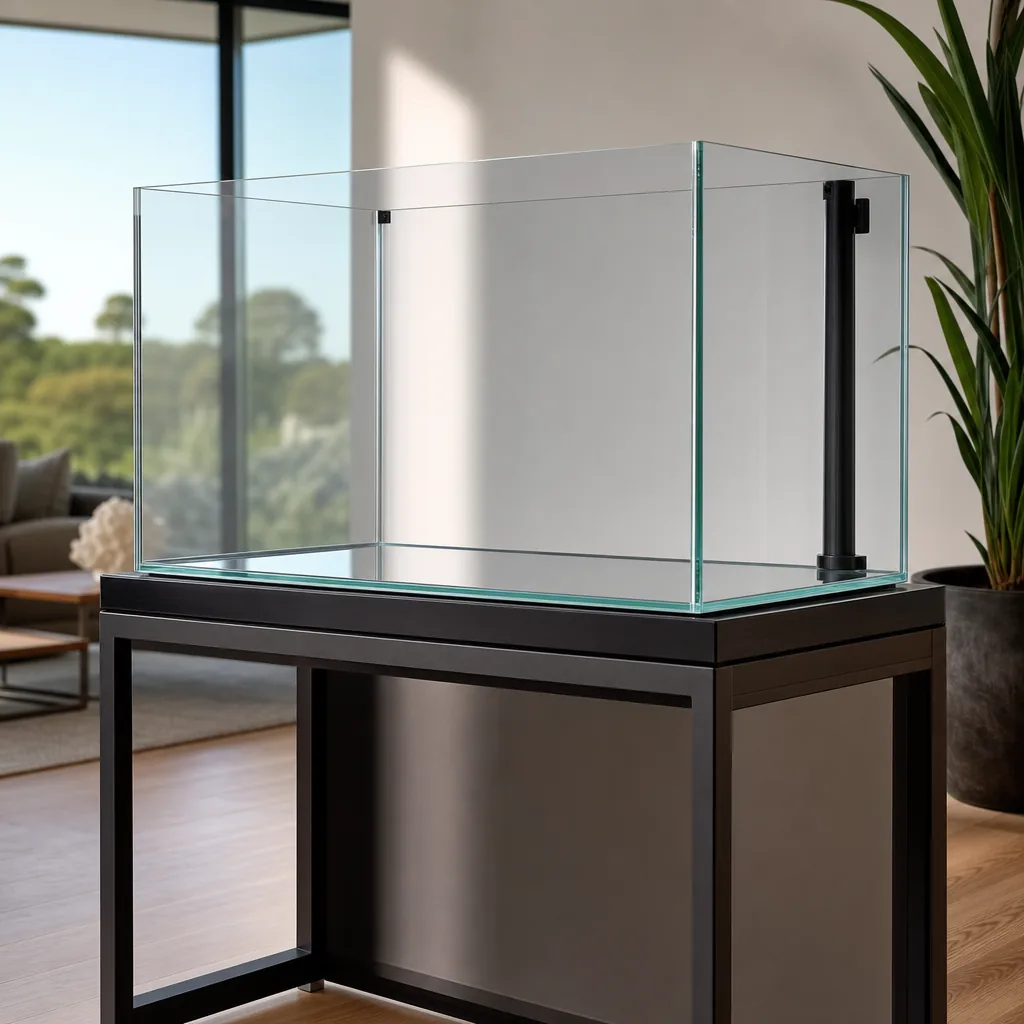
Every new aquarium goes through a cycle: bacteria colonize rock, sand and filter surfaces and learn to turn toxic ammonia into nitrite, then into less harmful nitrate. In a saltwater tank, fish and invertebrates are especially sensitive to ammonia and nitrite. Cycling the tank before anything alive goes in is the single biggest way to avoid early losses.
Why fishless cycling
Years ago, people used a few hardy fish to cycle new tanks. Those fish spent weeks in toxic water. A fishless cycle uses an ammonia source instead, which is kinder and gives you more control. You can dose ammonia to precise levels and test without worrying about livestock.
Before you start
Get the tank fully running before you begin:
- Fill with properly mixed saltwater, ideally made from RO/DI water. Our RO/DI guide explains why.
- Set salinity to around 1.025 to 1.026 specific gravity, checked with a calibrated refractometer.
- Run the heater around 77 to 79°F. Bacteria grow faster in warm water.
- Run powerheads and the return pump. Lights can stay off or on a short schedule for now.
- Get a test kit for ammonia, nitrite and nitrate.
Live rock or dry rock
Live rock comes already populated with bacteria and other organisms, so it can speed up the cycle a lot. It can also bring hitchhikers you may not want, like aiptasia, bristle worms in large numbers, or crabs.
Dry rock is clean and pest-free, but it starts with no life. The cycle takes longer, and new tanks with dry rock typically go through an algae and diatom stage. Many reefers now start with dry rock plus bottled bacteria for a clean start. Our live rock vs dry rock comparison covers the tradeoffs.
Running the cycle
- Add bottled bacteria according to its label. Products with live nitrifying bacteria can shorten the cycle.
- Dose ammonia to about 1 to 2 ppm using pure ammonium chloride made for aquariums. Some people use a small piece of raw shrimp instead, but it’s harder to control and makes a mess.
- Test every day or two. Ammonia should fall first while nitrite rises. Later, nitrite falls as nitrate rises.
- Re-dose ammonia back to 1 to 2 ppm whenever it drops near zero, to keep the bacteria fed.
The cycle is finished when the tank can turn about 1 to 2 ppm of ammonia into zero ammonia and zero nitrite within 24 hours. With dry rock and bottled bacteria, that often takes 2 to 6 weeks. With quality live rock, it can be faster.
What’s normal along the way
- Cloudy water early on, from a bacterial bloom. It usually clears on its own.
- Brown diatoms coating sand and glass, often followed by green films and hair algae. This is commonly called the ugly phase.
- Stalled progress. Ammonia above 4 to 5 ppm or low pH can slow bacteria. If nothing moves for a week, do a water change and dose ammonia lower.
Diatoms and early algae aren’t a sign that something went wrong. They fade as the tank matures and nutrients settle down. Our guide to saltwater algae helps with persistent cases.
After the cycle
When ammonia and nitrite read zero within a day of dosing, do a large water change to bring nitrate down. Then start stocking slowly. Many reefers start with a small cleanup crew of snails and hermit crabs to handle the algae, then add one or two hardy fish a week or more later. Keep testing ammonia and nitrite for a couple of weeks after each addition.
Corals generally come once the tank has been stable for a while. Check our list of beginner saltwater fish and beginner corals for good first choices.
Common mistakes
- Adding livestock as soon as ammonia drops, before nitrite also reaches zero
- Overdosing ammonia, which stalls the bacteria
- Skipping salinity checks, since evaporation raises salinity in a tank without auto top-off
- Adding many fish at once at the end of the cycle
Using rock or filter media from another tank
If you or a friend run an established, healthy reef, a piece of their rock, a cup of their sand, or a used filter sponge carries bacteria that can jump-start your cycle. This can shorten the wait considerably. The tradeoff is that you also bring over anything else living in that tank, such as pest anemones, algae spores or parasites. Only take material from a tank you know well and that has been disease-free for months. Avoid moving water from the old tank, which adds little bacteria and can carry pathogens. Keep feeding the new system ammonia afterward, because the transferred bacteria need a steady food supply until livestock arrives.
Reading the cycle as it happens
A fishless cycle tends to move through three phases that you can follow with a basic test kit. First, ammonia rises after you add a source and stays high for a while. Next, nitrite appears as the first group of bacteria grows, and ammonia starts to fall. Finally, nitrite drops and nitrate climbs, which shows the second group of bacteria is processing the nitrite. Testing every two or three days is usually enough to see the trend. The cycle is generally considered complete when the tank can turn a dose of about 2 ppm ammonia into zero ammonia and zero nitrite within 24 hours.
Stalls are common. If nothing changes for a week or more, check temperature, salinity, and pH. Cool water and a low pH both slow bacteria. Very high ammonia, well above 4 or 5 ppm, can also hold things back, so keep doses moderate. A water change to bring ammonia down is a reasonable fix if you overshot.
The ugly phase after cycling
Almost every new reef goes through a run of nuisance growth once the cycle ends and lights run longer. Brown diatoms often coat the sand first, followed by green film algae or patches of cyanobacteria. This is a normal result of fresh nutrients and new surfaces, not a sign that the cycle failed. Keep the photoperiod moderate, use RO/DI water, feed lightly once fish arrive, and let a small cleanup crew work on it. Most tanks settle within a few weeks to a couple of months.
Adding the first livestock
Start with one or two hardy fish or a few snails, then wait a week or two and watch ammonia and nitrite before the next addition. The bacteria colony grows to match the waste it receives, so a slow ramp up gives it time to keep pace. Quarantine new fish where you can, since treating disease in a display reef is much harder than in a separate tank.
Key points
A fishless cycle with ammonium chloride and bottled bacteria is controlled and predictable. Keep conditions stable, test regularly, and stock slowly after ammonia and nitrite hit zero. For the full build, see our saltwater setup guide, or find test kits in the AquaticRig shop.
Saltwater cycling gear: Fritz Fishless Fuel, Microbe-Lift Nite-Out II, and the API master kit, which reads ammonia, nitrite and nitrate in salt water too.
Frequently Asked Questions
Can I cycle a saltwater tank faster?
Bottled bacteria, live rock, or rock and sand moved from an established tank can all speed things up. Warm temperatures help too.
Do I need lights on during the cycle?
Not really. Some keepers run them short to reduce algae later. Others prefer keeping them off until livestock arrives.
What should nitrate be after the cycle?
It may be quite high at the end of a fishless cycle. A large water change before stocking brings it down to a comfortable level.
Is a mini-cycle possible later?
Yes. Adding a lot of livestock at once, a big die-off or overcleaning the filter can trigger a short ammonia or nitrite spike.
This article was researched and written with AI assistance and reviewed for accuracy.