
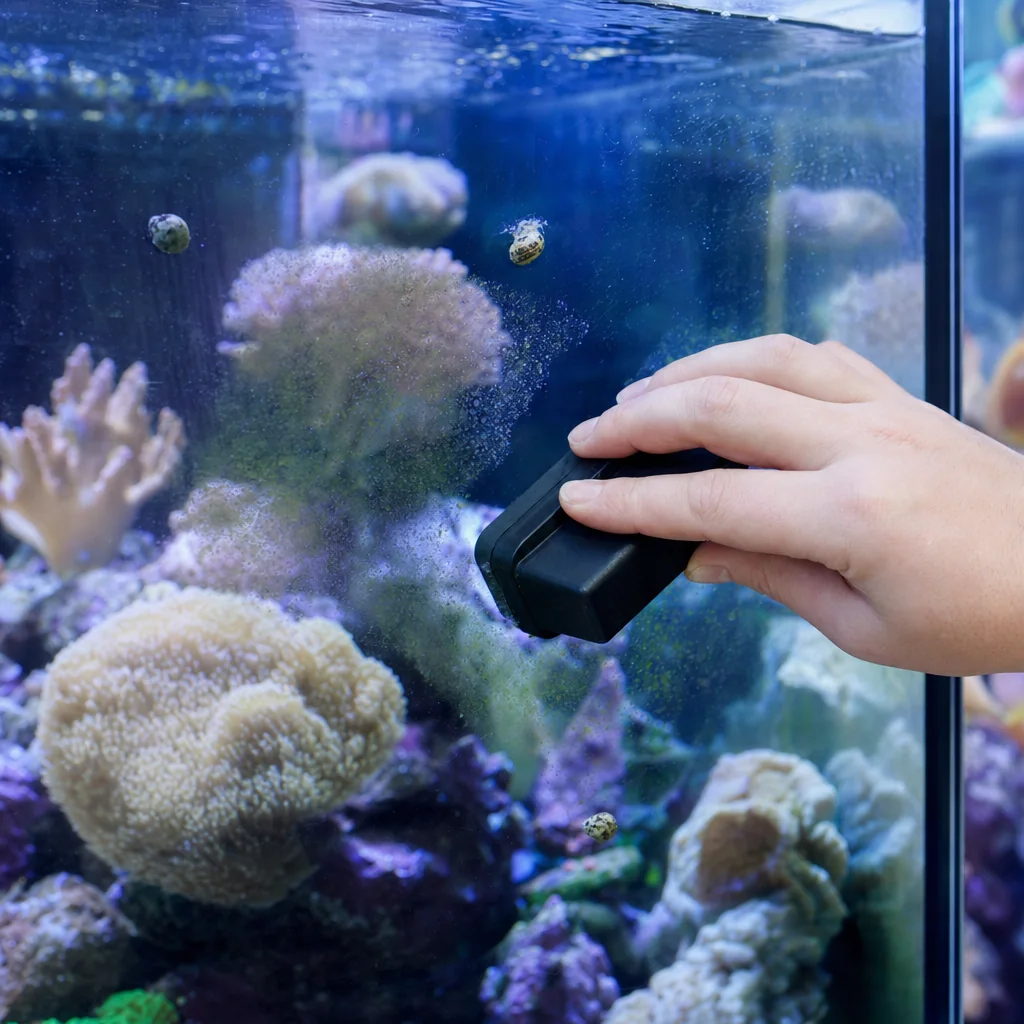
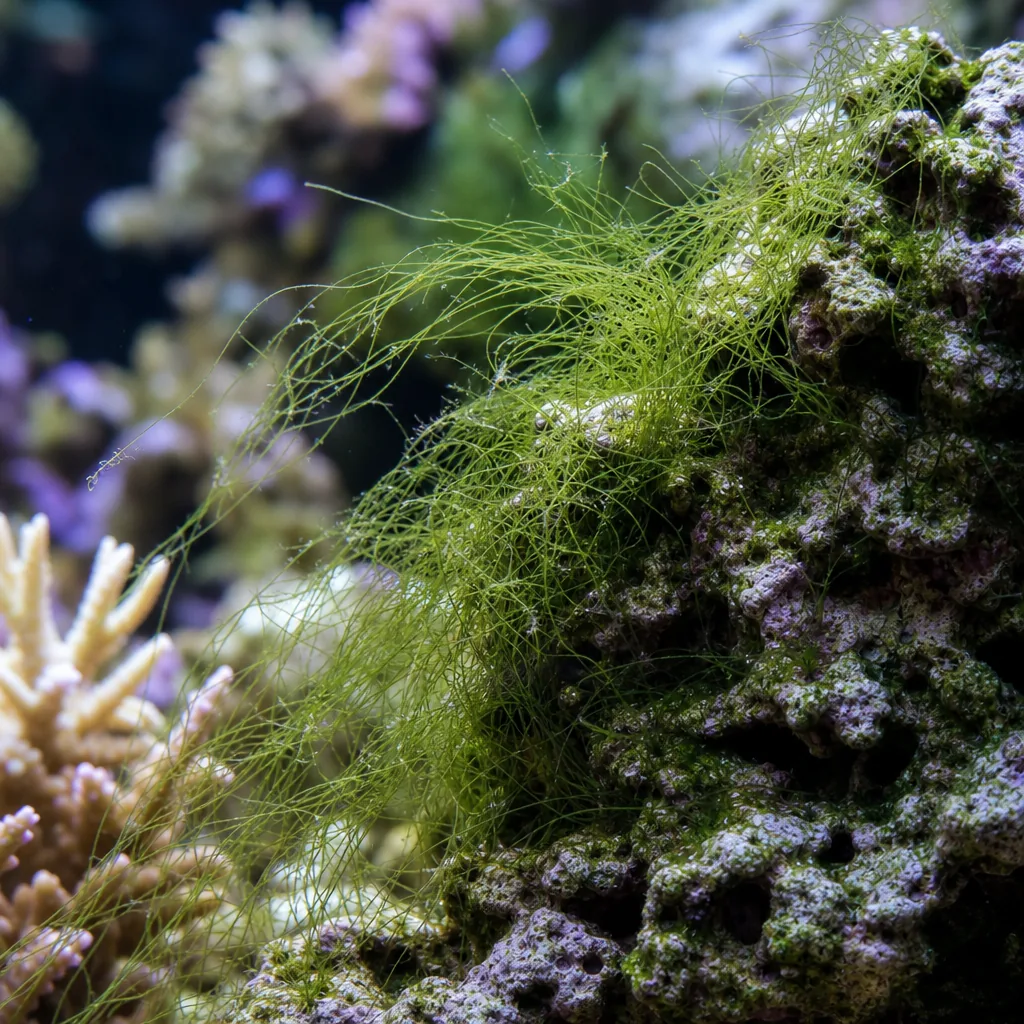
Almost every saltwater tank goes through an ugly phase. Brown films, hairy green tufts, or stubborn red slime show up in the first months and convince new reefers they are doing something terribly wrong. Usually they are not. Algae is a symptom, not a disease, and it appears wherever there are excess nutrients and light to use them. Once you understand that, controlling algae stops being a frustrating game of whack-a-mole and becomes a matter of cutting off the supply.
This guide covers what feeds algae, how to starve it, and the cleanup crew and habits that keep a tank looking clean for the long haul.
Why Algae Appears
Algae needs two things to flourish: nutrients and light. Reduce either and it struggles. The nutrients that matter most are nitrate and phosphate, which build up from fish waste, uneaten food, and even the source water you mix your salt with.
The Common Sources of Excess Nutrients
- Overfeeding. Far and away the biggest culprit. Every uneaten morsel becomes algae fuel.
- Overstocking. More fish means more waste than the system can process.
- Poor source water. Tap water and low-quality RO water can introduce nutrients before the tank even starts.
- Infrequent maintenance. Detritus that accumulates in the rock and sand slowly leaches nutrients.
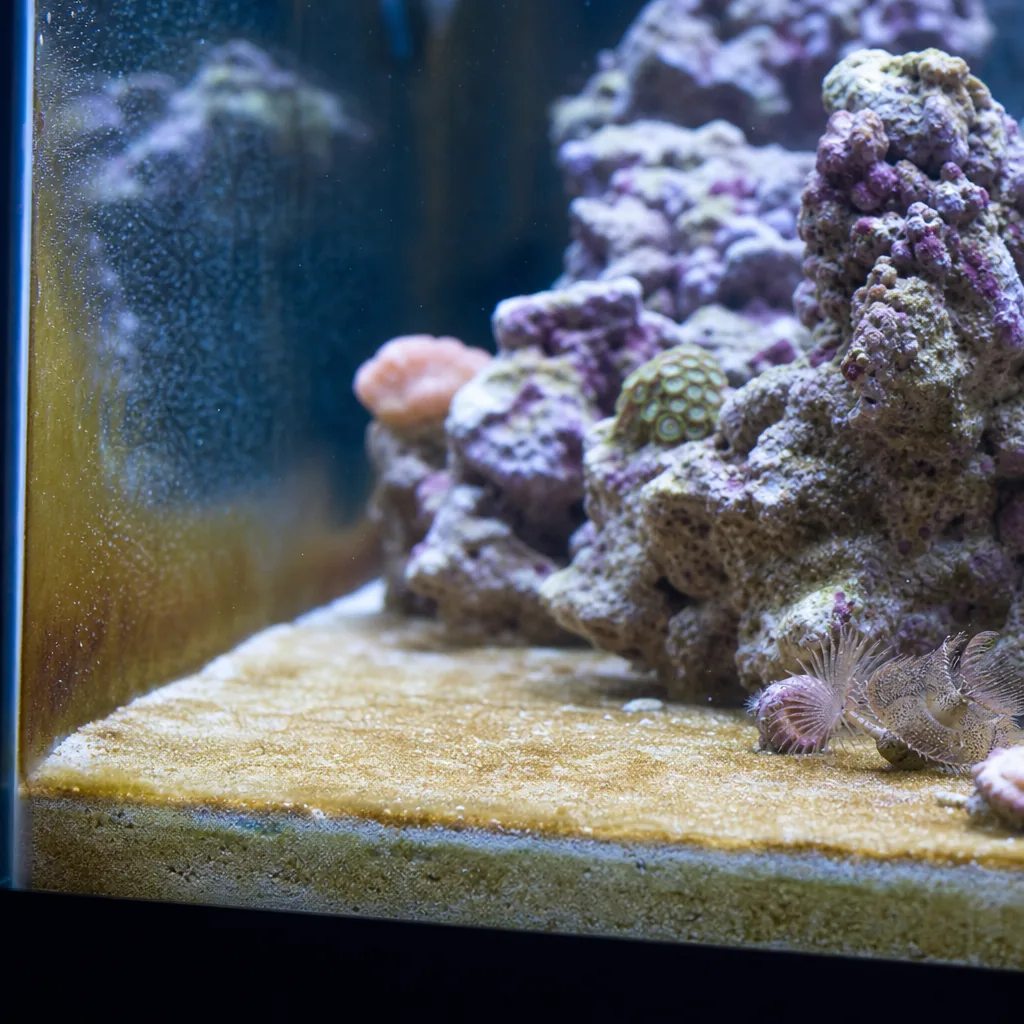
The New Tank Phase Is Normal
Before you tear your tank apart, know that a young system naturally cycles through algae stages as it matures. Diatoms often appear first as a brown dust, followed sometimes by green film or hair algae. This is the tank balancing itself, and with steady husbandry it typically passes. Patience during the first months prevents a lot of overreaction.
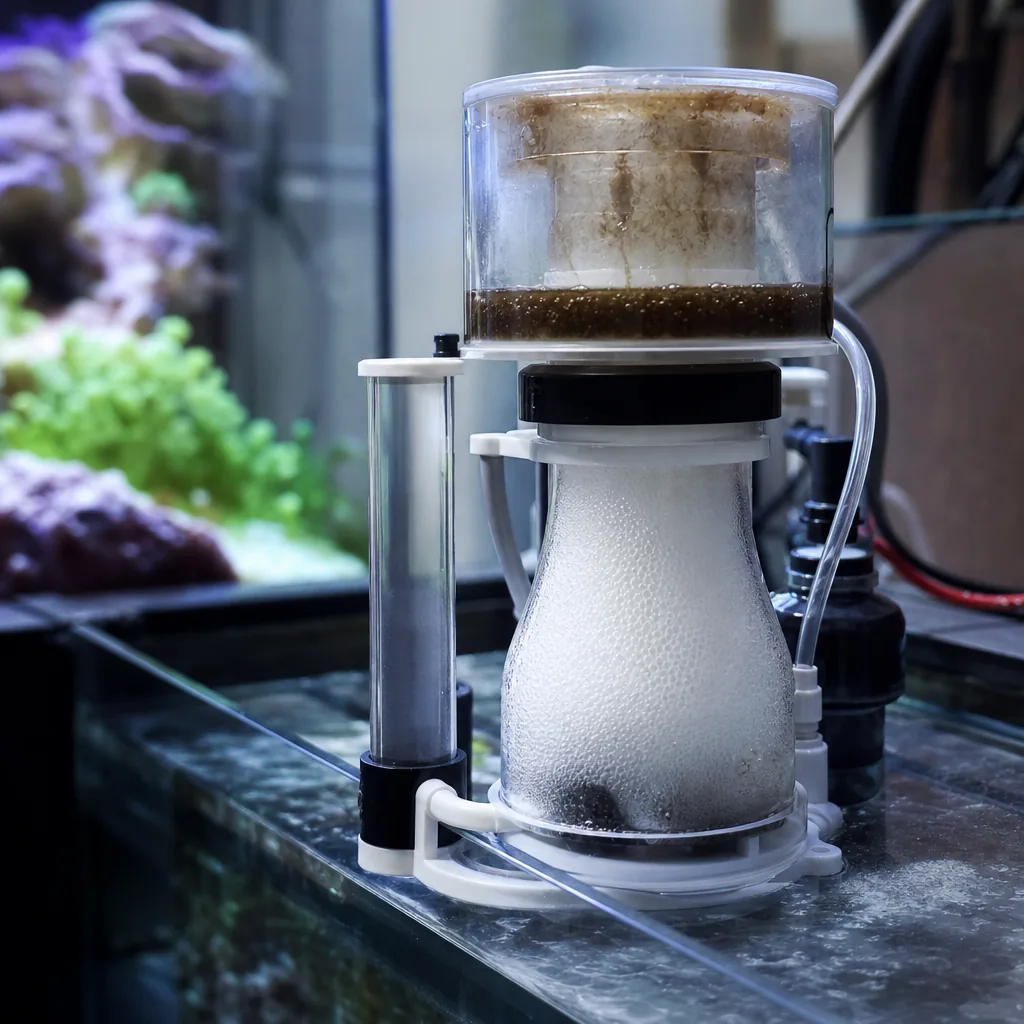
Starving Algae at the Source
The durable fix is always nutrient control. Anything that physically removes algae without addressing nutrients is temporary.
- Feed less, feed deliberately. Offer only what your fish consume in a short window and skip the heavy hand. This single change solves a surprising number of algae problems.
- Use quality source water. Mixing salt with purified RO/DI water keeps phosphate and other contaminants out from the start.
- Keep up with water changes. Regular changes export nutrients before they accumulate.
- Export detritus. Siphon the sand, blow off the rock with a turkey baster, and clean mechanical filtration often so trapped waste does not break down in the tank.
Quality RO/DI units, test kits, and nutrient-export gear are all in our shop, and the saltwater hub covers the husbandry routines that keep nutrients low.
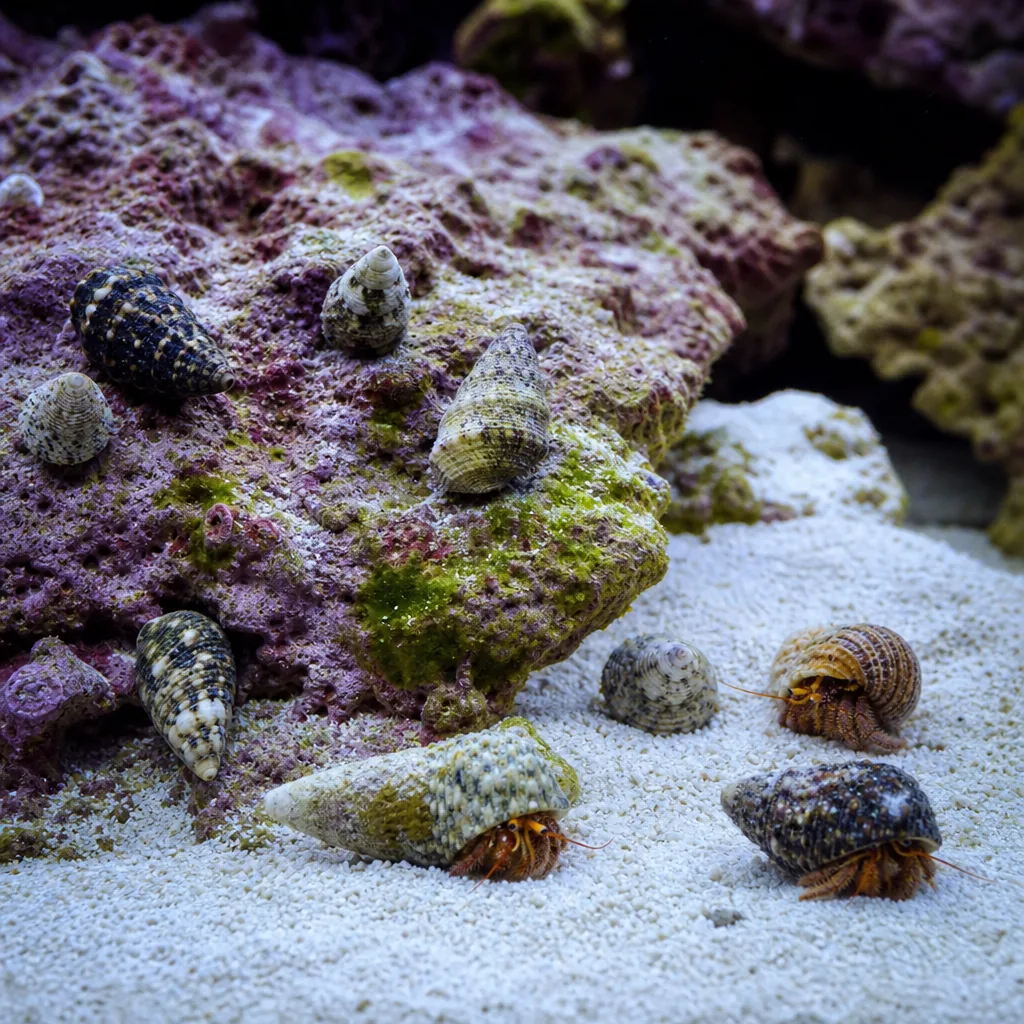
Your Cleanup Crew
A well-chosen cleanup crew of invertebrates grazes algae and stirs detritus, doing maintenance around the clock. They do not replace nutrient control, but they keep surfaces tidy while you manage the source.
What to Include
- Snails graze film algae off glass and rock efficiently.
- Hermit crabs pick at hair algae and scavenge leftover food.
- Certain grazing fish can help in larger tanks, though stocking should suit the tank size.
The goal is a modest, balanced crew matched to your tank, not an army that will starve once the algae is gone.
Lighting and Algae
Light is the other half of the equation. Excessive photoperiods and aging bulbs both favor algae over the animals you actually want. Keeping a sensible lighting schedule, as covered in our reef lighting guide, removes one of algae’s two requirements. If algae explodes right after you increase lighting hours, the connection is usually direct.
Dealing With Specific Problem Algae
Some algae types call for targeted action alongside nutrient control. Stubborn hair algae often needs manual removal in combination with reduced feeding. Red slime, which is actually a cyanobacteria, usually signals flow dead spots and excess nutrients together, so improving circulation helps. The key is that none of these are solved by removal alone; they return unless you fix the underlying nutrient and light conditions.
Keeping a Tank Clean Long-Term
Algae control is not a one-time battle but a steady routine: feed lightly, use clean source water, change water on schedule, export detritus, run a sensible cleanup crew, and keep lighting in check. Do those consistently and the ugly phase fades into a tank that mostly takes care of itself. For more on dialing in the conditions corals love, browse the saltwater guides.
Frequently Asked Questions
Why does my new saltwater tank have brown algae?
Brown dusting is usually diatoms, a normal part of a young tank finding its balance. It typically appears in the first weeks and passes on its own with steady husbandry. Resist the urge to overreact while the tank matures.
What is the main cause of algae in reef tanks?
Excess nutrients, mainly nitrate and phosphate, combined with light. Overfeeding is the single biggest contributor, followed by overstocking and poor source water. Cutting nutrients at the source is the durable fix.
Will a cleanup crew get rid of all my algae?
A cleanup crew grazes surfaces and helps keep things tidy, but it cannot fix the underlying nutrient problem. Use snails and hermit crabs alongside nutrient control, not as a replacement for it.
How do I get rid of red slime algae?
Red slime is a cyanobacteria that thrives in low-flow, high-nutrient conditions. Improve circulation to eliminate dead spots, reduce feeding, and keep up with water changes. Manual removal helps in the short term but it returns unless conditions change.
Does lighting cause algae?
Light is one of algae’s two requirements, so excessive photoperiods and aging bulbs both encourage it. Keeping a sensible lighting schedule removes part of what algae needs. If algae spikes right after you extend your lighting hours, that is usually the cause.