
 Hover to zoom

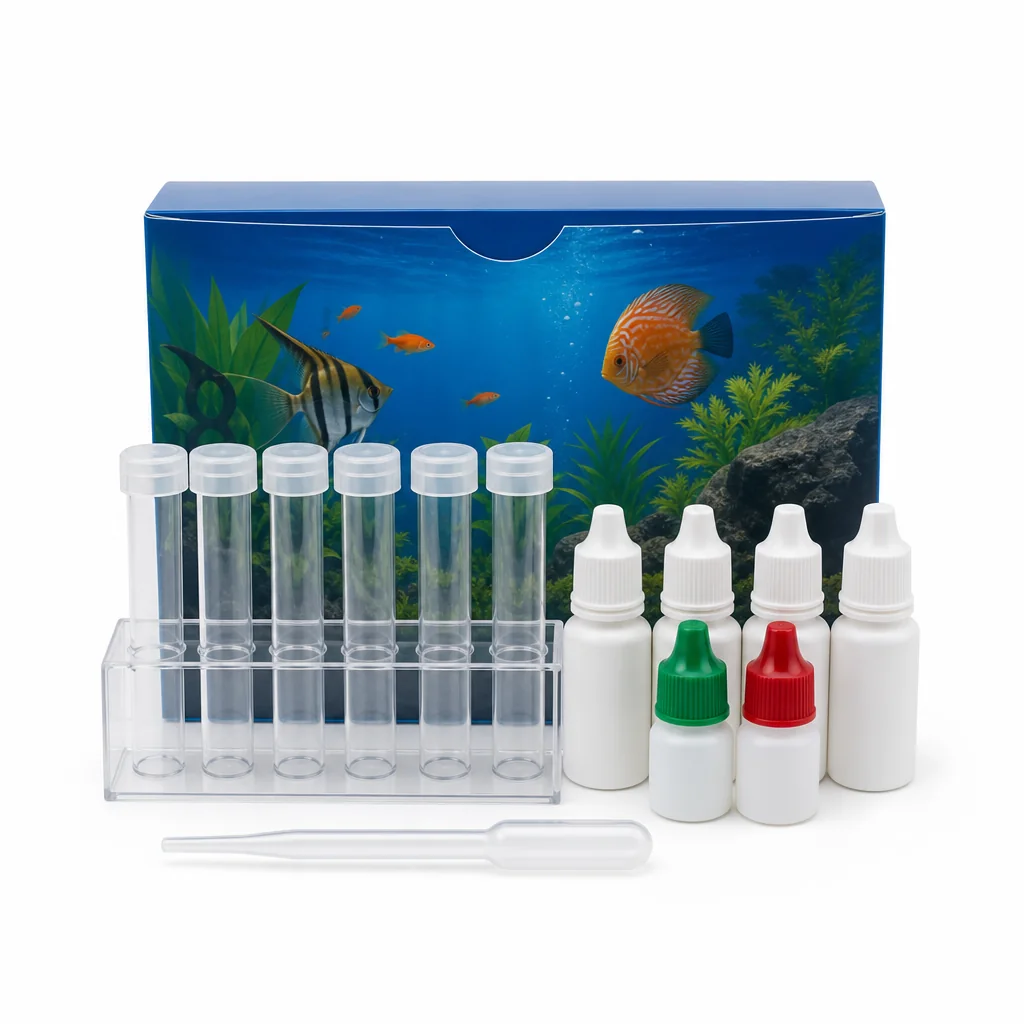
API Freshwater Master Test Kit
A liquid test kit for the core freshwater readings, built for cycling new tanks and checking problems in established ones.
- Liquid reagent test kit for freshwater aquariums
- Covers pH, ammonia, nitrite and nitrate
- Glass test tubes and color chart included
- Useful for cycling and troubleshooting
Check the latest price and availability on Amazon.
View on Amazon →As an Amazon Associate, AquaticRig earns from qualifying purchases.
Pros
- More consistent results than test strips
- Covers the readings that matter in freshwater
- Good for tracking a fishless cycle
Cons
- Each test takes a few minutes
- Color matching takes some practice
At a glance
A liquid test kit for the core freshwater readings, built for cycling new tanks and checking problems in established ones.
The kit to keep on hand for any freshwater tank, especially while cycling.
- Liquid reagent test kit for freshwater aquariums
- Covers pH, ammonia, nitrite and nitrate
- Glass test tubes and color chart included
- Useful for cycling and troubleshooting
Product Specifications
- Brand
- API
- Part number
- 34
- Water type
- Freshwater
- Package dimensions
- 12 x 6 x 5 inches
- Weight
- 2.4 pounds
The API Freshwater Master Test Kit is a set of liquid reagents and glass tubes for testing aquarium water at home. It covers the readings that matter most in a freshwater tank: pH, ammonia, nitrite and nitrate. You fill a tube with tank water, add drops, shake, wait and match the color to a printed chart.
Why liquid tests
Dip strips are quicker, but they’re harder to read precisely and they spoil fast once opened. Liquid kits take a few minutes per test and give more consistent results, which is why the hobby treats them as the reference when cycling a tank or chasing down a problem.
When to test
- Cycling a new tank. Test ammonia and nitrite every day or two. The tank is ready when both read zero and nitrate is showing up. A bottle of Fritz FishLess Fuel gives you a controlled ammonia source for a fishless cycle.
- After adding fish. Check weekly for the first month, since a new bioload can cause an ammonia spike.
- When something looks off. Gasping fish, cloudy water or sudden deaths are reasons to test before you change anything else.
- Routine checks. In a stable tank, testing every week or two tells you when to change water.
Getting accurate readings
Rinse the tubes in tank water before and after each test. Hold the bottles straight so every drop is the same size, and follow the shaking steps in the nitrate test closely, since that one is the easiest to get wrong. Read colors against the chart in daylight or under a white light, not the tank’s colored LEDs.
If you get a high ammonia or nitrite reading, do a partial water change with conditioned water, then test again the next day.
Who should look elsewhere
This is a freshwater kit. Reef keepers need separate tests for alkalinity, calcium and salinity, such as the Salifert alkalinity kit. If color matching is hard for you, a digital meter for pH may be easier to read.
The Bottom Line
The kit to keep on hand for any freshwater tank, especially while cycling. It takes a few minutes per test, but the readings are more reliable than strips.
View on Amazon →As an Amazon Associate, AquaticRig earns from qualifying purchases.
Frequently Asked Questions
Does it work for saltwater?
No. It's made for freshwater tanks. Reef tanks need separate tests for things like alkalinity and calcium.
How do I know my tank has cycled?
Ammonia and nitrite both read zero and nitrate is present.
Why does my nitrate reading look wrong?
The nitrate test needs firm shaking of one reagent bottle and the tube. Follow the timing in the instructions closely.