
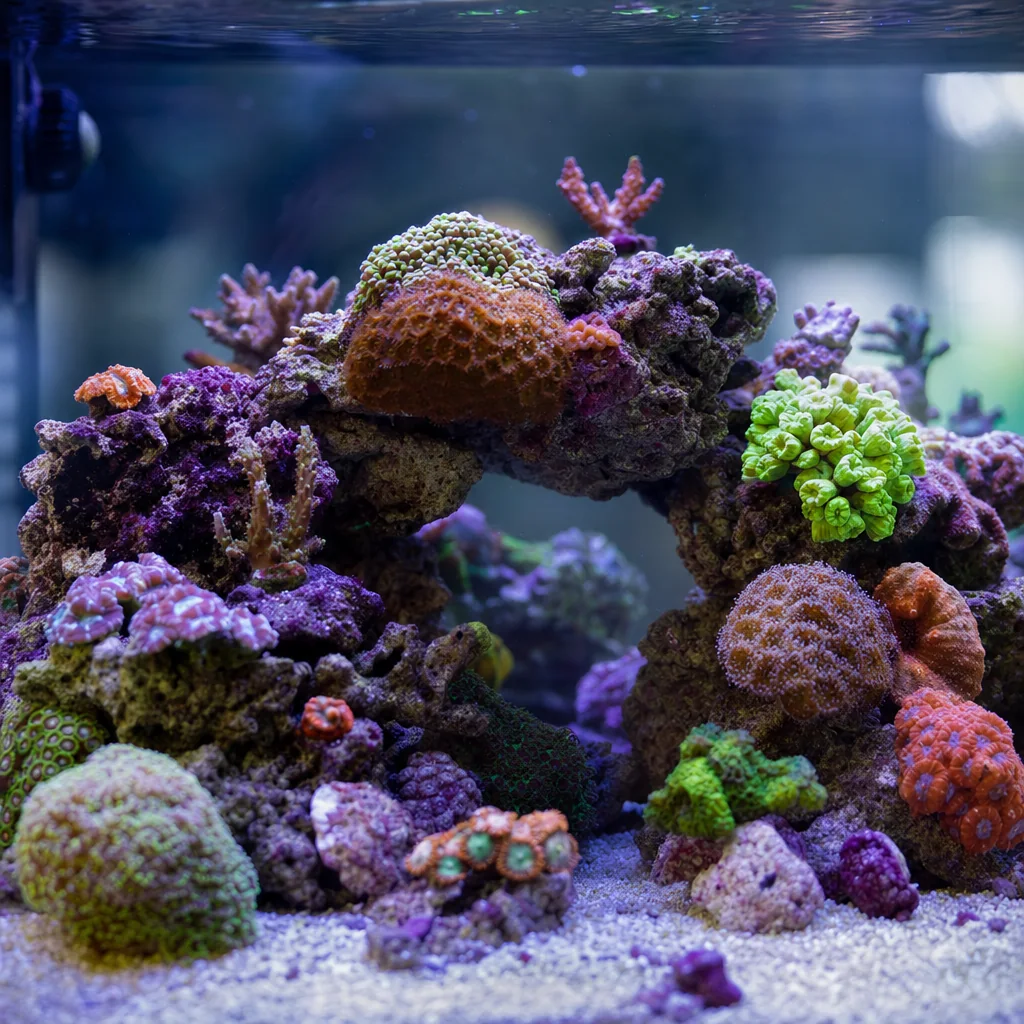
The rock you put in a reef tank isn’t just decoration — it’s the biological heart of the system and the structure everything else is built around. So one of the first real decisions a new reefer faces is whether to start with live rock or dry rock. There’s no universally correct answer, but there are clear trade-offs in cost, speed, biodiversity, and the risk of importing pests. Understanding those trade-offs lets you pick the foundation that fits your patience and your goals.
What “Live Rock” Actually Means
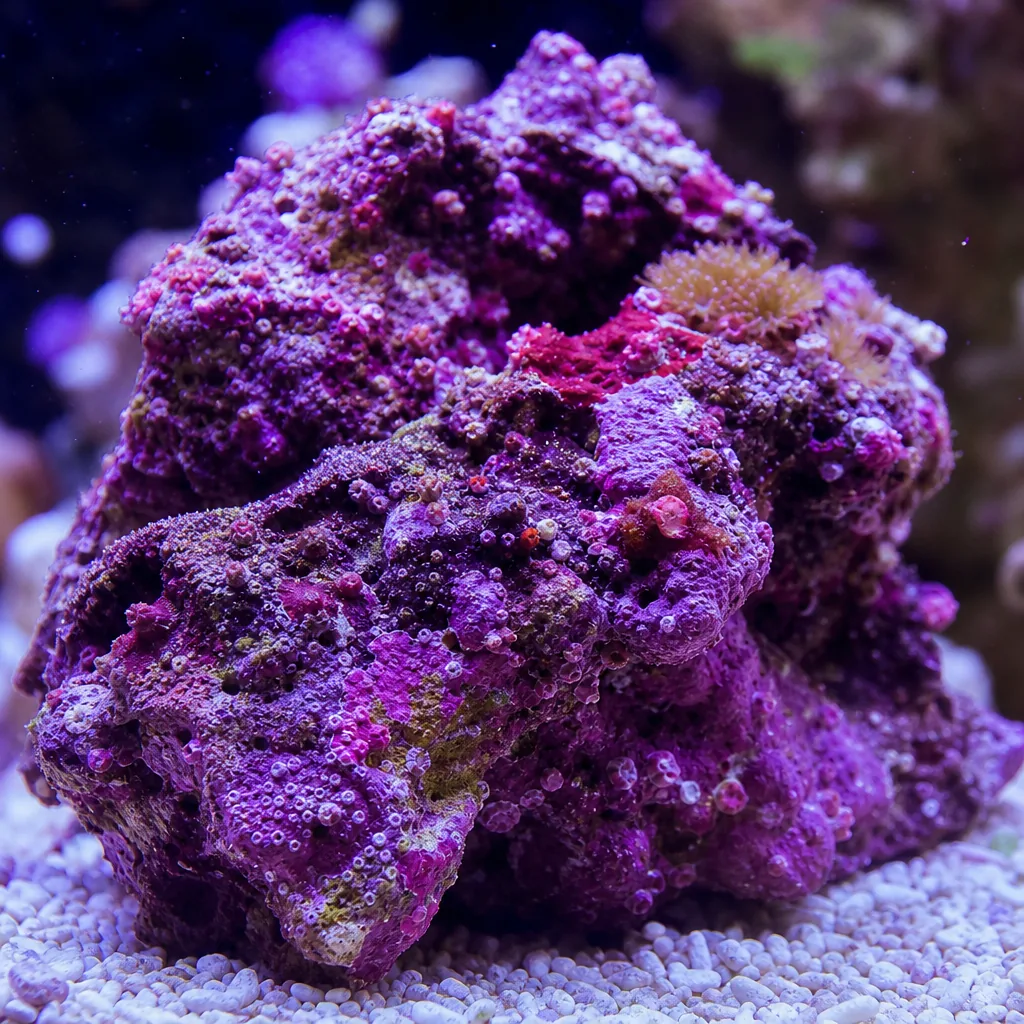
Live rock is porous calcium-carbonate rock — usually old, broken-down coral skeleton — that has been colonized by beneficial bacteria, coralline algae, and a host of tiny organisms. The “live” part refers to that biological population. It comes either harvested from the ocean (increasingly restricted) or, more commonly today, as aquacultured rock grown in ocean farms or cured in established systems.
The big appeal is instant biology. Live rock arrives already seeded with the nitrifying bacteria that drive your tank’s filtration, plus a diversity of beneficial life that mature tanks rely on.
Live rock advantages
- Faster cycling — it brings an established bacterial colony, often shortening the cycle.
- Built-in biodiversity — copepods, beneficial worms, coralline algae, and other microfauna that enrich the ecosystem.
- A more natural, mature look from day one.
Live rock drawbacks
- Higher cost — living rock is more expensive than inert dry rock.
- Pest risk — this is the big one. Live rock can smuggle in unwanted hitchhikers like aiptasia anemones, bristleworms, mantis shrimp, or nuisance algae.
- Die-off — organisms that perish in transit can cause an ammonia spike, so it often needs curing.
What Dry Rock Offers
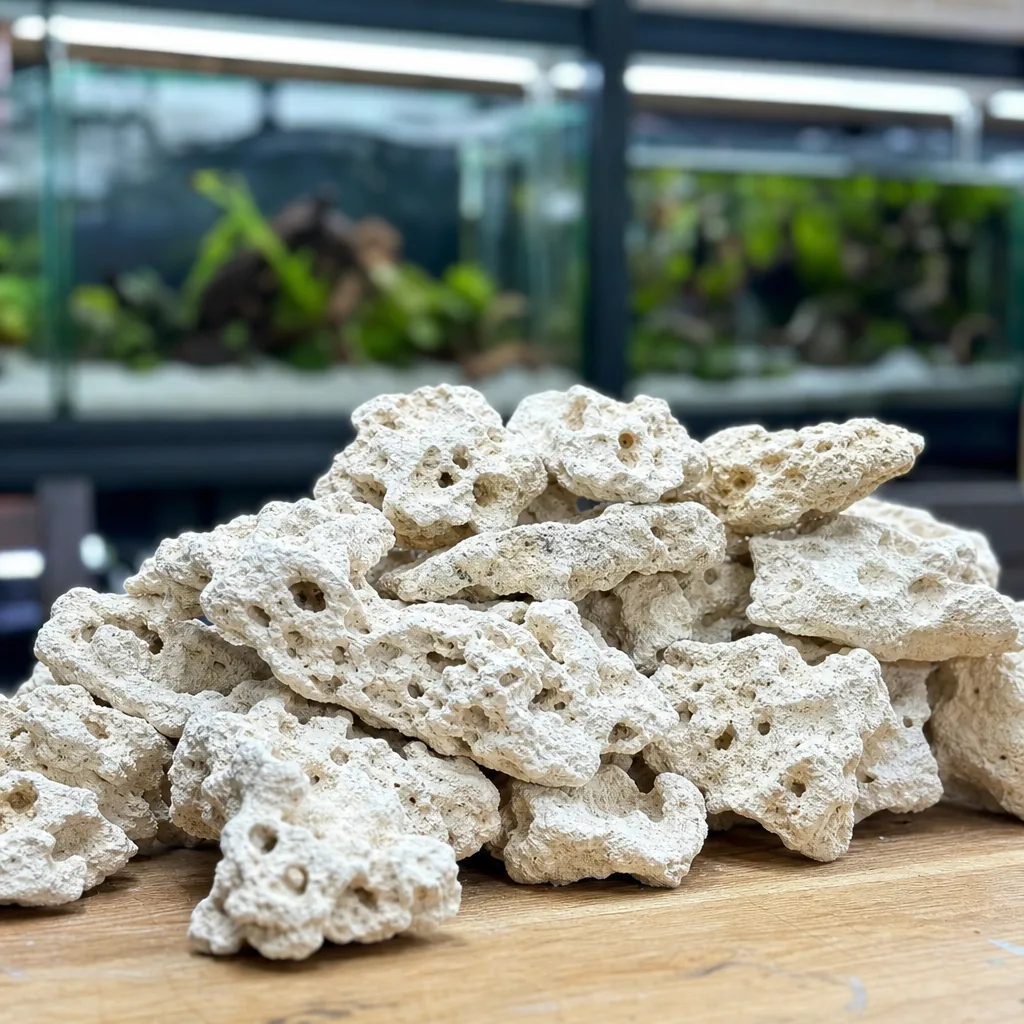
Dry rock is the same kind of porous reef rock, but inert — it has no living organisms on it. It’s either mined ancient reef rock or man-made aquacultured rock that hasn’t been seeded. Because it’s lifeless going in, it sidesteps the biggest live-rock problem entirely.
Dry rock advantages
- No pests, guaranteed. Sterile rock can’t carry aiptasia, mantis shrimp, or unwanted algae — the single biggest reason many reefers choose it.
- Lower cost than live rock.
- Total aquascaping freedom — clean, dry rock is easy to handle, glue, and arrange into elaborate structures before it ever gets wet.
- Lighter and cleaner to ship and work with.
Dry rock drawbacks
- Slower to cycle — with no established bacteria, the tank takes longer to become biologically active.
- No starting biodiversity — you build the ecosystem from scratch.
- The “ugly” phase — new dry rock systems often go through a stretch of diatom and algae blooms as they mature.
The Hybrid Approach
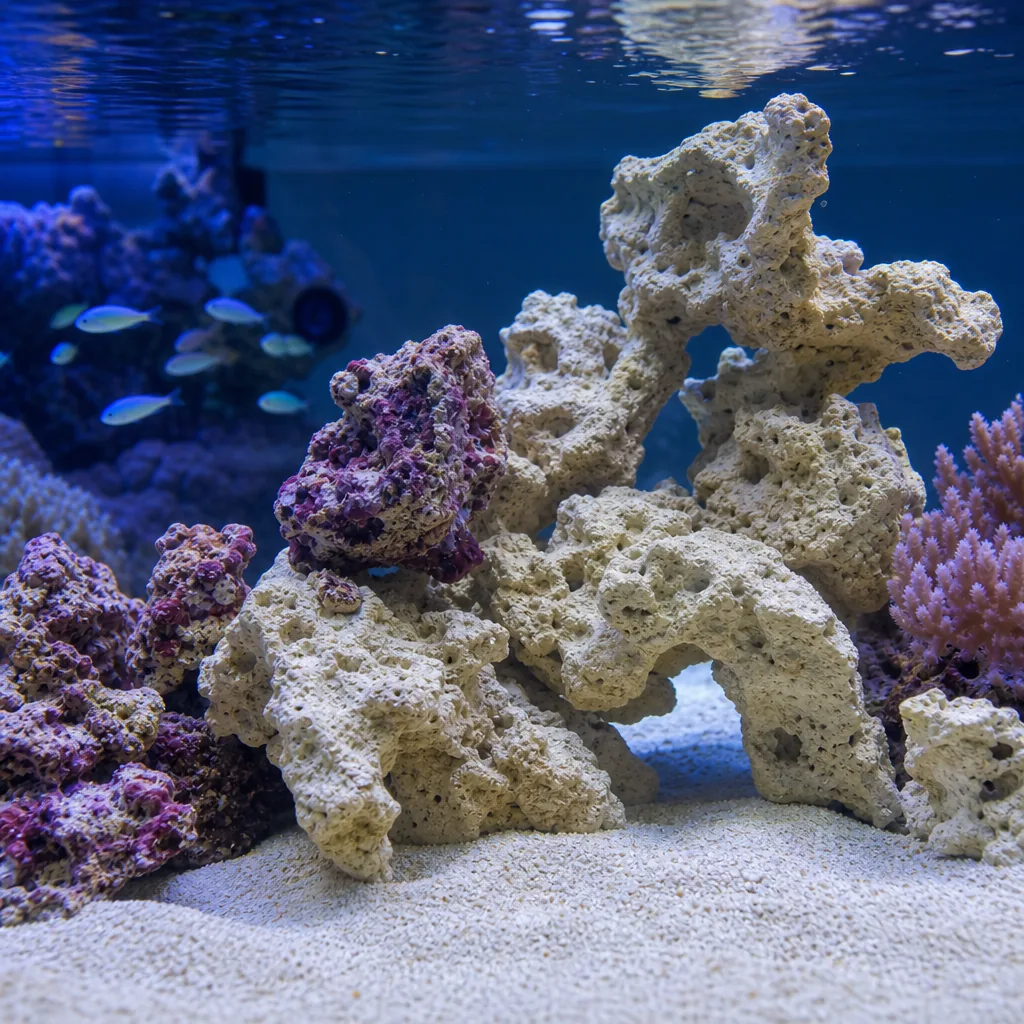
Here’s what many experienced reefers actually do: start mostly with dry rock and seed it with a small amount of live rock or live sand. You get the pest-control and cost benefits of dry rock as the bulk of your structure, while a piece or two of quality live rock introduces beneficial bacteria and microfauna to kick-start the biology. Over a few months, the live organisms spread across the dry rock and it all becomes “live” anyway.
This is often the best of both worlds, and it’s the approach I’d steer most beginners toward. Our saltwater setup guide covers fitting rock into the broader build.
Curing Rock Before It Goes In
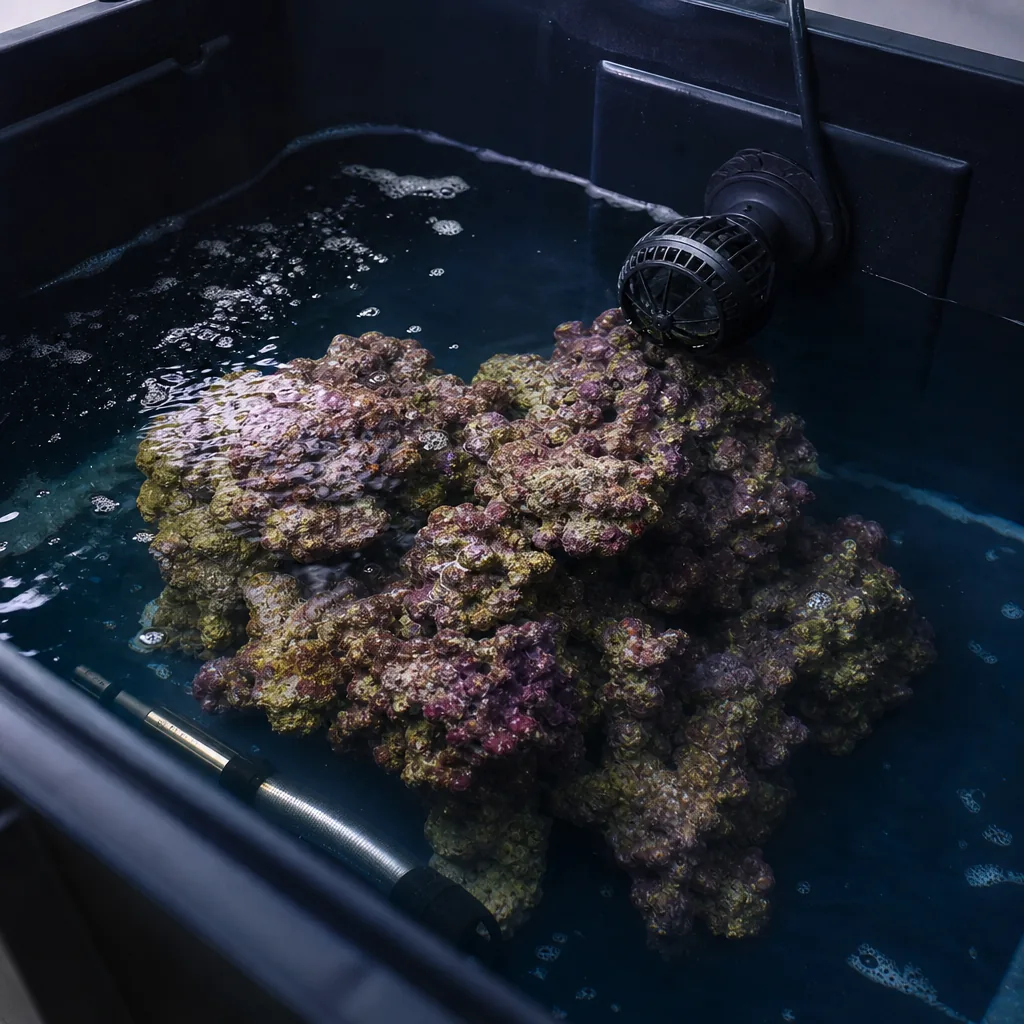
Whichever you choose, curing matters. Live rock with die-off needs curing in a separate container with water changes until ammonia and nitrite read zero, so the spike happens outside your display. Dry rock benefits from a rinse and, if it’s mined rock, sometimes an acid bath or extended soak to leach out phosphates that would otherwise fuel algae later. Skipping this step is a common cause of stubborn early algae problems.
How to Decide
Match the choice to what you care about most:
- Want the safest, cleanest start and don’t mind waiting? Go dry rock, seeded with a little live rock.
- Want the fastest cycle and richest biodiversity, and willing to manage pest risk? Go live rock from a reputable source.
- On a budget? Dry rock stretches further.
- Building an elaborate aquascape? Dry rock is far easier to glue and shape.
You’ll find both options and the epoxy and aquascaping supplies to build with on our recommended gear page.
Conclusion
Neither live rock nor dry rock is simply “better” — they’re different tools. Live rock buys speed and biodiversity at the cost of money and pest risk; dry rock buys safety, control, and savings at the cost of patience. For most newcomers, a mostly-dry-rock build seeded with a little live rock delivers a clean, controllable start that matures into a thriving reef. Whatever you choose, cure it properly and let the biology develop on its own timeline. Explore more reef foundation guides on AquaticRig.
Frequently Asked Questions
Is live rock or dry rock better for beginners?
Many experienced reefers steer beginners toward mostly dry rock seeded with a little live rock. This gives you the pest-control and cost benefits of dry rock while a small amount of live rock kick-starts the beneficial bacteria.
Does dry rock take longer to cycle?
Yes, because it starts with no established bacteria, so the tank takes longer to become biologically active. Seeding it with live rock, live sand, or a bacterial starter speeds the process considerably.
What pests can come with live rock?
Live rock can carry hitchhikers like aiptasia anemones, bristleworms, mantis shrimp, and nuisance algae. Curing and inspecting rock carefully reduces the risk, but it’s never fully eliminated, which is why some reefers avoid live rock entirely.
Why does my new dry-rock tank have an algae outbreak?
New systems commonly pass through an “ugly phase” of diatoms and algae as the rock and biology mature. It usually resolves on its own with patience, good husbandry, and sometimes by leaching phosphates from the rock before use.
Can dry rock become live rock over time?
Yes — once submerged in a cycled tank, dry rock gradually gets colonized by bacteria, coralline algae, and microfauna, effectively becoming live rock. Seeding it with a piece of live rock simply speeds that transition along.