
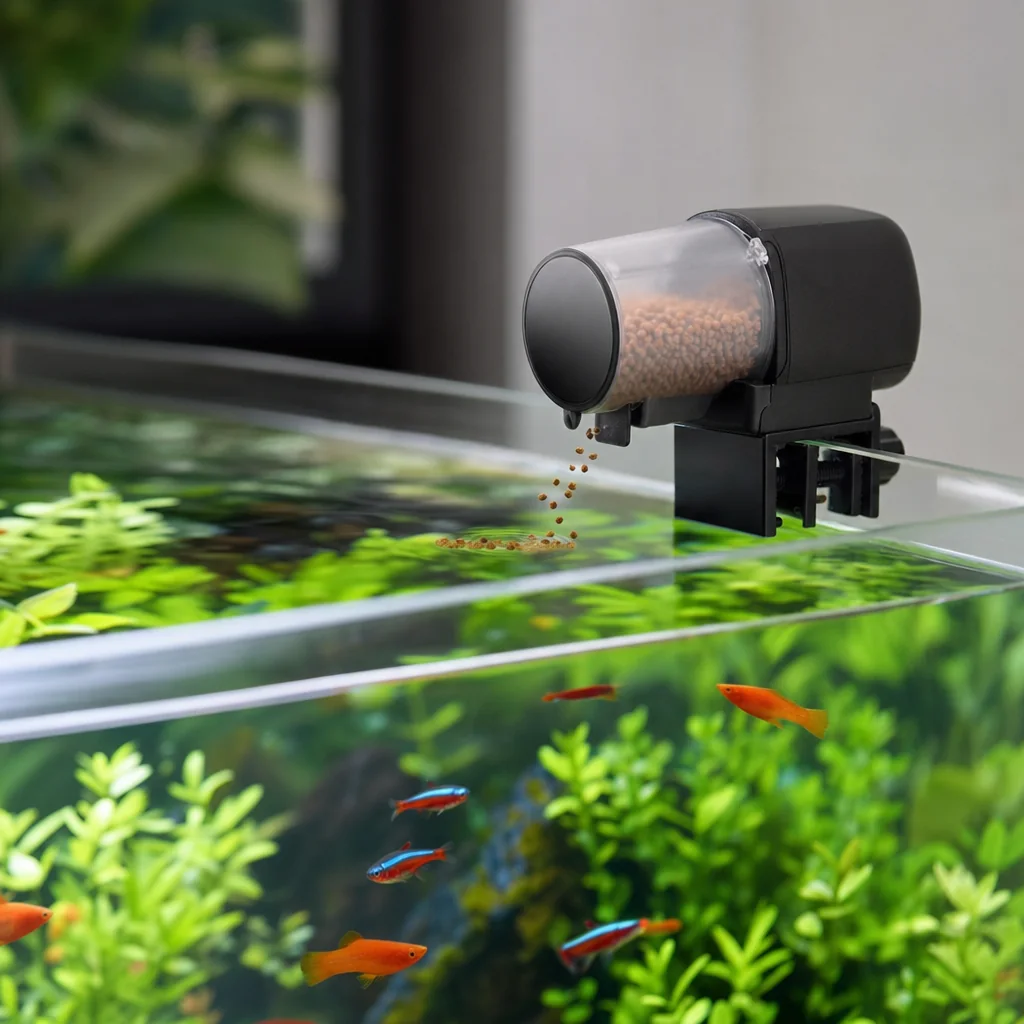
One of the most common worries new fishkeepers have is what happens to the tank when they leave town. It feels like you’re abandoning living animals that depend on you daily. The reassuring reality is that a healthy, established aquarium is remarkably self-sufficient — far more than a dog or cat. With a little preparation, most tanks sail through a vacation with no one touching them at all.
The key is understanding what actually needs attention while you’re gone and what doesn’t. Fish don’t need daily feeding nearly as much as people assume, and the biggest vacation risks usually aren’t hunger at all.
The Good News: Fish Don’t Need Constant Feeding
Adult fish in good health can comfortably go several days to a couple of weeks without food. In the wild, food isn’t guaranteed daily, and fish are built to handle lean stretches. A short trip — a long weekend, even a week — usually requires no feeding plan at all. Fasting healthy fish for a few days is genuinely fine and can even be good for them.
This matters because the worst thing you can do before leaving is over-prepare with food. A neighbor who “helps” by dumping in extra food, or an automatic feeder set too generously, causes far more deaths than a few days of fasting ever would. Uneaten food rots, ammonia spikes, and you come home to a disaster.
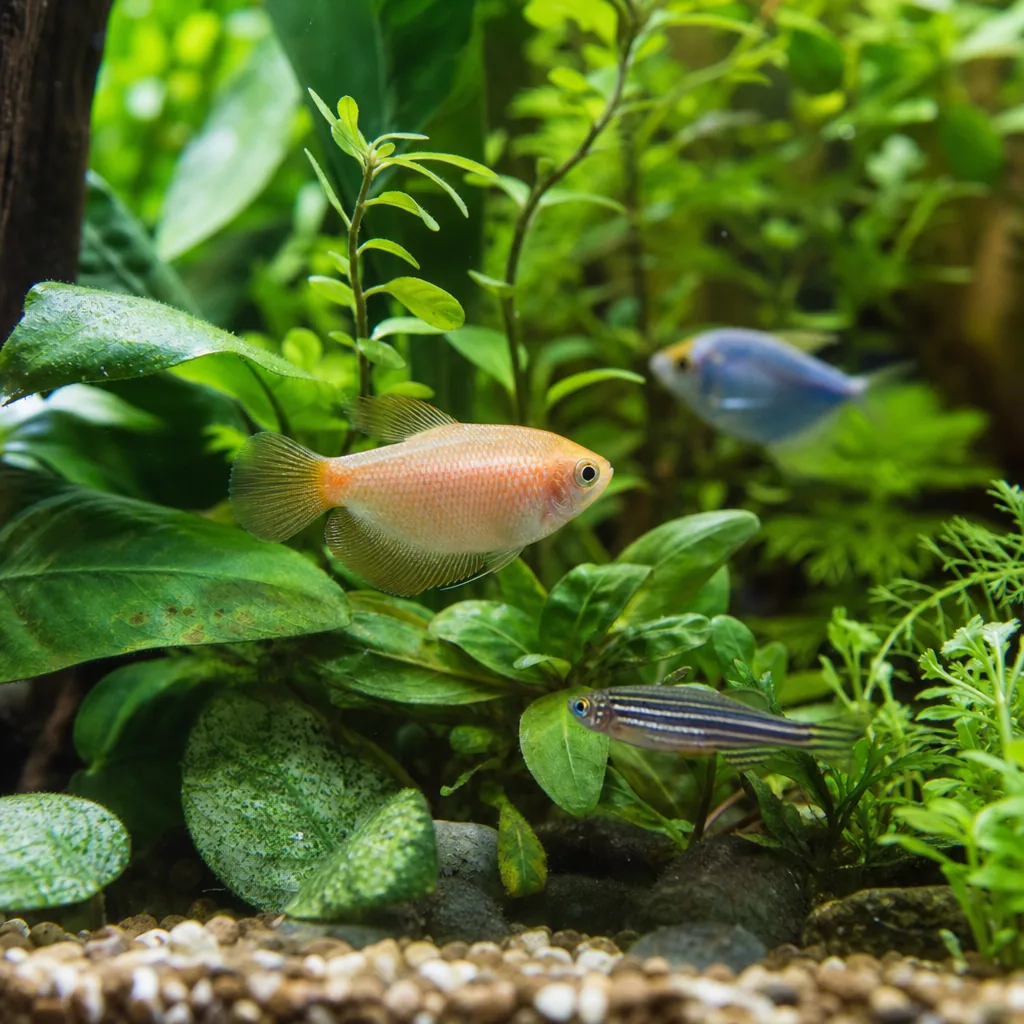
Planning by Trip Length
A weekend (1-3 days)
Do nothing special. Feed normally before you leave, top off evaporation, and go. A healthy tank won’t notice you were gone.
Up to about a week
Most established tanks handle a week with no feeding at all, especially community tanks with some algae and biofilm for grazing. If you’d rather feed, a quality automatic feeder dialed in before you leave is the safest option — test it for several days first so you know the portion is small and correct.
Two weeks or longer
This is where a plan helps. A reliable automatic feeder, a trusted (and instructed) fish sitter, or a combination is worth setting up. For longer trips, the priorities shift toward equipment reliability and water stability more than feeding.
Pre-Vacation Checklist
Run through this a few days before you leave — not the morning of — so you have time to fix anything that’s off.
- Do a water change a day or two before departure so the tank starts your trip with pristine water and low nitrate.
- Test your parameters and confirm everything is stable. Don’t leave with a problem brewing.
- Clean or service the filter a few days out so flow is strong and it won’t clog while you’re gone.
- Top off evaporation and account for more loss over a long trip — a lower water level concentrates waste and can expose equipment.
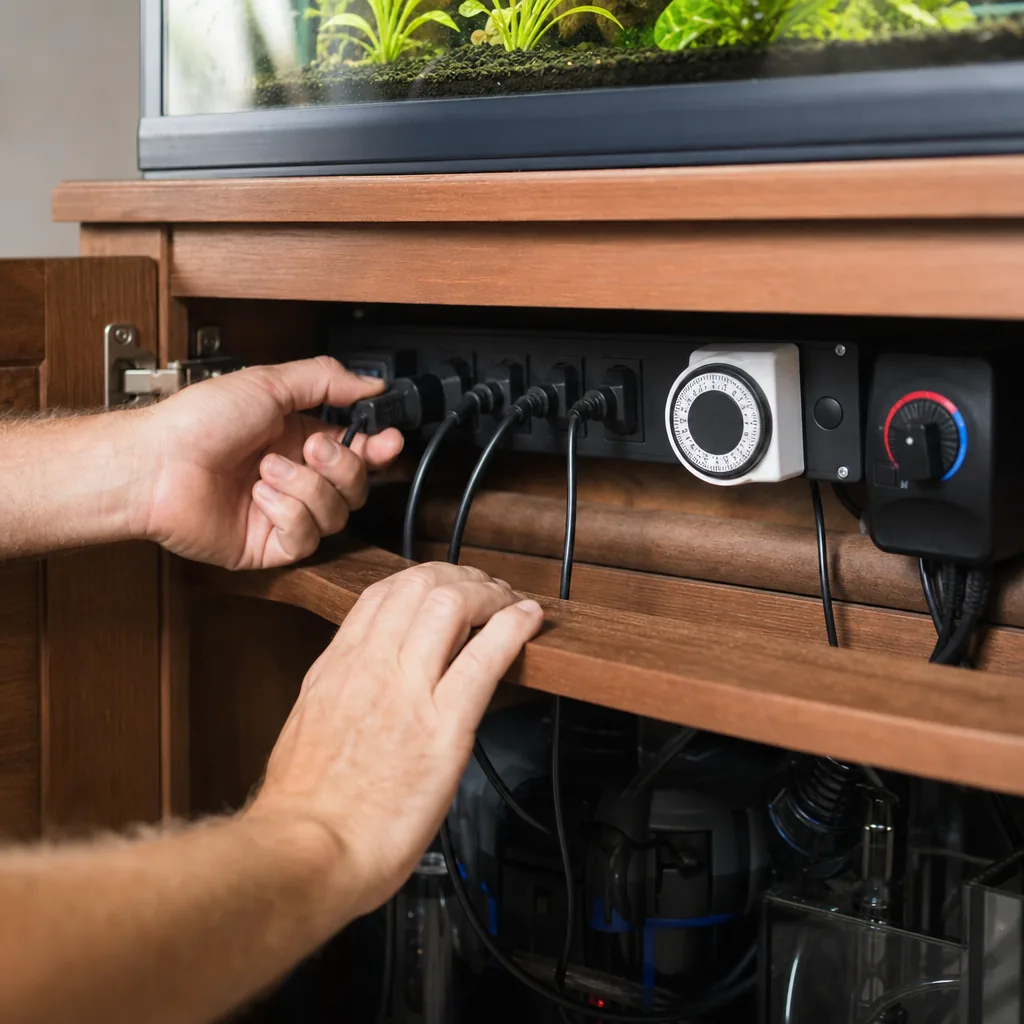
- Check the heater and lighting timer so temperature stays stable and the light cycle runs automatically.
- Don’t add new fish or plants right before leaving. You want a settled, stable tank, not one adjusting to change.
Automatic Feeders: Use With Caution
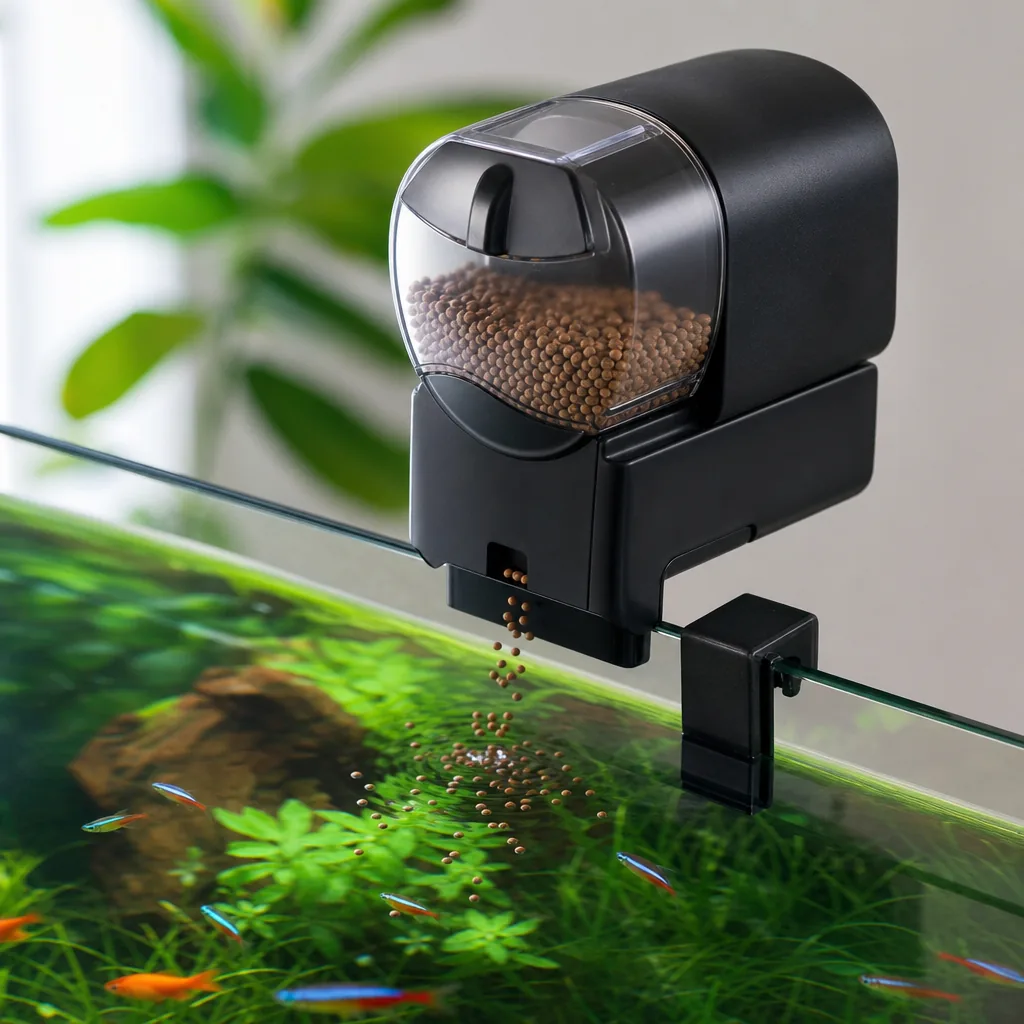
Auto feeders are useful, but only when set up correctly and tested in advance. The two rules that matter:
- Underfeed, don’t overfeed. A small portion once a day is plenty. It’s far safer for fish to be a little hungry than for excess food to foul the water.
- Test before you trust. Run the feeder for several days while you’re home to confirm it dispenses the right amount and doesn’t jam in humid air.
You can find feeders, timers, and other set-and-forget gear in our aquarium gear shop.
The Bigger Risks: Equipment and Power
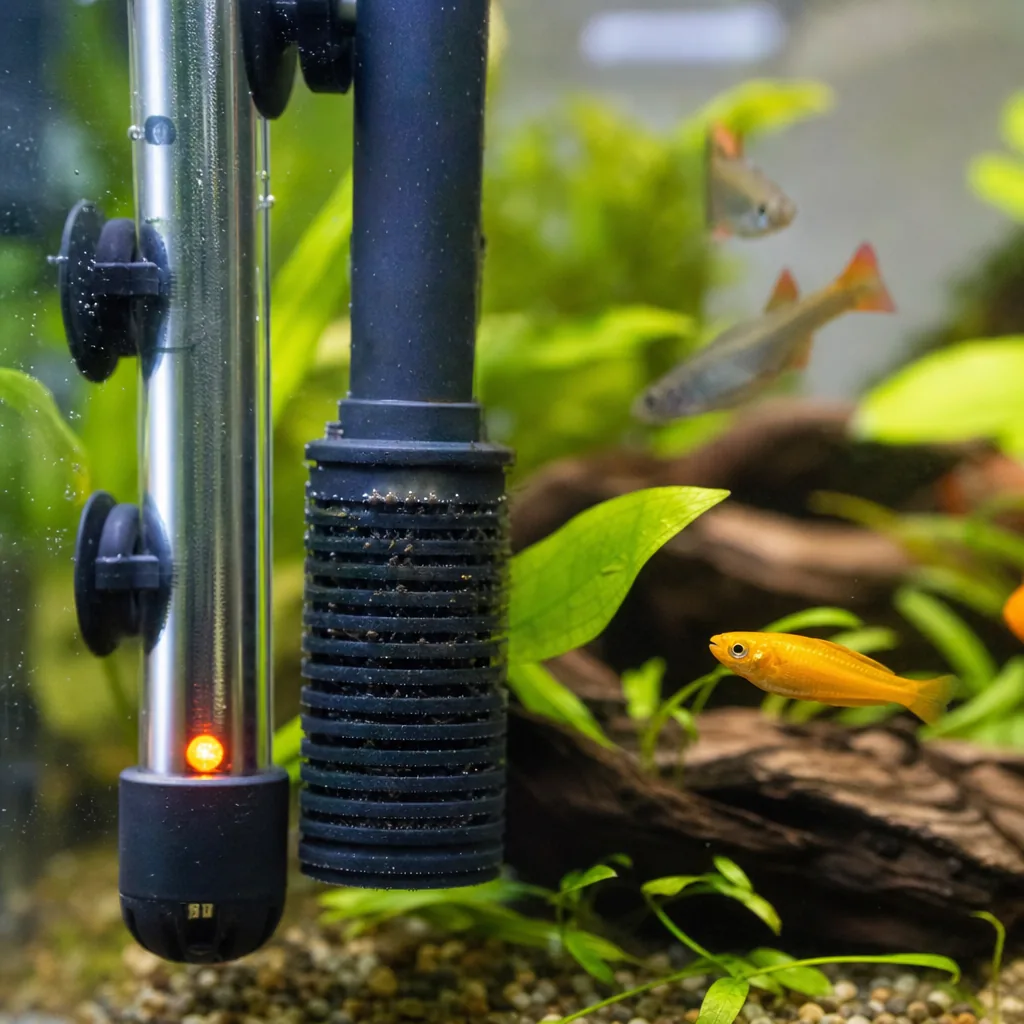
For most trips, hunger isn’t the real danger — equipment failure and power outages are. A heater that sticks on, a filter that clogs, or a multi-day blackout does far more harm than a missed meal. Reduce the risk by:
- Servicing equipment before you leave so it’s running clean and reliable.
- Putting lights on a timer so the photoperiod stays consistent.
- Asking a neighbor simply to glance at the tank every few days and call you if something looks obviously wrong — not to feed or adjust anything.
If you live somewhere with frequent outages, a battery-powered air pump is cheap insurance to keep water oxygenated if the filter stops.
Briefing a Fish Sitter
If you do use a sitter for a long trip, give them written instructions and pre-portion the food into labeled containers or a daily pill organizer so there’s no guessing. Make the instruction crystal clear: only feed the pre-measured amount, and when in doubt, feed less. Most fish-sitting disasters come from a well-meaning helper deciding the fish look hungry.
Final Thoughts
An established aquarium is one of the most travel-friendly pets you can own. Prepare a few days ahead, lean toward underfeeding, prioritize equipment reliability over food, and resist the urge to over-manage. Do that and you’ll come home to the same healthy freshwater tank you left — often looking even better for the quiet.
Frequently Asked Questions
How long can fish go without food?
Healthy adult fish can typically go several days to two weeks without feeding. Short trips need no feeding plan at all, and a brief fast is harmless — far safer than the risks of overfeeding before you leave.
Should I use an automatic feeder?
They’re useful for trips of a week or more, but only if you test them at home first and set them to underfeed. A jammed or overgenerous feeder causes more harm than a few days of fasting.
What’s the biggest risk while I’m away?
Equipment failure or a power outage, not hunger. A stuck heater, clogged filter, or blackout does far more damage than a missed meal, so service your gear and consider a backup air pump before leaving.
Should I have a neighbor feed my fish?
Only if it’s a long trip and you give precise, pre-portioned instructions. Most fish-sitting disasters happen when a helper decides the fish look hungry and adds extra food, so emphasize feeding less, not more.
Do I need to do anything before a weekend trip?
No — for one to three days, feed normally before you go, top off any evaporation, and leave. A healthy, established tank won’t notice you were gone.