
A power outage turns a balanced aquarium into a still box of water. The filter stops, the heater goes cold and the surface goes flat. Most fish can ride out a few hours without trouble, but a long outage can kill fish and the bacteria that keep the water safe. A little planning makes the difference.
What actually threatens fish when the power goes out
Oxygen. Fish rely on the filter and air pump to move water across the surface, where oxygen dissolves. Once the water goes still, oxygen falls, faster in warm water and in crowded tanks.
Temperature. Tropical fish feel it as the tank cools to room temperature. A sudden drop of several degrees causes stress, and in winter the room itself can get cold.
Filter bacteria. The bacteria living in the filter need oxygen-rich water passing over them. After a few hours of no flow, especially in a sealed canister, they begin to die off, and the water inside can turn foul.
The first hour
- Don’t feed. Food adds waste and uses oxygen while it rots. Fish can go several days without eating without harm.
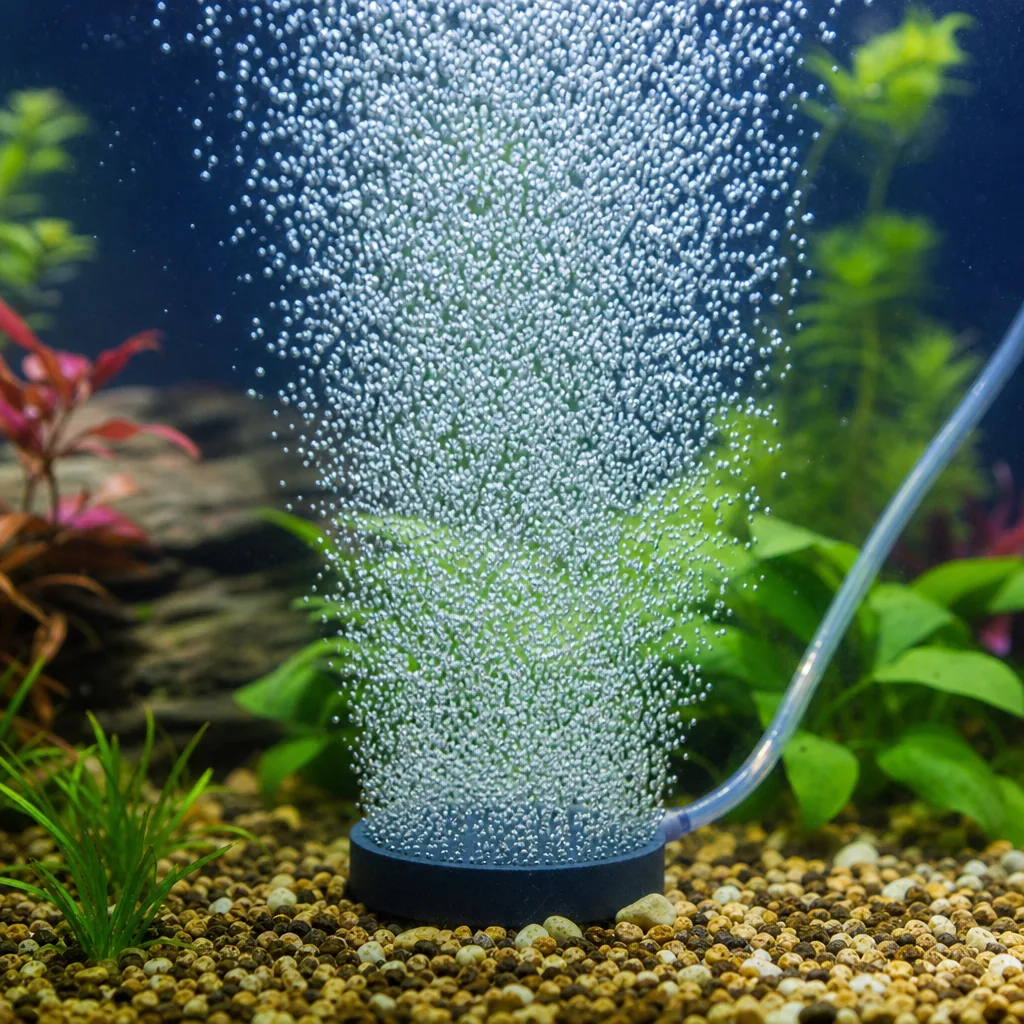
- Add surface movement. A battery-powered air pump is the single most useful item to own. Without one, gently scoop water with a clean cup and pour it back from a height every half hour or so to stir the surface.
- Cover the tank. Close the lid and wrap the sides in blankets or towels to hold heat in. Leave a gap for air exchange.
- Keep the room as stable as you can. Close doors and keep the area out of drafts.
If it lasts more than a few hours
For heat, fill sealed bottles or zip bags with hot tap water (if your water heater still works) or water warmed on a gas stove, and float them in the tank. Swap them as they cool, and check the thermometer so you don’t overshoot. In summer, the opposite problem shows up, and floating bottles of ice can keep a tank from overheating. Make changes gradually, aiming for a few degrees at most over several hours.
In a canister filter, the water inside turns stagnant first. If power is off for more than a few hours, unplug the canister before power returns. You may want to rinse the media in tank water and refill the canister before restarting, so you don’t flush a slug of dead water and waste into the tank.
Hang-on-back and sponge filters are more forgiving. Keeping a battery air pump running a sponge filter keeps those bacteria alive the whole time.
Reef and saltwater tanks
Reefs are less tolerant because corals depend on constant flow and stable temperature. A battery backup made for powerheads keeps water moving on at least one pump. Many controllable DC pumps can run off a battery pack at reduced speed for many hours. Skip the protein skimmer and lights until power returns. Corals can handle a day in the dark much better than they can handle no flow.
When the power comes back
- Check that the heater is working and the temperature is climbing back slowly.
- Restart filters one at a time. Watch for a cloud of debris from canisters, and rinse media in tank water if needed.
- Test ammonia and nitrite over the next couple of days. Some of the bacteria may have died, so a mini-cycle is possible.
- Do a partial water change if ammonia shows up, and feed lightly for a few days.
- Remove any dead fish or invertebrates right away.
Our guide to lowering ammonia helps if readings climb.
Backup gear worth owning
- Battery air pump. Inexpensive and runs for many hours on D-cell batteries. Some switch on automatically when the power cuts out.
- Uninterruptible power supply (UPS). A computer UPS can run an air pump or small powerhead for a long time. It won’t run a heater for long, because heaters draw a lot of power.
- Portable power station. Larger lithium battery units can power pumps for a day or more, and some can handle a heater for a while.
- Generator. For long outages and big systems. Run it outdoors only.
- Insulation. A few blankets or foam panels that fit your tank.
- A thermometer you can read without power, such as a glass or stick-on type.
Plan before you need it
Write a short checklist and keep it near the tank with the battery pump and some fresh batteries. If you travel, give whoever checks the house the same list. Our page on leaving an aquarium during a vacation covers the rest of that prep, and a sponge filter is an easy backup filter to keep seeded in the tank.
In summary
Stop feeding, keep the surface moving, and hold the temperature steady. Shut down canisters during long outages, restart carefully, and watch ammonia afterward. Pick up a battery air pump from the AquaticRig shop before the next storm.
Outage backup items: a battery-friendly mini air pump, an AQUANEAT sponge filter to keep bacteria alive, and Seachem Stability if the biofilter takes a hit.
Frequently Asked Questions
How long can fish survive without a filter?
Most can handle several hours in a tank that isn’t overstocked. With a battery air pump moving the surface, many tanks are fine for a day or more.
Should I do a water change during an outage?
Usually not. New water may be the wrong temperature and you may not be able to dechlorinate or heat it properly. Wait until power returns unless ammonia is high.
Will my beneficial bacteria die?
Some may. Bacteria on gravel, decor and in sponge filters with air flow tend to survive best. Testing for a few days after the outage tells you whether a mini-cycle is underway.
Can I use a car inverter to power my tank?
A small inverter can run an air pump. Don’t leave a car running in an enclosed garage, and remember that heaters draw much more power than an inverter can usually supply.