
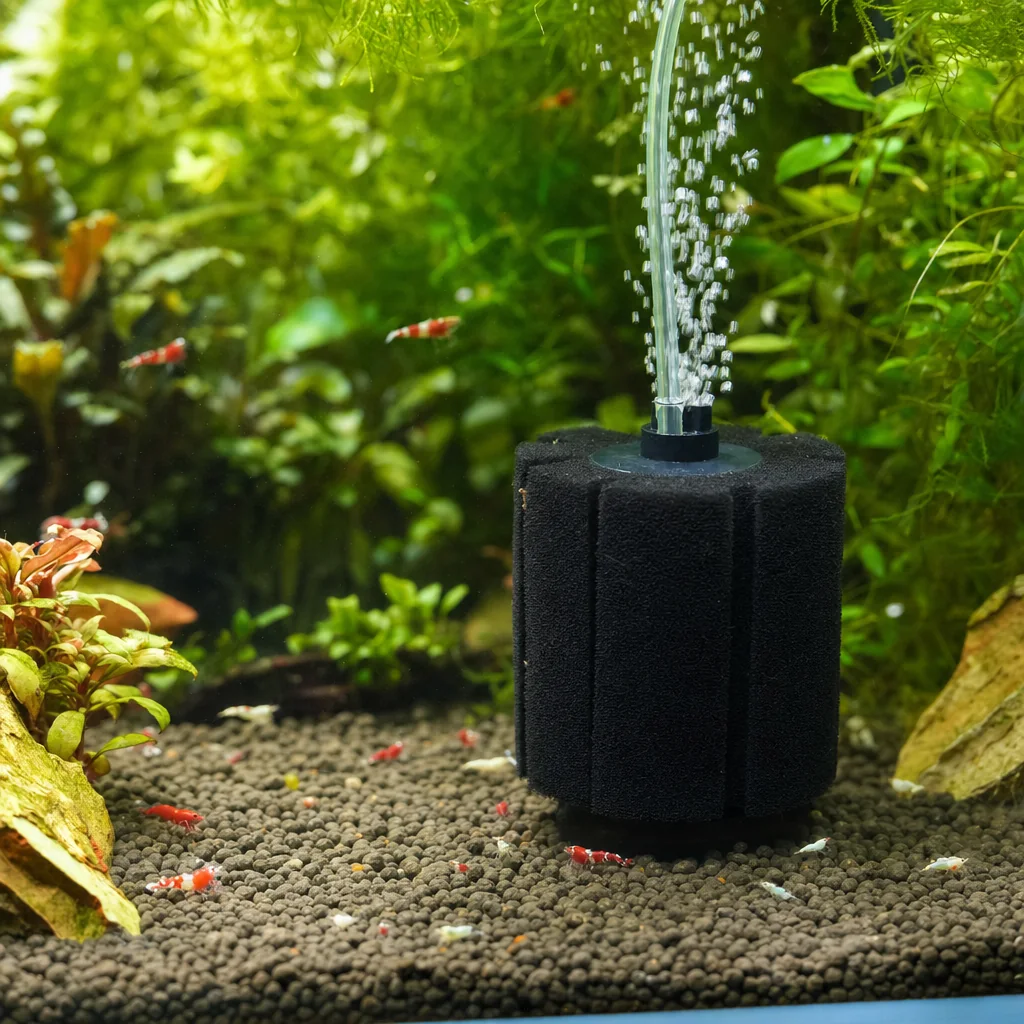
Walk into the fish room of almost any long-time hobbyist and you’ll find sponge filters everywhere — bubbling away in fry tanks, quarantine setups, shrimp tanks, and tucked behind the rockwork of main displays. They’re the cheapest filter you can buy, they look about as low-tech as filtration gets, and yet experienced aquarists swear by them. There’s a reason for that, and once you understand what a sponge filter actually does well, you’ll probably want one running too.
This guide explains how sponge filters work, the situations where they outperform fancier gear, and how to set one up and maintain it for years of trouble-free service.
How a Sponge Filter Works
A sponge filter is beautifully simple. An air pump pushes air through a tube, and rising bubbles pull water through a porous sponge. That sponge does two jobs at once:
- Mechanical filtration — the sponge physically traps debris and floating particles.
- Biological filtration — the enormous surface area inside the sponge becomes home to the beneficial bacteria that convert toxic ammonia and nitrite into far less harmful nitrate.
That second job is the important one. The sponge is essentially a giant bacteria colony with gentle water flow running through it — which is exactly what a healthy aquarium needs.
Where Sponge Filters Shine
Fry and breeding tanks
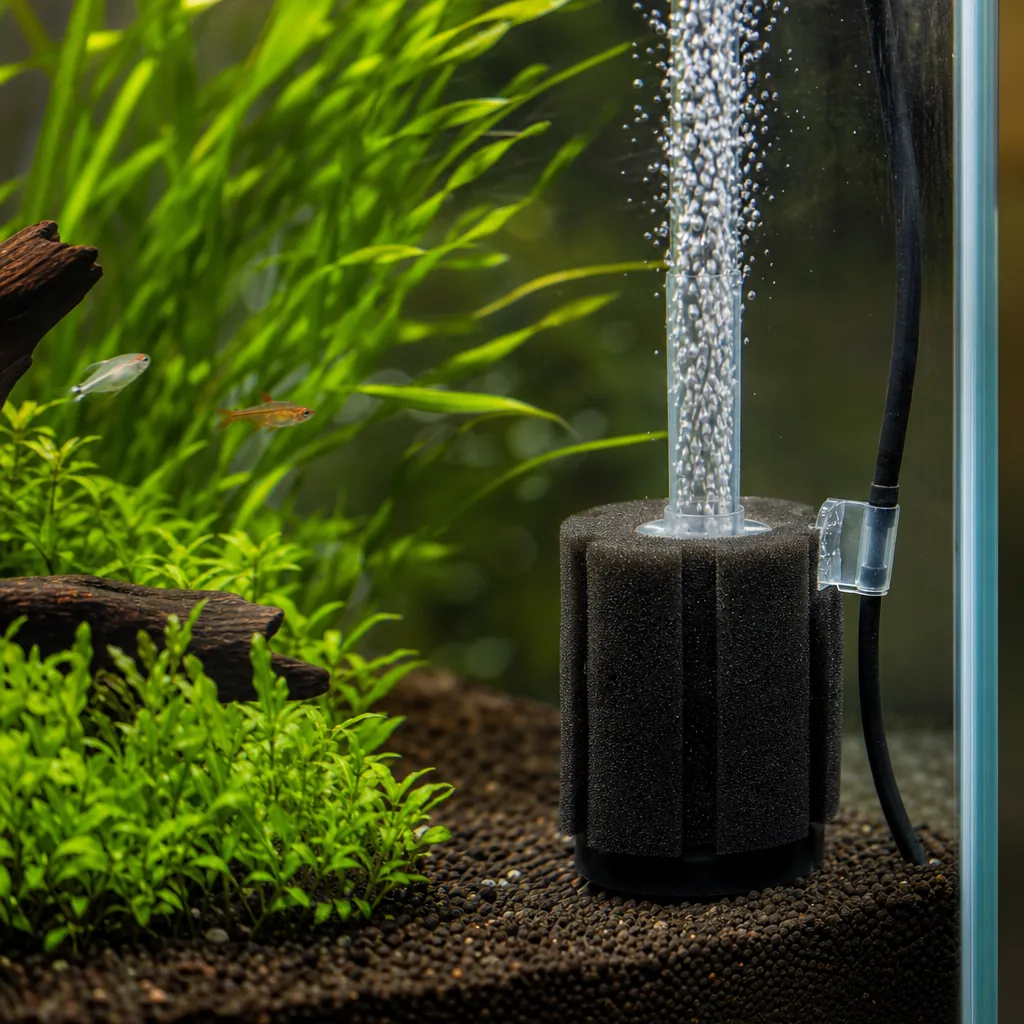
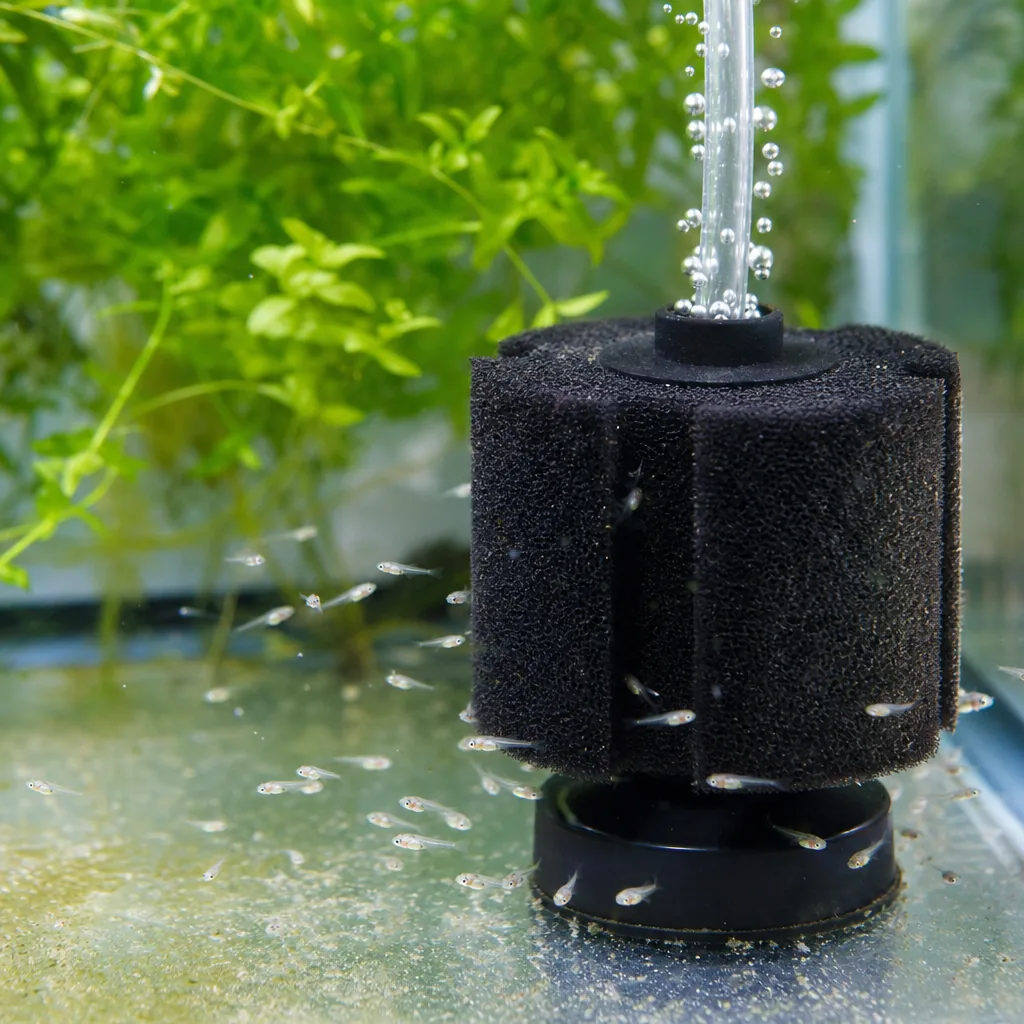
This is the classic use case. A powered hang-on or canister filter will happily suck up baby fish and tiny shrimp. A sponge filter provides solid filtration with a gentle intake that won’t harm even the smallest fry, which is why breeders rely on them almost exclusively.
Quarantine and hospital tanks
A sponge filter is the perfect quarantine filter. It provides biological filtration without the carbon found in many cartridge filters — and carbon strips out medication, which defeats the purpose when you’re treating a sick fish. Keep a spare sponge “seeded” in an established tank and you can set up an instant cycled quarantine the moment you need one. For more on quarantine, see our disease and health guides.
Shrimp tanks
Shrimp keepers love sponge filters because shrimp graze on the biofilm that grows on the sponge, and the gentle flow suits delicate invertebrates. There’s no intake to trap or injure them.
Backup and supplemental filtration
Even on a main display with a powerful primary filter, a sponge running quietly in the corner adds biological capacity and gives you insurance if the main filter ever fails.
The Real Advantages
Beyond the specific use cases, sponge filters offer a set of qualities that explain their cult following:
- Cheap to buy and run. The filter itself costs very little, and replacement sponges last years.
- Nearly indestructible. There’s no impeller to seize, no cartridge to replace on a schedule, no electronics to fail. An air pump is the only powered part.
- Huge biological capacity. A well-colonized sponge is a powerful nitrifying engine.
- Gentle, even flow. Ideal for bettas, fry, shrimp, and any fish that dislikes strong currents.
- Extra surface agitation. The rising bubbles boost gas exchange and oxygen at the surface.
You can find reliable sponge filters and quiet air pumps on our recommended gear page.
Setting One Up
Installation takes about five minutes:
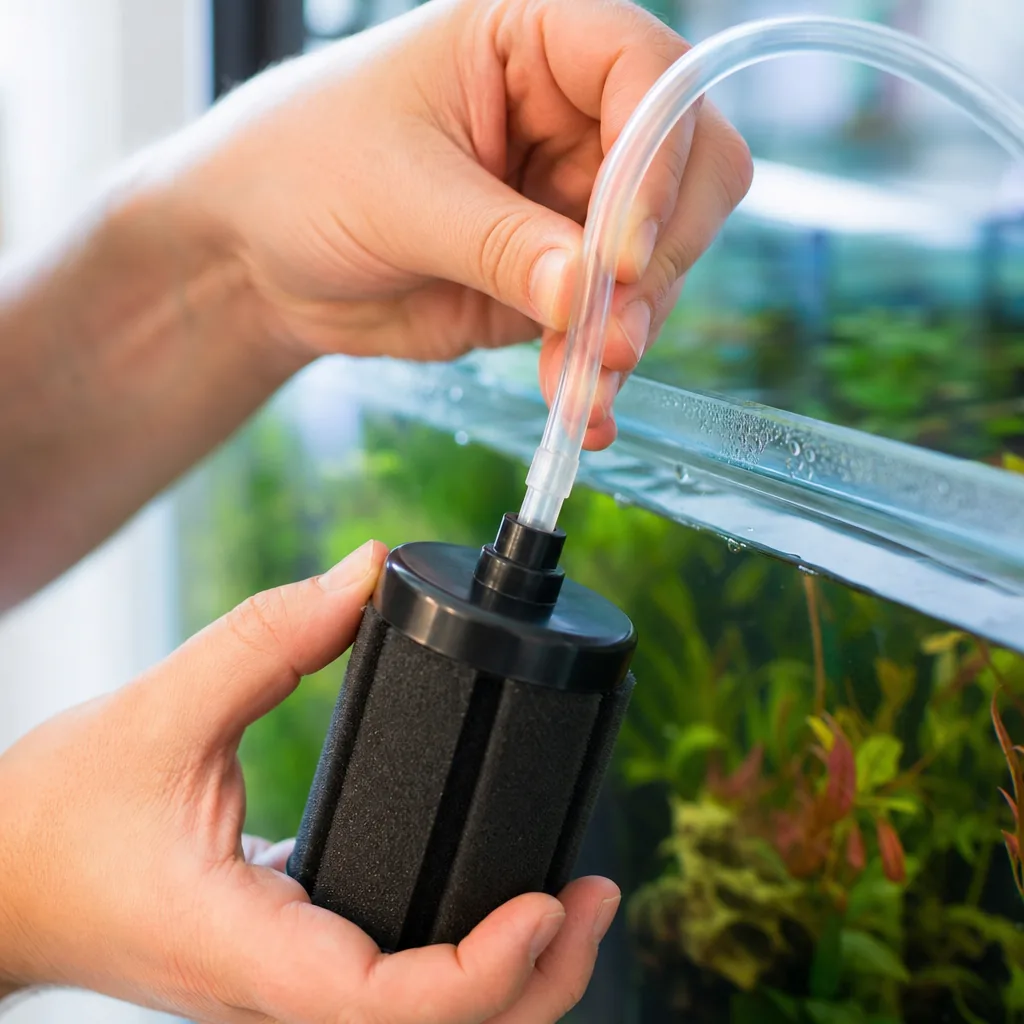
- Connect airline tubing from your air pump to the sponge filter’s lift tube.
- Add a check valve in the line — this prevents water from siphoning back into the pump if the power cuts out.
- Submerge the sponge fully and let it sit a moment so it stops floating.
- Plug in the pump and adjust the air flow until you get a steady stream of bubbles.
The check valve is the one piece people forget, and it’s the one that saves your air pump from a backflow flood. Don’t skip it.
Maintenance: Less Is More
The biggest mistake with sponge filters is over-cleaning them. That sponge is your bacteria colony, and scrubbing it under hot tap water kills the very thing you want to keep alive.
The right way to clean
- Clean only when flow noticeably slows, typically every few weeks to a month.
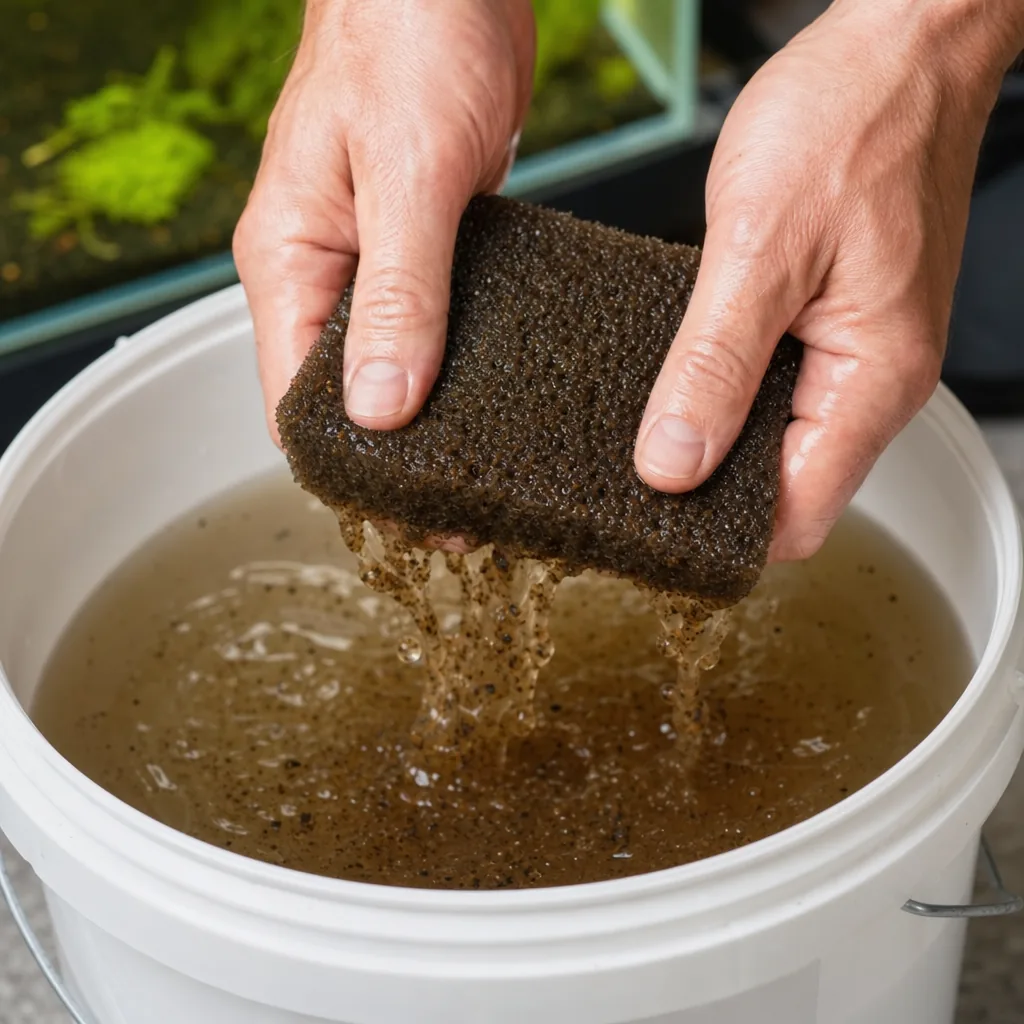
- During a water change, gently squeeze the sponge in a bucket of the old tank water you just removed.
- Squeeze until the gunk releases, then put it right back. The dechlorinated tank water protects the bacteria; tap water’s chlorine would slaughter it.
That’s the whole routine. No cartridges, no schedules, no expensive media to replace.
The One Real Downside
Sponge filters aren’t perfect. They don’t polish water to crystal clarity the way a canister with fine media can, and the air pump produces a faint hum. They also take up a bit of visible space inside the tank. For a show display, many aquarists pair a sponge filter with a primary filter rather than relying on it alone — getting the biological backup without sacrificing water polish.
Conclusion
A sponge filter won’t win any beauty contests, but it’s one of the most useful tools in the hobby: cheap, reliable, gentle, and a biological powerhouse. Keep one seeded in an established tank and you’ll always have instant cycled filtration ready for a fry tank, a quarantine, or an emergency. For any aquarist serious about the long game, it’s hard to think of a better few dollars spent. Explore more freshwater equipment guides on AquaticRig.
Frequently Asked Questions
Are sponge filters enough on their own?
For lightly stocked tanks, fry tanks, shrimp tanks, and quarantine, a properly sized sponge filter is often all you need. On a heavily stocked display, many aquarists pair one with a stronger primary filter for extra mechanical polish.
How often should I clean a sponge filter?
Only when flow noticeably slows, usually every few weeks to a month. Squeeze it gently in a bucket of removed tank water rather than under the tap, so you don’t kill the beneficial bacteria living inside.
Do sponge filters need an air pump?
Most do — an air pump drives the bubble flow that pulls water through the sponge. Some versions can run off a powerhead instead, but the simple air-pump setup is the most common and reliable.
Why do breeders use sponge filters?
Because the gentle intake won’t suck up baby fish or tiny shrimp the way a powered filter would. They still provide strong biological filtration, making them ideal for fragile fry.
Can I use a sponge filter in a quarantine tank during medication?
Yes, and it’s actually the preferred choice because sponge filters contain no activated carbon. Carbon removes medication from the water, so a carbon-free sponge filter keeps your treatment working as intended.