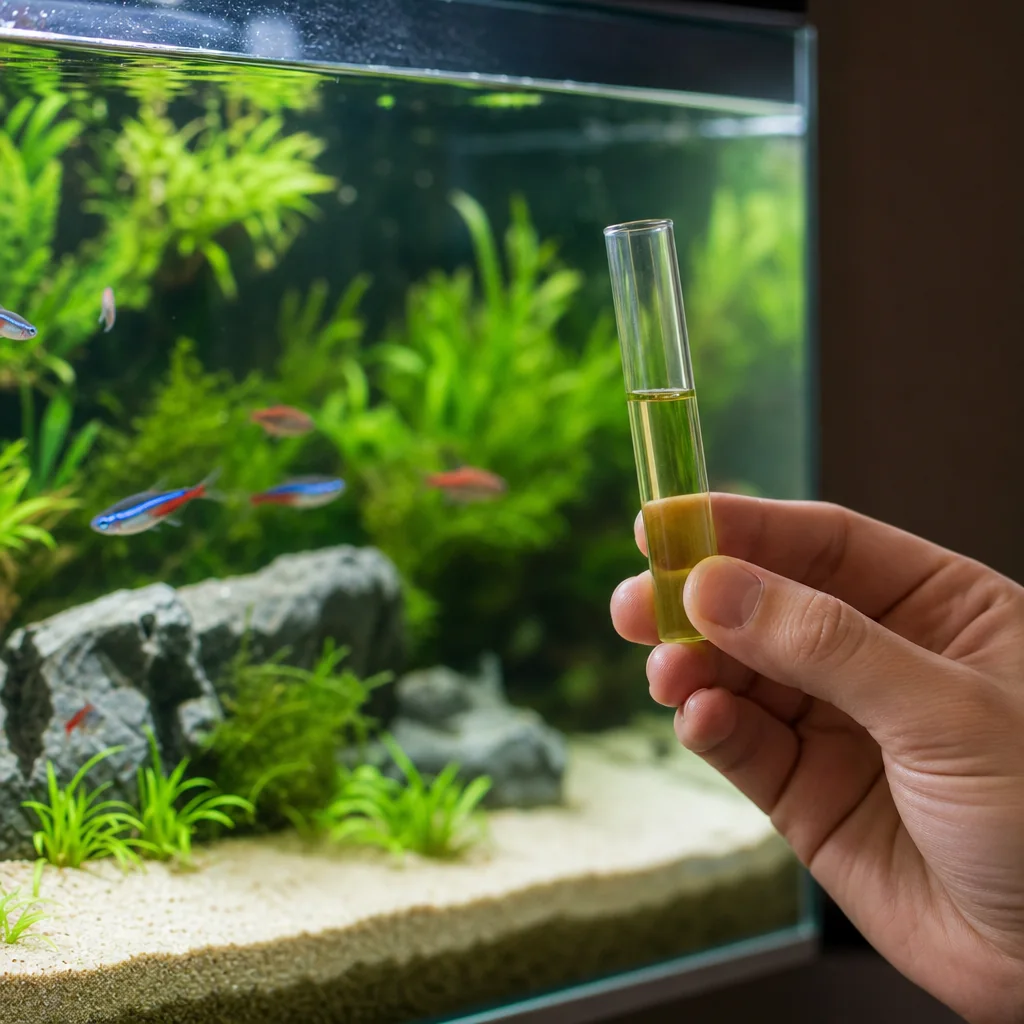
You just filled your first tank, added a fish, and now the water’s cloudy and your fish looks stressed. The culprit is almost always the same: the tank isn’t cycled yet. Cycling is the single most important thing you’ll do before keeping fish, and skipping it is the number one reason new hobbyists lose their first fish.
What “Cycling” Actually Means
Cycling a tank means growing a colony of beneficial bacteria that convert fish waste into less harmful compounds. Fish constantly produce ammonia through their gills and waste, and ammonia is toxic even in small amounts. A new tank has no bacteria to deal with it, so the ammonia just builds up. Cycling establishes a biological filter that keeps that toxin in check for the life of the tank.
This isn’t optional or a “nice to have.” Until your tank is cycled, every fish you add is sitting in a slowly filling pool of its own toxic waste. The good news: it’s straightforward once you understand what’s happening.
The Nitrogen Cycle Explained
The nitrogen cycle is a three-stage process driven by two groups of bacteria:
- Ammonia (NH3): Produced by fish waste, uneaten food, and decaying plants. Highly toxic. This is the starting point.
- Nitrite (NO2): The first group of bacteria eats ammonia and produces nitrite. Still very toxic to fish, just a different poison.
- Nitrate (NO3): A second group of bacteria converts nitrite into nitrate. Nitrate is far less harmful and only becomes a problem at high levels, which you control with regular water changes.
A tank is “cycled” when both bacteria colonies are large enough to convert ammonia all the way to nitrate quickly, keeping ammonia and nitrite at zero. From there, you manage nitrate with weekly water changes and your tank stays stable.
Fish-In vs. Fishless Cycling
There are two ways to cycle, and one is much kinder to fish.
Fishless Cycling (Recommended)
You add an ammonia source yourself and grow the bacteria before any fish go in the water. No fish are exposed to toxins, you can take your time, and you get to stock the tank fully once it’s done. This is the method I recommend for almost everyone.
Fish-In Cycling
You add a few hardy fish and let their waste fuel the cycle, doing frequent water changes to keep ammonia and nitrite low enough that the fish survive. It works, but it’s stressful for the fish and requires daily testing and water changes. Only consider it if you already have fish and no other option.
How to Do a Fishless Cycle, Step by Step
Here’s the process from an empty, set-up tank to a fully cycled one.
- Set up the tank completely first. Substrate, filter, and heater all running. Set the heater to around 78–82°F, since bacteria grow faster in warmer water. Let it run a day to stabilize.
- Add an ammonia source. Pure ammonia (no surfactants or scents) dosed to about 2–3 ppm is the cleanest method. Some people use a small pinch of fish food left to decay, but dosing liquid ammonia gives you far more control.
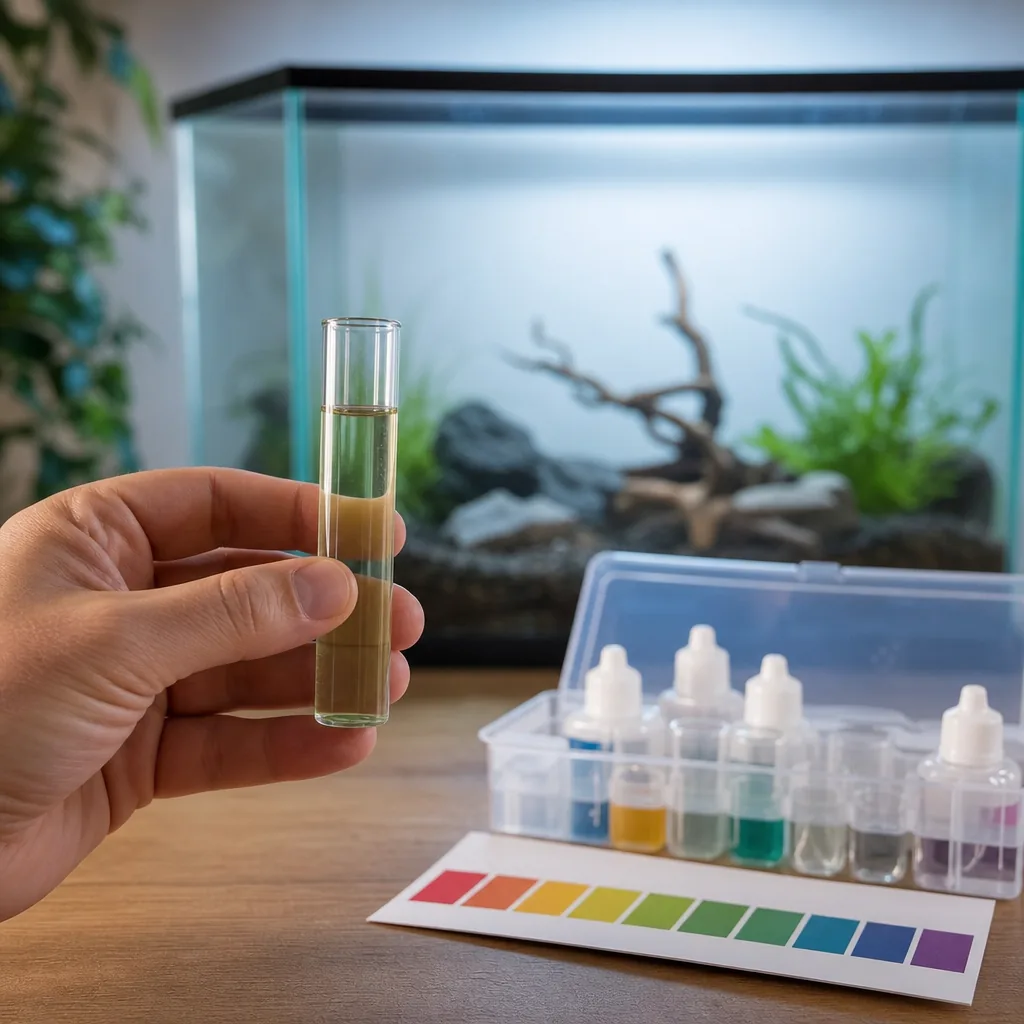
- Test daily and wait for ammonia to drop. Using a reliable liquid test kit, watch for ammonia readings to start falling and nitrite to appear. That’s your first bacteria colony coming alive.
- Re-dose ammonia as it gets consumed. Keep feeding the bacteria so the colony keeps growing. Don’t let it crash to zero and stay there for days, or the bacteria starve.
- Watch for nitrate. Once nitrite begins dropping and nitrate climbs, your second colony is established.
- Confirm a full conversion. When a dose of ammonia drops to zero and nitrite reads zero within 24 hours, you’re cycled.
Start to finish, a fishless cycle typically takes four to eight weeks. It tests your patience, but it pays off with a stable tank.
How to Speed It Up Safely
You can’t skip the cycle, but you can shorten it honestly:
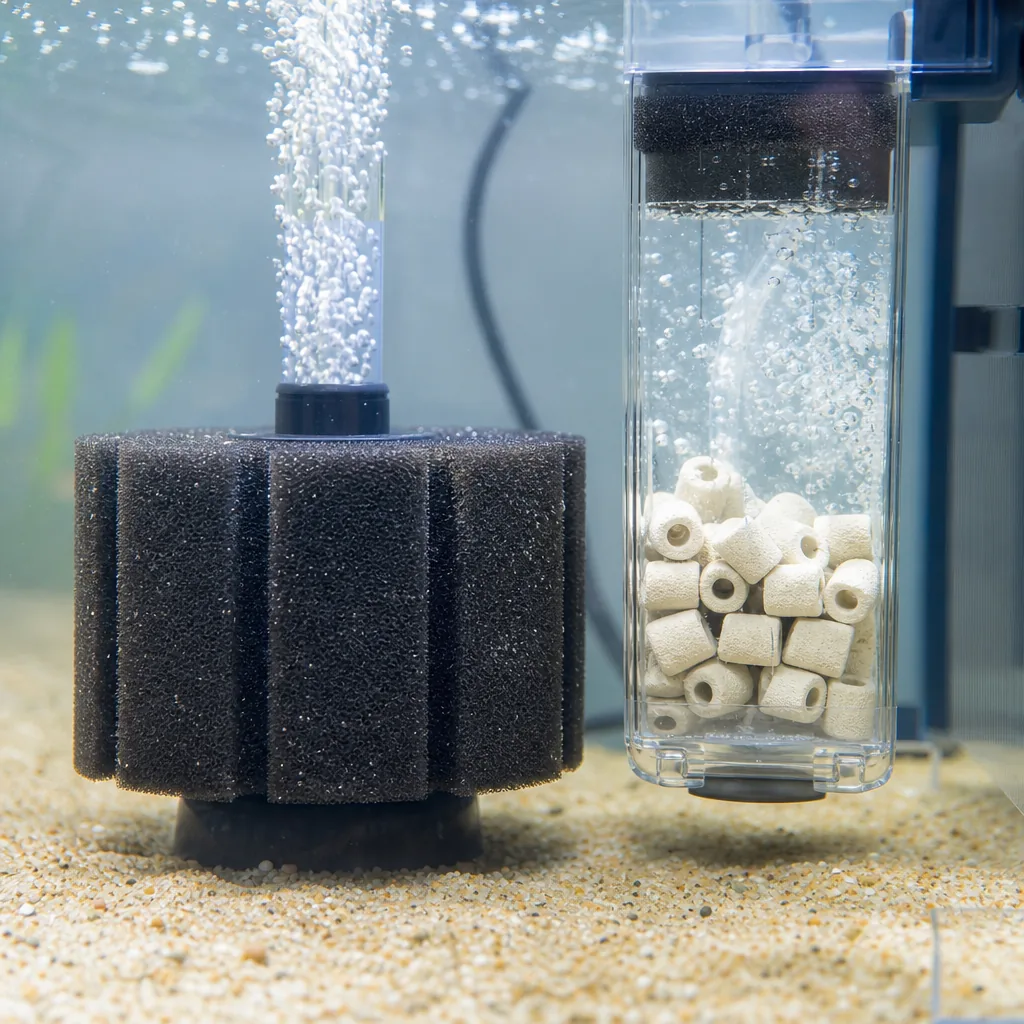
- Seeded media: The fastest method by far. Grab a handful of filter media, a sponge, or some substrate from an established, healthy tank and put it in your filter. You’re transplanting a living bacteria colony. A friend’s tank or a trusted local fish store can be a great source.
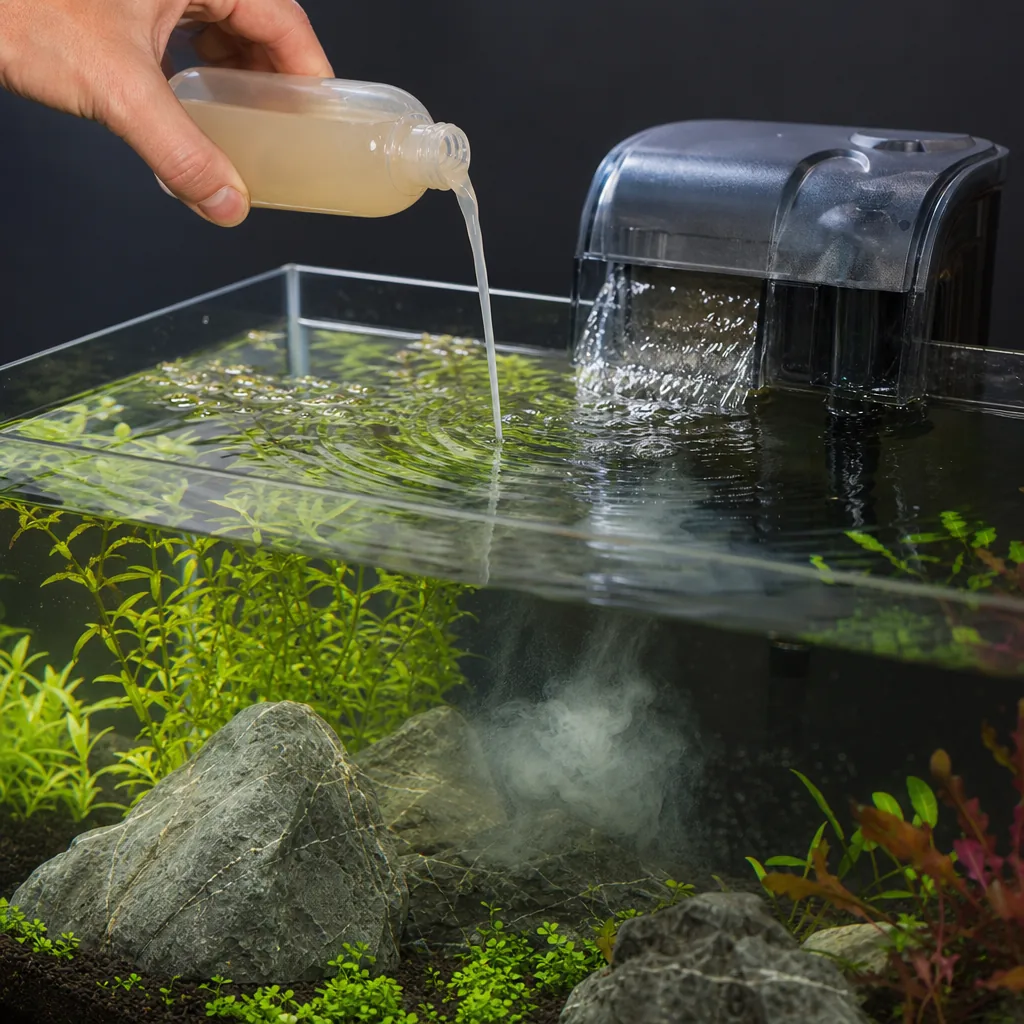
- Bottled bacteria: Quality bottled bacteria supplements can jump-start the process. Results vary by brand and freshness, so treat them as a head start, not a guarantee, and keep testing.
- Warmth and oxygen: Higher temperatures and good surface agitation help bacteria multiply faster. Make sure your filter is providing plenty of flow.
What doesn’t work: water conditioner alone, “instant cycle” claims with no testing, or just waiting a few days. If your test kit doesn’t confirm it, it isn’t done.
How to Know When It’s Done
There’s only one reliable answer, and it comes from your test kit, not the calendar. Your tank is cycled when, after dosing ammonia to around 2 ppm, both of these are true within 24 hours:
- Ammonia reads 0 ppm
- Nitrite reads 0 ppm
- Nitrate is present (some measurable reading, usually 10–40 ppm)
Do one last large water change to bring nitrate down before adding fish, and you’re ready to stock. If you’re setting up your first community tank, our guide to beginner-friendly species over on the freshwater section pairs perfectly with this step.
Common Mistakes to Avoid
- Adding fish on day one. The classic mistake. Cycle first, fish later.
- Using test strips for cycling. Strips are convenient but often imprecise. A liquid test kit is worth it during cycling, when accuracy matters most. You can compare options in our reviews.
- Rinsing filter media in tap water. Chlorine kills your bacteria. Always rinse media in old tank water.
- Over-cleaning a new filter. Your bacteria live in the filter. Scrubbing it sterile sets you back to square one.
- Giving up too early. Cloudy water and stalled readings are normal mid-cycle. Keep testing and stay the course.
Bottom Line
Cycling isn’t busywork; it’s the foundation of a healthy tank. Run a fishless cycle, lean on seeded media if you can get it, and let your test kit, not the calendar, tell you when you’re ready. Get this right and the rest of the hobby gets a whole lot easier. When you’re ready to stock up, browse our gear reviews or head back to the blog for your next steps.
Frequently Asked Questions
How long does it take to cycle a new aquarium?
A fishless cycle usually takes 4-6 weeks. You can speed it up by adding seeded filter media, substrate, or a piece of decor from an established tank.
What is the nitrogen cycle in simple terms?
Beneficial bacteria convert toxic ammonia from fish waste into nitrite, then into far less harmful nitrate, which you remove with regular water changes.
How do I know when my tank is fully cycled?
When you can add a dose of ammonia and, within 24 hours, both ammonia and nitrite read 0 ppm while nitrate has risen, your bacterial colony is established.
Can I add fish while the tank is cycling?
It is better not to. A fishless cycle avoids exposing fish to toxic ammonia and nitrite spikes. If you must, stock very lightly and test the water daily.
Do I need a test kit to cycle a tank?
Yes. A liquid ammonia, nitrite, and nitrate test kit is the only reliable way to track progress. You cannot judge a cycle by how the water looks.