
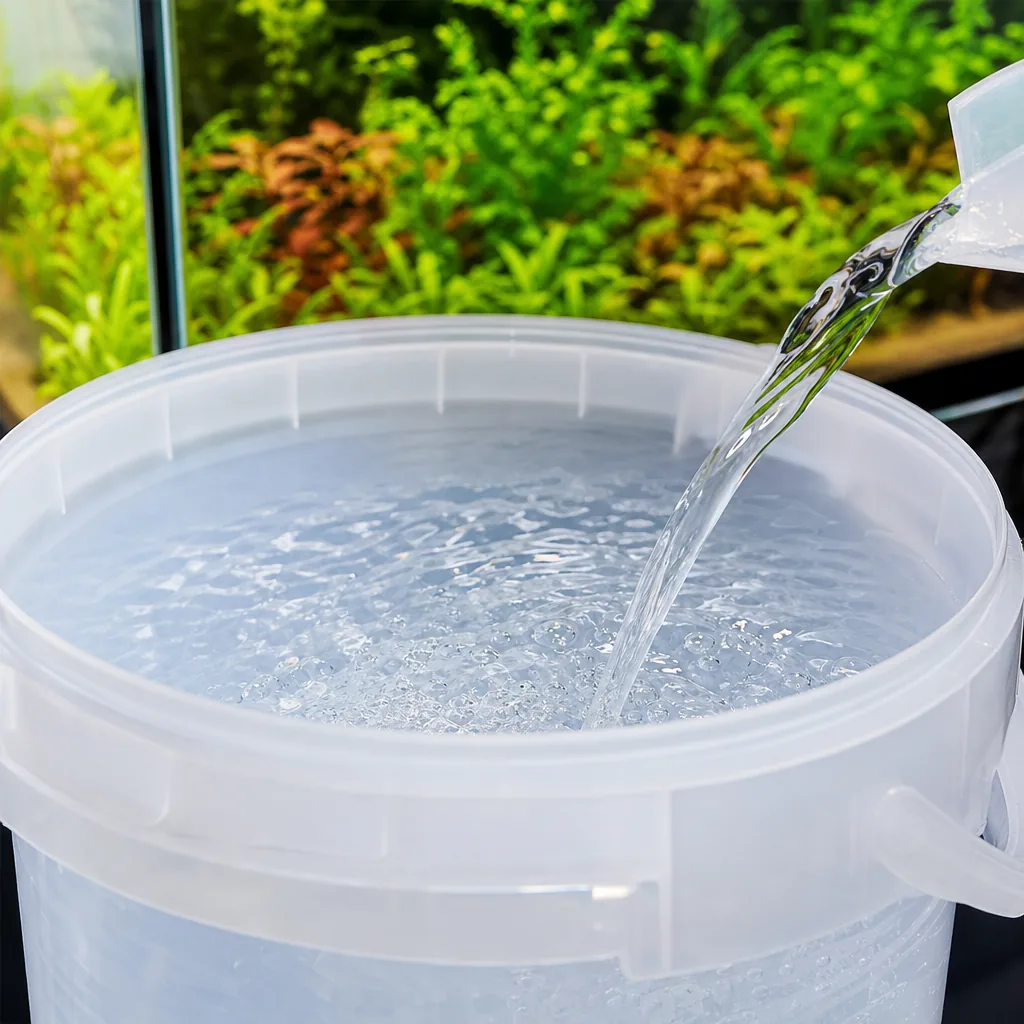
Ask experienced reef keepers what they wish they’d done sooner, and many will say they wish they had stopped using tap water. A freshwater community tank usually does fine with dechlorinated tap water. A reef tank is a different story. Corals and invertebrates live in some of the most nutrient-poor water on the planet, and the dissolved material in most municipal water can drive algae, feed cyanobacteria and throw off your parameters.
Reverse osmosis with deionization, called RO/DI, strips that material out and gives you a clean starting point for top-off water and every batch of salt mix.
What’s in tap water that matters
Tap water is safe to drink, but drinking-water standards weren’t written for corals. Depending on where you live, it can carry:
- Phosphate and nitrate. Both fuel nuisance algae. Some utilities add phosphate on purpose to protect old pipes.
- Silicate. A favorite food for diatoms, the brown film that coats sand and glass.
- Chlorine and chloramine. Toxic to fish and invertebrates. Chloramine is more stable than chlorine and doesn’t gas off on its own.
- Copper and other metals. Copper can leach from household plumbing, and invertebrates are very sensitive to it.
Your utility’s annual water quality report shows typical levels, but it won’t reflect what your pipes add, and it can change with the season.
How an RO/DI system works
Most units for aquarium use have four to seven stages, and each one has a job:
- Sediment filter. A fine mesh cartridge catches sand, rust and grit that would clog the stages after it.
- Carbon block. Removes chlorine and, with enough contact time, chloramine. That protects the membrane, which chlorine damages. Areas with chloramine benefit from a second carbon block or a catalytic carbon cartridge.
- RO membrane. Water is pushed through a very fine membrane under pressure. Most dissolved solids stay behind and leave through the waste line.
- DI resin. A cartridge of resin beads grabs the remaining ions the membrane let through, including some silicate. This polishing stage brings the water down to zero total dissolved solids (TDS).
Reading TDS
A TDS meter is the easiest way to see how the system is doing. Most units have a dual inline meter that reads the tap water going in and the water coming out of the RO or DI stage. Typical readings look like this:
- Tap water: often 100 to 400 ppm, sometimes higher
- After the RO membrane: usually a few percent of the tap reading
- After the DI resin: 0 ppm
When the DI output starts to creep above 0 or 1 ppm, the resin is spent. Color-changing resin helps you see this coming, as the beads change shade from the inlet end.
Water pressure and waste water
RO membranes need pressure to work well. Many are rated for best performance around 50 to 60 psi. Below about 40 psi, production slows, more water goes to waste and the output is less pure. If your home pressure is low, a booster pump fixes it. A cheap pressure gauge tells you where you stand.
All RO systems send some water down the drain. A ratio of three or four gallons of waste for each gallon of clean water is common, and better systems with good pressure can do better. The waste water is fine for houseplants, gardens or mopping, so it doesn’t all have to be lost.
Replacement schedule
How often you change cartridges depends on your water and how much you make, but these are typical starting points:
- Sediment and carbon: every 6 months, sooner with heavy chloramine
- RO membrane: every 2 to 3 years, or when its rejection rate falls
- DI resin: whenever output TDS rises above 0 to 1 ppm
A falling RO rejection rate shows up as the DI resin running out faster than usual, which is often the first sign the membrane needs replacing.
Storing and using the water
Most reefers make water into a food-grade container, such as a 32-gallon brute trash can or a dedicated water tank, then use it for two jobs. Plain RO/DI goes into the top-off reservoir to replace water lost to evaporation, since evaporation leaves salt behind. Mixed with salt, it becomes new saltwater for water changes. Our guide to mixing saltwater covers that step.
Keep stored water covered to keep dust out, and don’t leave it sitting for months. A small pump and heater in the mixing container make it easier to prepare saltwater ahead of time.
Do you really need it?
For a fish-only saltwater tank with tap water that tests low in phosphate and silicate, some keepers get by with a good conditioner. For anything with corals, RO/DI is close to essential, and many reef problems, from stubborn hair algae to red slime cyanobacteria, get easier once the source water is clean. Buying RO/DI water from a local fish store is another choice, but check it with your own TDS meter before trusting it.
Wrapping up
An RO/DI unit removes the nutrients, metals and disinfectants that tap water brings into a reef. Watch TDS, keep the pressure up, and change cartridges on time. If you’re building your first reef, our saltwater setup guide and reef parameter targets are good next reads, and the AquaticRig shop has filtration gear.
Reef water-prep gear: Red Sea Coral Pro salt, the Milwaukee MA887 refractometer and the XP Aqua Duetto ATO for topping off with clean fresh water.
Frequently Asked Questions
Can I use RO/DI water in a freshwater tank?
Yes, but not on its own. Pure RO/DI water has no minerals, which fish and plants need. Freshwater keepers remineralize it with a product designed for that, or blend it with tap water.
Is a water conditioner enough instead?
A conditioner handles chlorine and chloramine, but it does not remove phosphate, nitrate, silicate or copper. For a reef, that’s usually not enough.
How long does an RO/DI unit take to make water?
It depends on the membrane rating and your water pressure. A 75 or 100 gallon-per-day unit at good pressure takes several hours to fill a 30-gallon container.
Should I flush the membrane?
Many units have a flush valve. A short flush before making water helps clear concentrated solids from the membrane surface and can extend its life.