
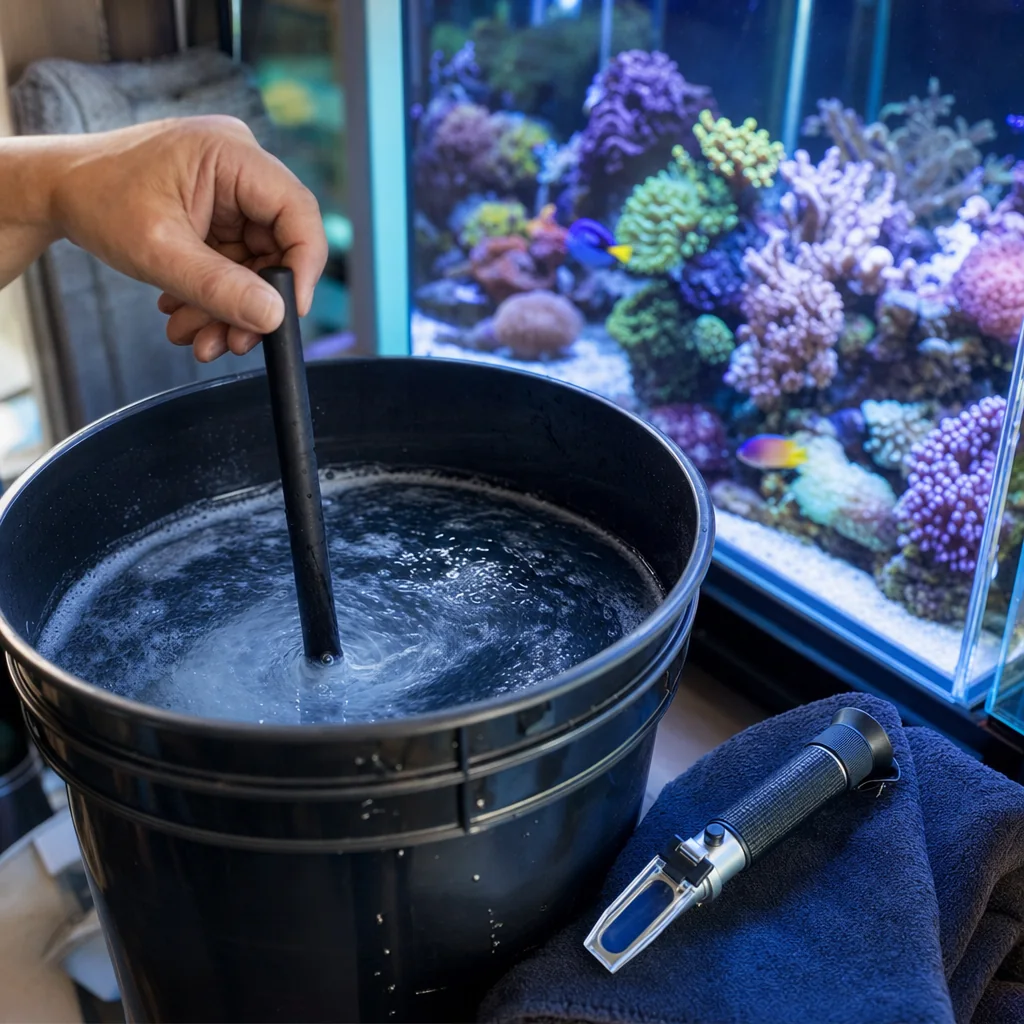
Every problem in a reef tank traces back to water, and water starts with how you mix it. Get this one routine right — clean source water, the correct salinity, properly dissolved mix — and you’ve eliminated a huge share of the headaches that plague new reefers. Get it wrong and you’ll chase mysterious algae, stressed corals, and unstable parameters for months. Mixing saltwater isn’t complicated, but it rewards consistency, and there are a handful of details that separate a good batch from a bad one.
Start With the Right Water
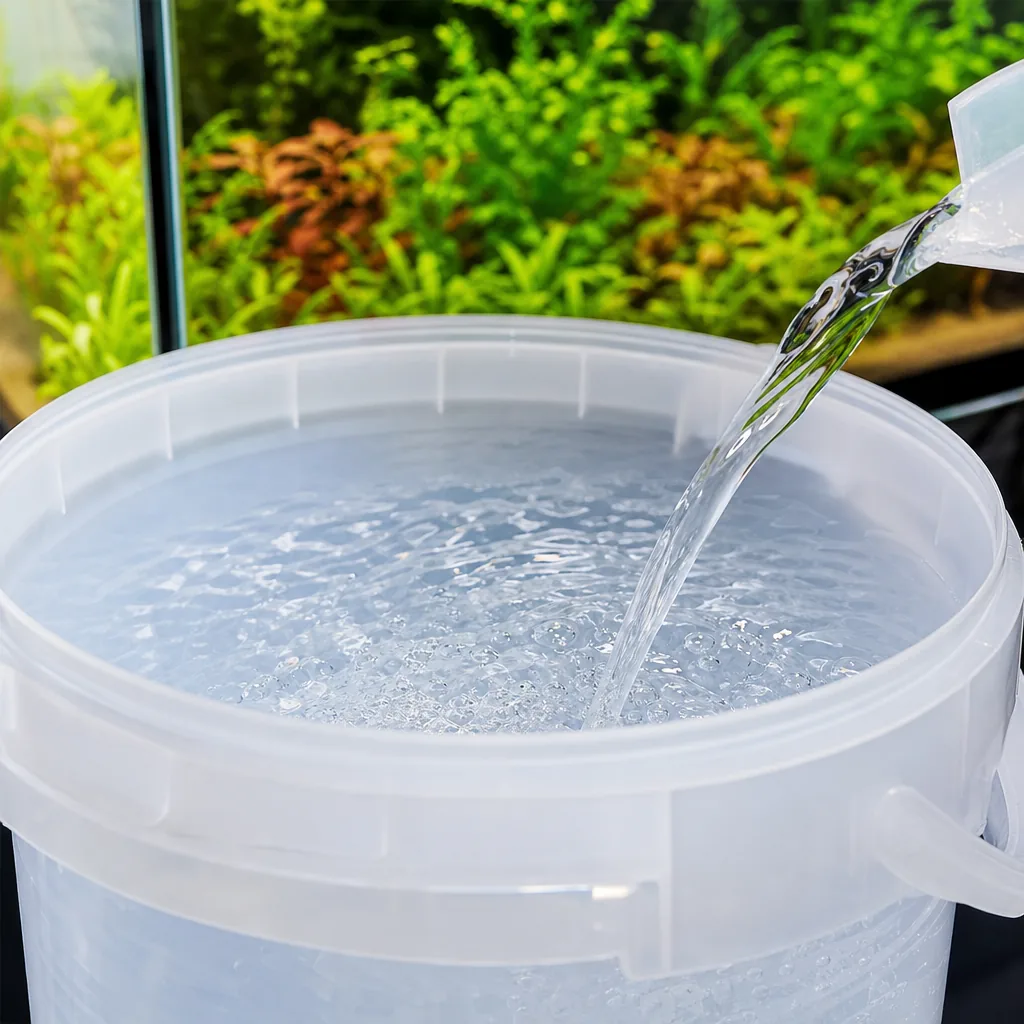
This is the part beginners most often get wrong. Do not use tap water. Tap water carries chlorine, chloramine, phosphates, nitrates, copper, and other contaminants that fuel nuisance algae and harm sensitive invertebrates. Even “good” tap water varies day to day, which makes consistency impossible.
The standard is RO/DI water — reverse osmosis followed by deionization — which strips your source water down to nearly pure H2O. A TDS (total dissolved solids) meter should read zero or close to it from a healthy RO/DI unit. Starting from pure water means every batch of saltwater is identical, which is exactly what a reef craves. You’ll find RO/DI units and TDS meters on our recommended gear page.
Choose a Quality Salt Mix
Salt mixes are not all the same. Reef salts are formulated with elevated calcium, alkalinity, and magnesium to support coral growth, while basic fish-only salts contain less. For a reef tank, use a reef-grade synthetic salt mix from a reputable brand and stick with it — switching brands changes your baseline parameters and can stress your tank.
Consistency matters more than chasing the “best” salt. Pick a quality reef mix, learn how it behaves, and stay with it.
The Mixing Process
Here’s the routine that produces clean, ready-to-use saltwater every time:
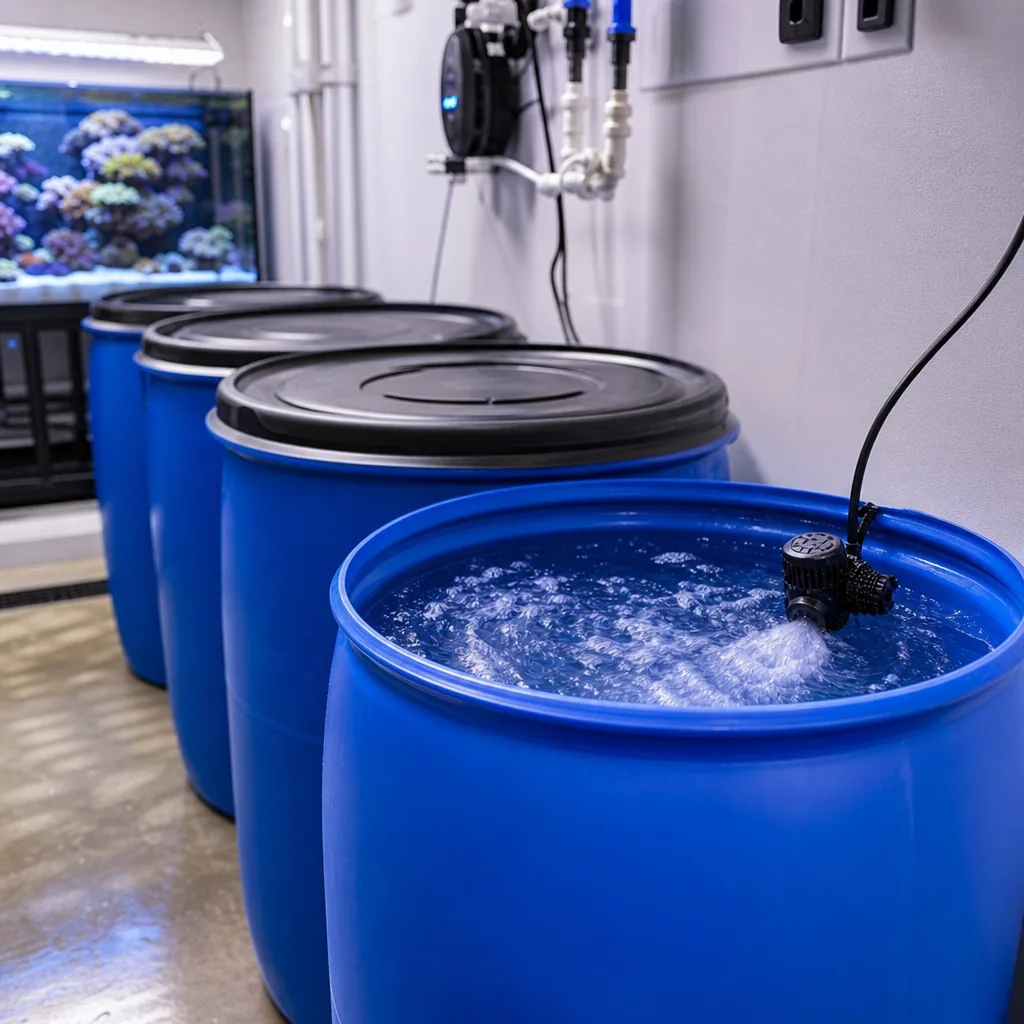
- Fill a clean container with RO/DI water. Use a dedicated mixing vessel that has never held soap or chemicals. A food-grade bucket or Brute can works well.
- Add a powerhead and a heater. Strong circulation dissolves salt fully, and matching the temperature to your display prevents shocking the tank later.
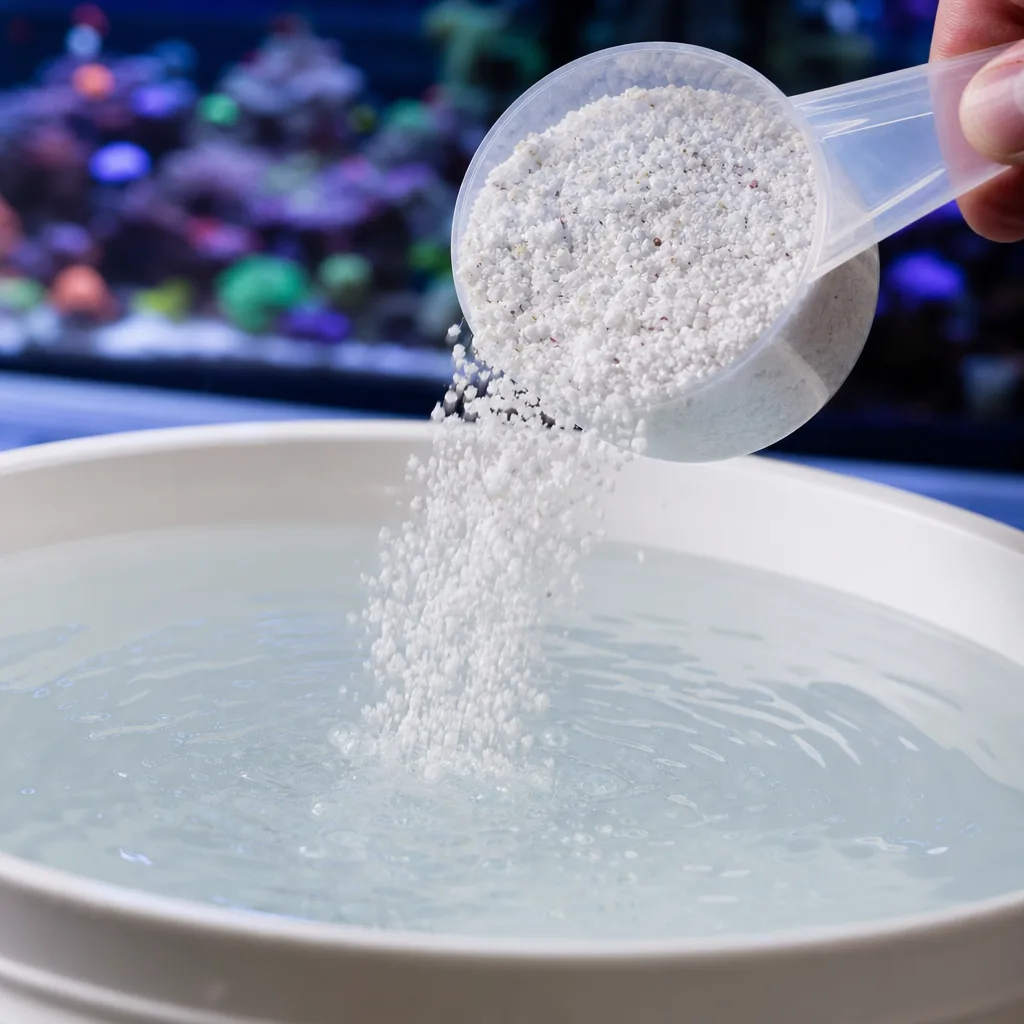
- Add salt to water, not water to salt. Pour the mix in gradually while the powerhead runs. Adding it slowly prevents clumping and precipitation.
- Let it circulate. Allow the batch to mix and aerate for several hours, ideally overnight, until the water is fully clear and the salt is completely dissolved.
- Test and adjust salinity before using it.
The overnight rest is the step impatient reefers skip. Freshly mixed salt can be cloudy and chemically unstable for the first several hours; letting it equilibrate gives you predictable, fully dissolved water.
Hitting the Right Salinity
Salinity is the single most important number to nail. For a reef tank with corals and invertebrates, the target is around 1.025 specific gravity, equivalent to roughly 35 parts per thousand — the salinity of natural seawater. Fish-only tanks can run slightly lower, but matching natural seawater is the safe, standard choice.
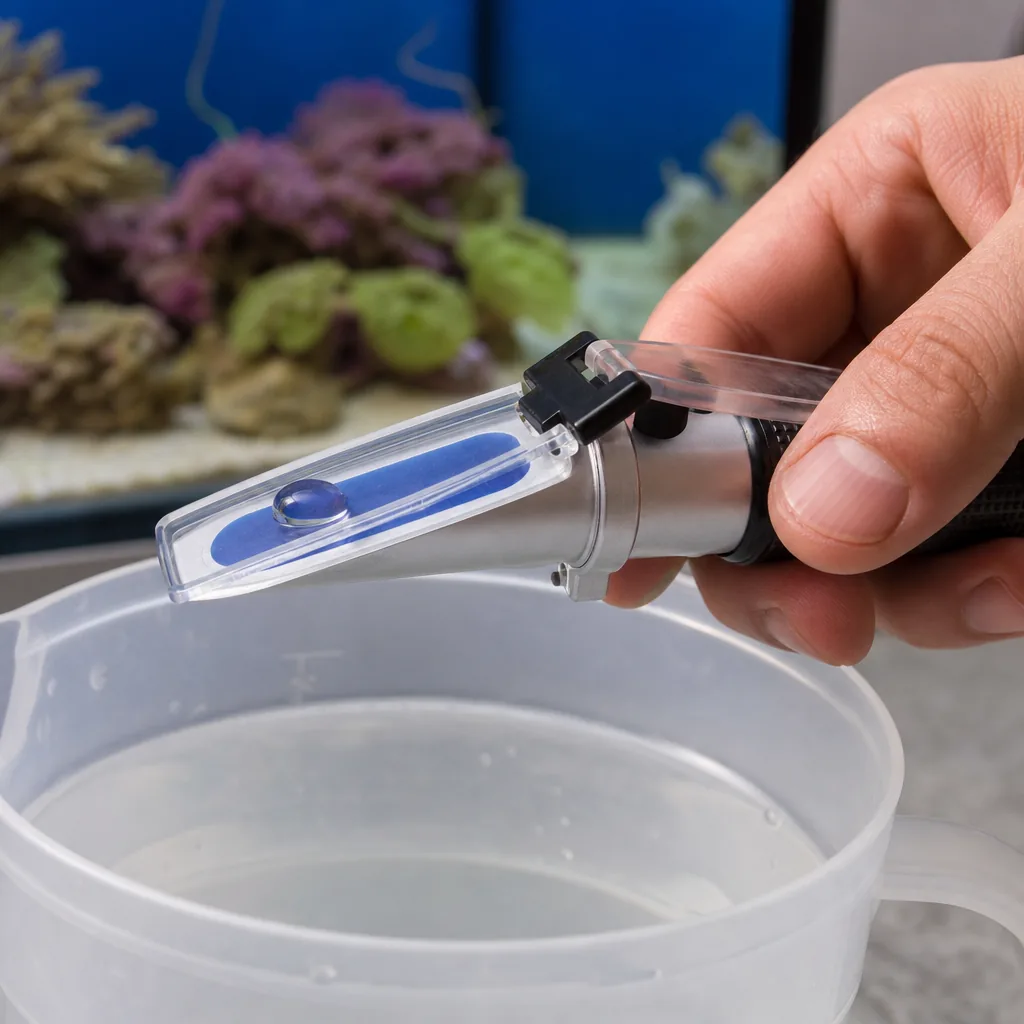
Measure with a refractometer
Cheap swing-arm hydrometers are notoriously inaccurate and drift over time. A refractometer is worth the modest cost and gives reliable readings. Calibrate it with calibration fluid periodically so you can trust it. For more on water parameters, see our saltwater guides.
Temperature Match Before You Use It
Never pour cold, freshly mixed saltwater straight into a warm tank. A sudden temperature swing stresses fish and corals badly. Always bring your mixed batch to the same temperature as your display — this is exactly why the heater goes in the mixing container. Matching temperature and salinity before a water change makes the whole process nearly stress-free for your animals.
Storing Mixed Saltwater
Many reefers mix a large batch and store it for upcoming water changes. A few guidelines:
- Keep stored saltwater in a sealed, food-grade container to limit evaporation and contamination.
- Run a small powerhead or aerator if storing for more than a day or two, to keep it oxygenated and mixed.
- Re-check salinity before use — evaporation during storage raises it.
- Bring it back to tank temperature before adding it.
Common Mixing Mistakes
A few errors come up again and again:
- Using tap water — the root of countless algae and coral problems.
- Not letting the mix dissolve fully — leads to cloudy water and unstable readings.
- Trusting a cheap hydrometer — inaccurate salinity readings cause slow, invisible harm.
- Temperature shocking the tank with cold new water.
- Switching salt brands mid-stream and changing the tank’s baseline.
Conclusion
Mixing saltwater is a simple routine that pays off enormously when done consistently: start with RO/DI water, use a quality reef salt, dissolve it fully with circulation and heat, target around 1.025 with a refractometer, and match temperature before use. Build this into a reliable habit and you remove one of the biggest sources of instability in the hobby. Your corals and fish will show the difference. Explore more reef care guides on AquaticRig.
Frequently Asked Questions
Can I use tap water to mix saltwater?
It’s strongly discouraged — tap water contains chlorine, phosphates, metals, and other contaminants that fuel algae and harm invertebrates. RO/DI water gives a clean, consistent base that makes every batch identical and your tank far easier to manage.
What salinity should a reef tank be?
Aim for around 1.025 specific gravity, roughly 35 parts per thousand, which matches natural seawater. Corals and invertebrates do best at this level, so measure it with a refractometer rather than a cheap hydrometer.
How long should I let saltwater mix before using it?
Let it circulate with a powerhead for several hours, ideally overnight, until fully dissolved and clear. Freshly mixed salt can be chemically unstable for the first few hours, so the rest period gives you predictable water.
Do I need a refractometer or is a hydrometer fine?
A refractometer is well worth it — swing-arm hydrometers are often inaccurate and drift over time. Accurate salinity is one of the most important numbers in a reef, so reliable measurement matters.
Can I store mixed saltwater?
Yes, in a sealed food-grade container, ideally with a small powerhead running if you keep it more than a day or two. Re-check salinity and bring it to tank temperature before using it, since evaporation during storage raises salinity.