
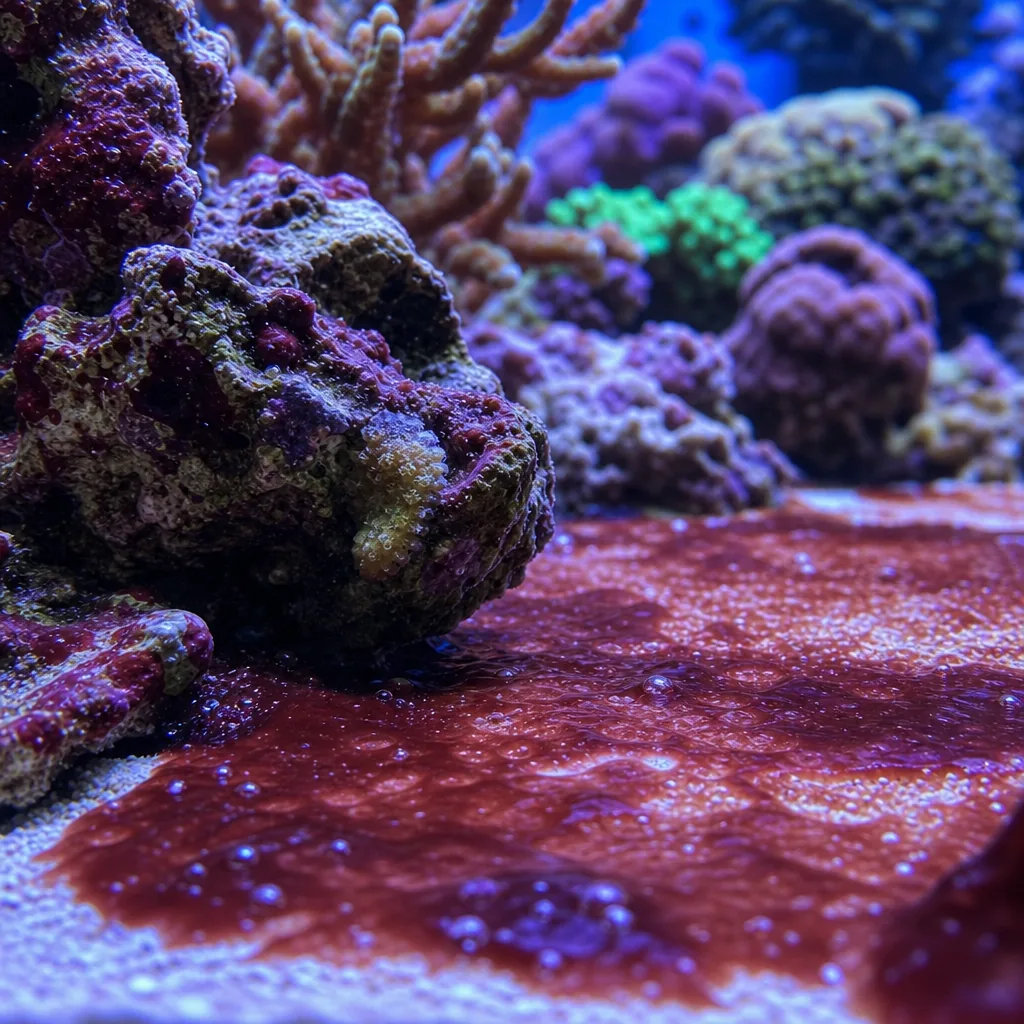
If a red, maroon, or purple slimy sheet is creeping across your sand bed, rock, and equipment, you are dealing with cyanobacteria, commonly called red slime algae. Despite the name it is not really an algae; it is an ancient photosynthetic bacteria, and that is exactly why it is so stubborn and so good at exploiting a reef tank that is even slightly out of balance. Beating it means changing the conditions that let it thrive, not just wiping it away.
What Cyanobacteria Is and Why It Appears
Cyanobacteria bloom when a few conditions line up: excess nutrients in the water (nitrate and especially phosphate), low water flow, and often aging or intense lighting. It forms slimy mats that trap oxygen bubbles and smother corals, spreading fast once it takes hold. It is one of the most common nuisance blooms in the hobby and a nearly universal rite of passage for new reef keepers.
The key insight is that cyano is a symptom. It shows up because your tank is offering it a buffet and a calm place to eat. Fix that, and it starves.
Step One: Manual Removal
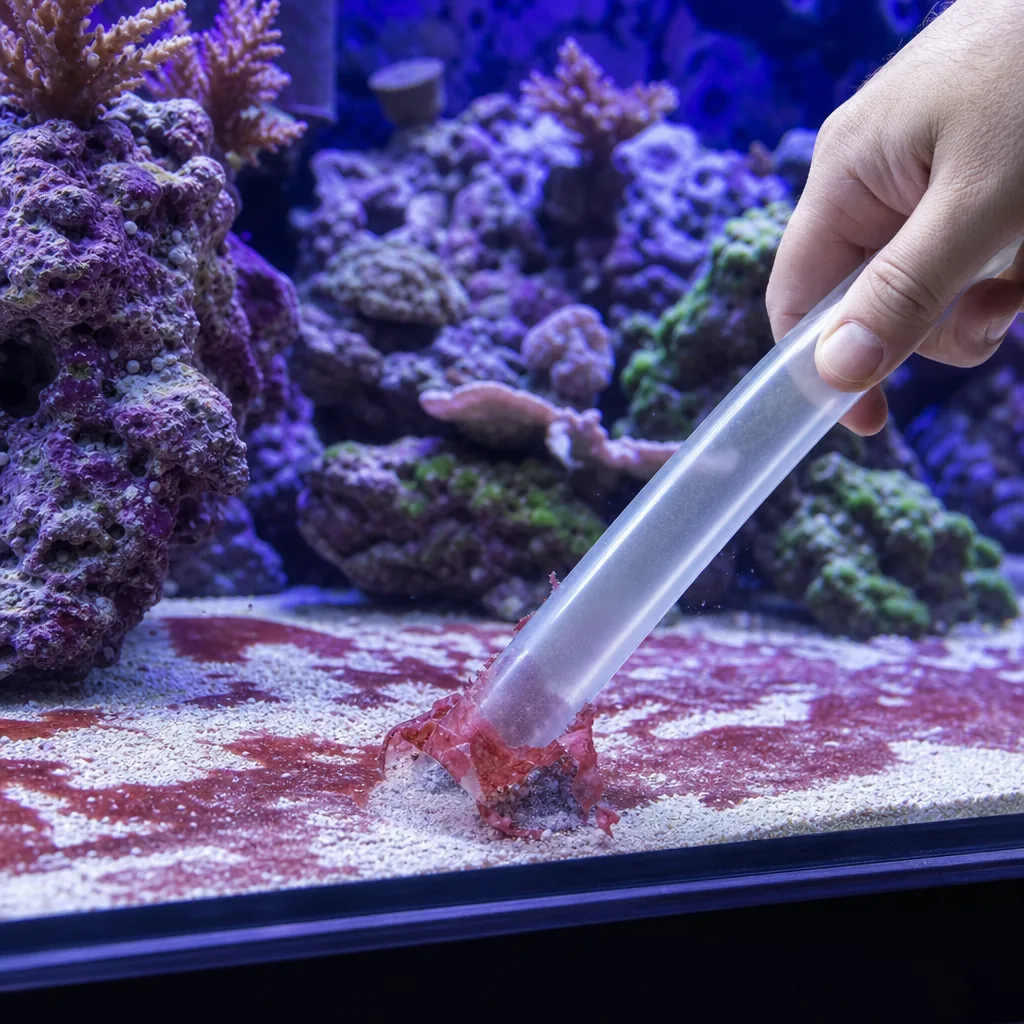
Start by physically removing as much as you can. Siphon the slime out during a water change rather than just brushing it loose, because loose cyano simply resettles elsewhere. Turkey-baster it off rock, siphon it off the sand bed, and export it from the system. This buys you time and reduces the bloom while you address the root cause.
Step Two: Cut the Nutrients
Nutrient control is the heart of the fix. Test your nitrate and phosphate; cyano loves both.
- Do consistent water changes with quality salt mix and, ideally, RO/DI water. Tap water often carries phosphate and silicate that feed nuisance blooms.
- Improve nutrient export with a properly sized protein skimmer and, if needed, a refugium growing macroalgae like chaeto to outcompete the cyano for nutrients.
- Consider granular ferric oxide (GFO) to pull phosphate down if it is elevated.
- Cut back on feeding. Overfeeding is the single most common source of the excess nutrients driving the bloom.
- Clean or replace filter socks and mechanical media regularly so trapped detritus is not constantly leaching nutrients back into the water.
Our saltwater guides cover dialing in skimmers and refugiums in more detail, and you can find RO/DI units and skimmers in the shop.
Step Three: Increase Flow
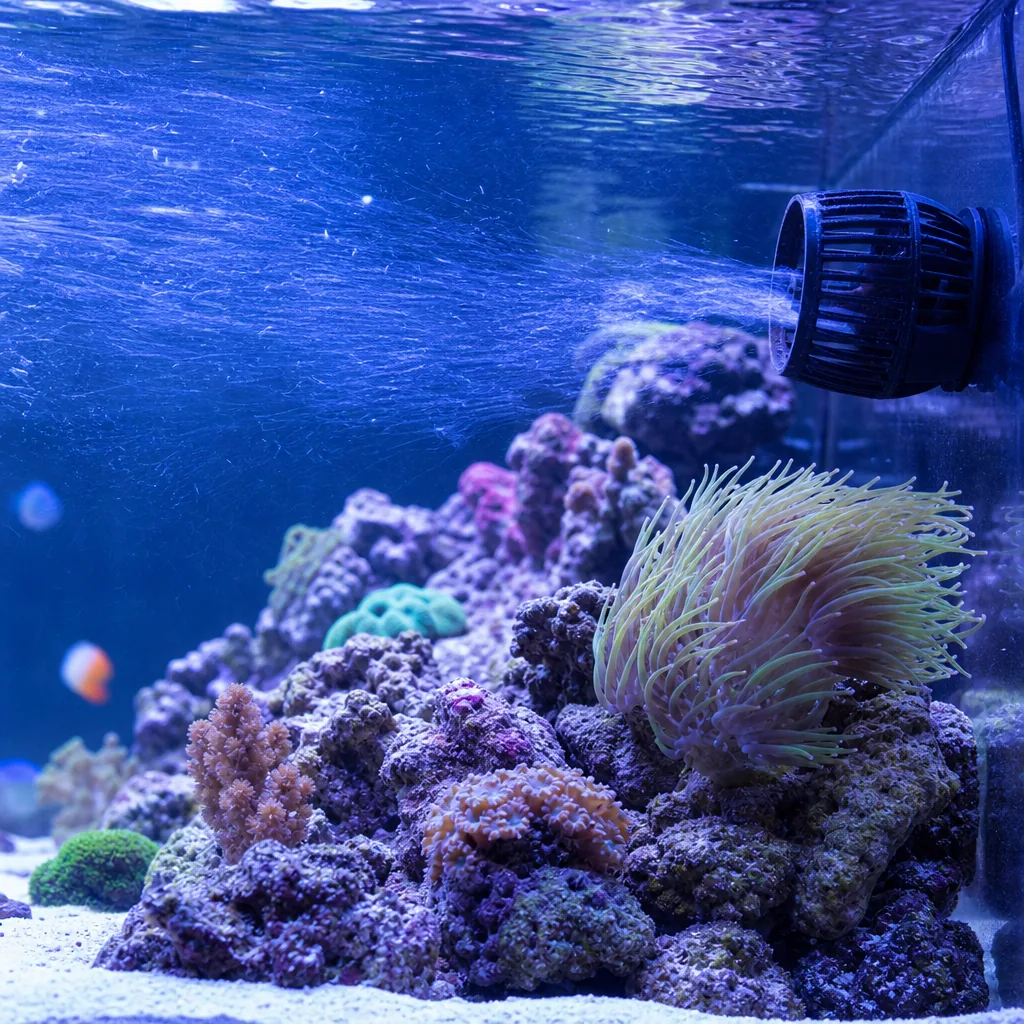
Cyanobacteria loves dead spots where water barely moves. Add or reposition powerheads to eliminate stagnant zones, especially low along the sand bed and in back corners. Good, varied flow makes the environment far less hospitable and helps keep detritus suspended so your filtration can remove it.
Step Four: Review Your Lighting
Since cyano is photosynthetic, lighting plays a role. Old bulbs that have shifted spectrum, or an overly long photoperiod, can favor cyano. Make sure your lights are appropriate for your corals and not running longer than needed. A short blackout period of two to three days can knock back a stubborn bloom, but treat it as a supporting tactic, not a cure, since the nutrients will still be there afterward.
A Word on Chemical Treatments
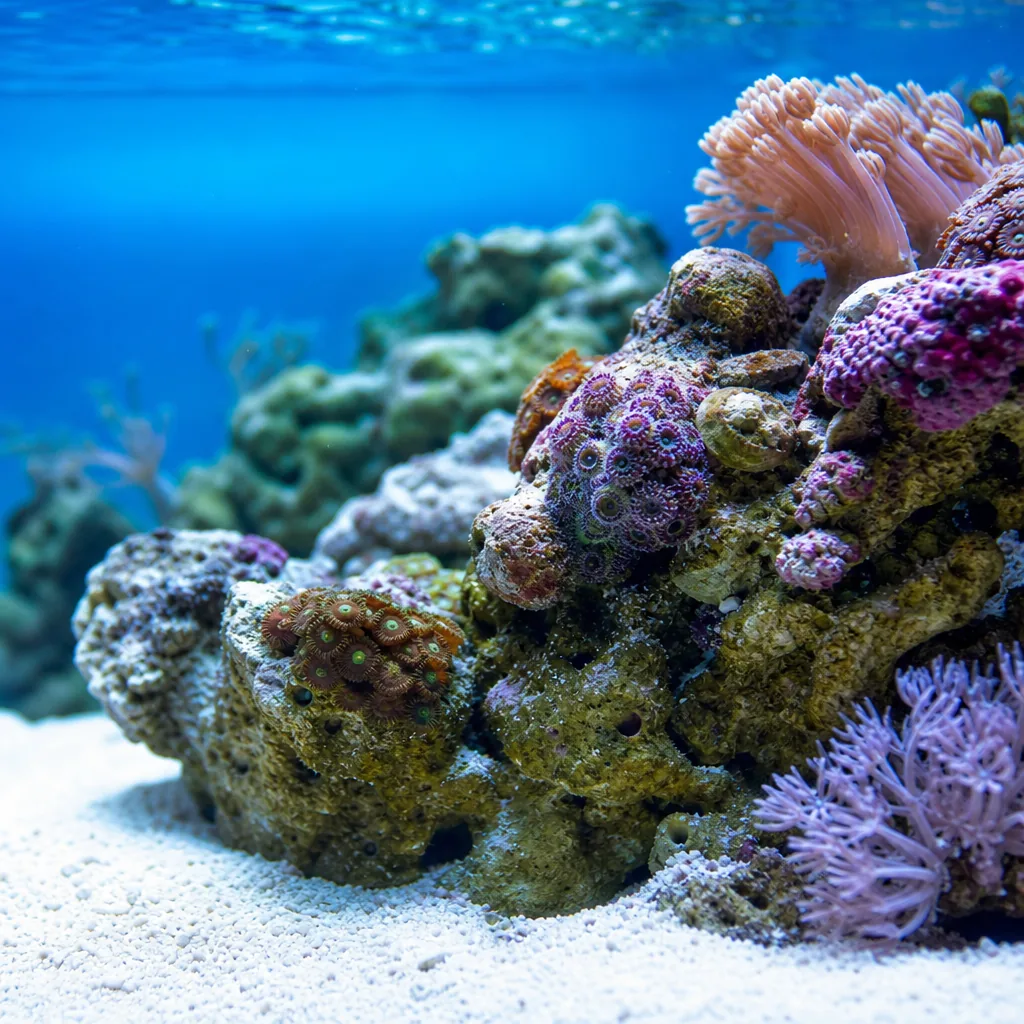
There are red slime removers on the market that kill cyanobacteria directly. They can clear a bloom quickly, but they come with cautions:
- A large die-off releases nutrients and can crash oxygen levels, so run extra aeration and be ready with water changes.
- They treat the symptom, not the cause. If you do not fix nutrients, flow, and lighting, the cyano returns.
Use them as a reset button while you correct the underlying conditions, never as a standalone solution.
Keeping It Gone
Long-term prevention is just good reef husbandry: feed conservatively, use RO/DI water, run an effective skimmer, keep flow strong and varied, change water on a schedule, and maintain your equipment. A tank kept in balance simply does not offer cyano what it needs. Find more nuisance-algae troubleshooting on the blog. Red slime is beatable, and the tank you rebuild while fighting it will be healthier for every coral in it.
Frequently Asked Questions
Is red slime algae actually algae?
No. Cyanobacteria is a photosynthetic bacteria, not a true algae. That is why it behaves differently and why beating it relies on nutrient and flow control rather than typical algae remedies.
What causes cyanobacteria in a reef tank?
Excess nutrients, mainly nitrate and phosphate, combined with low water flow and often aging or overlong lighting. It is a symptom of a tank that is offering it easy food and calm water.
Will a blackout kill cyanobacteria?
A two to three day blackout can knock back a bloom, but it is only a supporting tactic. The nutrients that fed the cyano remain, so it returns unless you also fix feeding, export, and flow.
Are chemical red slime removers safe?
They work but carry risk. A large die-off releases nutrients and can drop oxygen levels, so add aeration and do water changes. Use them as a reset while you fix the root cause, not as a permanent fix.
How do I stop cyanobacteria coming back?
Practice consistent husbandry: feed lightly, use RO/DI water, run an effective skimmer, keep strong varied flow, change water on schedule, and maintain equipment. A balanced tank starves cyano out.