
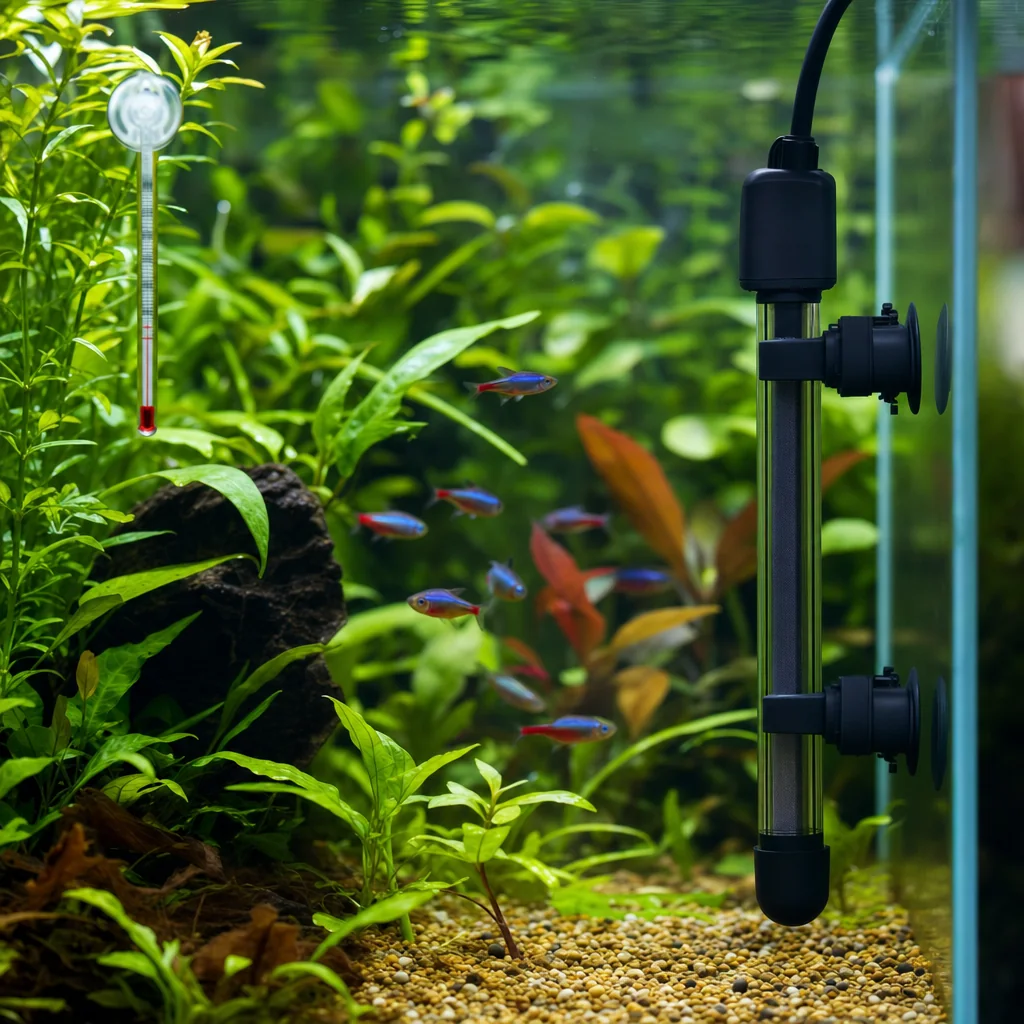
An undersized heater runs constantly and still can’t hold temperature on a cold night. An oversized one can cook a tank if the thermostat sticks. Most aquarists overthink the math and still guess wrong because they ignore the two variables that matter most: the room the tank lives in, and how far you’re trying to push the water above it. Once you understand those, picking the right wattage takes about thirty seconds.
This guide gives you a practical sizing method, explains the heater types worth your money, and covers the safety habits that prevent the two failure modes — a tank that’s too cold and a tank that’s accidentally boiled.
The Only Rule That Matters: Temperature Delta
A heater’s job is to make up the difference between your room’s lowest temperature and your target tank temperature. That gap — the delta — is the real driver of how much wattage you need, far more than tank volume alone.
If your room sits at a comfortable 72°F and you want a tropical tank at 78°F, that’s a small lift and you don’t need much power. If your fish room drops to 60°F overnight in winter, the same tank now needs to climb 18°F, and that demands considerably more wattage.
A workable starting point
The common rule of thumb is roughly 3 to 5 watts per gallon. Use the lower end when your room is warm and stable, and the higher end when the room runs cold or swings a lot. A tank in a heated living room sits comfortably at the bottom of that range; a tank in a chilly basement or garage needs the top of it — or two heaters.
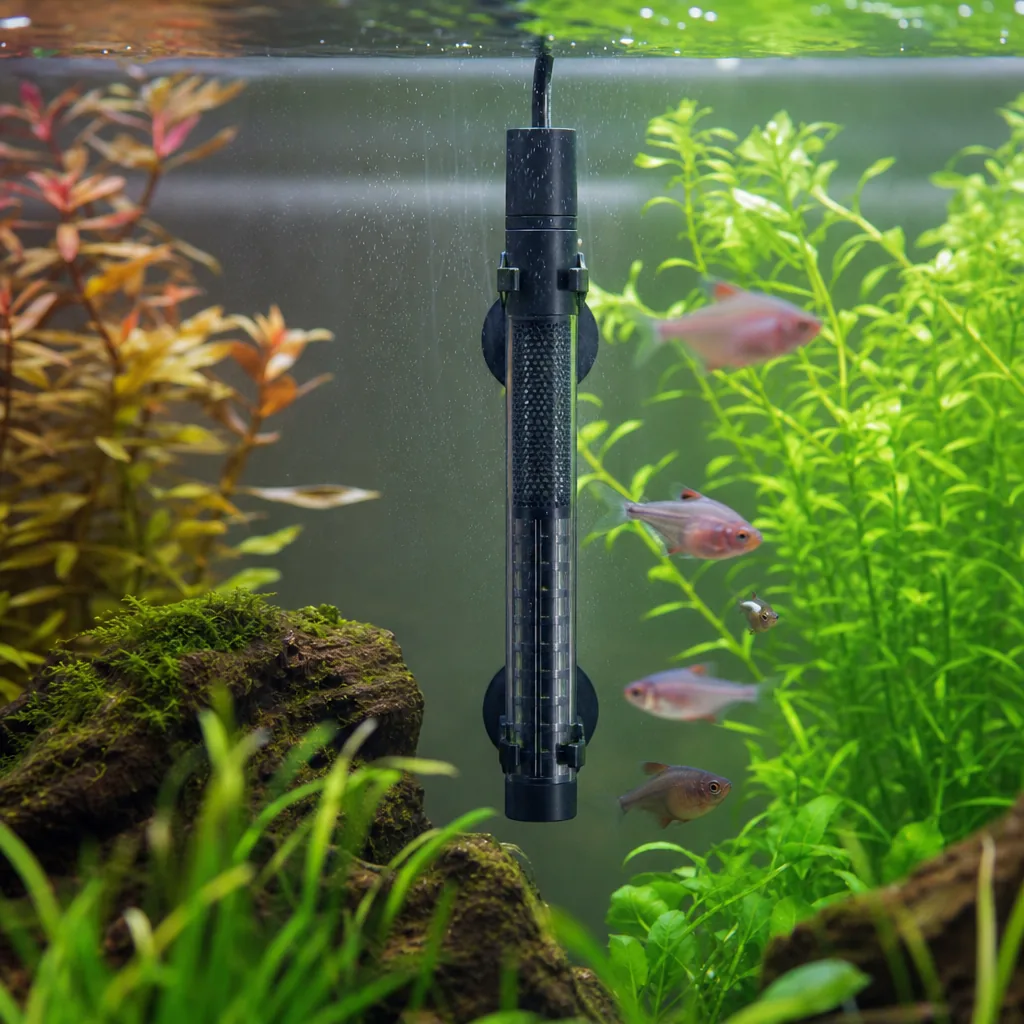
Tank Volume Quick Reference
Treat these as middle-of-the-range starting points for a typically heated room, then adjust up if your space runs cold:
- 5–10 gallon nano — a small, low-wattage heater, ideally one rated to prevent overheating in small volumes.
- 20–29 gallon — a mid-wattage heater handles most heated rooms easily.
- 40–55 gallon — step up the wattage, and consider whether your room ever runs cold.
- 75 gallon and up — this is where running two heaters becomes the smart move.
You’ll find appropriately rated options on our recommended gear page, organized by tank size.
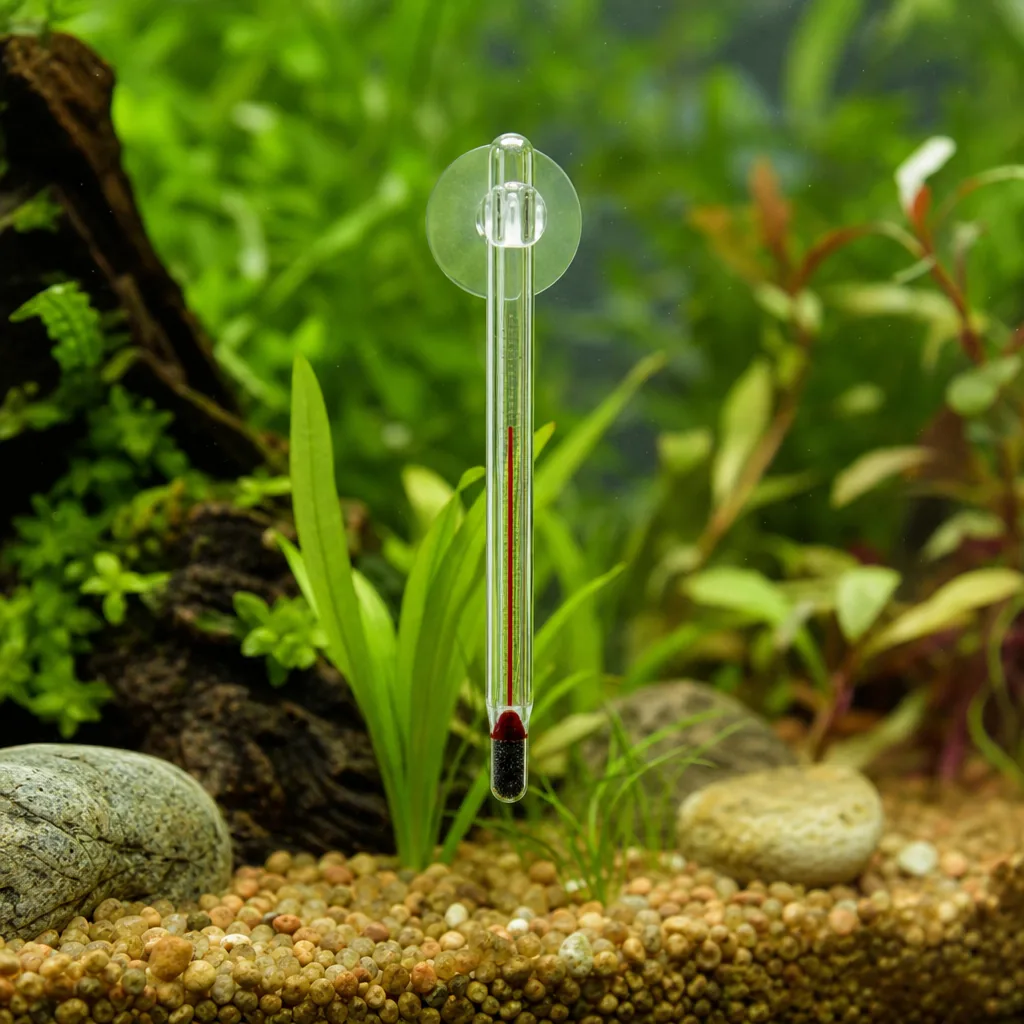
Why Two Smaller Heaters Beat One Big One
On any tank above roughly 40 gallons, splitting your total wattage across two heaters is one of the best habits in the hobby. The payoff is twofold:
- Redundancy — if one heater fails off, the other keeps the tank from crashing while you react.
- Safety — if one heater fails on (stuck thermostat), a smaller heater simply can’t dump enough heat to cook the whole tank before you notice.
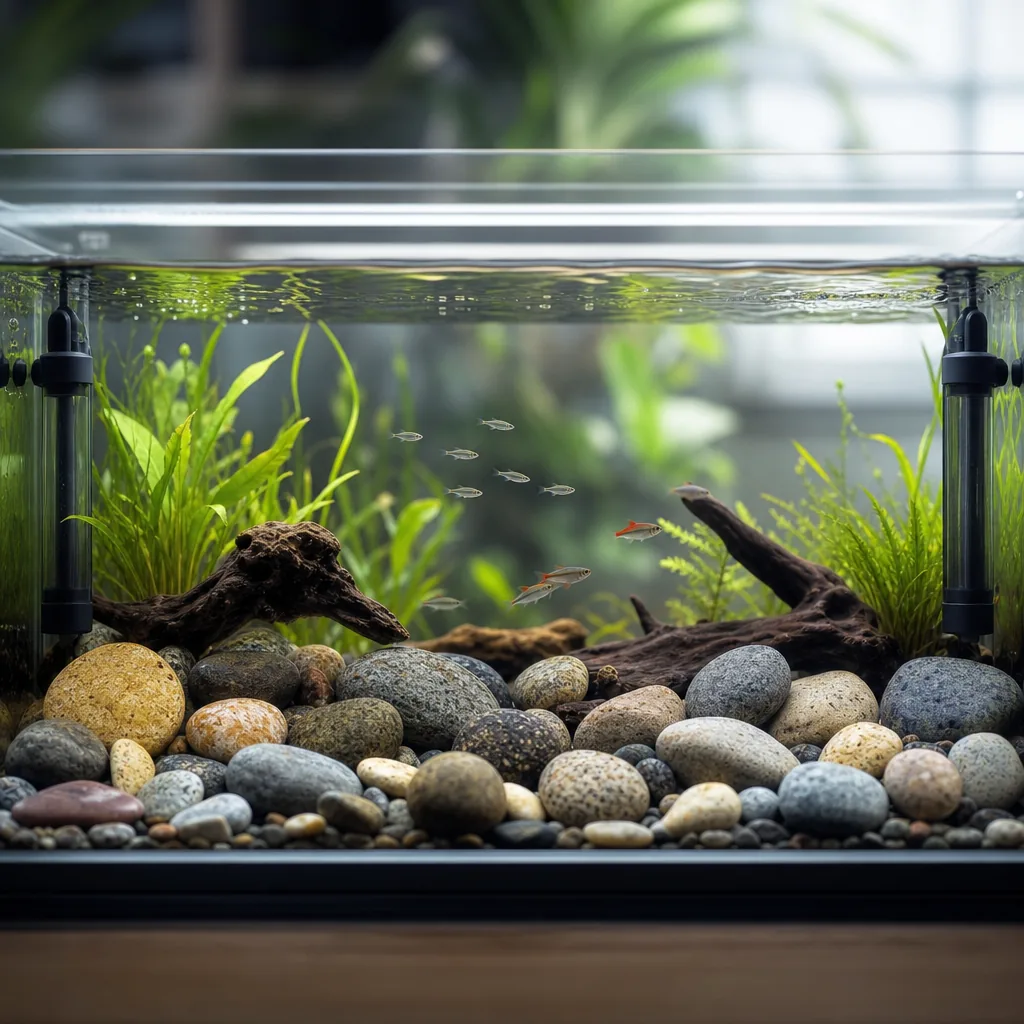
Two 100-watt heaters in a 75-gallon tank are safer than a single 200-watt unit, even though the total output is identical. Place them at opposite ends for even distribution.
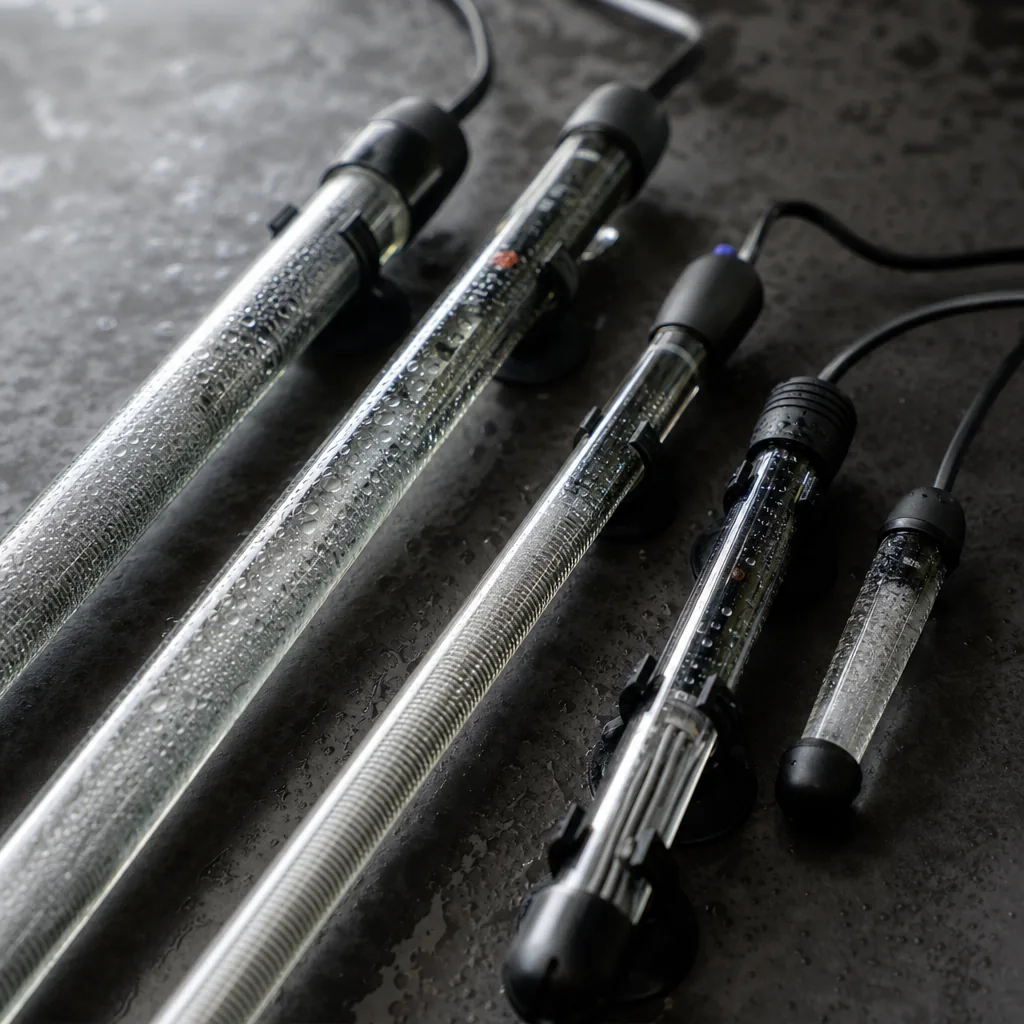
Heater Types Worth Knowing
Submersible glass heaters
The classic, affordable choice. Reliable when from a reputable brand, but the glass can crack if exposed to air while running, so always unplug them before a water change drops the level.
Shatterproof and titanium heaters
Titanium heaters paired with an external controller are the gold standard for larger and saltwater tanks. They’re hard to break, and the separate controller is more accurate and easier to replace than a built-in thermostat. For reef setups, see our saltwater equipment notes.
Preset nano heaters
Small tanks often use fixed-temperature heaters with no adjustment dial. They’re fine for nano setups in a stable room, but you lose the ability to fine-tune.
The Habits That Prevent Disasters
Wattage gets you in the right ballpark; technique keeps the tank alive.
- Always use a separate thermometer. Never trust the heater’s dial alone. A cheap glass or digital thermometer on the opposite side of the tank tells you what the water is actually doing.
- Unplug before water changes. A glass heater exposed to air while hot can crack the moment cold water hits it.
- Let a new heater equalize. Submerge it and wait 15 to 30 minutes before plugging in, so the internal thermostat reads true tank temperature.
- Consider a controller. An external temperature controller overrides any heater’s built-in thermostat and shuts power off at a hard limit — the single best insurance against a stuck-on heater.
Reading the Warning Signs
A heater that never seems to cycle off is either undersized or struggling against a cold room — add wattage or insulate the area. A tank that creeps warmer than the dial setting points to a failing thermostat; replace it before it sticks fully. And a heater indicator light that won’t turn off at all is a red flag to pull the plug immediately and investigate.
Conclusion
Forget complicated formulas. Estimate the gap between your coldest room temperature and your target, start near 3 to 5 watts per gallon, lean higher for cold rooms, and split the load across two heaters on bigger tanks. Add a real thermometer and an external controller for peace of mind, and your tank will hold a rock-steady temperature through every cold snap. For more equipment guides, visit the AquaticRig blog.
Frequently Asked Questions
What happens if my heater is too small?
It will run almost constantly and still struggle to reach your target temperature on cold nights, leaving fish stressed by chronic cold or temperature swings. The fix is either more wattage or a second heater to share the load.
Can a heater make my tank too hot?
Yes — a stuck-on thermostat can overheat a tank, which is exactly why oversizing a single heater is risky. Splitting wattage across two smaller units and adding an external controller is the safest setup.
Do I really need two heaters?
On tanks below about 40 gallons, one good heater is usually fine. Above that, two smaller heaters give you redundancy if one fails and make a stuck heater far less dangerous, which is well worth the modest extra cost.
Where should I place my heater?
Position it near good water flow, such as beside a filter outlet, so heat distributes evenly instead of pooling. On larger tanks with two heaters, place them at opposite ends for the most uniform temperature.
Should I unplug my heater during a water change?
Always unplug a glass submersible heater before the water level drops below it. A hot glass heater exposed to air can crack instantly when refilled with cooler water.