
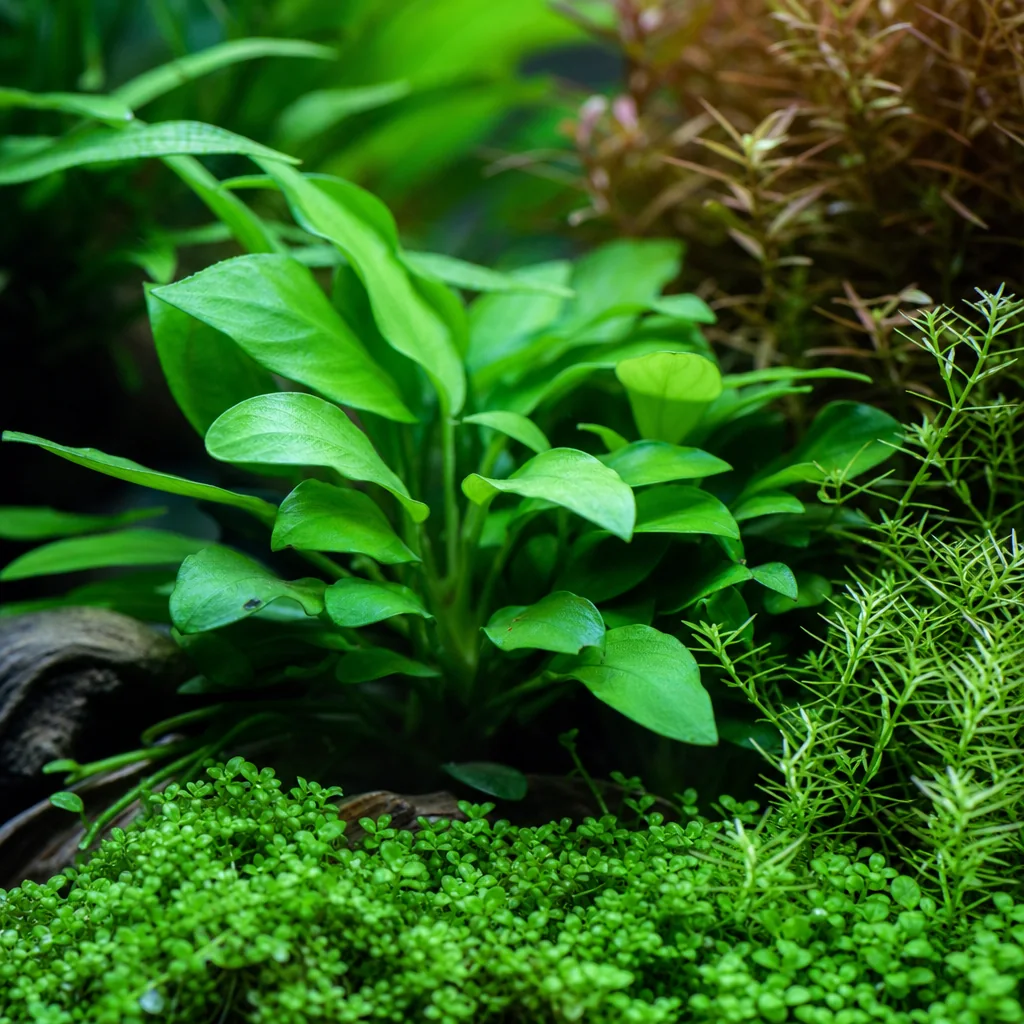
Live plants make a tank look alive in a way plastic decorations never will, and they quietly do real work: soaking up nitrogen, oxygenating the water, and giving fish places to hide. The trick for a first planted tank is picking species that forgive mistakes, because you will make a few.
What Makes a Plant Beginner-Friendly
Most plant failures come from buying something that needs more than your tank provides. A genuinely easy plant has three traits.
- Low light tolerance. It grows under a basic stock LED or even a cheap clip light, no high-output fixture required.
- No CO2 injection needed. Pressurized CO2 systems are a rabbit hole. Beginner plants pull enough carbon from the water and fish respiration to do fine without one.
- Tolerance for imperfect water. If a plant melts the moment your parameters drift, it’s not a beginner plant.
Everything below fits those rules. You can run all of them in a standard tank with no CO2 and a simple light on a timer for around 7 to 9 hours a day.
The Easiest Plants to Start With
Java Fern
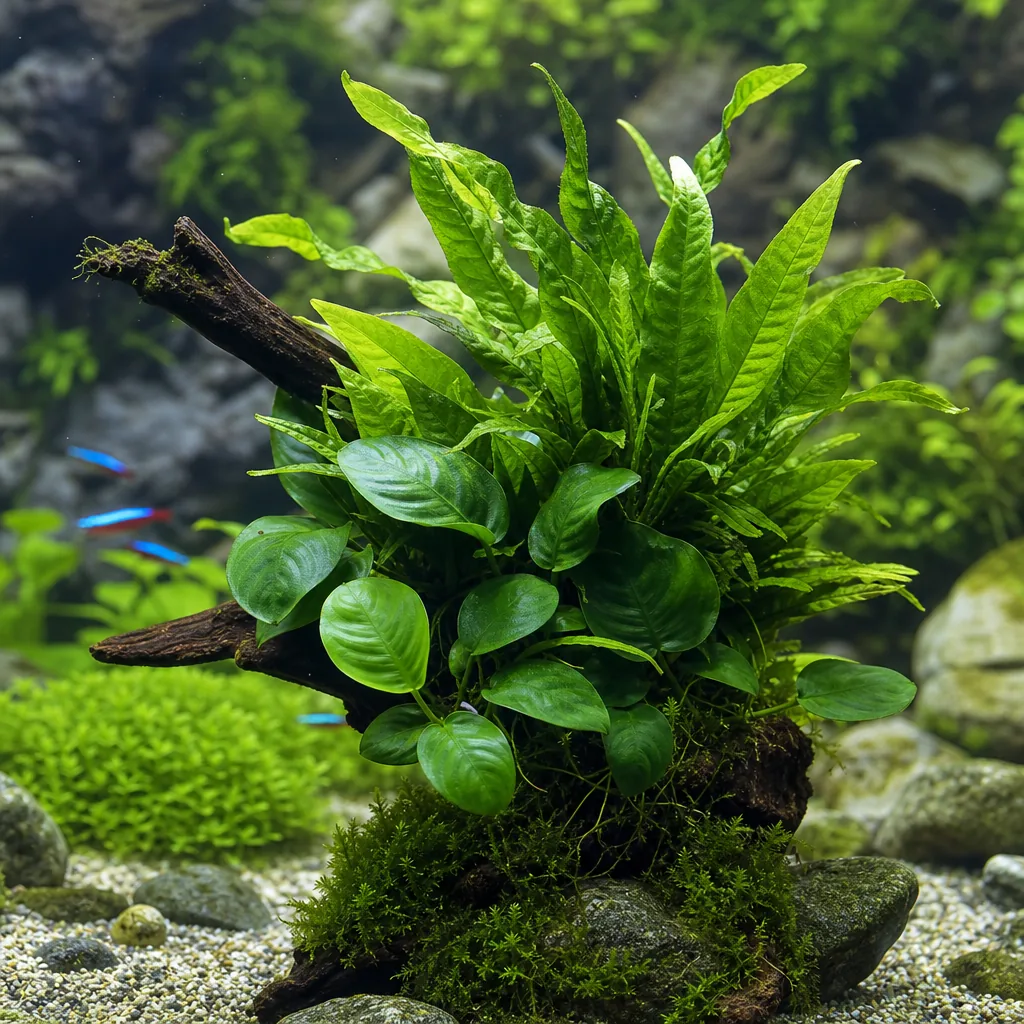
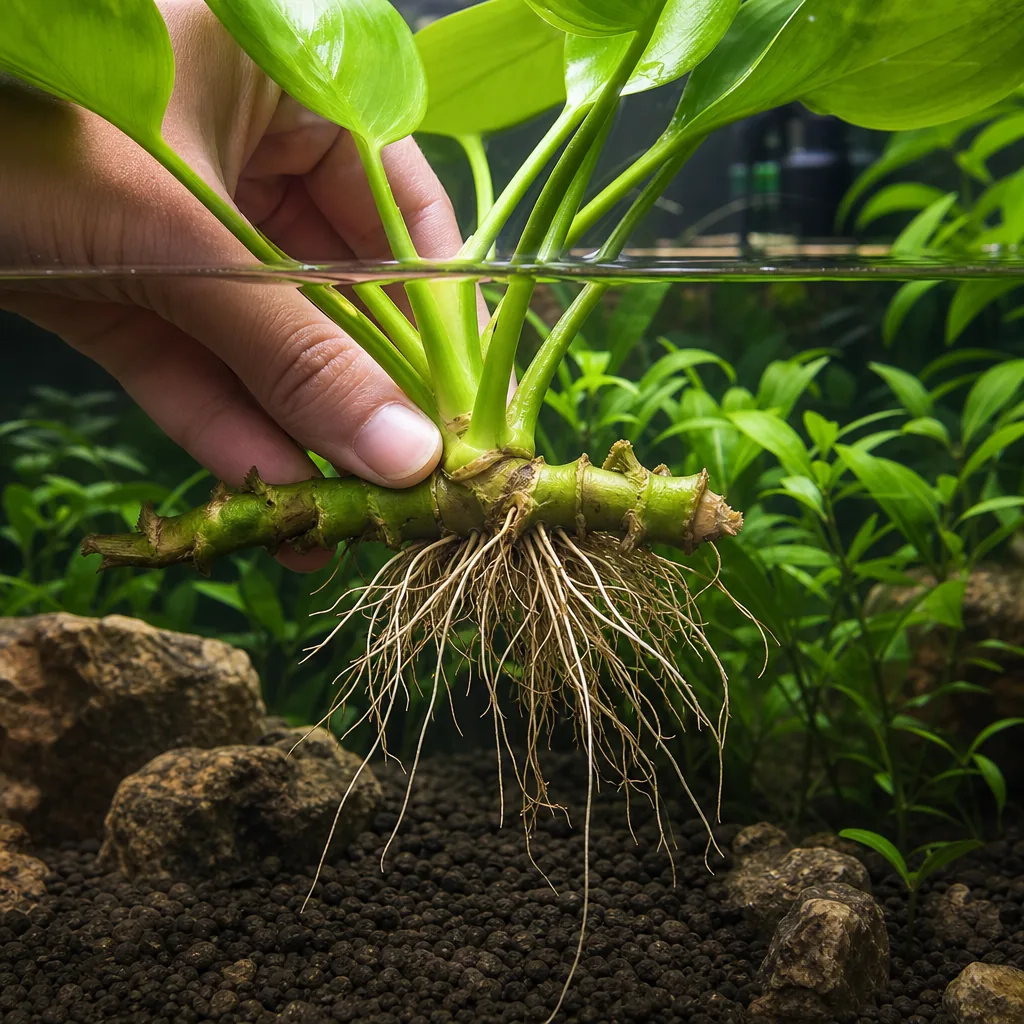
If you buy one plant, make it this. Java fern is nearly impossible to kill, thrives in low light, and grows from a rhizome (the thick horizontal stem the leaves sprout from). Do not bury the rhizome in substrate or it will rot. Instead, tie or glue it to a rock or piece of driftwood. Over time it produces little plantlets on its older leaves that you can snip off and start new plants with.
Anubias
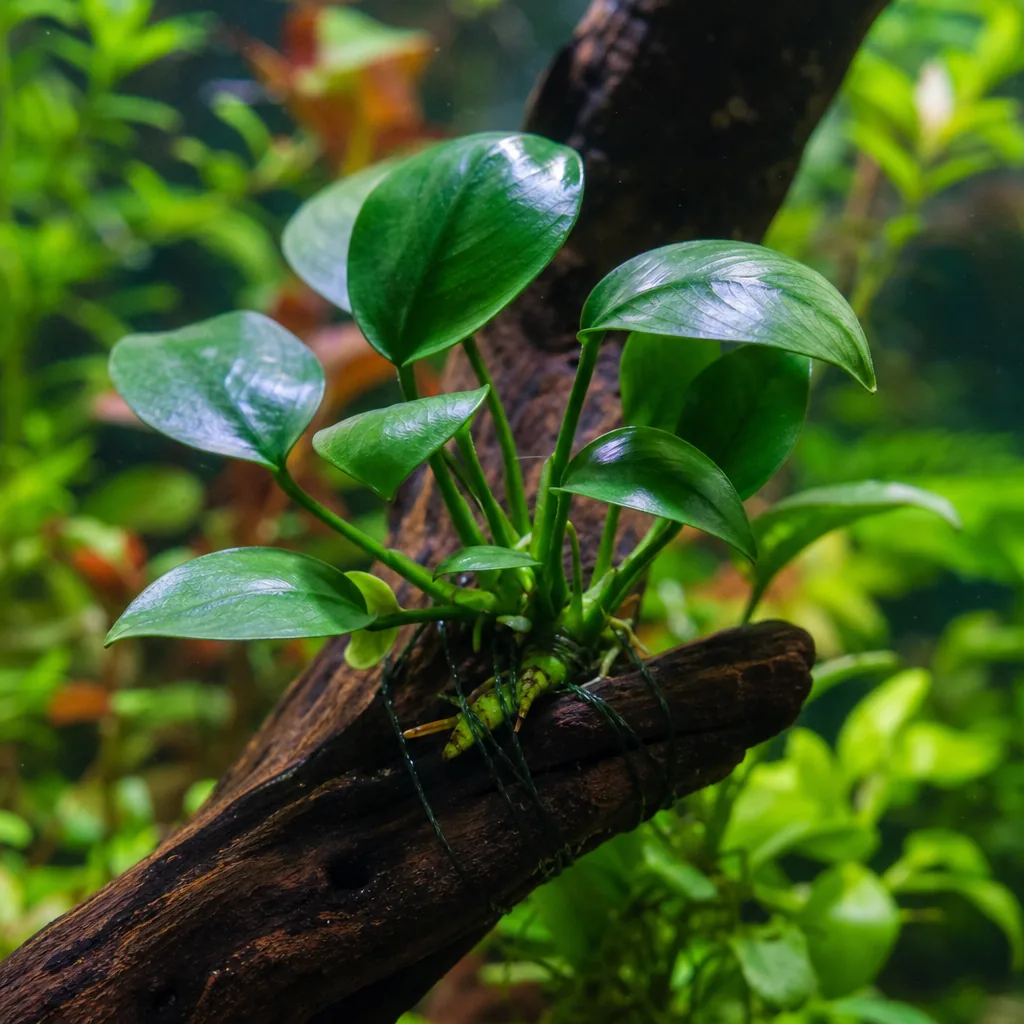
Another rhizome plant and another near-indestructible choice. Anubias has thick, waxy, dark green leaves that algae-eaters love to graze and that shrimp will perch on. Like java fern, the rhizome stays above the substrate, attached to hardscape. It grows slowly, which is actually a feature for beginners: less trimming, less mess. Anubias nana and nana “petite” are great for smaller tanks.
Java Moss
A clumpy, mat-forming moss that needs zero planting. Just wedge it between rocks or tie it to driftwood and leave it alone. It’s the go-to for shrimp tanks and fry, since the tangle traps food and gives babies cover. Give it an occasional trim or it will sprawl into a green cloud.
Amazon Sword
The classic background plant. Amazon swords get large, with broad leaves that fill the back corners of a tank, so give them room. Unlike the rhizome plants above, this is a true root feeder: plant it in the substrate and it benefits a lot from a root tab fertilizer pushed into the gravel near its base every couple of months. Bury the roots but keep the crown (where leaves meet roots) above the substrate line.
Hornwort
A fast-growing stem plant that you can plant or just let float. It’s a nutrient sponge, which makes it excellent for soaking up the excess that would otherwise feed algae in a new tank. Heads up: hornwort sheds needles, especially when first adjusting to a new tank, so expect a little debris early on. Trim the tops and replant them to bush it out.
Water Wisteria
Another fast grower with lacy, bright green leaves. Water wisteria is forgiving and helps stabilize a young tank by consuming nitrogen quickly. Plant the stems in substrate or float them. Like most stem plants, you propagate it by cutting a healthy top and replanting the cutting.
Cryptocoryne (Crypts)
Crypts are low, bushy foreground and midground plants that come in greens, browns, and reds. They’re rewarding once established but famous for “crypt melt”: after you plant them, the leaves may dissolve as the plant adapts to your water. Don’t panic and don’t pull them out. The roots are fine, and new leaves grown in your conditions will replace the melted ones within a few weeks. Root tabs help them thrive.
Vallisneria (Val)
Tall, grassy ribbons that wave in the current and create a natural-looking background curtain. Vallisneria spreads on its own by sending out runners, so one plant becomes a stand over time. Plant the roots but keep the crown exposed. Trim leaves at the base rather than across the middle to keep it tidy.
Marimo Moss Ball
Not technically a moss but a ball of algae, the marimo is the ultimate no-effort “plant.” Drop it in, roll it in your hand occasionally to keep its shape, and give it a gentle squeeze in old tank water during water changes. It tolerates almost anything and looks great in nano tanks and shrimp setups.
Rhizome Plants vs. Planting in Substrate
This is the single biggest beginner mix-up, so it’s worth being clear.
- Rhizome plants (java fern, anubias) and mosses attach to surfaces. Tie them on with cotton thread or fishing line, or use a dab of cyanoacrylate gel super glue (it’s aquarium-safe once cured). Burying the rhizome causes rot.
- Root feeders (Amazon sword, crypts, vallisneria) go into the substrate. Bury the roots, leave the crown exposed, and feed them with root tabs.
- Stem plants (hornwort, wisteria) can be planted or floated. Strip the leaves off the bottom inch before pushing the stem into substrate.
A pair of long aquascaping tweezers makes planting roots far easier than fingers, especially in deeper tanks. You can find planting tools and root tabs in our gear shop.
Common Beginner Mistakes
- Too much light, too soon. More light without matching nutrients and carbon just grows algae. Start around 7 to 8 hours on a timer and increase only if plants look starved.
- Pulling plants that are “dying.” Crypt melt and a rough first couple of weeks are normal. Give new plants a month before judging them.
- Burying rhizomes. Worth repeating: java fern and anubias rhizomes rot underground.
- Expecting instant results. Plants spend their first weeks growing roots, not new leaves. Patience is the whole game.
- Skipping quarantine. Store plants can carry snails, algae, or pests. A rinse and a short separate soak before adding them saves headaches.
Bottom Line
Start with java fern and anubias glued to hardscape, throw in a moss ball and some hornwort to fight early algae, and add a root-fed sword or crypt once you’re comfortable. Keep the light modest, be patient through the first month, and let the plants settle in. For more setup help see our freshwater guides, browse plant-keeping gear in the shop, or keep reading on the blog.
Frequently Asked Questions
What are the easiest aquarium plants for beginners?
Java fern, Anubias, Java moss, Amazon sword, and cryptocoryne are hardy, low-light favorites that tolerate beginner mistakes well.
Do beginner plants need special lighting or CO2?
No. The plants above thrive under standard full-spectrum light with no injected CO2, which is exactly what makes them great starters.
Can I glue or tie plants to rocks and wood?
Yes. Anubias, Java fern, and mosses should be attached to hardscape rather than buried. Burying their rhizome will cause it to rot.
Why are my new aquarium plants melting?
Many plants are grown out of water and melt as they adapt to being submerged. Trim the dead leaves and be patient, since new growth usually follows.
How many plants should I start with?
Planting densely from the start helps outcompete algae. If budget is tight, begin with a few fast-growing stems and let them fill in over time.