
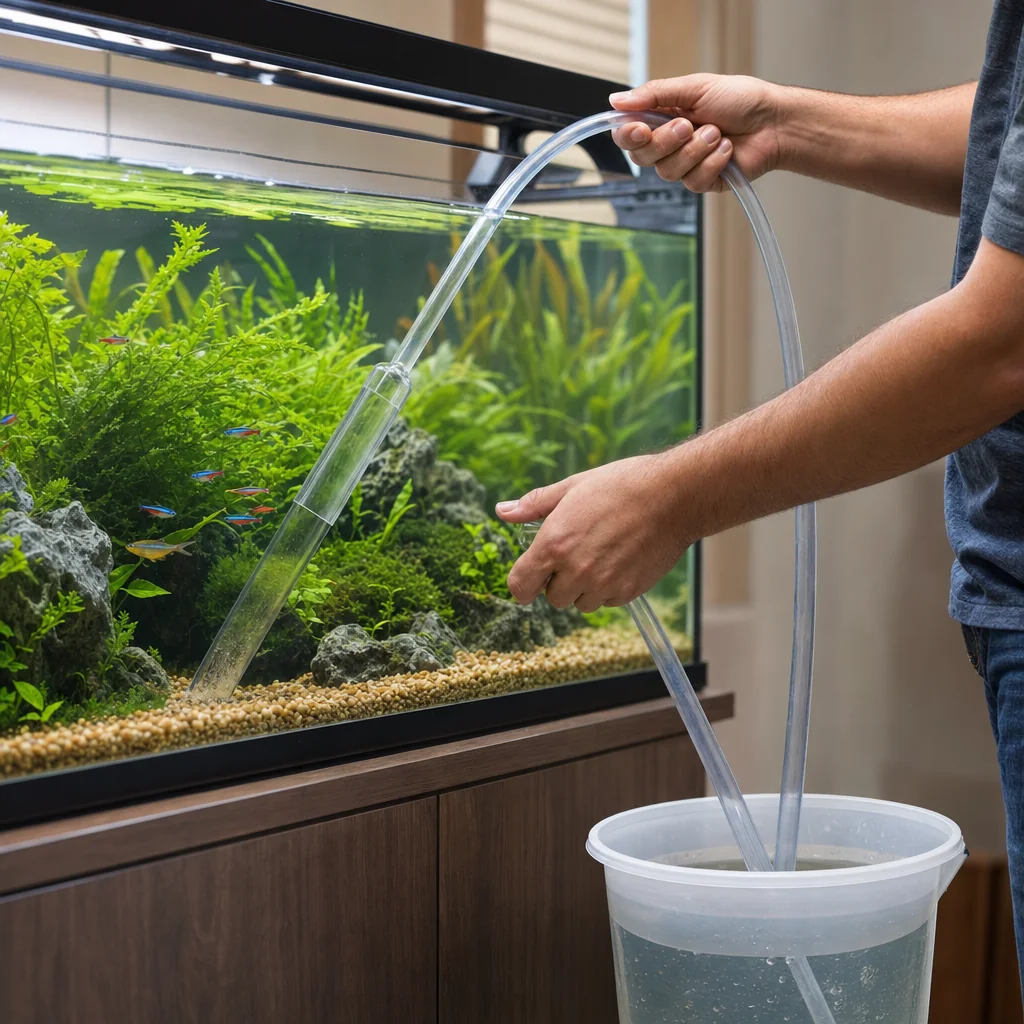
If you only do one thing right as a fishkeeper, make it regular water changes. No filter, no plant, no fancy gadget replaces the simple act of removing dirty water and replacing it with clean. Nitrate creeps up, trace pollutants accumulate, and minerals deplete over time — and a partial water change resets all of it in fifteen minutes.
Beginners often dread water changes because their first few are a wet, stressful production. They don’t have to be. With the right tools and a repeatable routine, a water change becomes a quick chore you barely think about. Here’s how experienced keepers make it painless.
Why Water Changes Matter So Much
Your filter converts ammonia and nitrite into nitrate, but it doesn’t remove nitrate — that’s your job. Left unchecked, nitrate climbs, pH can drift, and dissolved organics accumulate into the murky, faintly yellow water that signals a neglected tank. Regular changes:
- Keep nitrate in a safe range for your livestock.
- Replenish minerals and trace elements that buffer pH and support plant and fish health.
- Dilute pheromones and organics that can stunt fish growth and stress your stock.
- Remove physical waste from the substrate before it breaks down.
How Much and How Often
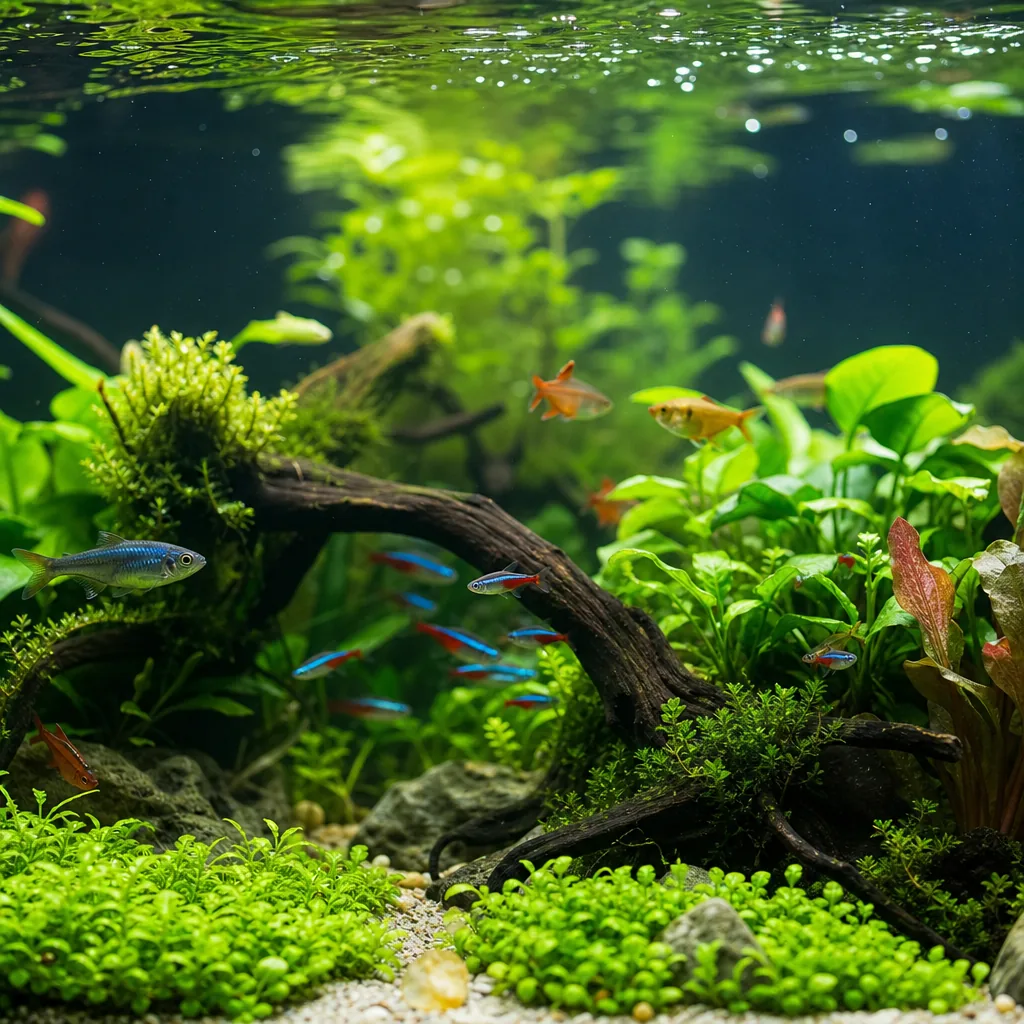
For most freshwater community tanks, a weekly change of 20-30% is the reliable standard. Heavily stocked tanks, growout tanks, or tanks with messy fish may need more; lightly stocked, planted tanks may get away with less. Rather than chasing a perfect percentage, let your test kit guide you — if nitrate is creeping above 20-40 ppm between changes, change more water or more often.
Consistency beats intensity
Smaller, more frequent changes are gentler than occasional huge ones. A weekly 25% keeps parameters stable; a monthly 75% swings them around and stresses fish. Build it into a steady rhythm — see our maintenance schedule guide for how water changes fit into a full routine.
The Tools That Make It Easy
The difference between a dreaded chore and a five-minute task is almost entirely about tools.
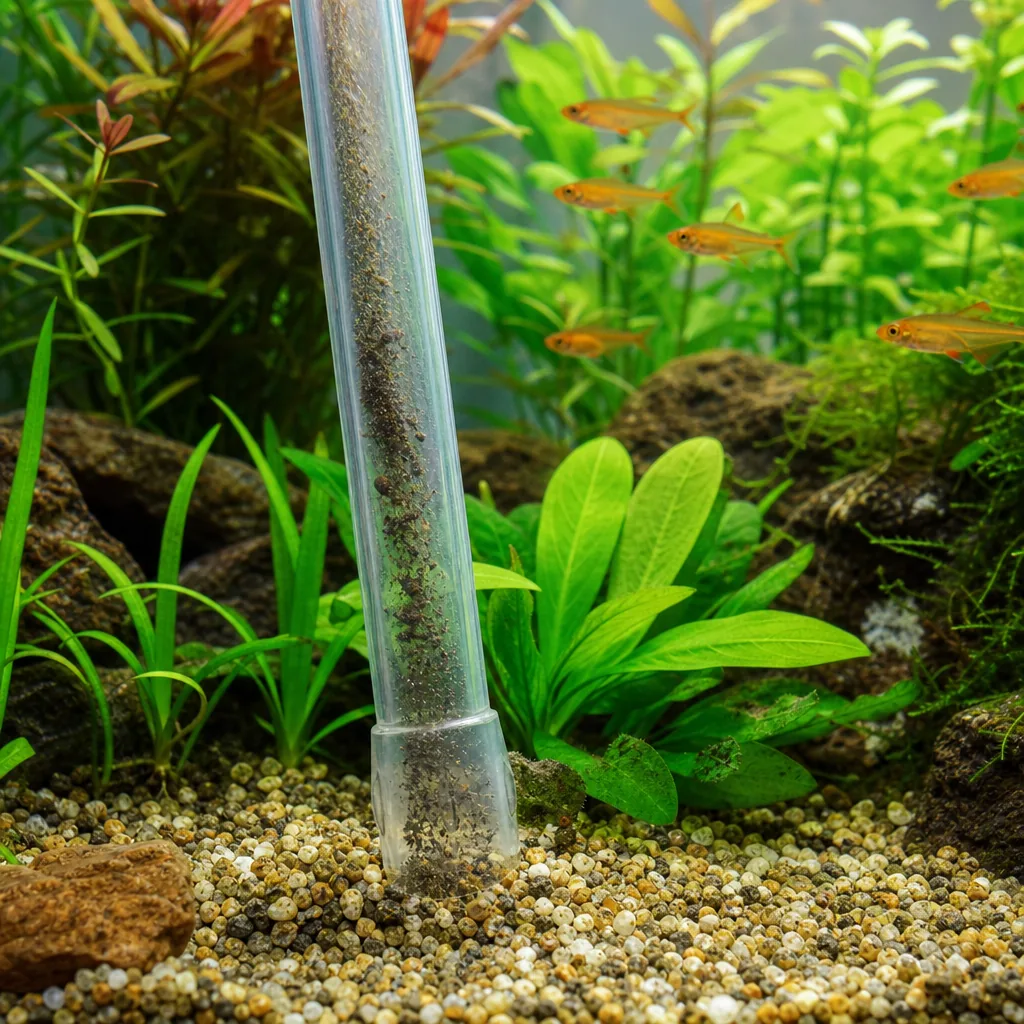
- A gravel vacuum / siphon — the single best purchase for water changes. It pulls water out while cleaning waste from the substrate in one motion.
- A dedicated bucket — never use one that’s seen soap or cleaning chemicals. Mark it “fish only.”
- A water conditioner / dechlorinator — essential for treating tap water before it goes in.
- A thermometer — to roughly match the new water temperature.
For larger tanks, a python-style hose that connects to a faucet lets you drain and refill without carrying a single bucket. It’s a game-changer once you’re past 40 gallons. You’ll find siphons, conditioners, and hose kits in our aquarium gear shop.
The Step-by-Step Routine
- Unplug the heater (and the filter if the water level will drop below its intake). A heater exposed to air can crack or overheat.
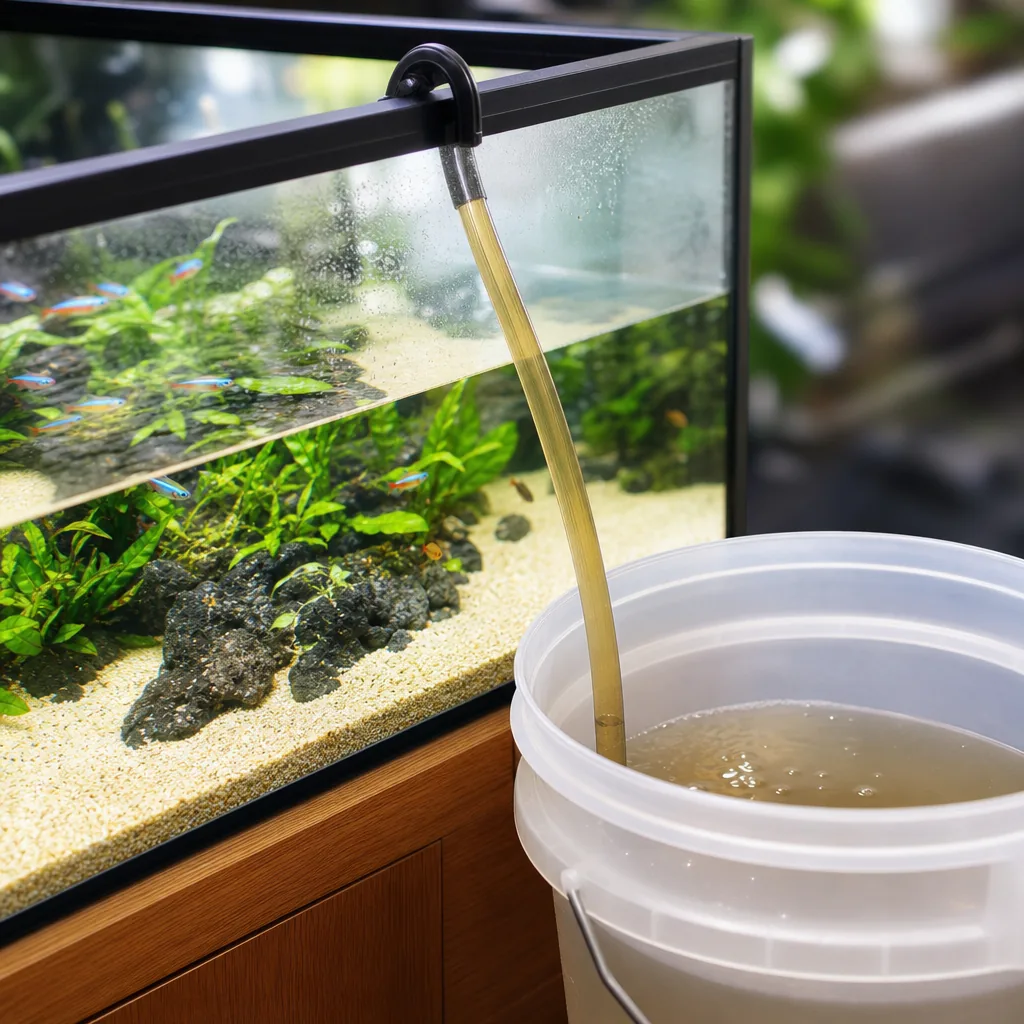
- Siphon out water with the gravel vacuum, working it into the substrate to lift waste as you go. Pull until you’ve removed your target percentage.
- Prepare the new water. Match the temperature to the tank using your faucet or by mixing, and add the correct dose of conditioner for the volume you’re replacing.
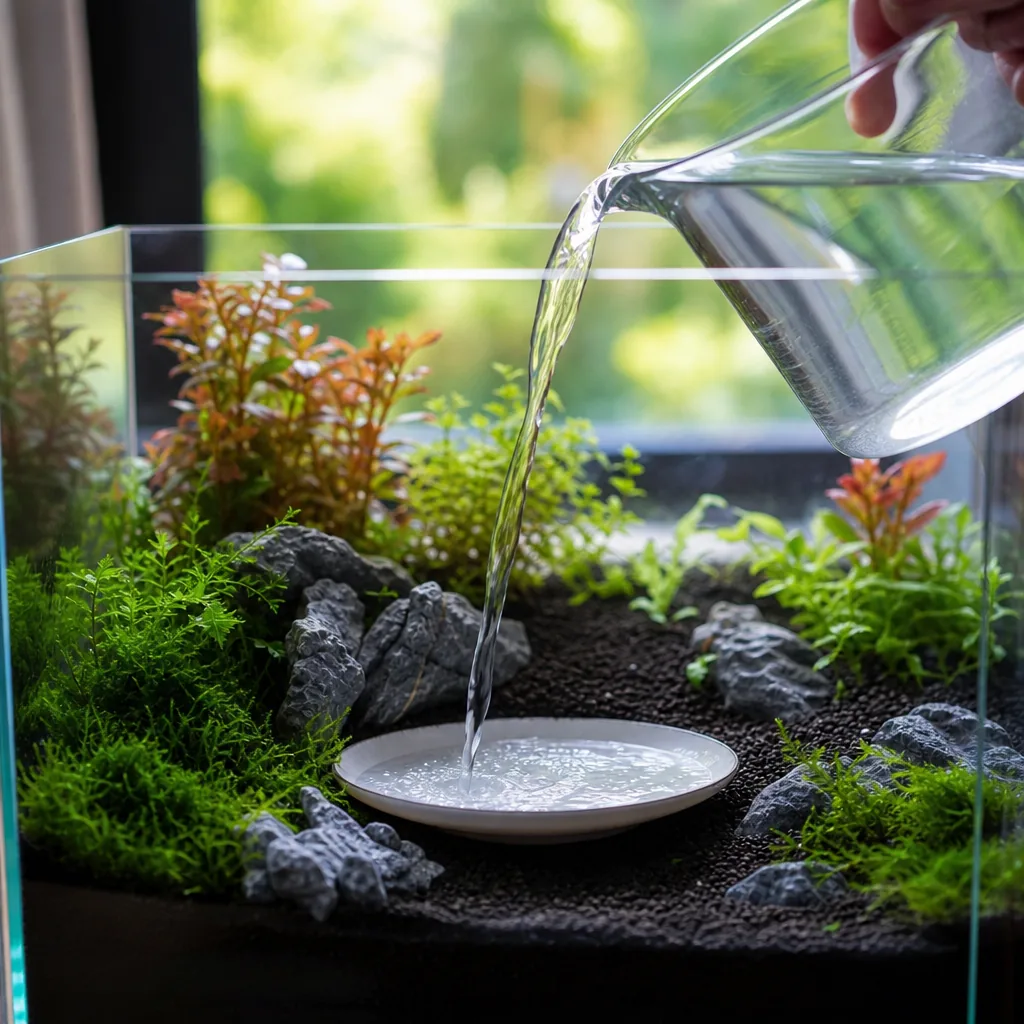
- Refill gently. Pour against the glass or a plate so you don’t blast the substrate or stress the fish.
- Restart equipment. Plug the heater and filter back in once the water level is safe.
Treating the water
If you keep fish in city water, dechlorinator is non-negotiable — chlorine and chloramine are harmful to fish and your biofilter. Dose for the new water volume, or for the whole tank if you’re unsure; most conditioners are safe to slightly overdose. Well water skips the chlorine but should still be checked for parameters before use.
Common Water Change Mistakes
- Forgetting the dechlorinator — the fastest way to harm fish and stall your cycle.
- Big temperature swings — refilling with cold or hot water shocks fish; aim to match within a few degrees.
- Cleaning the filter at the same time — don’t deep-clean your filter media and do a large water change on the same day, or you may disturb too much beneficial bacteria at once.
- Chasing zero nitrate — a small, steady nitrate reading is normal and fine; obsessive water changes can be more stressful than helpful.
Final Thoughts
Water changes are the closest thing the hobby has to a magic bullet. They’re cheap, they’re simple, and they fix or prevent more problems than any product on the shelf. Get the right siphon, keep a dedicated bucket and conditioner on hand, and lock in a weekly rhythm. Once it’s a habit, you’ll spend less time worrying about water quality and more time enjoying a clear, healthy freshwater tank.
Frequently Asked Questions
How often should I change my aquarium water?
A weekly change of 20-30% works for most community tanks. Adjust up if you keep messy or heavily stocked fish, and let your nitrate test readings guide the exact amount and frequency.
Do I need to remove the fish during a water change?
No — leave the fish in the tank. Partial water changes only swap out a fraction of the water, and netting fish out causes far more stress than the change itself.
What happens if I forget the water conditioner?
Untreated tap water introduces chlorine or chloramine, which harms fish gills and kills the beneficial bacteria in your filter. Always dechlorinate, and if you forget, add conditioner to the tank immediately and watch your fish closely.
Can I do too many water changes?
It’s hard to overdo a sensible routine, but very large or constant changes can swing parameters and stress fish. Steady, moderate changes are gentler and more effective than occasional dramatic ones.
Why is my water still cloudy after a change?
Cloudiness right after a change is often disturbed substrate or a temporary bacterial bloom that clears on its own. If it persists, check for overfeeding, an immature cycle, or insufficient filtration rather than doing endless water changes.