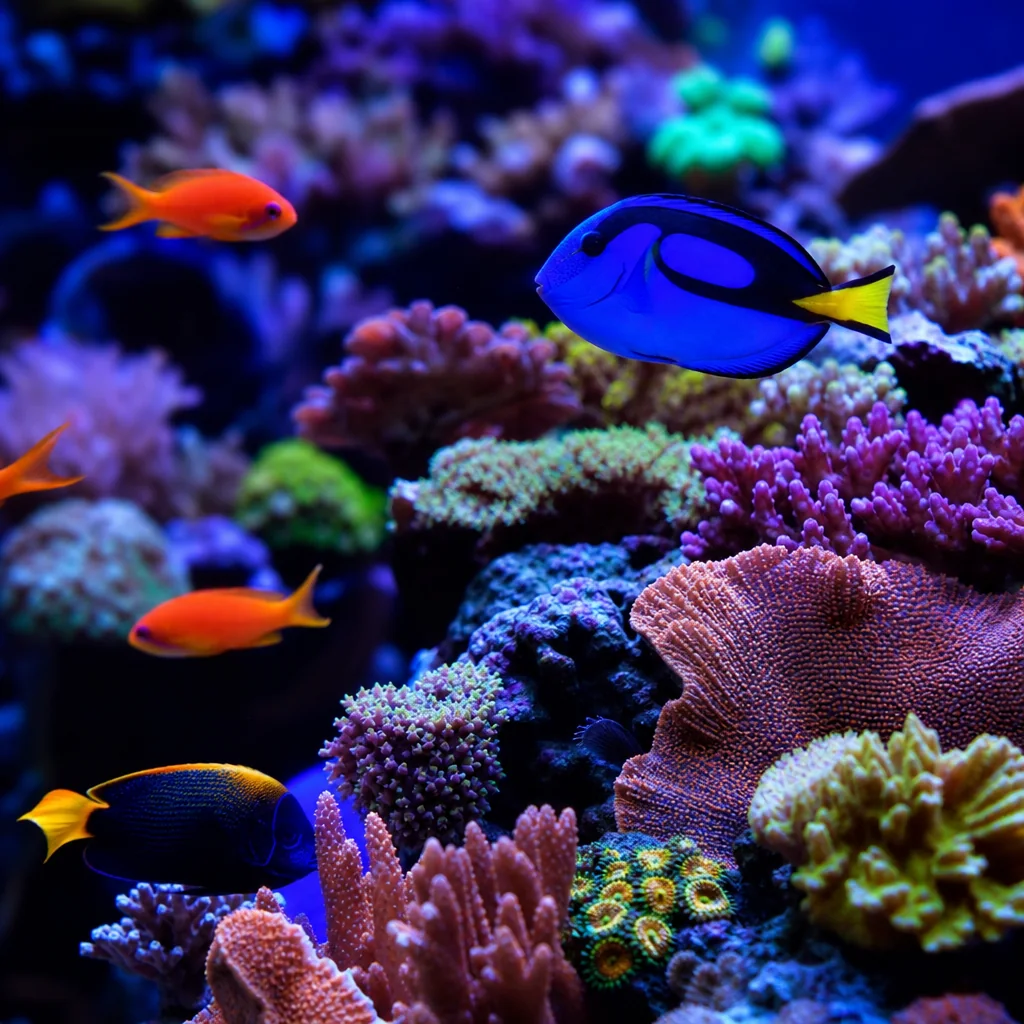
A reef tank looks intimidating from the outside: glowing corals, a wall of equipment, and a reputation for being expensive and unforgiving. The honest truth is that reefkeeping isn’t hard once you understand it; it just punishes shortcuts and rewards patience. Here’s what a first saltwater tank actually needs and how to get there without burning out or crashing your tank.
The Core Equipment You Actually Need
Saltwater asks for more gear than freshwater, but you don’t need everything on day one. Here’s the foundation.
Salt Mix
You don’t add table salt; you mix a purpose-made reef salt with purified water to create synthetic seawater. A reef-grade salt mix carries the calcium, magnesium, and trace elements corals need. Buy a quality mix and stick with one brand, since switching constantly makes it harder to keep parameters consistent.
RODI Water
This is the unsung hero. A reverse-osmosis/deionization unit strips your tap water of phosphates, nitrates, copper, and other contaminants that fuel algae and harm invertebrates. Mixing salt into untreated tap water is one of the most common rookie mistakes. A small RODI unit pays for itself fast versus buying jugs of purified water.
Protein Skimmer
A skimmer pulls dissolved organic waste out of the water before it breaks down into nitrate and phosphate. On freshwater it’s pointless, but on a reef it’s one of the best investments for water quality. Match the skimmer to your tank volume and give yourself a little headroom.
Flow and Powerheads
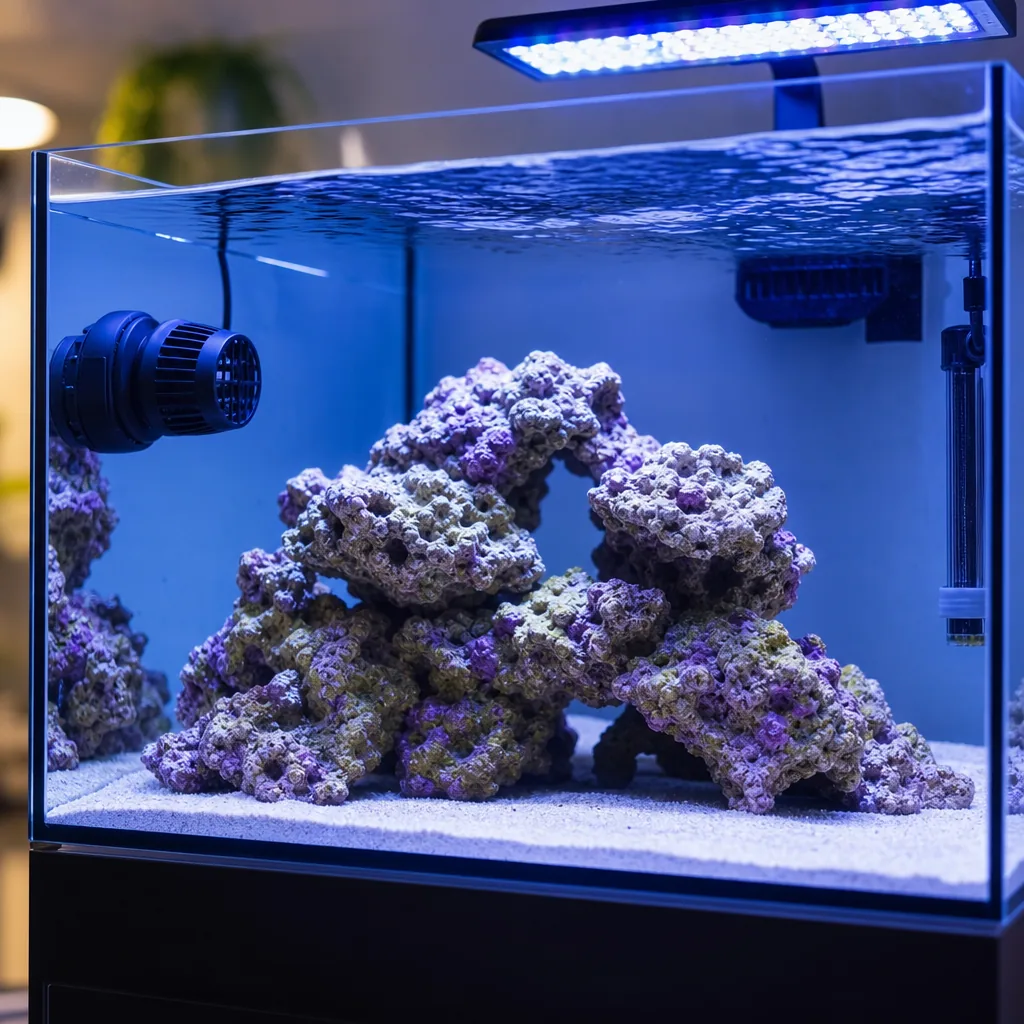
Corals need water moving across them to deliver food and carry away waste. A couple of powerheads create the random, turbulent flow a reef wants, distinct from the directional flow of a filter return. Aim for gentle, shifting current rather than a fire hose.
Reef Lighting
Corals are photosynthetic animals, so the right reef light isn’t decoration, it’s life support. Reef LEDs deliver the spectrum and intensity corals need. Plan your light around the corals you intend to keep, since soft corals want far less intensity than demanding small-polyp stony corals.
Heater and Test Kits
A reliable heater (many reefers run two smaller heaters for redundancy) keeps temperature steady. And you cannot run a reef blind: a saltwater test kit for salinity, ammonia, nitrite, nitrate, alkalinity, calcium, and magnesium is non-negotiable. A refractometer for salinity beats a cheap hydrometer every time.
Why Stability Beats Perfection
If you remember one thing about reefkeeping, make it this: corals care more about stability than about hitting a perfect number. A tank held steady at slightly imperfect values will outperform one that swings wildly toward “ideal” and back.
- Temperature: Pick a value in the high 70s Fahrenheit and hold it. Sudden swings stress everything in the tank.
- Salinity: Reef tanks run at marine strength salinity; the exact target matters less than keeping it from drifting as water evaporates. Top off evaporated water with fresh RODI, never saltwater, since salt doesn’t evaporate.
- Parameters: Alkalinity, calcium, and magnesium drive coral growth. Consistency is what keeps corals open and colorful.
This is why patience matters more than money in this hobby. The reefers with the best tanks aren’t the ones who spent the most; they’re the ones who changed nothing too fast.
Cycling a Saltwater Tank
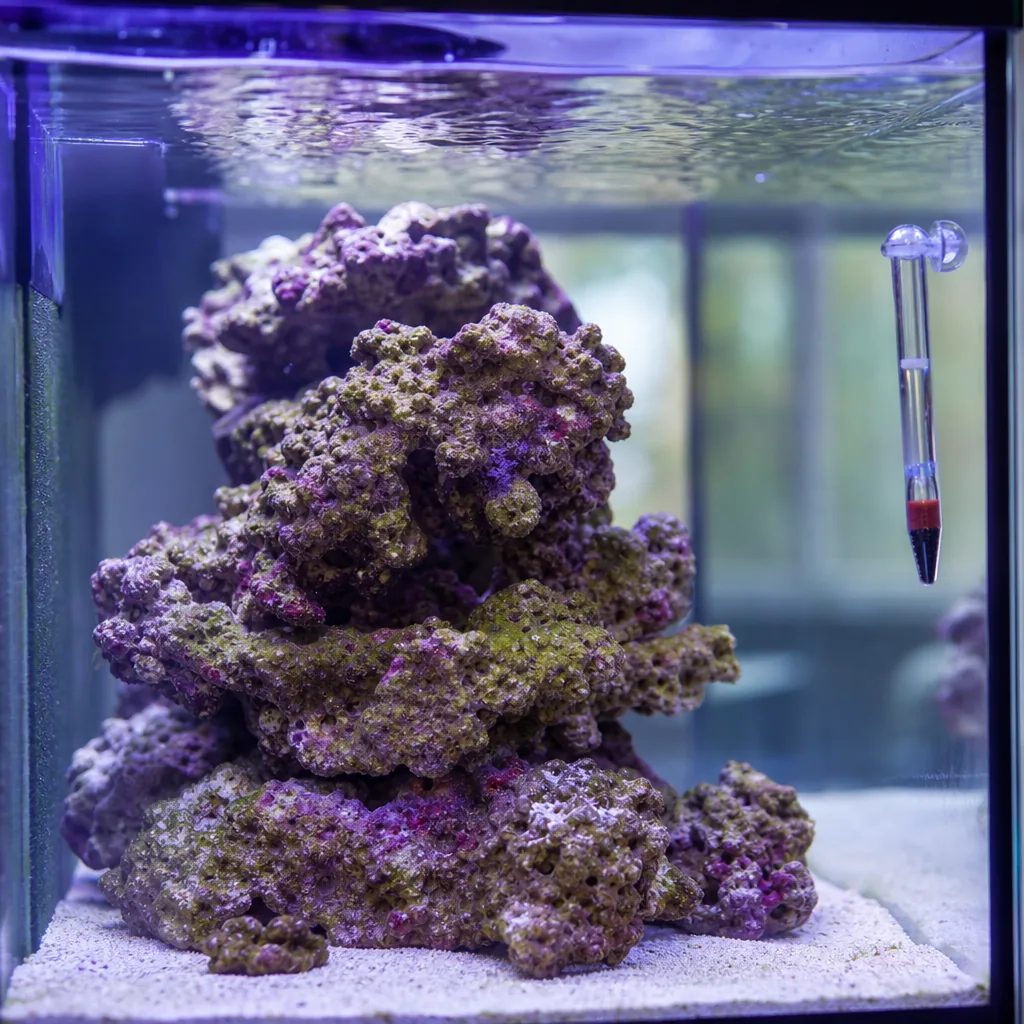
Cycling means growing the beneficial bacteria that convert toxic ammonia into nitrite and then into nitrate, exactly like freshwater. The difference is that reef tanks usually cycle on live rock (porous rock seeded with bacteria and microfauna), which becomes the biological backbone of the system.
- Set up the tank with mixed saltwater, live rock, and a sand bed.
- Add an ammonia source to feed the bacteria and start the cycle.
- Test regularly. You’ll watch ammonia spike and fall, then nitrite spike and fall.
- The cycle is done when ammonia and nitrite both read zero and you see some nitrate.
This typically takes several weeks. Do not rush it. Adding livestock to an uncycled tank is the fastest way to kill expensive animals and sour your first experience. The cycling logic carries over from freshwater, so if you’ve kept a freshwater tank, our freshwater guides will feel familiar here.
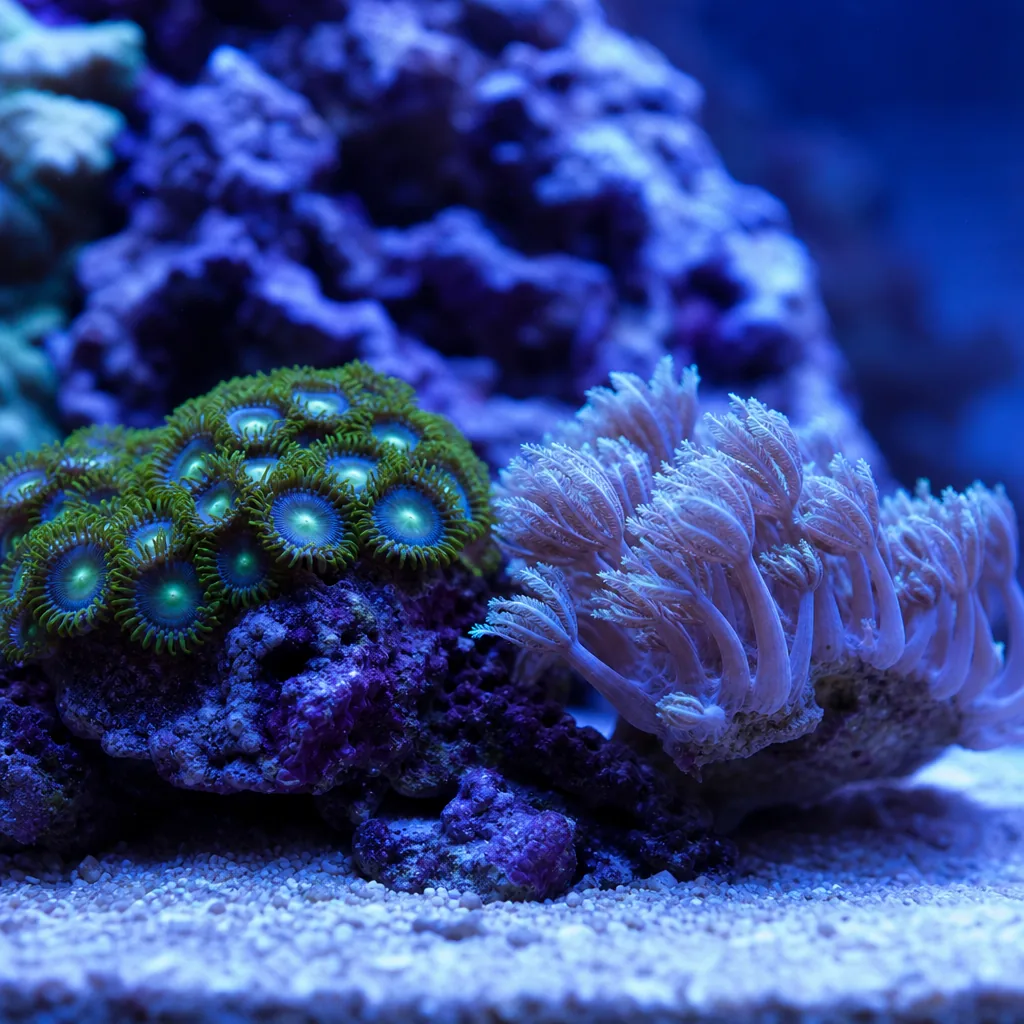
Add Hardy Corals First
Once the tank is cycled and you’ve watched your parameters hold steady for a couple of weeks, you can start adding life. Resist the urge to buy the showpiece coral first. Start with forgiving, beginner-friendly corals that tolerate the small swings a new tank still has.
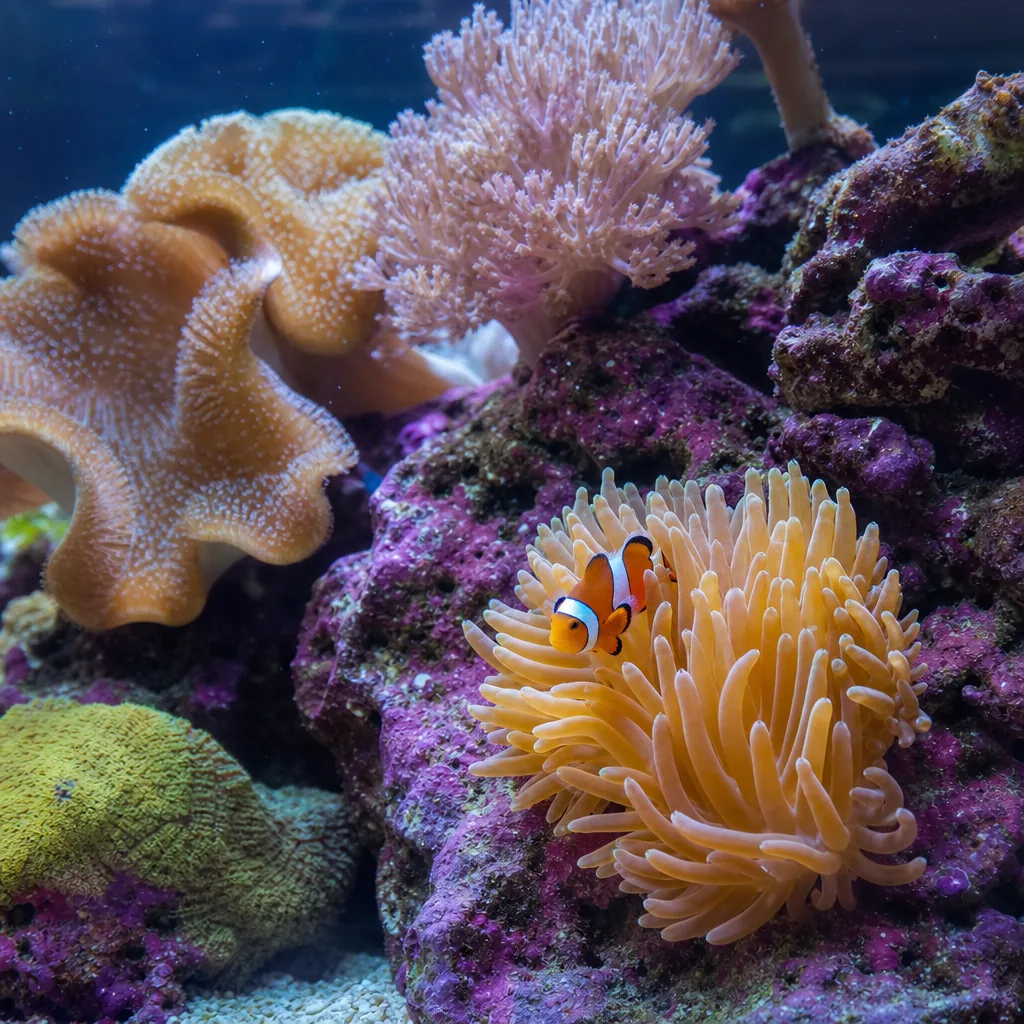
- Soft corals like mushrooms, zoanthids, and leather corals are famously tough and add instant color.
- Easy large-polyp stony corals can follow once the tank has matured.
- Demanding small-polyp stony corals belong months down the line, after you’ve proven you can hold parameters rock-steady.
Add a few pieces at a time and watch how they respond. A coral that stays open and extends its polyps is happy; one that stays closed is telling you something is off. Build your livestock list gradually, and lean on the deeper reef walkthroughs in our saltwater section as you go.
A Realistic Beginner Roadmap
Here’s a sane order of operations that keeps stress (yours and your livestock’s) low.
- Weeks 1-2: Set up the tank, RODI and salt mixing routine, heater, flow, and lights. Get equipment dialed and stable before any livestock.
- Weeks 2-6: Cycle the tank on live rock. Test often, change nothing, be patient.
- Weeks 6-8: Cycle complete. Add a cleanup crew (snails and hermits) to handle early algae.
- Months 2-3: Introduce your first hardy soft corals and one or two hardy fish, slowly.
- Months 3-6: Establish a maintenance rhythm: weekly testing, regular water changes with fresh saltwater, and topping off evaporation with RODI.
- Month 6 and beyond: Once you can hold parameters steady, branch into more demanding corals if you want them.
Notice how much of that timeline is just waiting and observing. That’s the job. The tank does the heavy lifting; you provide consistency.
Bottom Line
A successful first reef tank comes down to clean RODI water, solid core equipment, and the discipline to cycle fully before adding anything alive. Chase stability over perfect numbers, start with hardy corals, and let the system mature on its own schedule. Reefkeeping rewards the patient far more than the wealthy. When you’re ready for the next step, browse more setup guides on the AquaticRig blog, and if ponds are also on your radar, we cover those in our pond section too.
Disclosure: AquaticRig participates in affiliate programs, including the Amazon Associates Program. As an Amazon Associate we earn from qualifying purchases. Some links on this page are affiliate links, which means we may earn a commission at no extra cost to you if you make a purchase. This never affects our recommendations. See our full affiliate disclosure for details.
Frequently Asked Questions
Is a reef tank good for beginners?
A reef tank is an advanced step. Master saltwater fundamentals first, keep the tank stable for a few months, then start with hardy soft corals. See our saltwater guides.
What equipment does a basic reef tank need?
At minimum you need a quality reef light, a powerhead for flow, a heater, a refractometer, salt mix, live rock, and usually a protein skimmer.
What is the easiest coral for beginners?
Soft corals like zoanthids, mushrooms, and green star polyps are forgiving of beginner parameter swings and lower light. Save SPS corals for later.
How stable do reef parameters need to be?
Stability matters more than perfection. Keep salinity, temperature, alkalinity, and calcium consistent, because sudden swings stress corals more than steady, slightly off-target values.
How long before I can add corals?
Let the tank cycle and stabilize for at least 1-3 months. Add a cleanup crew first, then introduce hardy corals slowly while you monitor parameters.