
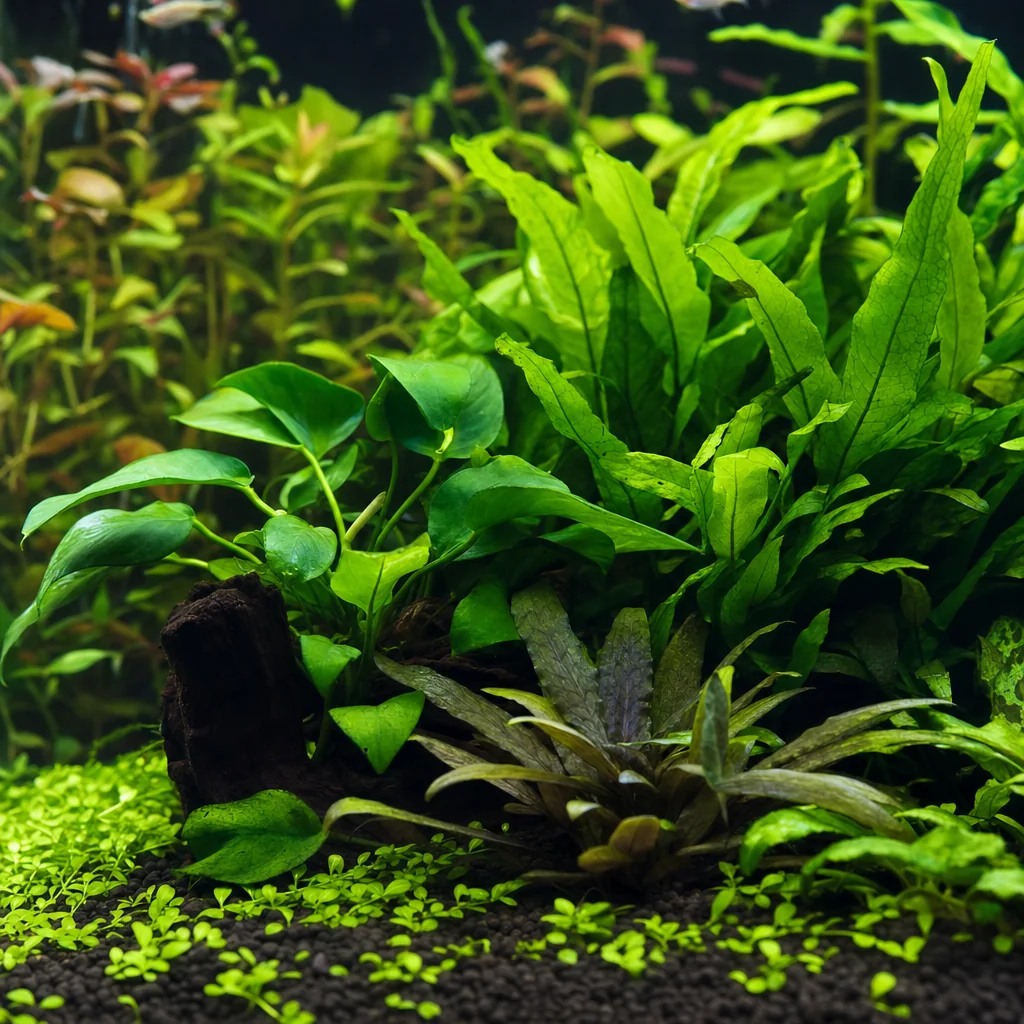
If you want live plants but do not want to invest in strong lighting and CO2, low-light plants are your answer, and the good news is that some of the most attractive plants in the hobby fall into this category. “Low-light” gets used loosely, so let me be precise: these are plants that grow well under modest lighting, tolerate a range of water conditions, and do not require injected carbon. They are forgiving, slow-growing, and nearly impossible to kill once established, which makes them perfect for beginners and busy keepers alike.
This guide covers the most reliable low-light plants, where to place each, and the handful of care points that keep them looking their best.
What Makes a Plant Low-Light
Low-light plants are typically slow growers that evolved in shaded or variable conditions. Because they grow slowly, they need less energy, which is exactly why they get by on modest lighting and limited nutrients. The trade-off is patience: these plants will not fill a tank overnight, but they also will not melt the moment conditions wobble.
The Most Reliable Low-Light Plants
These are the species seasoned hobbyists recommend over and over for forgiving, attractive growth.
Anubias
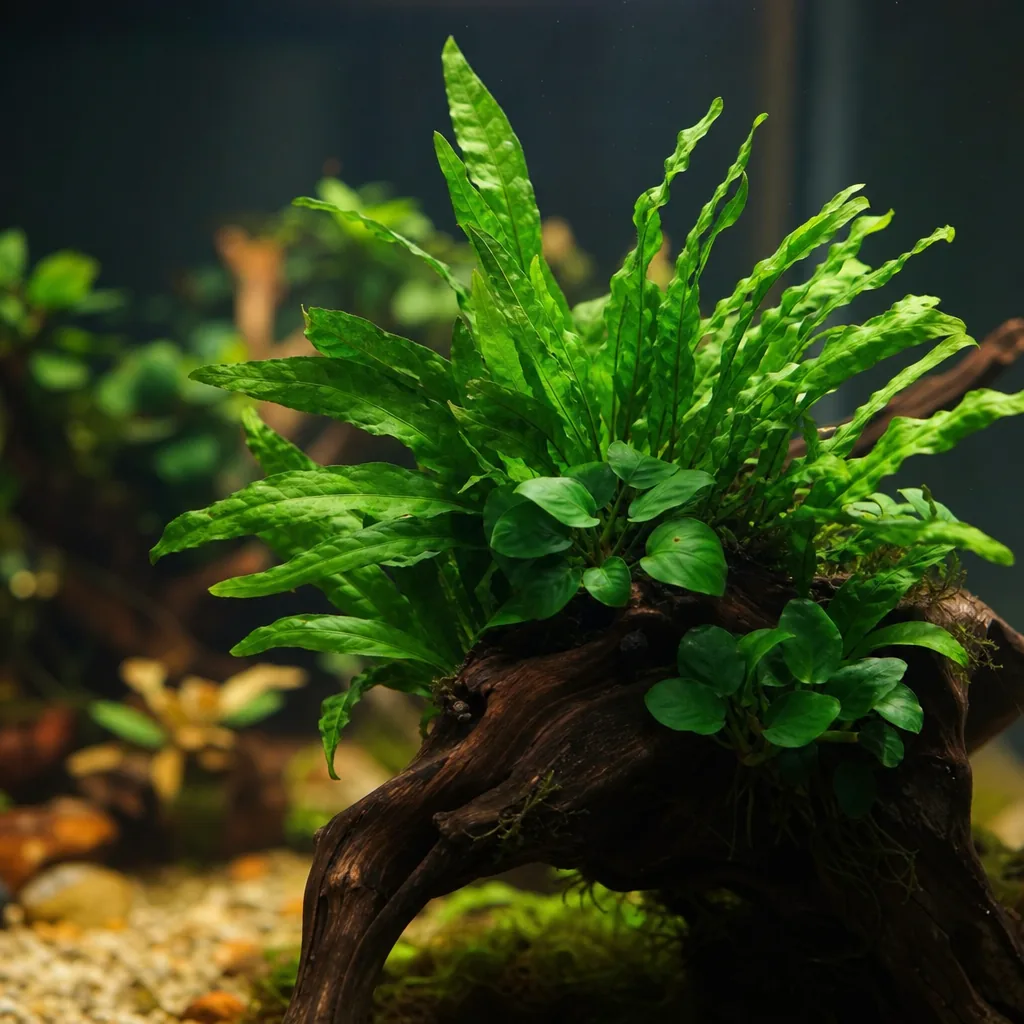
Anubias is a cornerstone of the low-light tank. Its thick, dark leaves grow from a rhizome that attaches to wood or rock, and it tolerates almost any condition. The one rule: never bury the rhizome in substrate, or it will rot. Tie or glue it to hardscape instead.
Java Fern
Java fern is similarly tough and similarly attaches to hardscape rather than rooting in substrate. It tolerates very low light, comes in several leaf shapes, and propagates by sprouting baby plants on its leaves. Like anubias, keep its rhizome above the substrate.
Cryptocoryne
Crypts root in the substrate and come in a wonderful range of colors and sizes. They can melt back when first introduced as they adjust, but they almost always recover and fill in beautifully. They are ideal midground and background plants for low-light tanks.
Mosses
Java moss and similar mosses grow steadily under low light and add soft texture to hardscape. They attach to wood and rock and are endlessly useful for naturalistic aquascapes.
Floating Plants
Many floaters thrive in low-light tanks, shade the water below, and soak up excess nutrients that would otherwise feed algae. They are a quiet workhorse in a forgiving setup.
Placing Low-Light Plants Well
Even forgiving plants look better with thoughtful placement.
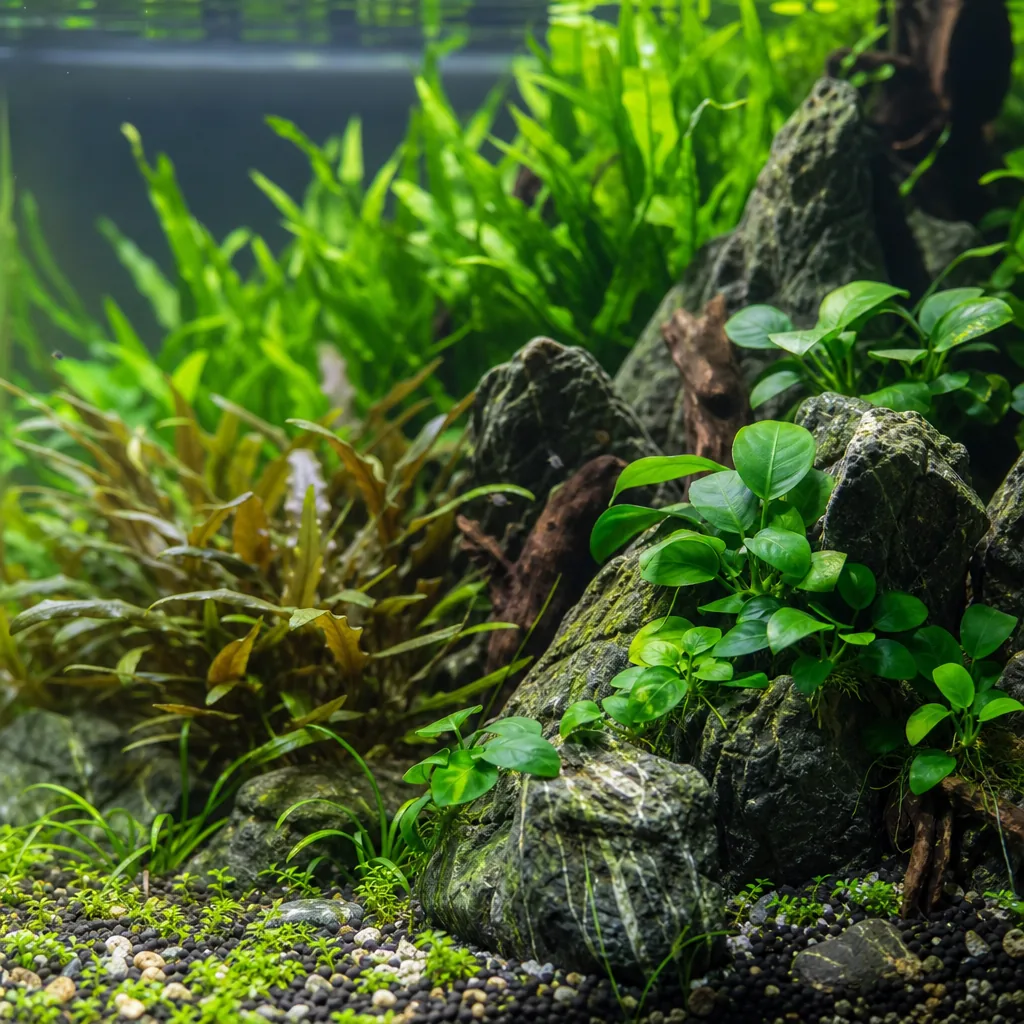
- Foreground: small anubias varieties and certain crypts work in front where their detail shows.
- Midground: larger anubias and medium crypts anchor the middle of the layout.
- Background: tall crypts and java fern fill the back and add height.
- Hardscape: mosses and rhizome plants attached to wood and rock tie the scape together.
For help arranging these into a cohesive layout, see our aquascaping basics guide. Many of these plants are available as beginner-friendly options in the shop.
Caring for Low-Light Plants
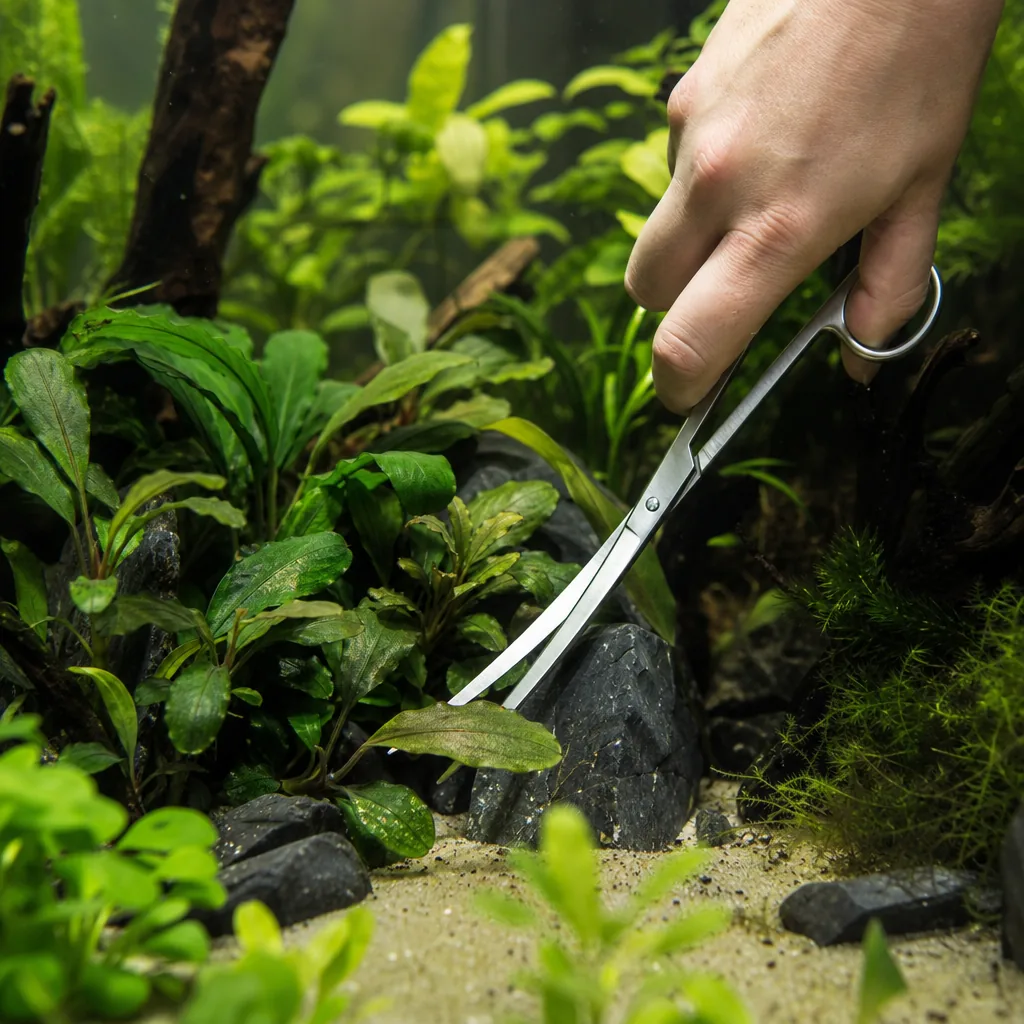
Low-light plants are easy, but a few habits keep them thriving rather than merely surviving.
- Do not over-light them. Excess light without CO2 just feeds algae that will coat slow-growing leaves.
- Provide modest nutrients. Light dosing of a comprehensive fertilizer and root tabs for rooted species cover their needs.
- Keep the rhizome free. For anubias and java fern, never bury the rhizome.
- Be patient with melt. Crypts especially may shed leaves when introduced, then recover. Do not pull them.
Pairing Plants With Your Tank
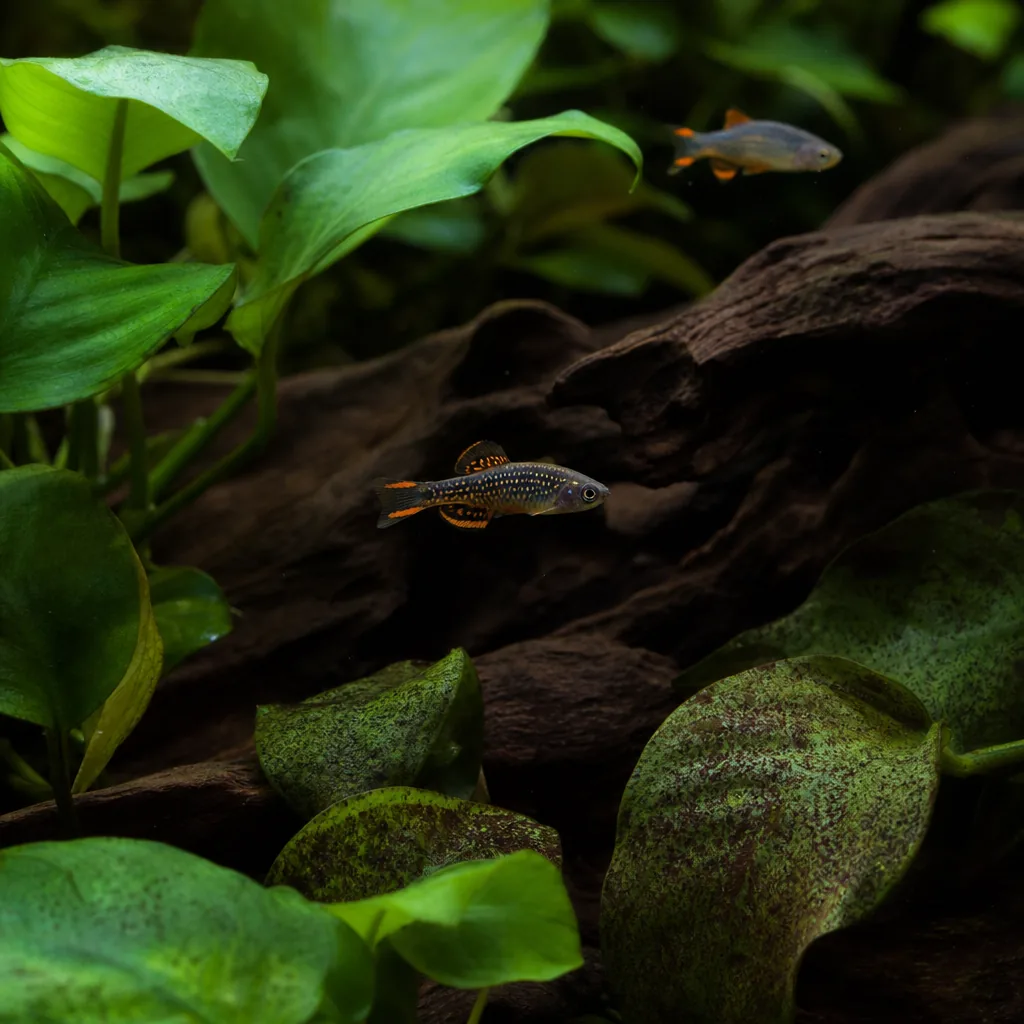
Low-light plants suit nearly any peaceful community and pair naturally with a relaxed, low-maintenance setup. They are the backbone of the low-tech planted tank approach and work beautifully with hardy community fish. Because they grow slowly and tolerate a wide range of conditions, they let you focus on enjoying the tank rather than chasing growth.
Easy Greenery, Lasting Results
Low-light plants prove you do not need expensive equipment to keep a living, green aquarium. Build around anubias, java fern, crypts, mosses, and floaters; light them modestly; feed them lightly; and give them time. The result is a tank that looks more natural and established with every passing month and asks remarkably little in return. For more on building out the rest of the system, browse the freshwater hub.
Frequently Asked Questions
What are the easiest low-light aquarium plants?
Anubias and java fern top the list because they tolerate very low light, attach to wood or rock, and survive almost any condition. Cryptocoryne and mosses are close behind. All thrive without CO2.
Can low-light plants grow without CO2?
Yes, that is their defining trait. Low-light plants are slow growers that get by on modest lighting and limited nutrients, so they do not need injected carbon. This makes them ideal for beginners and low-maintenance tanks.
Why is my anubias rotting?
The most common cause is burying the rhizome, the thick horizontal stem the leaves grow from. Anubias and java fern must have their rhizome kept above the substrate, attached to wood or rock, or it will rot.
My cryptocoryne lost all its leaves. Did it die?
Probably not. Crypts commonly melt back when first introduced as they adjust to new conditions, then recover and regrow. Leave the roots in place and be patient, and the plant will usually fill back in.
Do low-light plants need fertilizer?
They need only modest nutrients. Light dosing of a comprehensive liquid fertilizer plus root tabs for rooted species like crypts is plenty. Avoid overdoing light and nutrients, which feeds algae rather than these slow growers.