
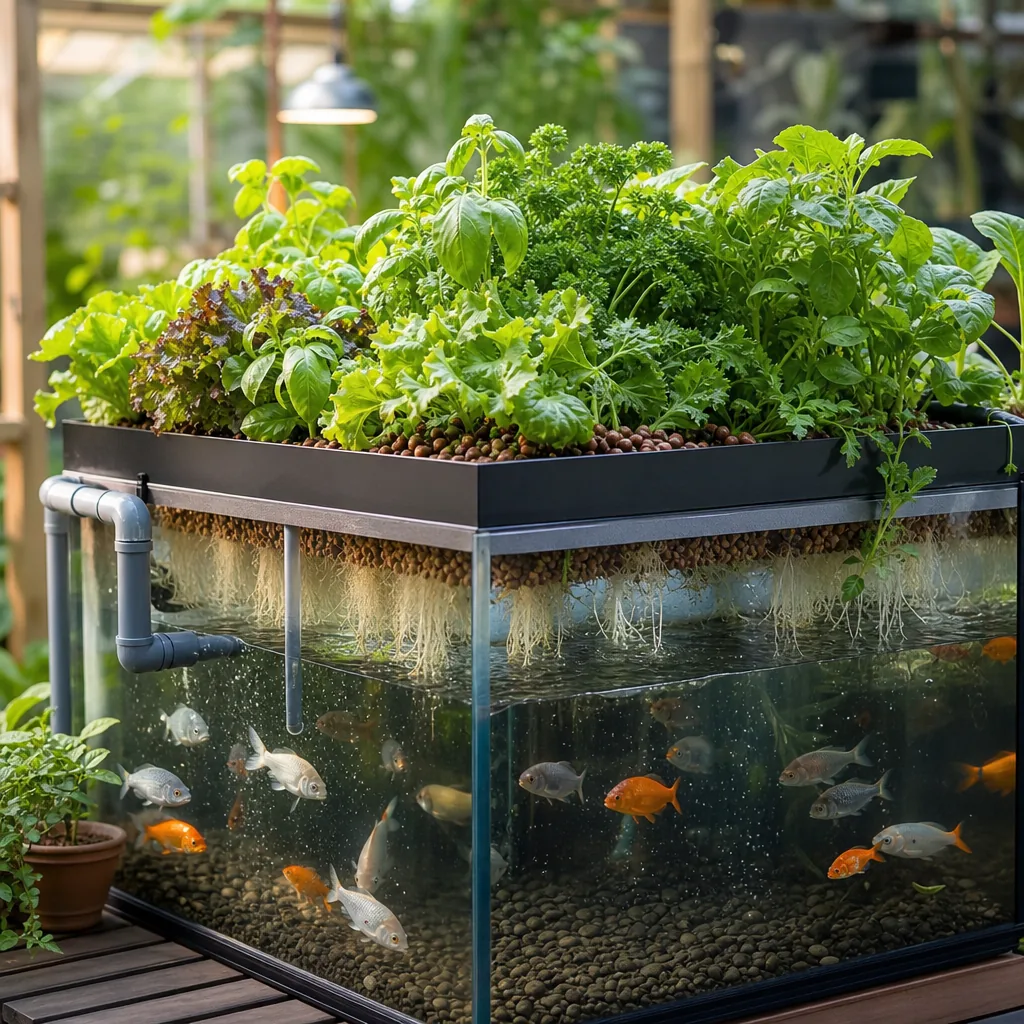
Aquaponics is one of the most satisfying projects in the whole hobby because it closes a loop most aquarists spend their lives fighting. Instead of exporting fish waste through water changes, you let it feed a bed of plants, and the plants return clean water to the fish. Get the balance right and you have a small ecosystem that mostly runs itself.
The Closed Loop: How It Actually Works
Everything in aquaponics revolves around one idea: fish waste becomes plant food. Fish produce ammonia through their gills and waste. Beneficial bacteria in the system convert that ammonia into nitrite and then nitrate. Plants absorb that nitrate as fertilizer, and in doing so they strip the water of the compounds that would otherwise build up and harm the fish.
This is the same nitrogen cycle every aquarist already relies on, just with plants doing the final export step instead of your water-change bucket. The bacteria are the engine, the fish are the fuel source, and the plants are the filter you can eat.
The Core Components
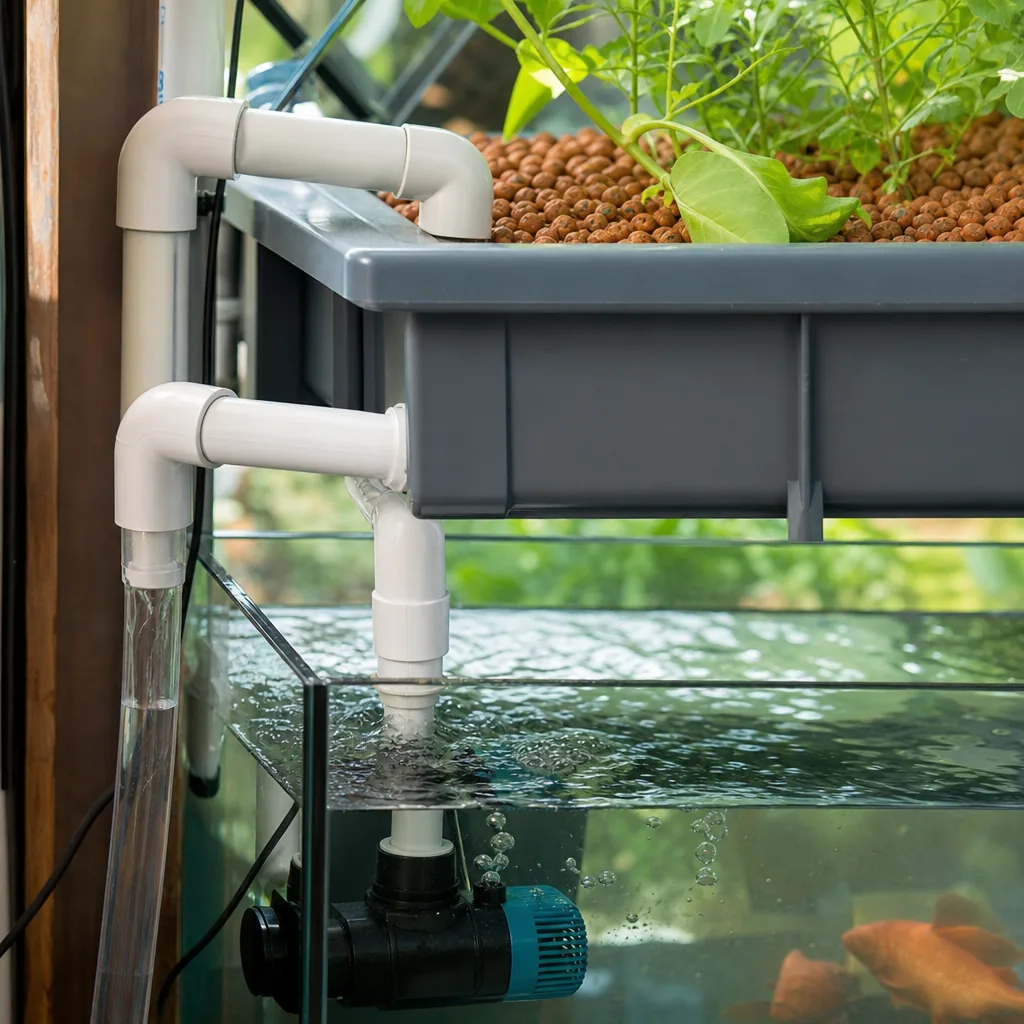
A basic setup has four parts working together:
- Fish tank: where your fish live and produce waste.
- Grow bed: a container of inert media (clay pebbles are common) where plants root and bacteria colonize.
- Pump: moves water from the fish tank up to the grow bed.
- Return path: water drains back down to the fish tank, oxygenating as it falls.
Many beginners use a media-bed flood-and-drain design because the media does triple duty: it anchors plants, hosts bacteria, and traps solid waste. A siphon periodically floods and drains the bed, which pulls in air and keeps roots healthy.
Cycle Before You Plant Heavily
You cannot skip the nitrogen cycle. If you add plants and a full stock of fish on day one, ammonia will spike before the bacteria colony exists to handle it. Cycle the system first, exactly as you would a new aquarium, until it reliably converts ammonia to nitrate. Our overview of the freshwater nitrogen cycle applies directly here.
Start with a light fish load and hardy plants, then scale up as the bacteria population catches up to the waste being produced.
Choosing Fish and Plants That Match
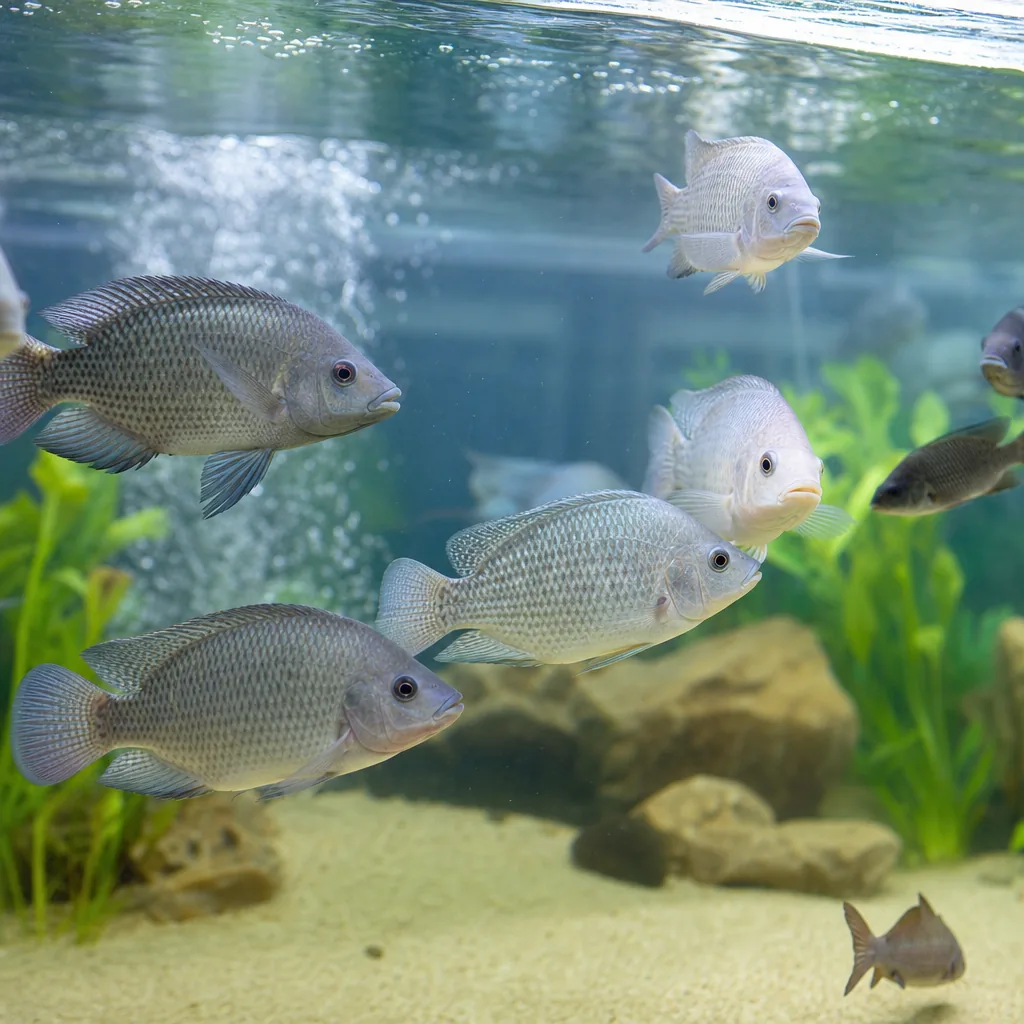
The best aquaponics pairings are forgiving on both ends. For fish, hardy freshwater species that tolerate a range of conditions do best. Whatever you choose, do not overstock; a lightly stocked tank is far more stable and the waste output still feeds a surprising amount of greenery.
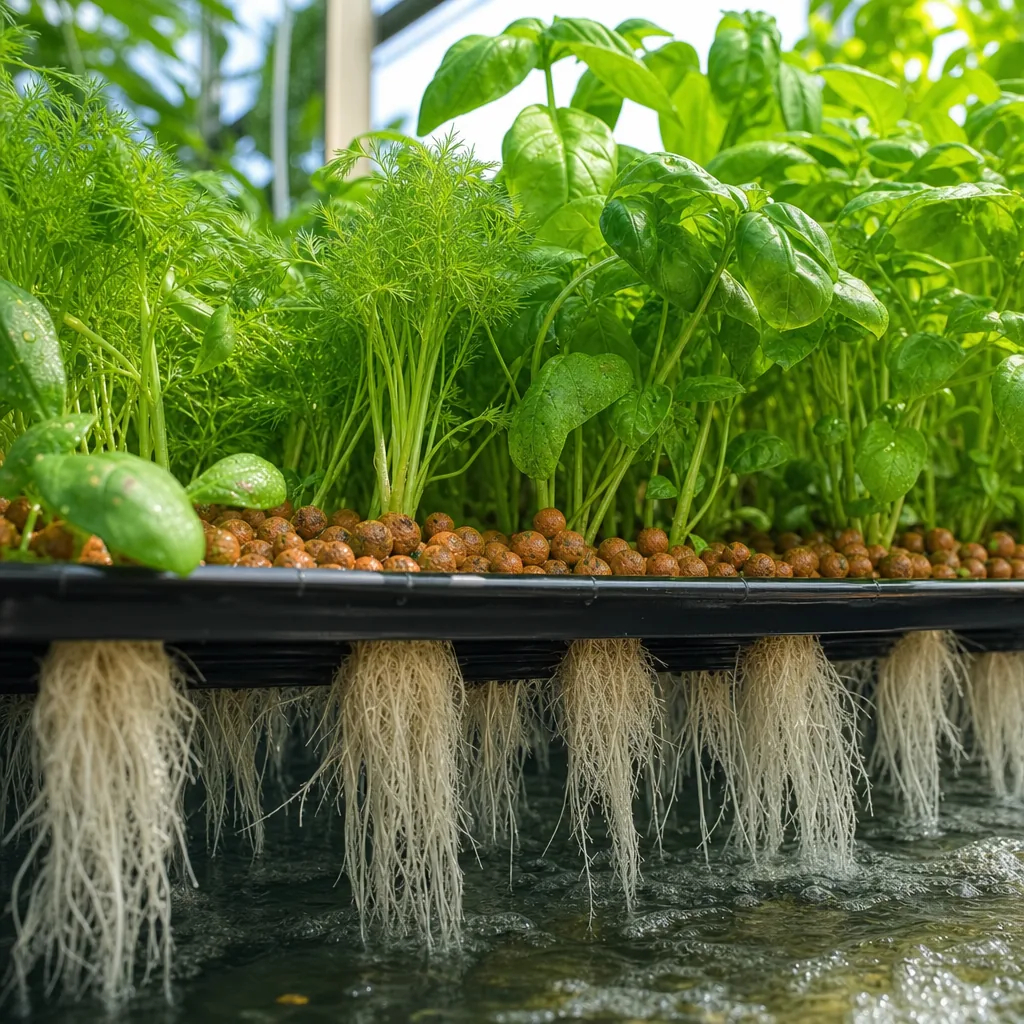
On the plant side, leafy greens and herbs are the easiest starters because they are hungry for nitrogen and do not demand heavy fruiting nutrients. Fruiting plants like tomatoes need more supplementation and a mature, heavily stocked system to thrive.
- Easy plants: lettuce, basil, mint, kale, chard.
- Harder plants: tomatoes, peppers, anything that flowers and fruits heavily.
Water Chemistry: The Compromise Zone
Fish, bacteria, and plants each prefer slightly different conditions, so aquaponics settles into a compromise. A slightly acidic to neutral range tends to keep everyone reasonably happy: low enough for plants to absorb nutrients, high enough for bacteria to work efficiently, and stable enough for fish.
Test regularly, especially in the first months. Watch ammonia and nitrite closely while the system matures, and once it is established, nitrate becomes your main gauge of whether the plants are keeping up with the fish.
Feeding Is Your Fertilizer Dial
Here is the mental shift that makes aquaponics click: fish food is plant fertilizer. Everything you feed the fish eventually becomes nitrogen for the plants. If your greens look pale and hungry, the system may be underfed or understocked. If nitrate climbs and plants cannot keep up, you are feeding more than the plants can use.
Feed a quality food in amounts the fish finish quickly, and let plant health and nitrate readings tell you whether to adjust.
Common Mistakes to Avoid
- Overstocking fish early: the fastest way to crash a young system.
- Skipping the cycle: no bacteria means ammonia poisoning.
- Poor aeration: both fish and plant roots need oxygen; make sure water aerates as it returns.
- Using treated water carelessly: chlorine harms your bacteria colony, so dechlorinate top-off water.
- Neglecting solids: too much settled waste can go anaerobic and foul the water.
Start small, cycle fully, stock lightly, and let the loop find its balance. Once it does, aquaponics becomes one of the lowest-maintenance and most rewarding builds you can run. For pumps, media, and grow-bed supplies, see our gear picks, and browse the blog for more DIY projects.
Frequently Asked Questions
How does aquaponics feed the plants?
Fish produce ammonia as waste, bacteria convert it into nitrate, and plants absorb that nitrate as fertilizer. In cleaning the water this way, the plants return safe water to the fish, closing the loop.
Do I need to cycle an aquaponics system?
Yes. You must establish the beneficial bacteria that convert ammonia to nitrate before adding a full fish load, exactly as with any new aquarium. Cycle first, then stock lightly and scale up.
What plants grow best in aquaponics?
Leafy greens and herbs like lettuce, basil, kale, and mint are the easiest because they thrive on the nitrogen fish waste provides. Fruiting plants such as tomatoes are harder and need a mature, well-stocked system.
How many fish should I keep?
Fewer than you think. A lightly stocked tank is far more stable and still produces enough waste to feed plenty of plants. Overstocking early is the most common way beginners crash their systems.
Do I still need to feed the fish?
Yes, and fish food is effectively your plant fertilizer. Everything you feed becomes nitrogen for the plants, so feed a quality food and adjust based on plant health and nitrate readings.