
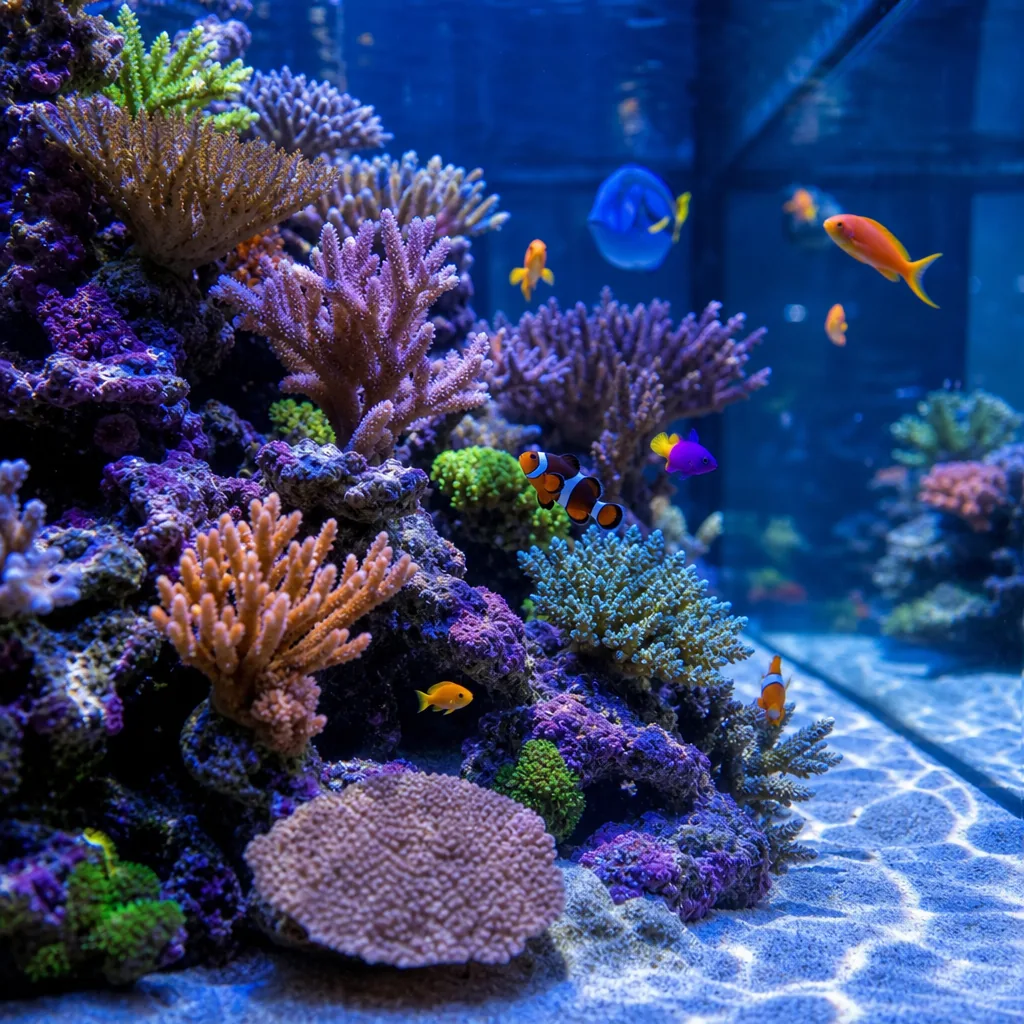
If you have kept a reef for more than a few months, you have heard someone say “the big three” like it is a secret handshake. Calcium, alkalinity, and magnesium are the parameters your corals draw down as they build skeletons, and once your livestock grows enough to consume them faster than a water change can replace them, you need to dose. The goal that trips people up is simple to say and hard to live by: keep them stable, not perfect.
What the Big Three Do
Stony corals and coralline algae build their skeletons out of calcium carbonate, which means they pull both calcium and carbonate (measured as alkalinity) from your water. Magnesium is the referee: it keeps calcium and alkalinity in solution so they do not bond together and precipitate out. Without enough magnesium, you can dose calcium and alkalinity all day and watch them fall anyway because they are dropping out as scale.
Target ranges most reefers aim for are roughly calcium in the low-to-mid 400s ppm, alkalinity around 8 to 9 dKH, and magnesium around 1300 to 1400 ppm. Those are starting points, not laws. A tank humming along at 7.5 dKH is far healthier than one that bounces between 11 and 7.
Test Before You Dose, Always
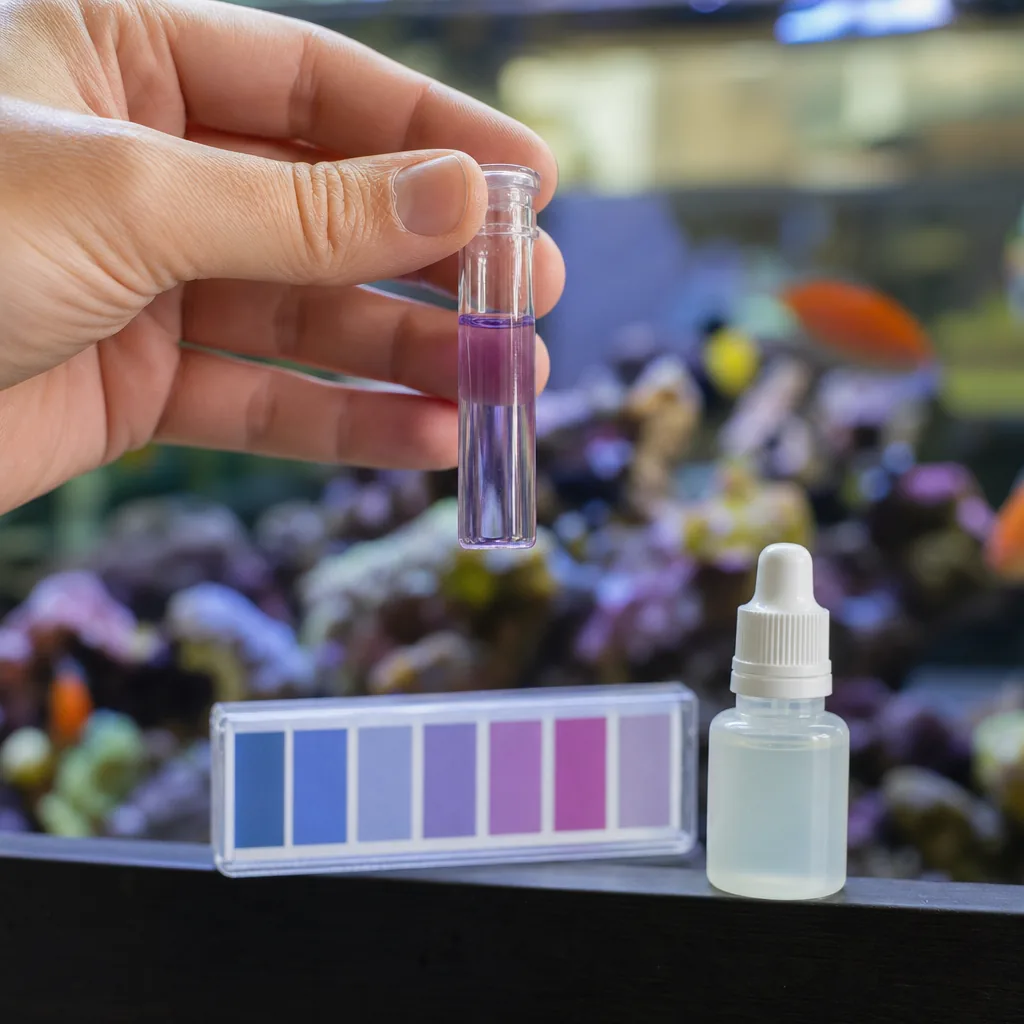
You cannot dose what you have not measured. Get a reliable alkalinity, calcium, and magnesium test kit and establish a baseline before adding anything. Alkalinity moves the fastest and is the parameter corals are most sensitive to, so most people test it most often, sometimes daily when first dialing in a system.
Track your numbers over several days to learn your consumption rate: how much each parameter drops in 24 hours. That number, not a generic dosing chart, tells you how much to add.
Getting Started: Fix Magnesium First
Before you touch calcium or alkalinity, confirm magnesium is in range. If magnesium is low, correct it first and let it stabilize. Only then work on the other two, because trying to raise calcium and alkalinity against low magnesium is a losing battle.
The Two-Part Method
The most common approach is two-part dosing: one bottle for calcium, one for alkalinity, added separately. The cardinal rule is to never dose them at the same time in the same spot. Add one, wait, then add the other in a different area of high flow. Dose into moving water, never directly onto corals or into a stagnant corner.
- Dose alkalinity and calcium at separate times, ideally hours apart.
- Start with small amounts and re-test the next day; creep up on your target.
- Raise alkalinity slowly – no more than about 1 dKH per day – to avoid shocking corals.
- Once you know your daily consumption, split the dose across the day or automate it.
Calcium Reactors and All-in-One Options
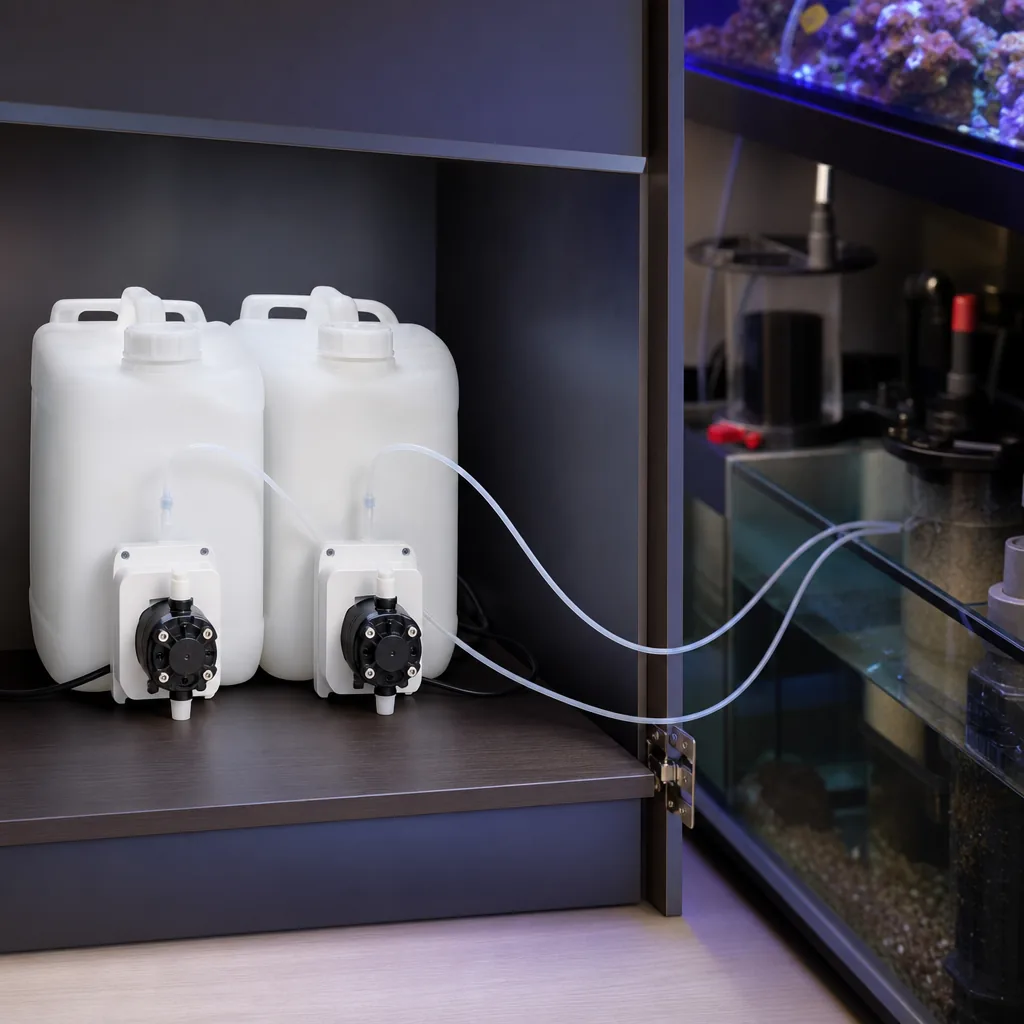
As a tank grows, hand-dosing gets tedious. A dosing pump can deliver small, consistent amounts on a schedule, which keeps parameters far steadier than one big daily dose. Larger stony-coral systems often graduate to a calcium reactor, which dissolves media to replenish calcium and alkalinity together in balance. All-in-one balanced solutions also exist and work well for smaller tanks. Whatever you choose, the principle is the same: small and frequent beats big and occasional. You can compare dosing gear in the shop.
Common Mistakes That Crash Tanks
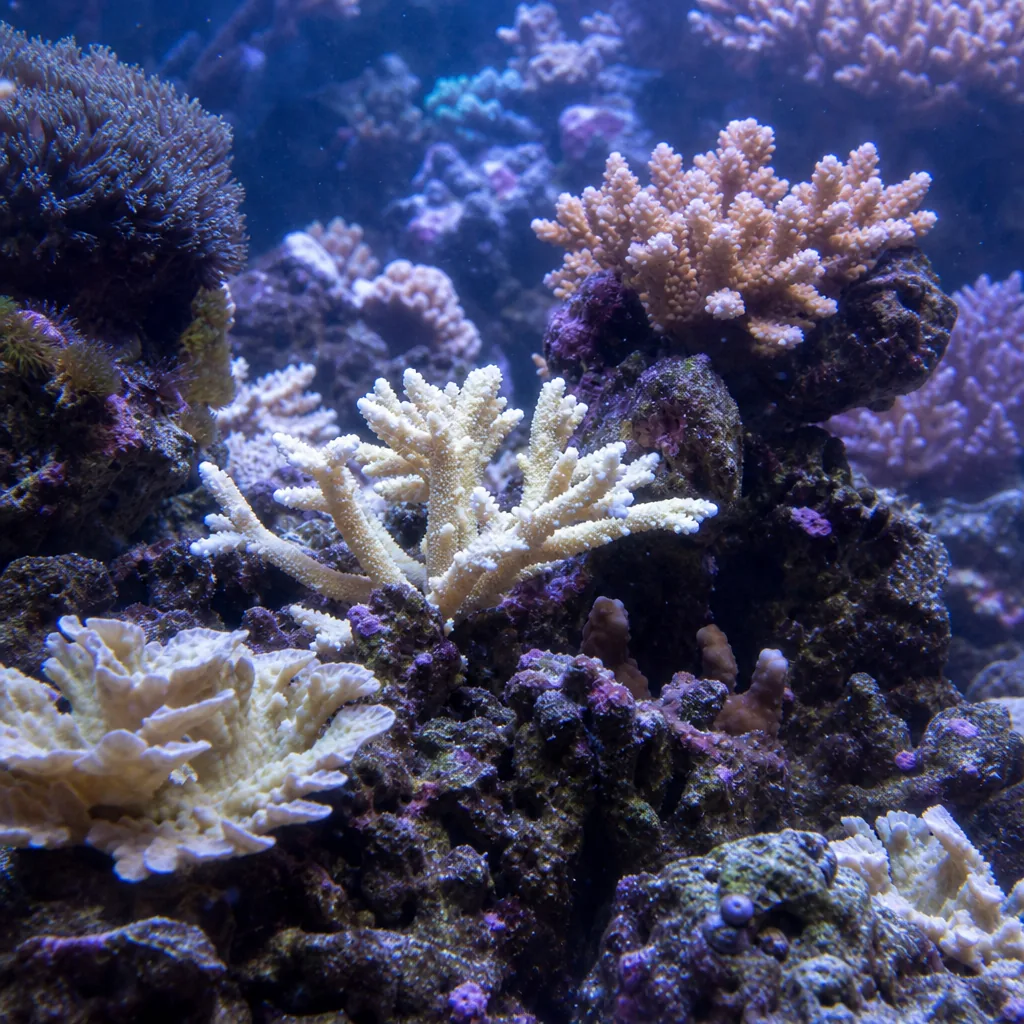
Almost every big-three disaster comes from chasing numbers. Someone reads 7 dKH, panics, dumps in a large dose, spikes to 11, and burns their corals’ tissue. Then they overcorrect the other way. The swing is what kills, not the specific value.
- Dosing without testing. You are flying blind and will overshoot.
- Chasing a textbook number. Pick a target within range and hold it steady.
- Dosing calcium and alkalinity together. They precipitate and cloud the water.
- Ignoring magnesium. Low mag makes the other two impossible to hold.
- Big single doses. Split them up or automate for stability.
Building a Simple Routine
A workable routine looks like this: test the big three, learn your consumption, dose to replace exactly what was consumed, and re-test to confirm. Water changes with a quality salt mix will cover small demand early on, so many nano keepers never need to dose at all until their corals grow. Keep notes; a log of your numbers over time is worth more than any calculator. For the wider picture of reef water chemistry, our saltwater guides and how-to articles walk through testing and maintenance step by step.
Get comfortable with stability and the big three stop being intimidating. Corals reward consistency, and a boring, steady set of numbers is exactly what you are aiming for.
Dosing products and tests: Seachem Reef Fusion 1 and 2, the Salifert alkalinity kit, and a salt like Red Sea Coral Pro for consistent water changes.
Frequently Asked Questions
What are the ideal reef parameters for the big three?
Common targets are calcium in the low-to-mid 400s ppm, alkalinity around 8 to 9 dKH, and magnesium around 1300 to 1400 ppm. Stability within range matters more than hitting an exact number.
Why should I not dose calcium and alkalinity at the same time?
Dosing them together in the same spot causes them to bond and precipitate out of solution, clouding the water and wasting the dose. Add one, wait, then add the other in high flow.
Why does my alkalinity keep dropping even though I dose?
Check magnesium first. If magnesium is low, calcium and alkalinity fall out of solution as scale no matter how much you add.
Do I need to dose in a small reef tank?
Often not at first. Regular water changes with quality salt cover the small demand of young corals. Start dosing only once consumption outpaces your water changes.
How fast can I raise alkalinity safely?
Raise it slowly, generally no more than about 1 dKH per day. Rapid swings stress and can burn coral tissue.