
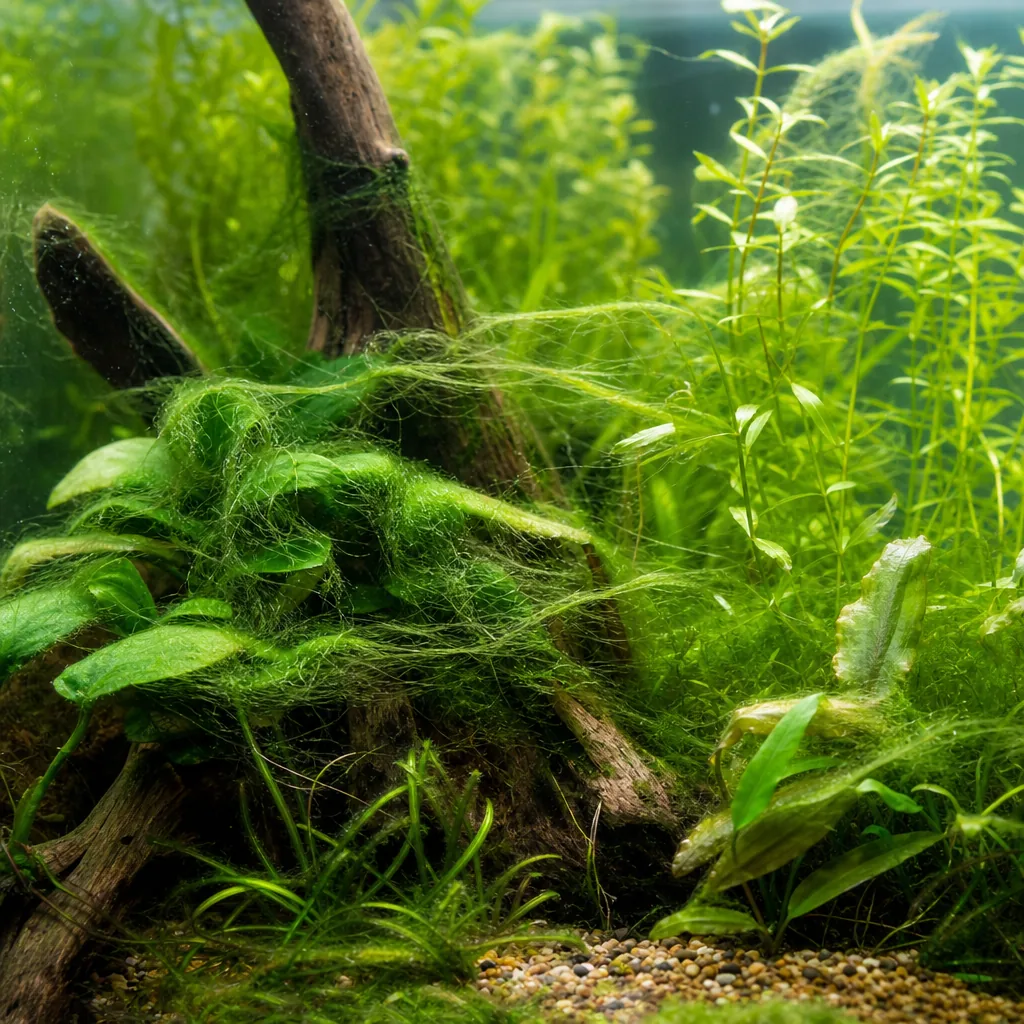
Green hair algae is one of the most common headaches in a planted tank, and it spreads fast enough to smother plants, decor, and hardscape in a matter of days. The frustrating part is that it usually appears in tanks that are otherwise doing well, because it thrives on the same light and nutrients your plants love. Beating it is less about killing it directly and more about tilting the balance back toward your plants.
Why Green Hair Algae Shows Up
Hair algae is an opportunist. It exploits any situation where there is plenty of light and available nutrients but the plants are not growing fast enough to use them. That gap, spare resources with no plant to claim them, is exactly what algae fills.
The most common causes are too much light (too intense or too long), excess nutrients relative to plant demand, and inconsistent or insufficient CO2 in higher-light setups. Often it is a combination: strong light pushing demand for CO2 that the tank cannot supply, so plants stall while algae thrives.
The Core Principle: Win the Race
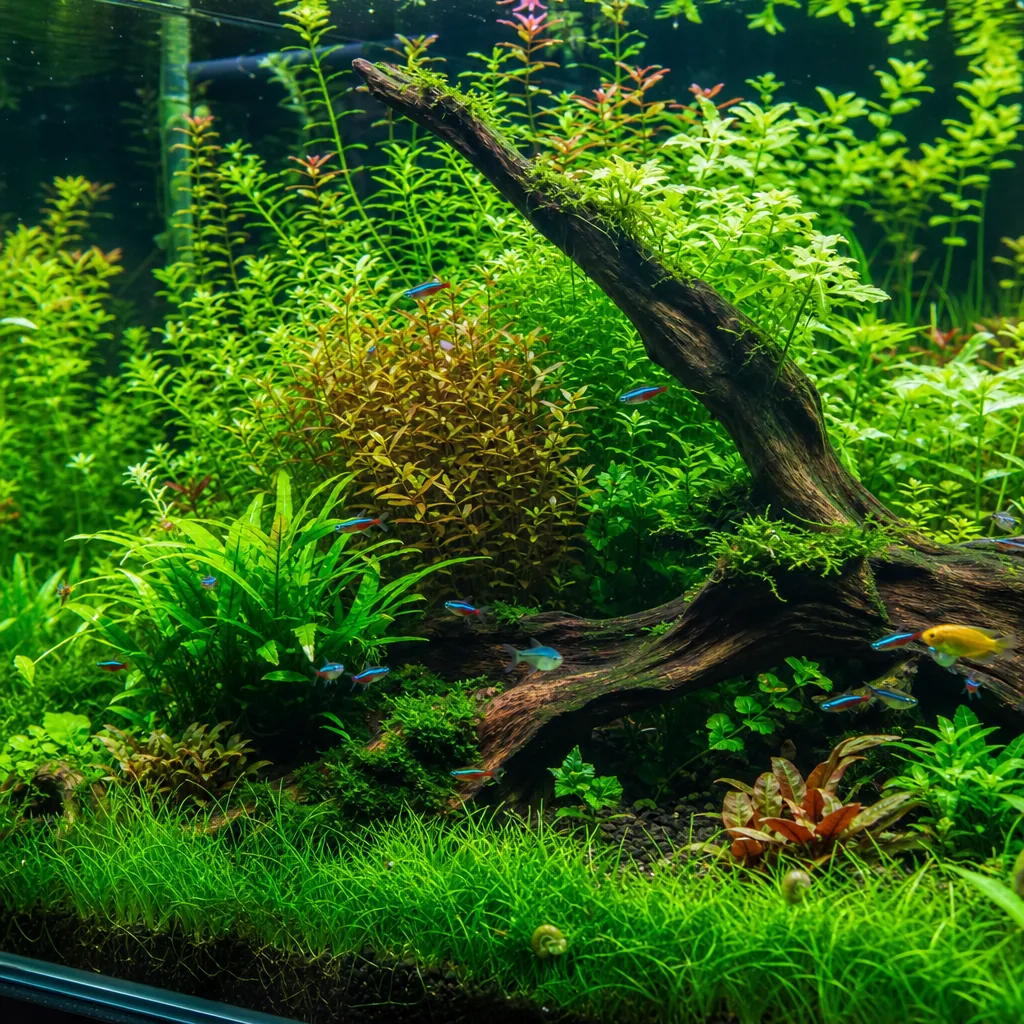
Healthy, actively growing plants are your best long-term defense because they outcompete algae for the same resources. Every strategy below comes down to one idea: make your plants grow well and give algae nothing to exploit. A jungle of thriving stems will keep hair algae in check on its own once the balance is right.
If your plants are struggling, sort that out first. Our planted tank basics cover getting healthy growth dialed in.
Step 1: Dial Back the Light
Light is the biggest lever. Many algae outbreaks are simply too much light for the tank’s balance.
- Reduce your photoperiod to a modest window rather than running lights all day.
- Lower intensity if your fixture allows it, or raise the light off the tank.
- Cut any ambient sunlight hitting the tank, which is a hidden driver of outbreaks.
A shorter, less intense photoperiod slows algae immediately while still supporting plant growth.
Step 2: Balance Nutrients and CO2
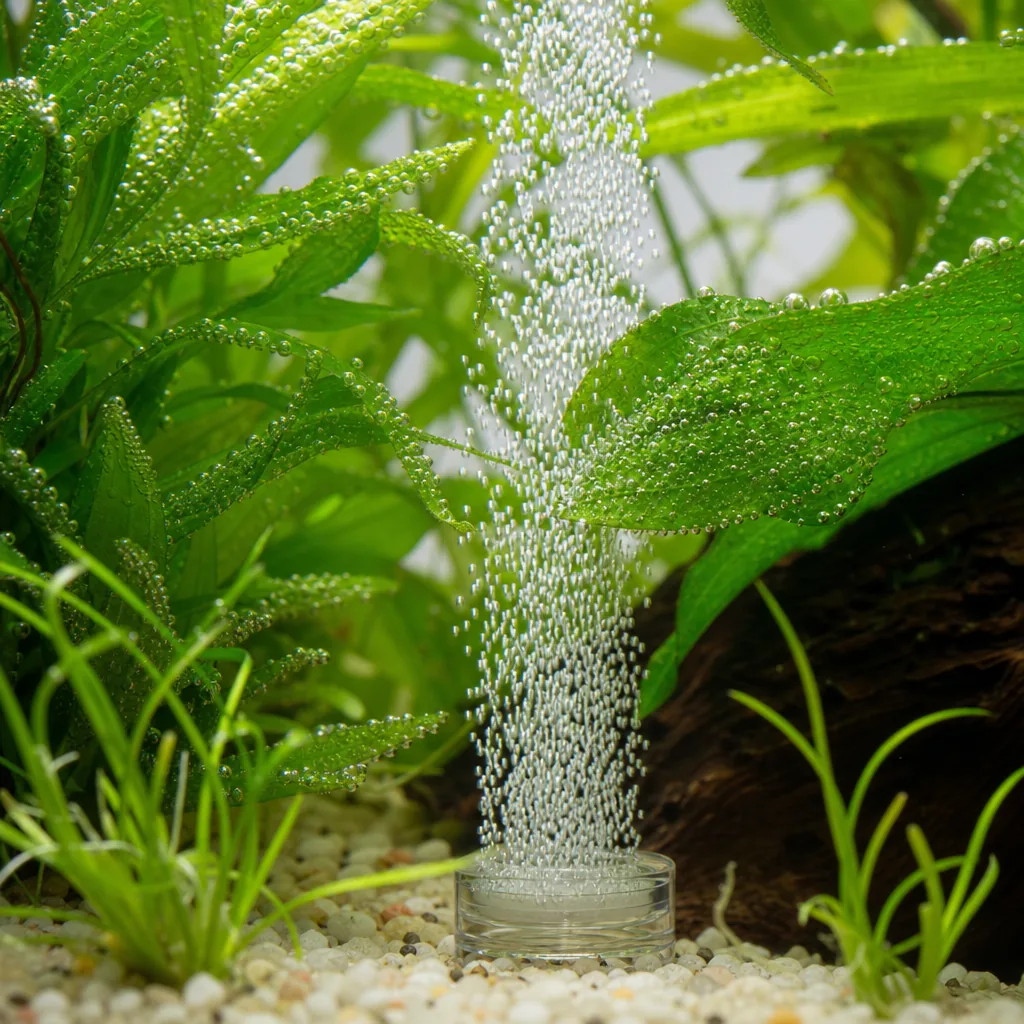
This is where it gets counterintuitive. Cutting nutrients to starve algae often backfires, because it also starves your plants and hands the algae an even bigger advantage. In higher-light tanks, the real limiter is usually CO2, not fertilizer.
- If you run strong light, make sure CO2 or a liquid carbon source is adequate and consistent.
- Keep fertilizer dosing steady rather than swinging up and down.
- Match your inputs to your light: high light needs high CO2 and nutrients, low light needs less of both.
The goal is a balanced tank where plants have everything they need to grow fast, leaving nothing spare.
Step 3: Manual Removal
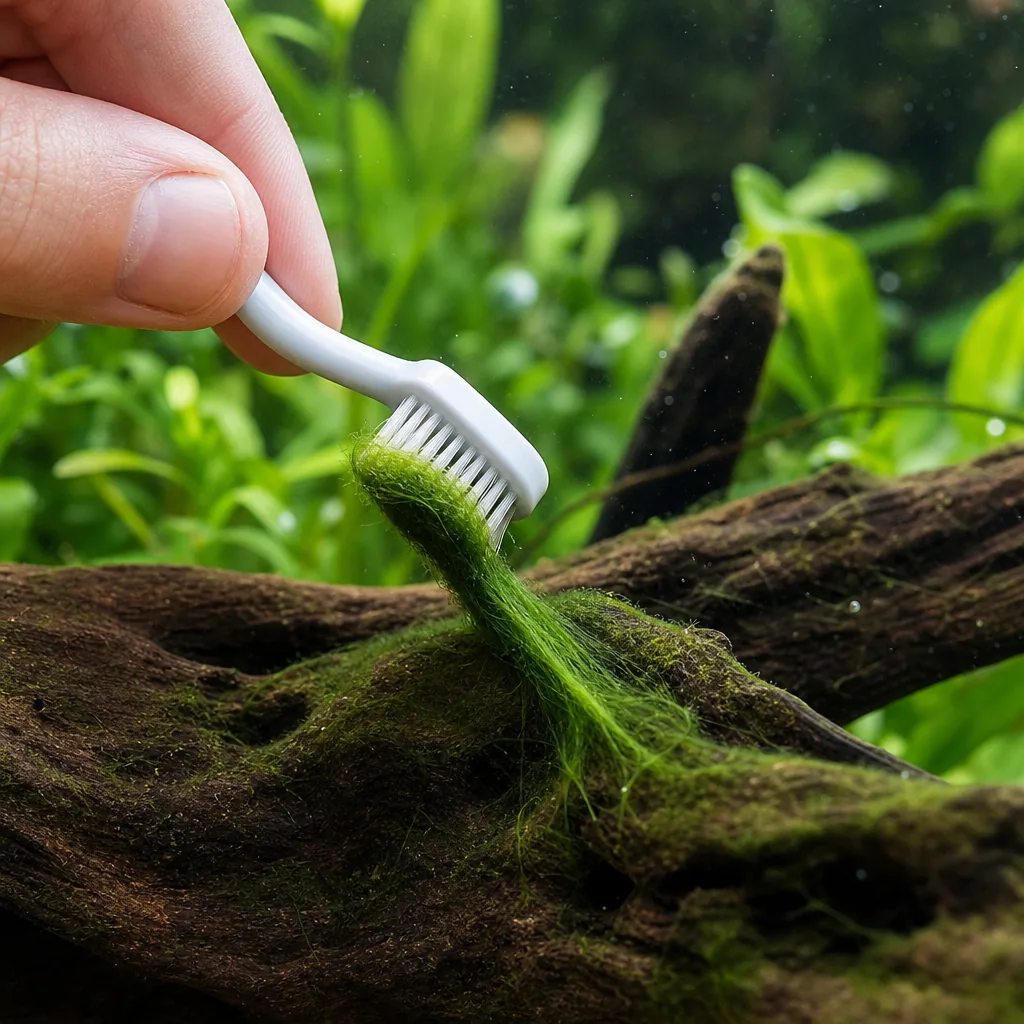
While you rebalance the tank, physically remove as much algae as you can. Hair algae comes off easily by twirling it around a toothbrush or your fingers, like winding spaghetti onto a fork. Remove it during water changes so the loose strands leave the tank rather than resettling.
Manual removal will not cure the problem alone, but it reduces the algae load while your changes take effect and keeps it from spreading further.
Step 4: Recruit a Cleanup Crew
Several tank inhabitants graze on hair algae and make excellent allies once the outbreak is under control:
- Amano shrimp are among the most effective at picking through hair algae.
- Nerite snails help on hardscape and glass.
- Certain algae-eating fish will graze it, though results vary by species and appetite.
Think of the cleanup crew as maintenance, not a rescue team. They keep new growth in check but cannot out-eat a raging outbreak fueled by bad balance.
Step 5: Stay Consistent
The tanks that beat hair algae for good are the ones with steady routines. Regular water changes, consistent dosing, a stable photoperiod, and a well-planted layout all reinforce each other. Once your plants pull ahead, hair algae fades and stays gone as long as you keep the balance.
Do not expect overnight results. Give changes a couple of weeks and adjust gradually. For CO2 kits, dosing supplies, and cleanup crew ideas, check our recommended gear, and see more troubleshooting in the blog.
Frequently Asked Questions
What causes green hair algae in a planted tank?
It thrives when there is excess light and nutrients that the plants are not growing fast enough to use. The most common driver is too much light combined with inconsistent CO2, which stalls plants while algae flourishes.
Should I cut nutrients to starve the algae?
Usually not. Cutting nutrients often starves your plants too and gives algae an even bigger edge. In higher-light tanks the real limiter is typically CO2, so balance your inputs rather than slashing fertilizer.
What eats green hair algae?
Amano shrimp are among the most effective grazers, and nerite snails help on hard surfaces. Some algae-eating fish will graze it too, but a cleanup crew is maintenance, not a cure for a full outbreak.
How do I remove hair algae by hand?
Twirl it around a toothbrush or your fingers like spaghetti on a fork, ideally during a water change so the strands leave the tank. Manual removal reduces the load while you fix the underlying balance.
How long until it goes away?
Give changes a couple of weeks. Once your plants are growing well and outcompeting the algae, it fades and stays gone as long as you keep light, CO2, and dosing consistent.