
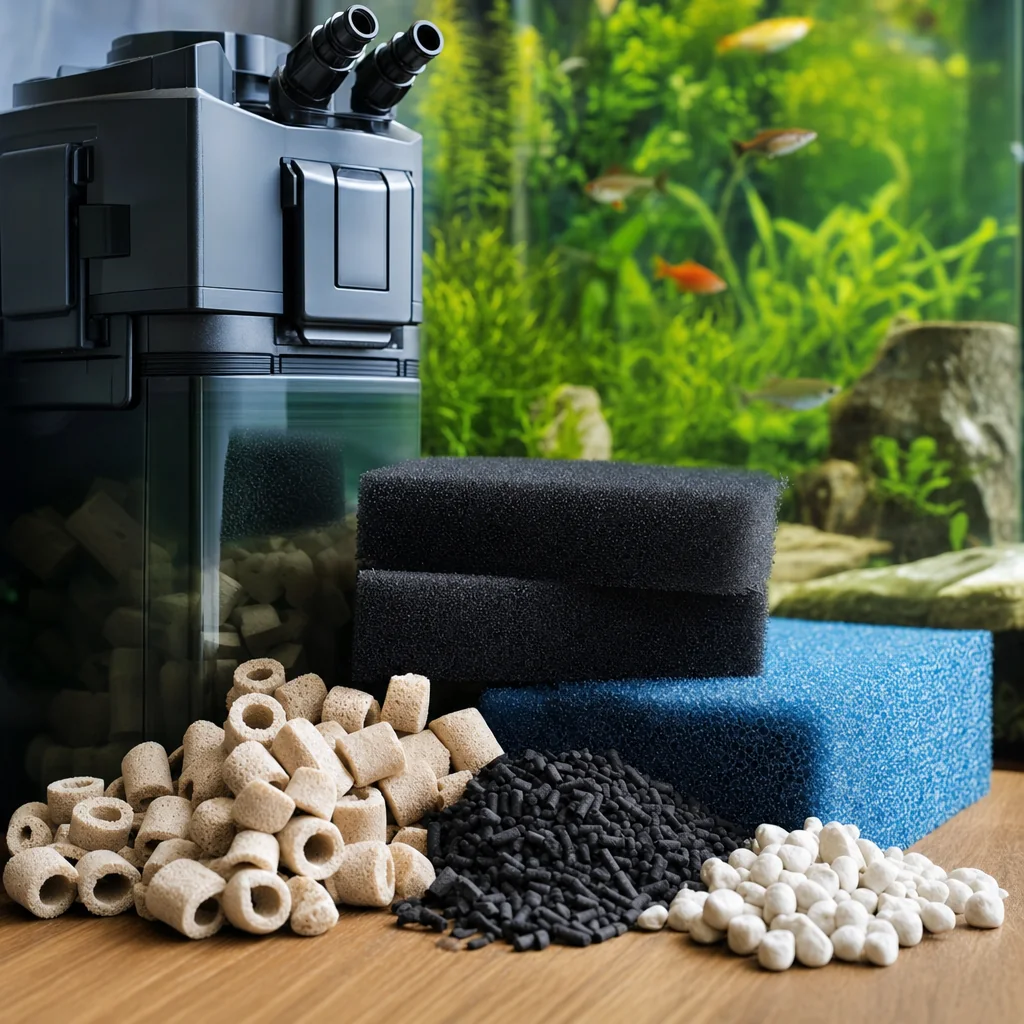
The filter is the most important piece of equipment on your tank, and what goes inside it does more for your fish than almost anything else. Yet filter media is where beginners get the most confused, partly because manufacturers sell single-use cartridges that quietly throw away your beneficial bacteria every month. Understand the three types of media and you’ll never buy a wasteful cartridge again.
Filtration works in three jobs: mechanical, biological, and chemical. A good filter setup uses the right media for each, in the right order. Here’s how it all fits together.
Mechanical Media: Trapping the Junk
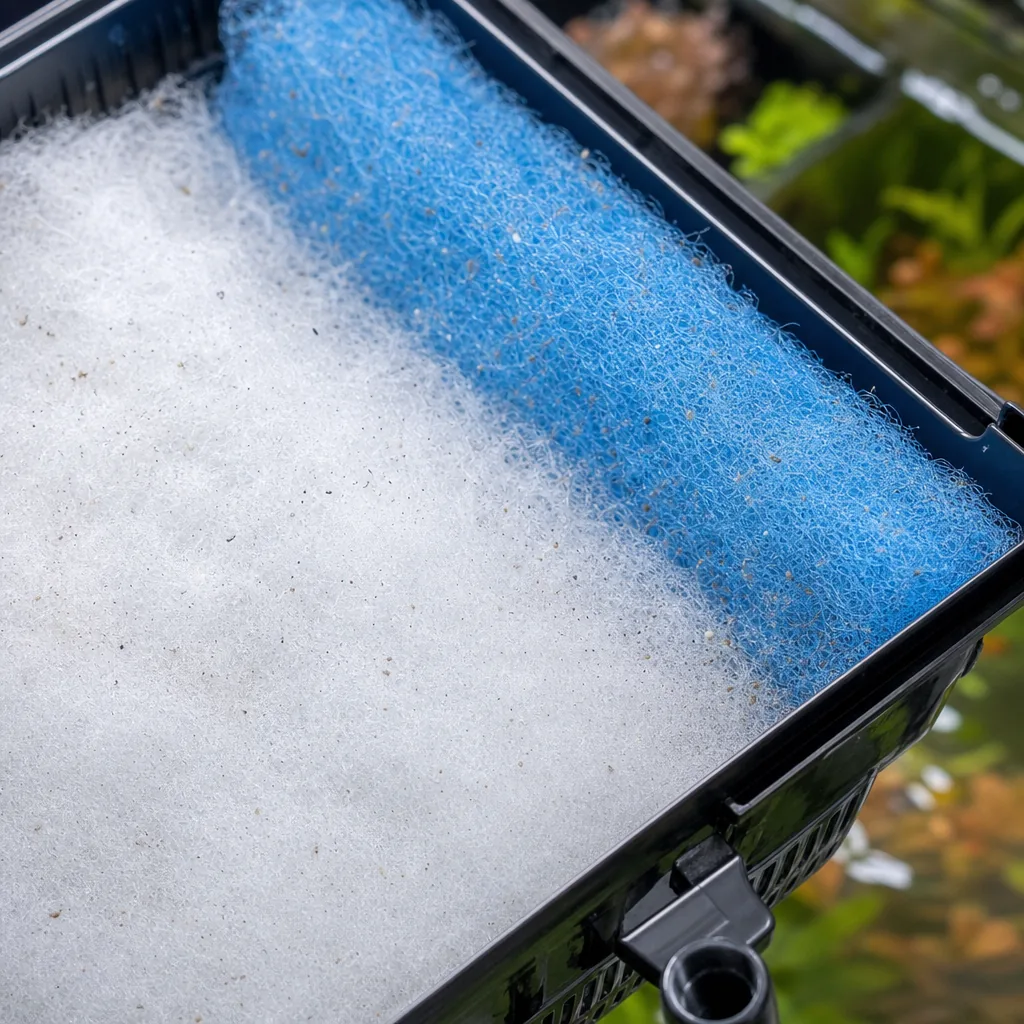
Mechanical media physically strains debris out of the water, things like uneaten food, fish waste, and plant matter. This is your sponges, filter floss, and pads.
- It should sit first in the flow path so it catches debris before it reaches the rest of the media.
- Coarser material goes before finer material so big particles don’t immediately clog the fine stuff.
- Rinse it regularly in old tank water; clogged mechanical media chokes your filter’s flow.
Mechanical media keeps the water visibly clear, but clarity isn’t the same as clean, which is where biology comes in.
Biological Media: The Heart of the Filter
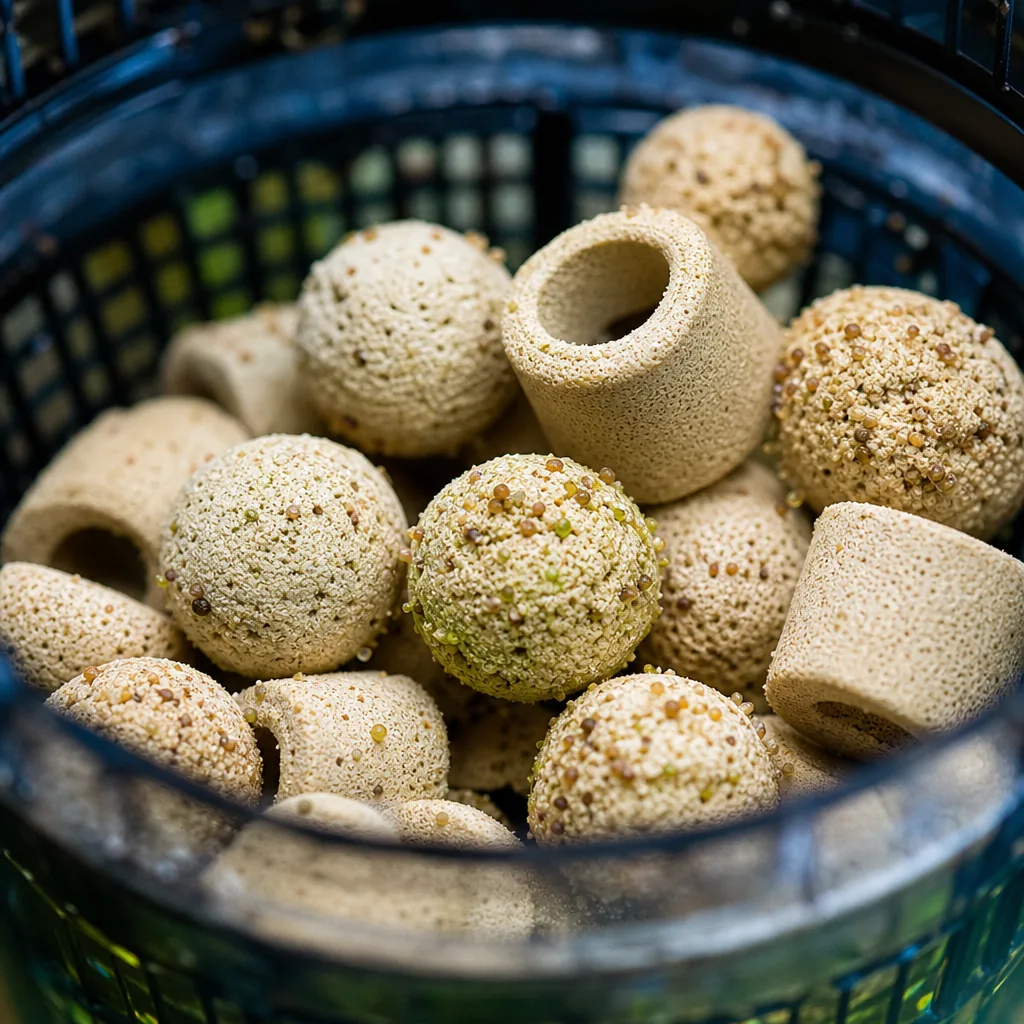
Biological media is the most important of the three and the one beginners most often sabotage. It’s the home for the beneficial bacteria that drive your nitrogen cycle, converting toxic ammonia to nitrite and then to nitrate. Ceramic rings, porous biomedia, and even mature sponges all serve this role by offering huge surface area for bacteria to colonize.
The cardinal rule: never replace all your biological media at once, and never rinse it under chlorinated tap water. Doing either wipes out your bacteria and crashes your cycle, triggering an ammonia spike. Rinse it gently in old tank water only when it’s genuinely gunked up, and leave it in place otherwise. Our freshwater guides explain the nitrogen cycle in full.
Chemical Media: Optional but Useful
Chemical media removes dissolved substances from the water through adsorption. The most common is activated carbon, but there are specialized resins too.
Activated Carbon
Carbon polishes water, removes odors, and pulls out tannins and medications. It’s useful but not mandatory in every tank, and it exhausts over time, so it needs periodic replacement. Many keepers run it situationally, such as after dosing medication, rather than permanently.
Specialty Resins
Other chemical media target specific problems, like resins that remove ammonia in an emergency or phosphate removers for algae control. These are tools for particular situations rather than everyday essentials. You’ll find a range of media options in our filtration guides.
How to Layer Your Media
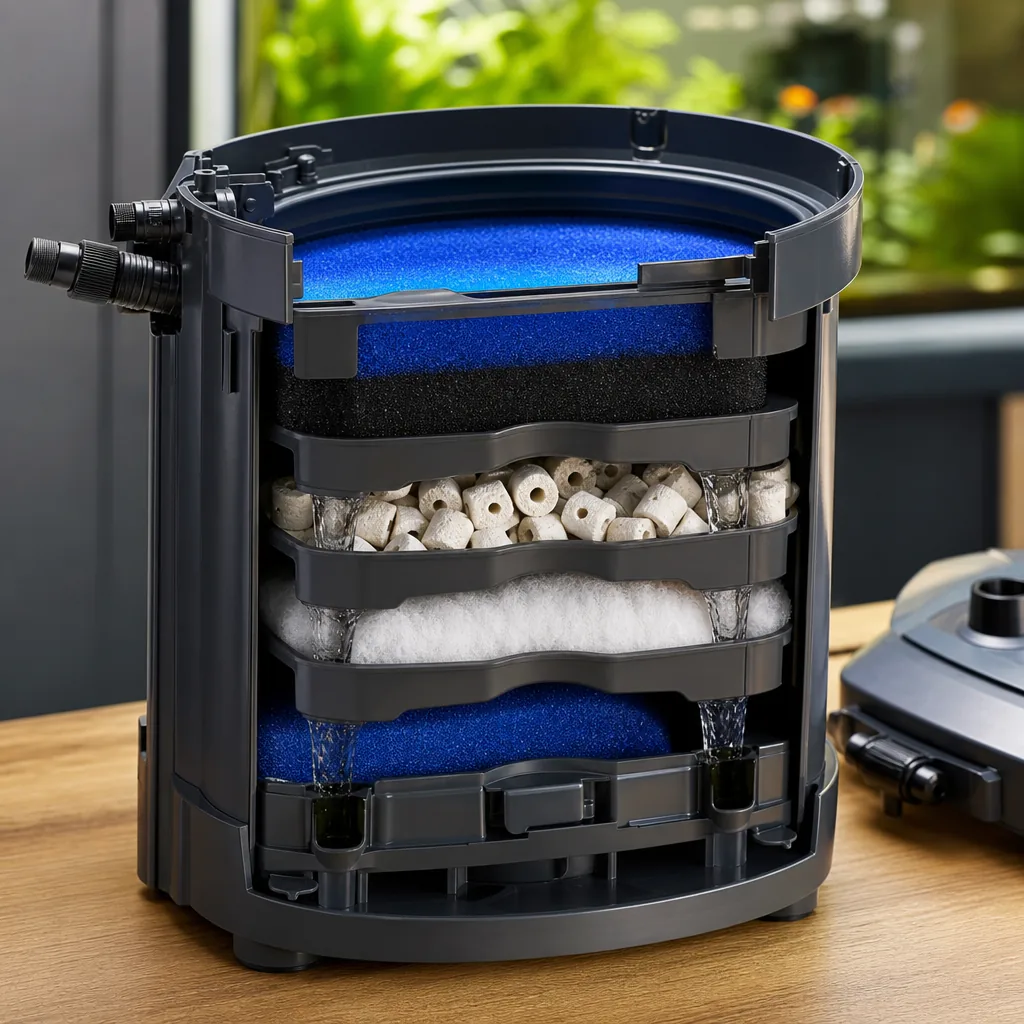
The order matters because water should pass through the media in sequence:
- Mechanical first: coarse then fine, to trap debris up front.
- Biological second: so bacteria work on already-clarified water and the media stays cleaner longer.
- Chemical last: to polish the water as a final step.
This sequence keeps each type doing its job efficiently and protects your biomedia from clogging prematurely.
Ditch the Disposable Cartridge Trap
Many hang-on-back filters ship with all-in-one cartridges the maker tells you to toss monthly. Throwing them out discards your beneficial bacteria along with the debris. Instead, fill the filter with reusable mechanical and biological media you maintain rather than replace. It’s cheaper over time and far better for your cycle. When a sponge finally wears out, replace it in stages so the bacteria carry over.
Filtration isn’t complicated once you see it as three jobs done by three kinds of media. Set them up in order, maintain rather than replace your biological media, and you’ll have a stable, low-drama tank. Get this right and most other problems take care of themselves. More equipment deep-dives live on our blog.
Frequently Asked Questions
What are the three types of filter media?
Mechanical media traps physical debris, biological media houses the beneficial bacteria that process waste, and chemical media adsorbs dissolved substances like odors and tannins. A good filter uses all three in order.
How often should I replace filter media?
Replace mechanical media only when it’s worn out and chemical media when it’s exhausted. Never replace all your biological media at once, since it holds your bacteria. Rinse biomedia in old tank water rather than replacing it.
Can I rinse filter media under the tap?
No. Chlorinated tap water kills the beneficial bacteria living in your media, which can crash your cycle. Always rinse media gently in a bucket of old tank water removed during a water change.
Do I need activated carbon in my filter?
Not always. Carbon polishes water and removes odors and medications, but many tanks run fine without it permanently. Plenty of keepers use it situationally, such as after dosing medication.
Why shouldn’t I use disposable filter cartridges?
Replacing them monthly throws away the beneficial bacteria colonizing them, which destabilizes your cycle. Reusable mechanical and biological media you maintain instead are cheaper over time and far better for the tank.