
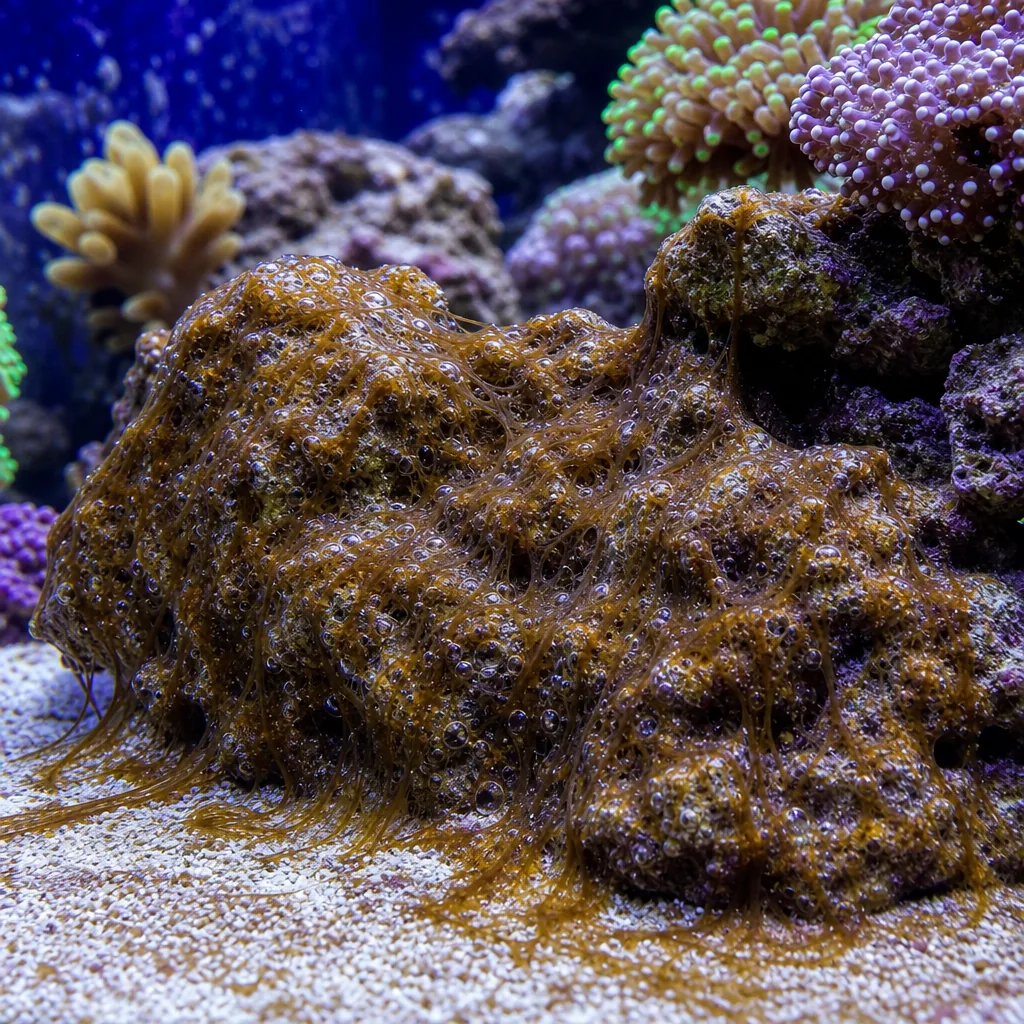
Of all the nuisance outbreaks a reef keeper can face, dinoflagellates are among the most frustrating. They look like brown, stringy snot laced with trapped oxygen bubbles, they can appear and vanish on a daily cycle, and the usual instinct to scrub everything clean and chase down nutrients often makes them worse. Winning this fight requires understanding what makes dinos different from every other pest you have dealt with.
How to Identify Dinoflagellates
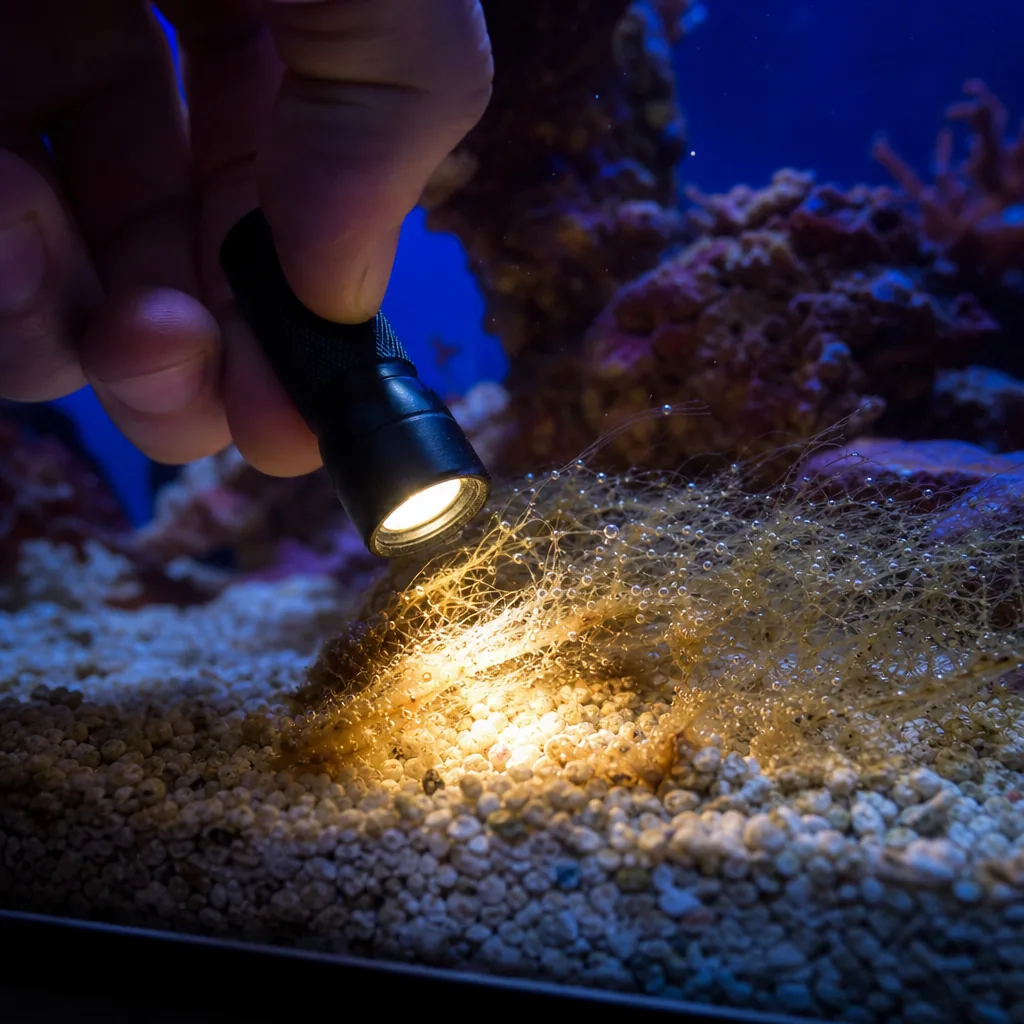
Dinos are single-celled organisms that form brown or tan slimy strings, often with obvious air bubbles trapped along their length. Key tells that separate them from algae or cyano:
- They frequently appear in the daytime and recede or disappear at night, following the light cycle.
- They form snotty, stringy webs rather than flat mats, and the bubbles are a signature look.
- They often bloom worst in tanks with very low or undetectable nutrients, the opposite of most algae problems.
- Corals and inverts may react badly to them, and some dino strains are toxic, causing livestock deaths.
If you are unsure, a cheap microscope confirms it: dinos are visibly mobile, single cells that dart around, unlike the static filaments of algae. That confirmation matters, because the treatment is nearly opposite to how you would handle cyano.
Why Dinos Are Different: The Nutrient Trap
Most nuisance blooms feed on excess nutrients, so the reflex is to strip nutrients as low as possible. Dinos exploit exactly that situation. They thrive in ultra-clean water where competing algae and bacteria have been starved out, giving dinos an open field. This is why aggressive nutrient export, heavy GFO use, and obsessive cleaning often trigger or worsen a dino bloom.
The counterintuitive truth: to beat dinos you usually need to raise nutrients a little and rebuild biodiversity, not sterilize the tank. Our saltwater guides explain healthy nutrient targets for a reef.
The Core Strategy
Because dinos exploit imbalance, the winning approach is to make the tank a competitive, biodiverse environment again. The specific tactics that help:
- Stop chasing zero nutrients. Let nitrate and phosphate rise into a healthy measurable range, which lets algae and bacteria compete with the dinos.
- Reduce lighting. A three-day blackout, followed by shorter photoperiods, hits dinos hard since they are strongly light-driven.
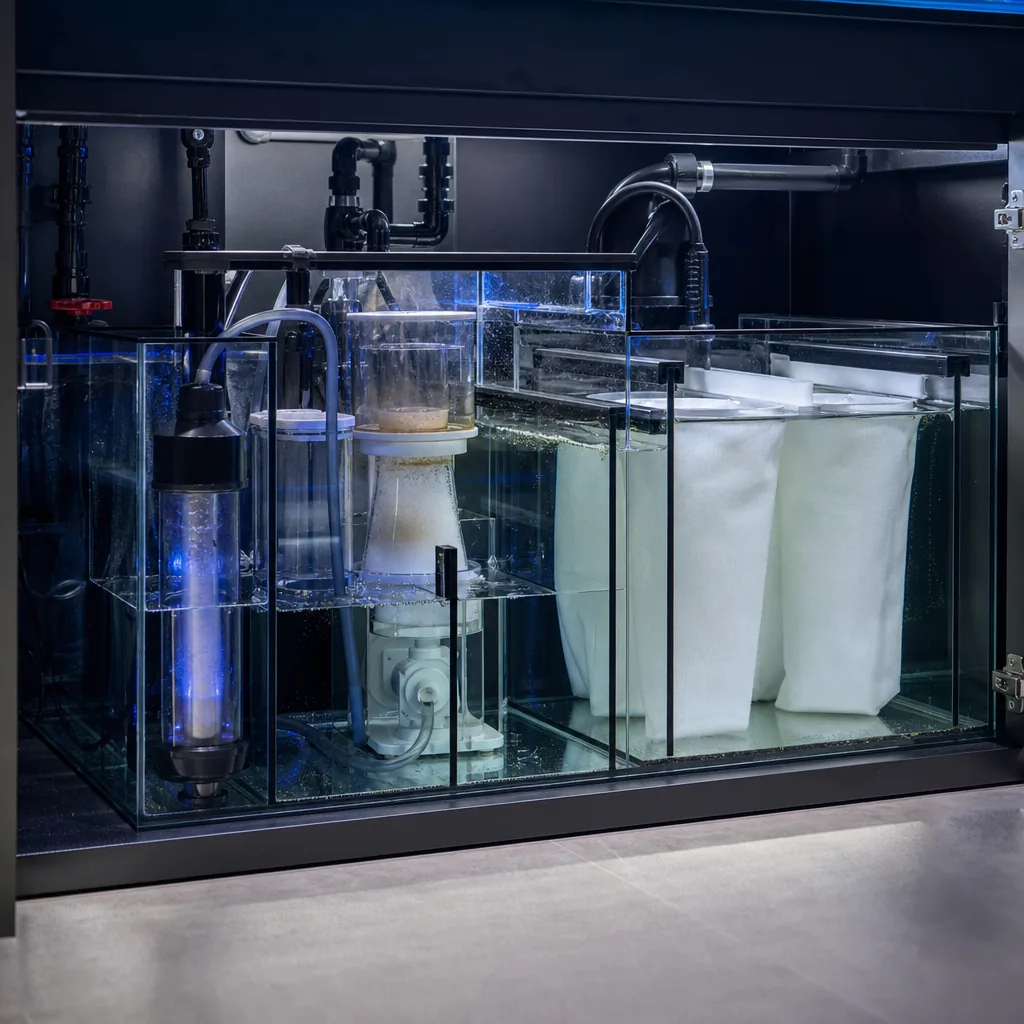
- Manually export daily. Siphon the strings out through a filter sock so cells are not just redistributed; many keepers siphon into a sock and return the water.
- Rebuild biodiversity by adding clean live rock, refugium macroalgae, and bacterial or pod diversity products.
- Run a UV sterilizer. UV is one of the most effective tools against free-floating dino cells, killing them as water passes through.
Raising Nutrients Deliberately
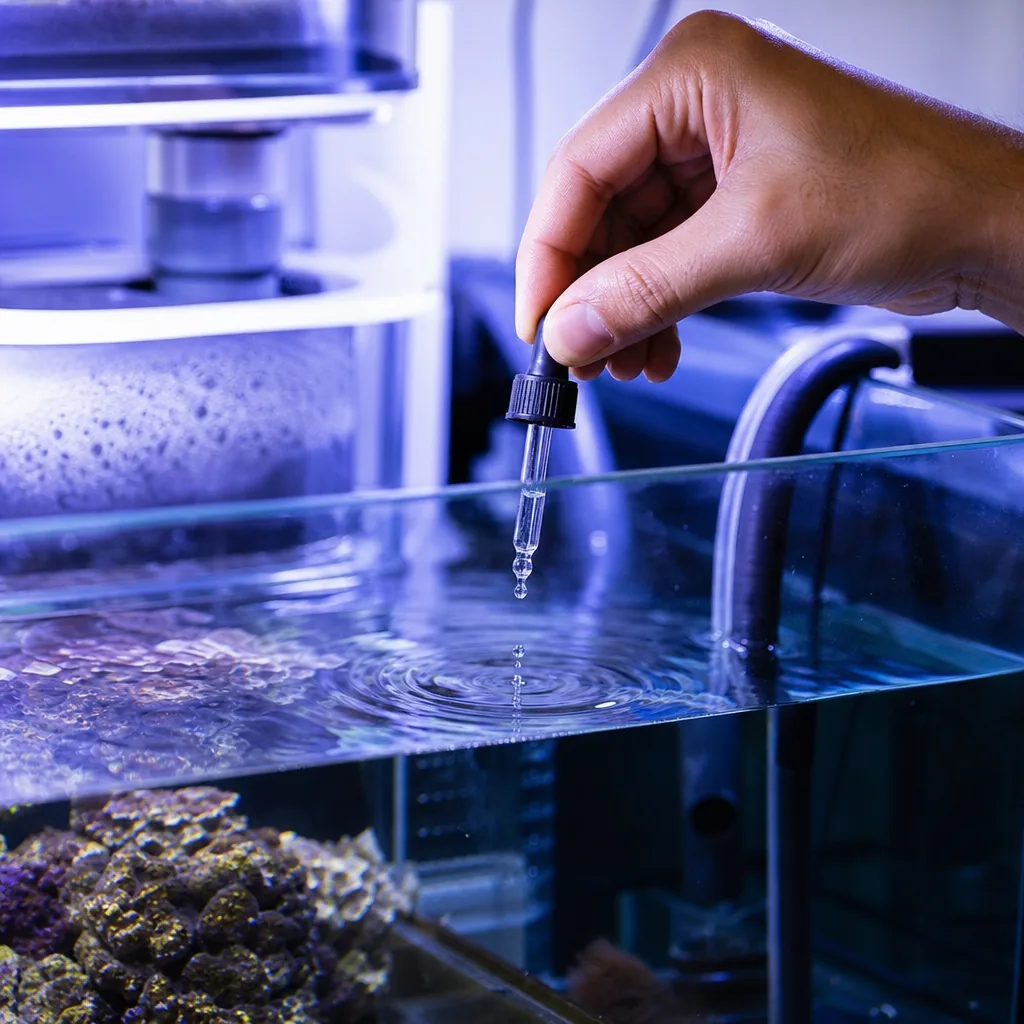
This feels wrong to reef keepers trained to keep water pristine, but it works. Feed a little more, dose nitrate or phosphate if your levels are genuinely bottomed out, and be patient. As competing organisms recover, they crowd the dinos out. Move slowly and test regularly rather than swinging levels wildly.
Support Tactics That Help
- Increase flow to keep cells suspended where the UV and filtration can capture them.
- Add a refugium with chaeto to compete for nutrients and provide a pod refuge.
- Maintain a healthy clean-up crew, though be aware toxic strains can harm inverts, so watch livestock closely.
- Be consistent. Dinos are a war of attrition, not a one-shot fix, and it can take weeks.
You can find UV sterilizers, refugium gear, and test kits in the shop.
Patience Is the Real Cure
Dinoflagellate outbreaks test your discipline more than your wallet. The mistake nearly everyone makes is panicking, cleaning harder, and stripping nutrients further, which feeds the problem. Do the opposite: rebuild biodiversity, allow measurable nutrients, control light, and use UV. Stay the course for several weeks and the tank rebalances. More reef troubleshooting lives on the blog.
Frequently Asked Questions
How do I tell dinoflagellates from cyanobacteria?
Dinos form brown, stringy, snotty webs with trapped bubbles and often recede at night, and they thrive in ultra-low-nutrient tanks. Cyano forms flatter red or purple mats and thrives on excess nutrients. A microscope showing mobile single cells confirms dinos.
Why did dinos appear after I cleaned my tank?
Dinos exploit ultra-clean, nutrient-stripped water where competing algae and bacteria have starved out. Aggressive export, heavy GFO, and over-cleaning remove the competition and give dinos an open field.
Should I raise nutrients to beat dinos?
Usually yes. Letting nitrate and phosphate rise into a healthy measurable range lets algae and bacteria compete with dinos. This is opposite to how you treat most nuisance blooms, which is why dinos are so confusing.
Does a UV sterilizer help against dinoflagellates?
Yes. UV is one of the most effective tools against free-floating dino cells, killing them as water passes through. Pair it with good flow to keep cells suspended and reachable.
Are dinoflagellates dangerous to fish and corals?
Some strains are toxic and can cause livestock deaths, so watch fish and inverts closely during an outbreak. Even non-toxic strains smother corals, so treat a dino bloom as urgent.