
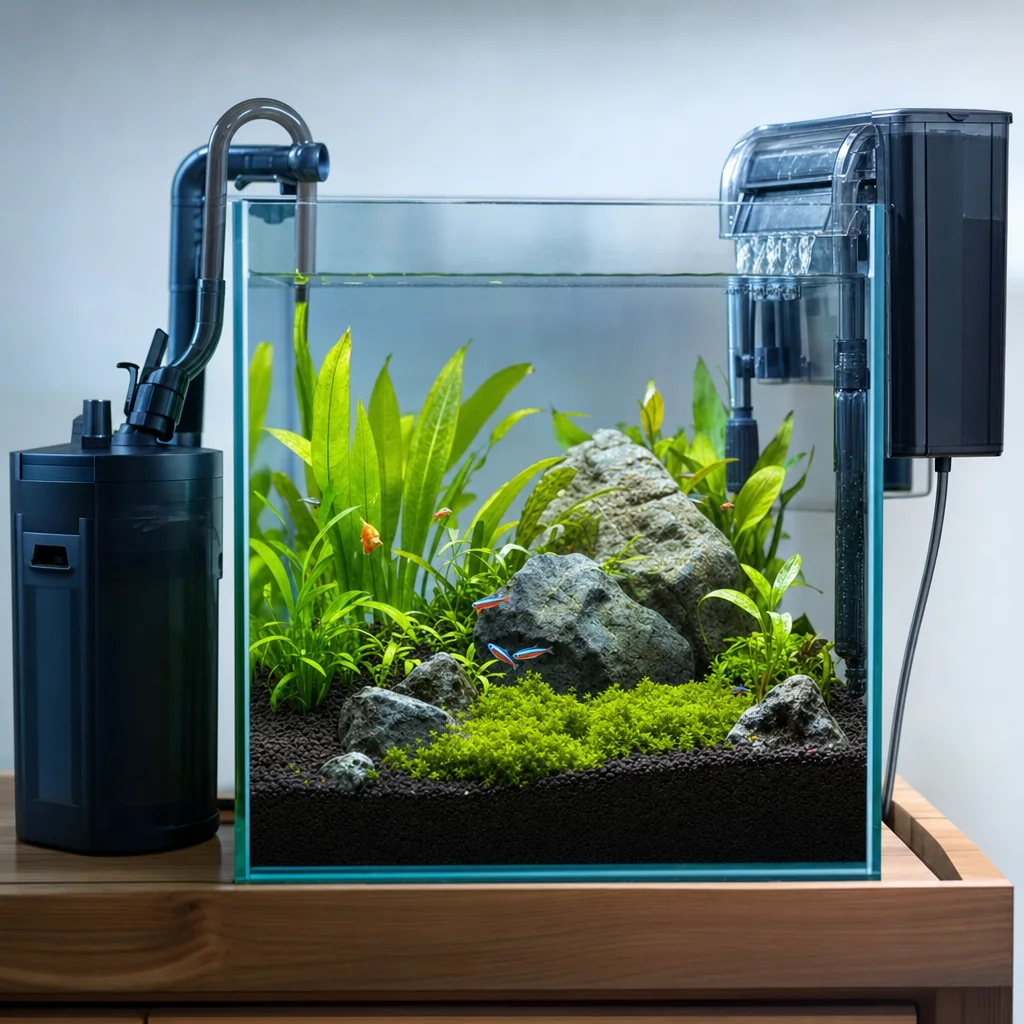
The filter is the heart of your aquarium, and it’s also the piece of gear beginners agonize over most. Walk into a debate online and you’ll find people convinced that canister filters are the only serious option and others who’ve kept gorgeous tanks for a decade on a simple hang-on-back unit. The truth is that both are good tools — they’re just suited to different tanks and different keepers.
Instead of asking which filter is “best,” ask which one fits your tank size, your stocking level, and how much maintenance you’re realistically willing to do. Answer those honestly and the choice usually makes itself.
How Each Filter Type Works
Hang-on-back (HOB) filters
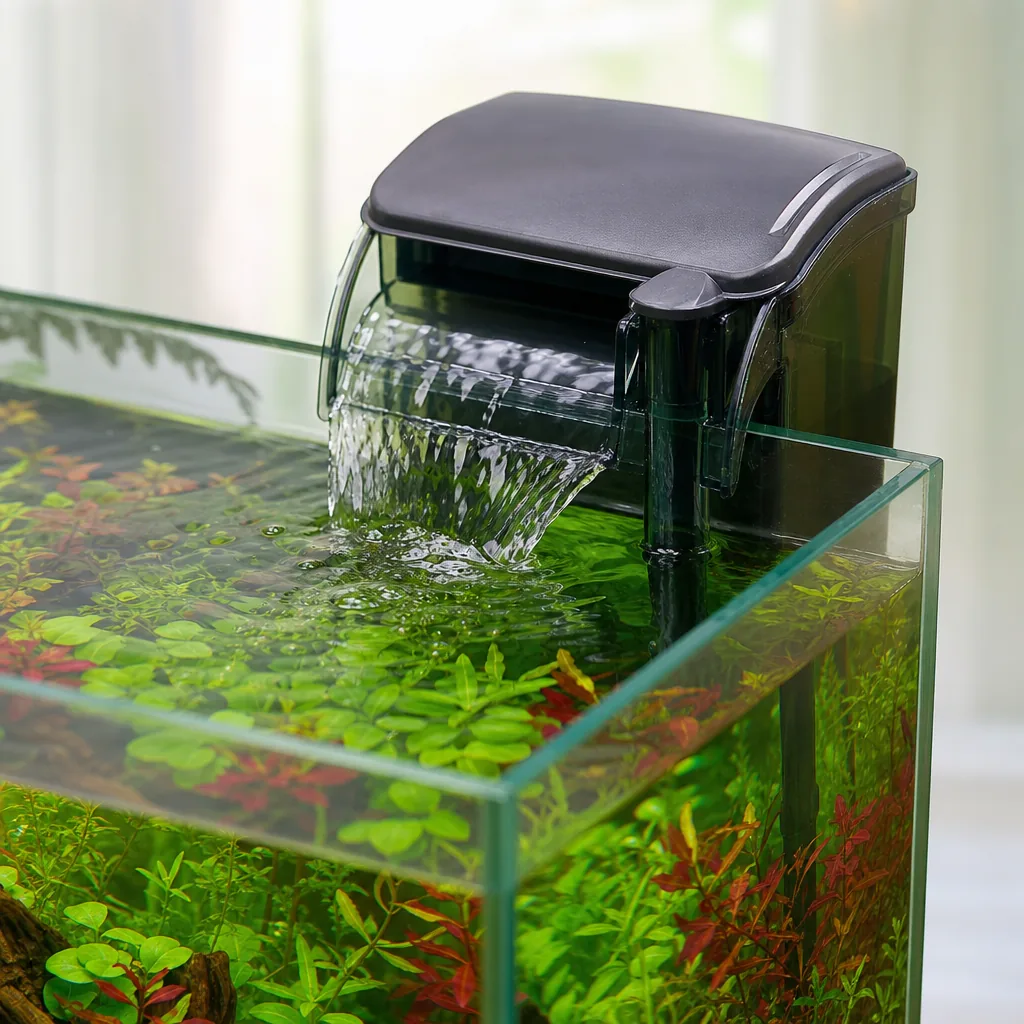
An HOB hangs on the rim of the tank, pulls water up through an intake tube, runs it through a cartridge or media chamber, and spills it back in over a small waterfall. They’re inexpensive, simple, and the media is right there when you want to service it. Most beginner kits ship with one for a reason.
Canister filters
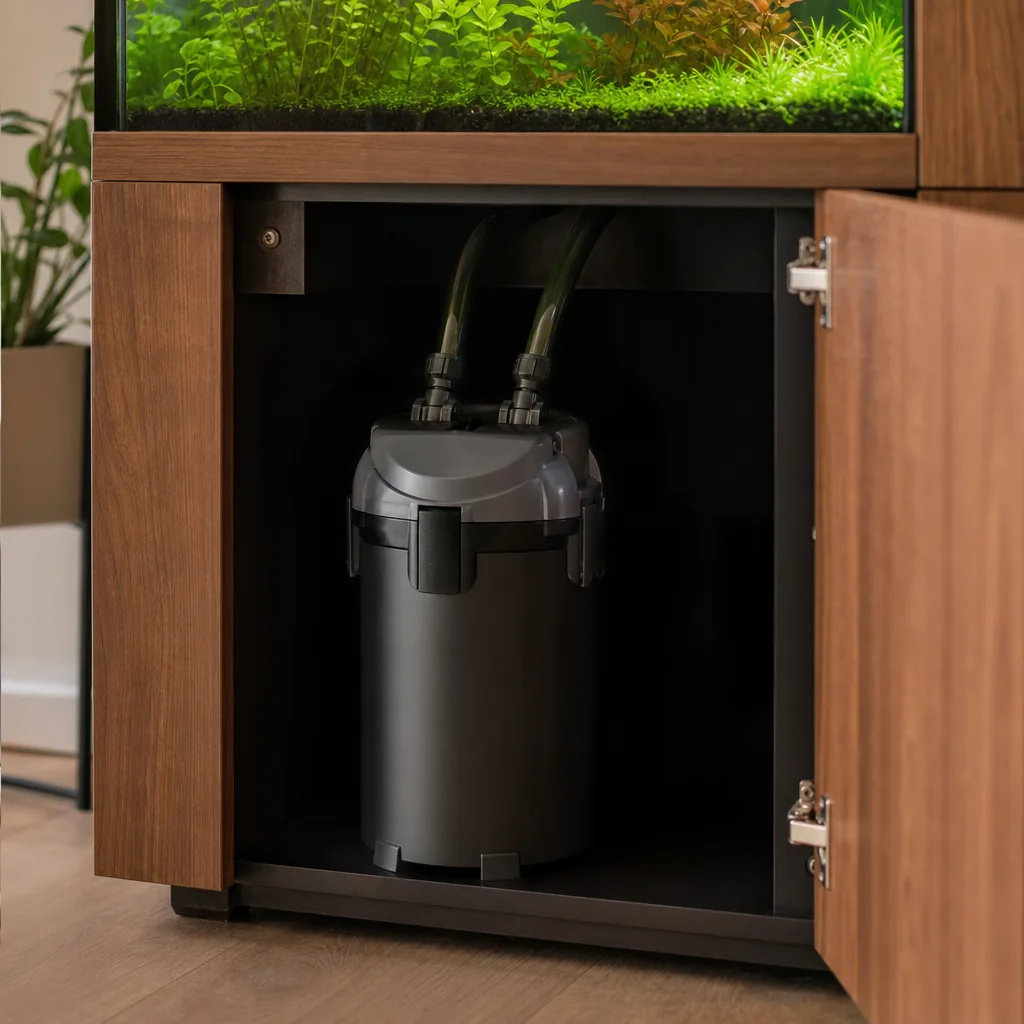
A canister sits in the cabinet below the tank. Water is pumped down to a sealed canister packed with several trays of media, then returned up to the tank through a spray bar or output nozzle. The larger media volume and longer water path make canisters powerful biological and mechanical filters, especially on bigger tanks.
Where HOB Filters Shine
Don’t let anyone tell you HOBs are only for tiny tanks. They’re an excellent choice for a huge range of setups.
- Smaller and mid-size tanks — generally up to around 40-55 gallons, depending on the model and your stocking.
- Budget builds — they cost less up front and the running cost is low.
- Easy maintenance — you can swap or rinse media in minutes without disconnecting hoses or priming anything.
- Surface agitation — the waterfall return helps with gas exchange and oxygenation.
The main trade-offs are limited media capacity and a return that breaks the water surface, which isn’t ideal if you’re running a planted tank and trying to retain CO2. They can also be a little louder if the water level drops and the waterfall starts splashing.
Where Canister Filters Shine
Canisters earn their keep on larger and more heavily stocked tanks where you need serious biological capacity and a quieter, more polished result.
- Large tanks — once you’re past roughly 55 gallons, a canister’s media volume becomes hard to beat.
- Heavily stocked or messy fish — cichlids, goldfish, and big communities produce a lot of waste that canisters handle well.
- Planted tanks — a spray bar gives gentle, distributed flow with minimal surface disturbance, which helps hold CO2.
- A clean look — all the bulky equipment hides in the cabinet, leaving only slim intake and output tubes in the tank.
The downside is cost, a slightly more involved setup, and maintenance that means disconnecting hoses and hauling the canister to a sink. It’s not hard once you’ve done it, but it’s a bigger job than rinsing an HOB cartridge.
Choosing Based on Your Tank
A simple decision framework
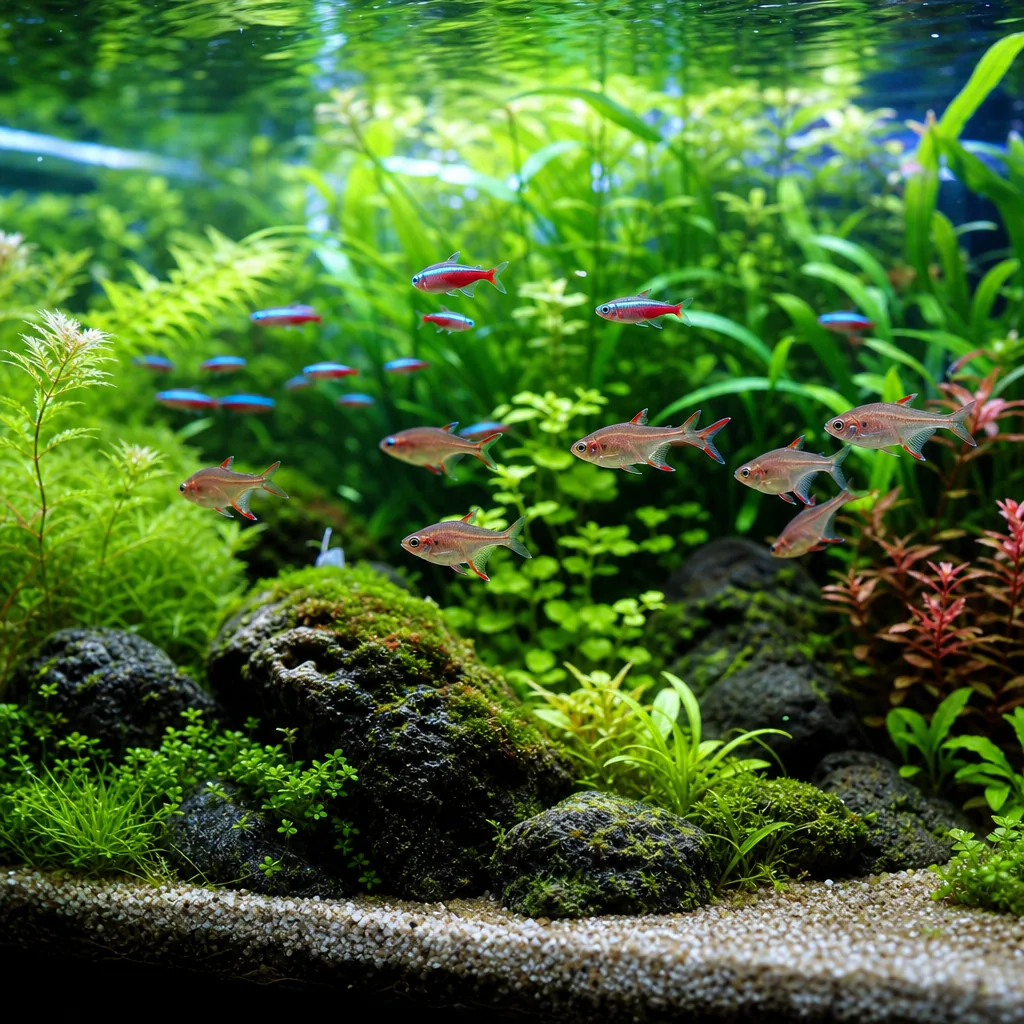
- Tank under ~40 gallons, lightly to moderately stocked: an HOB is usually all you need and the easier choice.
- Tank 40-55 gallons: either works. Pick based on whether you value low cost and easy upkeep (HOB) or capacity and a clean look (canister).
- Tank over ~55 gallons, or heavily stocked, or planted: lean canister.
- Messy fish at any size: over-filter. Many keepers run a canister plus an HOB on big, dirty tanks.
Whatever you choose, size up rather than down. A filter rated for a larger tank than yours gives you margin for heavier stocking and longer gaps between cleanings. You can compare options in our filtration gear shop and our broader freshwater guides.
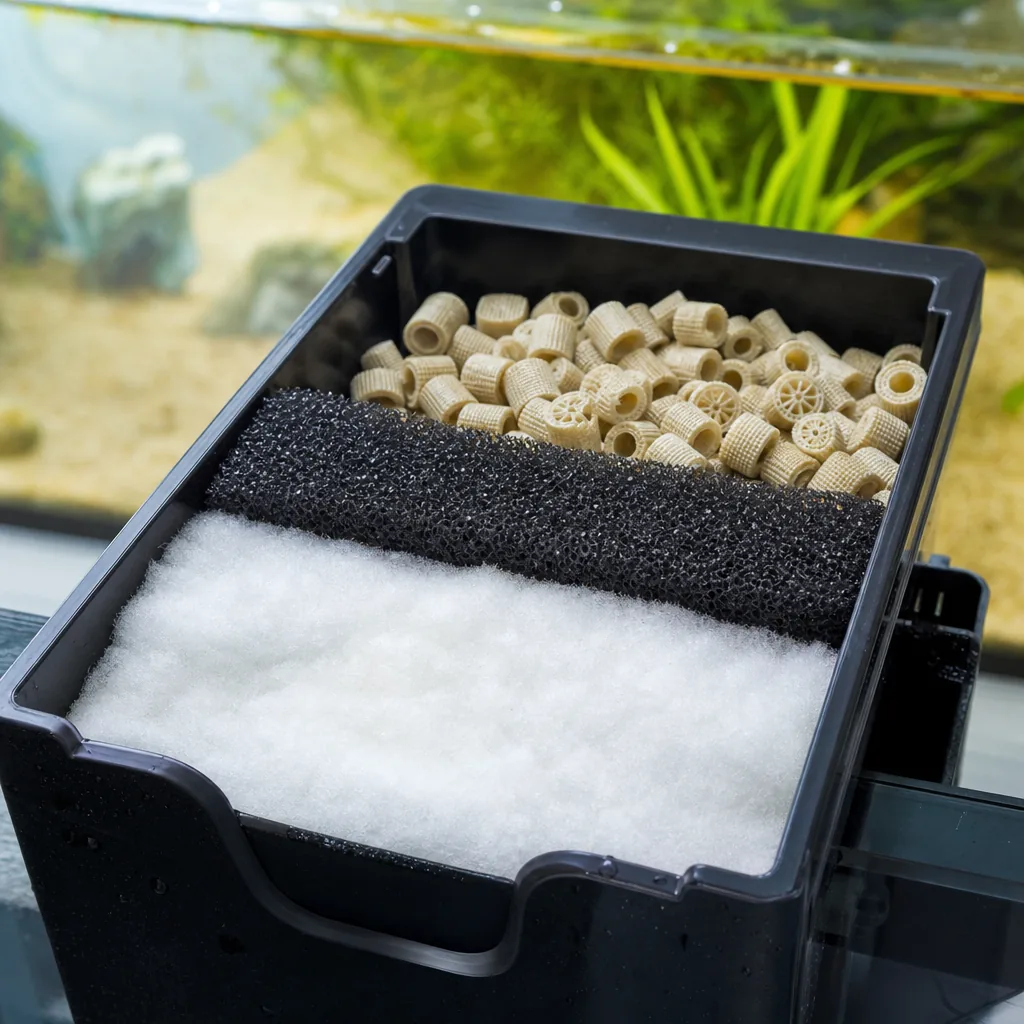
Media Matters More Than the Box
Here’s something experienced keepers know that beginners often miss: the filter housing matters less than what you put inside it. Both HOBs and canisters become great filters when you ditch disposable cartridges in favor of quality mechanical media (sponge, filter floss) and biological media (ceramic rings, sintered glass, or similar). Cartridges are designed to be replaced — and replacing them throws out your beneficial bacteria. Rinse and reuse media in old tank water instead.
Final Thoughts
There’s no universally correct answer, and you won’t ruin your tank by picking the “wrong” one. For most beginners with a modest community tank, a well-sized HOB is the practical, affordable starting point. As your tanks grow or your fish get messier, a canister becomes the upgrade that pays off. Match the filter to the job, load it with good media, and maintain it consistently — that combination beats any brand-name argument.
Frequently Asked Questions
Is a canister filter always better than an HOB?
No — a canister offers more capacity and a cleaner look, but it costs more and is more involved to maintain. On a small, lightly stocked tank a good HOB performs just as well with far less hassle.
Can I run both at once?
Absolutely, and many keepers do on large or messy tanks. Running a canister plus an HOB gives you redundancy and extra biological capacity, which is a smart move for heavily stocked setups.
How big a filter do I need?
Size up rather than down — pick a filter rated for a larger tank than you actually have. That margin handles heavier stocking, gives you room before maintenance, and keeps water quality stable.
Should I replace filter cartridges every month like the box says?
No — swapping cartridges throws out your beneficial bacteria and disrupts the cycle. Use reusable sponge and biological media, and just rinse it in old tank water when flow slows down.
Which filter is best for a planted tank?
A canister with a spray bar is usually preferred because it provides gentle, even flow without breaking the surface, which helps retain CO2. An HOB can work for low-tech planted tanks, but the surface agitation makes it less ideal for CO2-injected setups.