
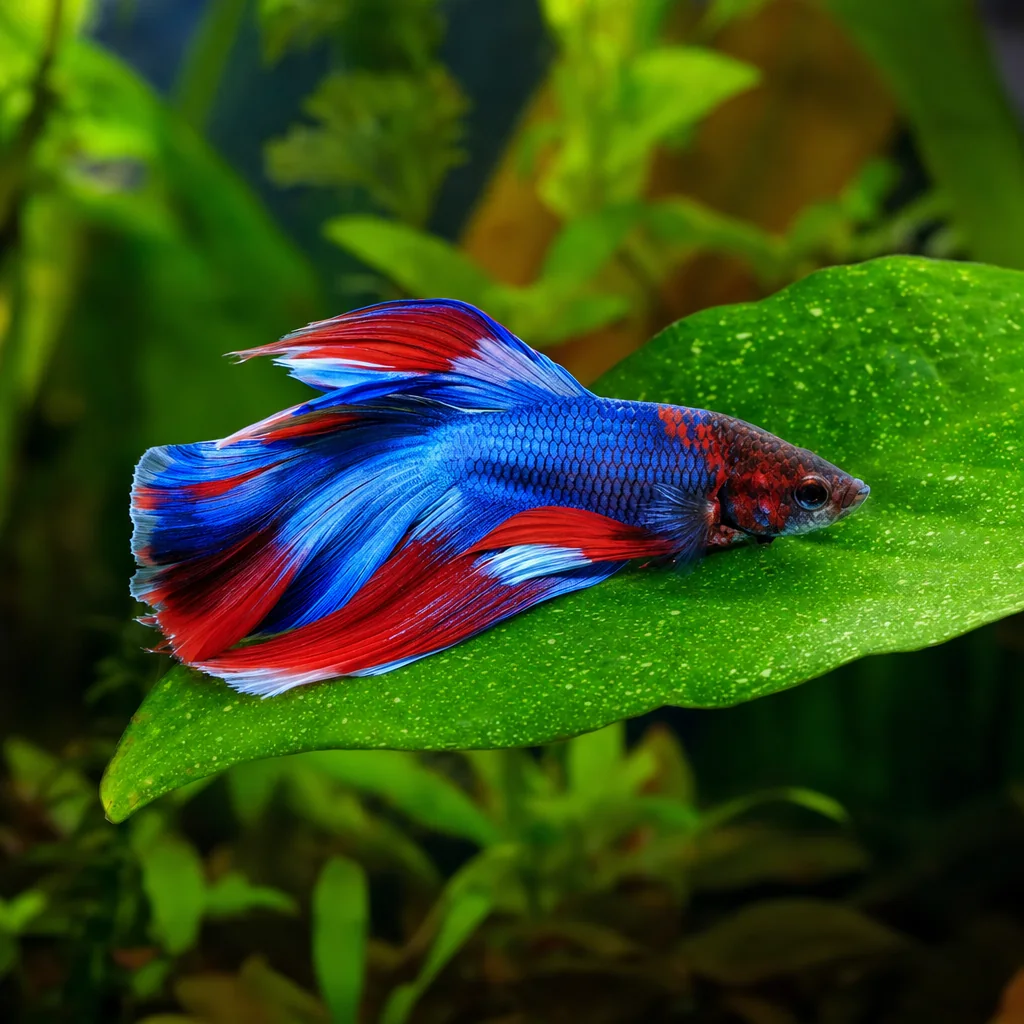
Bettas and live plants are a natural match. In the wild, bettas live in heavily vegetated, slow-moving water, so a planted tank isn’t just for looks; it gives your fish cover, resting spots near the surface, and a more stable environment than a bare glass box ever will. The trick is choosing plants that thrive in the warm, gently filtered, often lower-light conditions a betta tank tends to have, while not shredding those long fins.
Here are the plants I’d reach for first, why they suit bettas specifically, and a few setup tips that keep both plant and fish happy. Everything here works in a standard freshwater setup with no CO2 injection required.
What Makes a Plant Good for a Betta Tank
Before the list, it helps to know what we’re actually screening for. A great betta plant usually checks these boxes:
- Tolerates low to moderate light. Many betta tanks are small with modest lighting.
- Handles warm water. Bettas like it in the upper 70s to low 80s Fahrenheit, which some plants resent.
- Has soft, smooth leaves or a forgiving texture so delicate fins don’t snag and tear.
- Doesn’t demand high-tech care. Most betta keepers want low-maintenance, and that’s completely doable.
With that lens, here are the standouts.
The Best Low-Maintenance Betta Plants
Java Fern
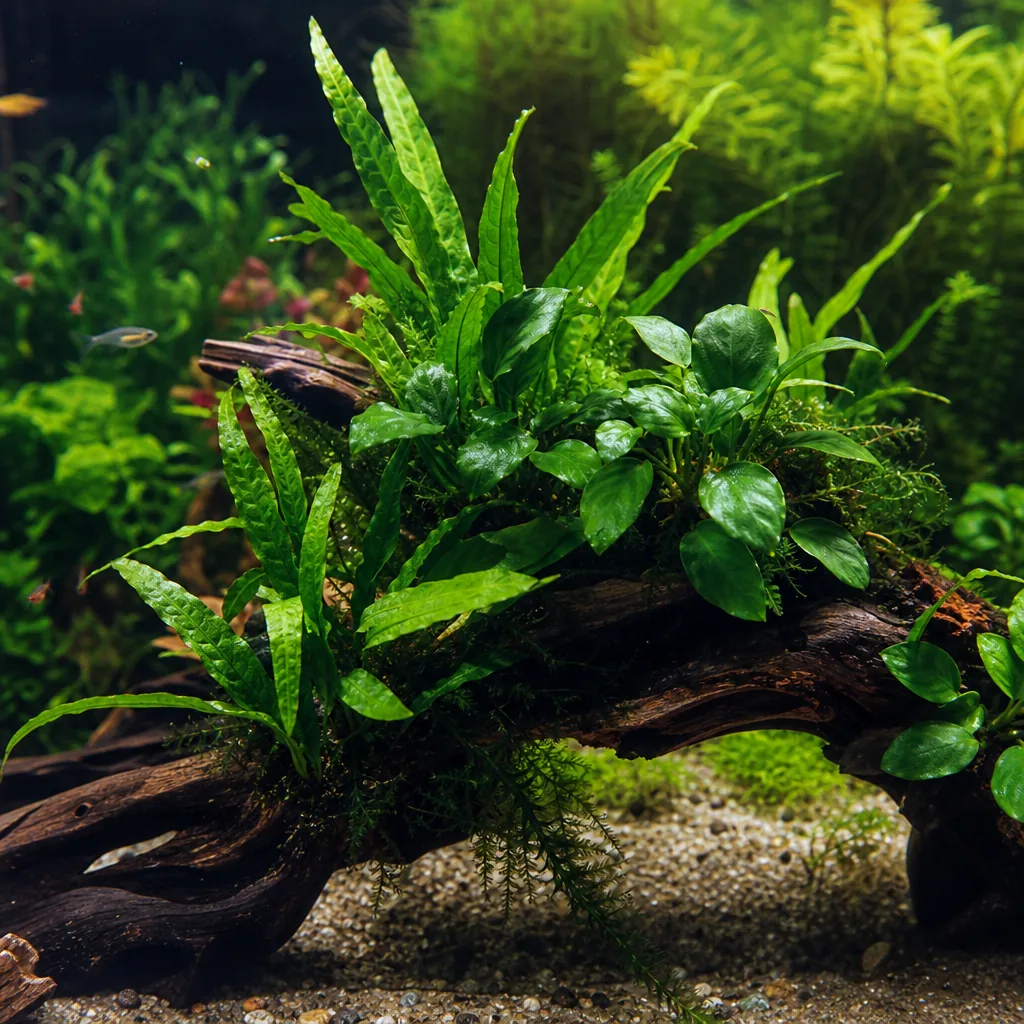
Java fern is close to unkillable, which is exactly what a beginner wants. It’s a rhizome plant, so you tie it to rock or driftwood rather than burying it, and it pulls nutrients straight from the water. The broad leaves give bettas shade and something to lean against, and it shrugs off low light without complaint.
Anubias
Like Java fern, Anubias is a rhizome plant you attach to hardscape. Its thick, sturdy leaves are nearly indestructible and make perfect resting shelves for a betta to perch on near the surface. Anubias nana is a compact variety that fits small tanks beautifully. Keep the rhizome above the substrate or it will rot.
Cryptocoryne
Crypts are root feeders that do well in modest light and add a lush, leafy mid-ground. They can melt back when first introduced, dropping leaves as they adjust, but don’t panic; they almost always regrow from the roots once settled. A root tab under each crypt keeps them thriving.
Plants That Bettas Especially Love
Floating Plants
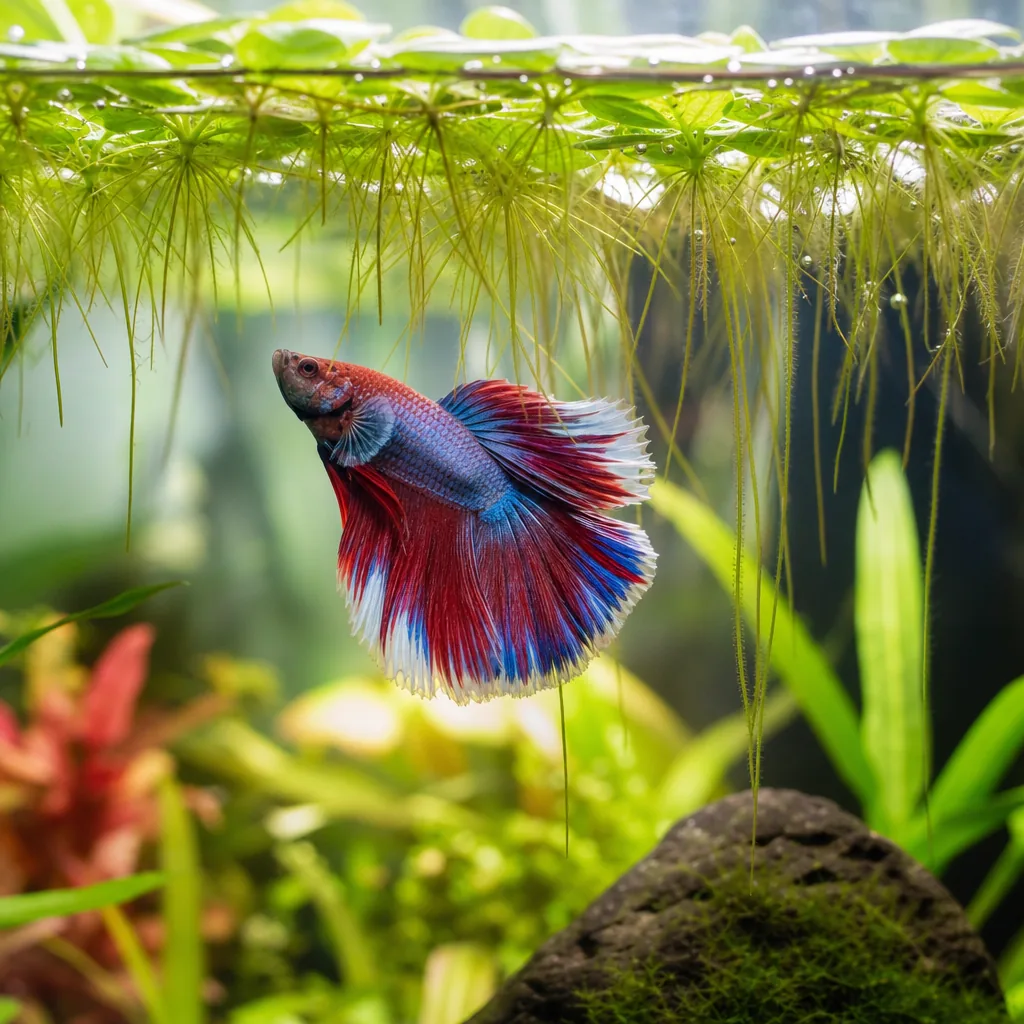
This is the category betta keepers underrate. Floating plants like Amazon frogbit, red root floaters, and even a little duckweed do something special for bettas: they diffuse harsh light, give your fish a sense of security, and provide cover near the surface where bettas spend a lot of time. Bettas breathe air from the surface through a labyrinth organ, so floating cover that doesn’t form a solid mat is ideal.
Just thin floaters out regularly so they don’t blanket the entire surface and block gas exchange.
Betta Bulbs (Aponogeton)
These grow fast and throw up long, flowing leaves that bettas drift through. They’re an easy, rewarding plant that gives quick visual payoff, which is satisfying when you’re new to the hobby.
Plants for a Betta Resting Hammock Effect
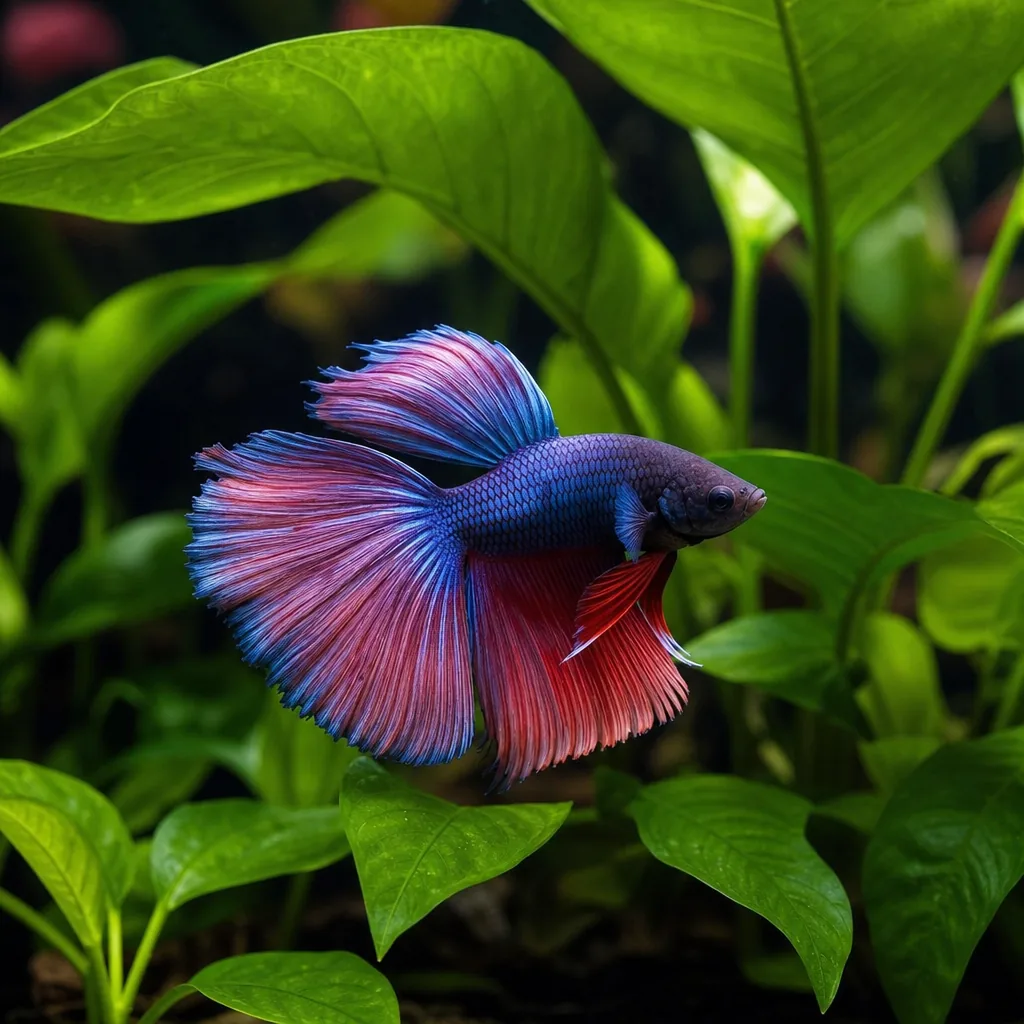
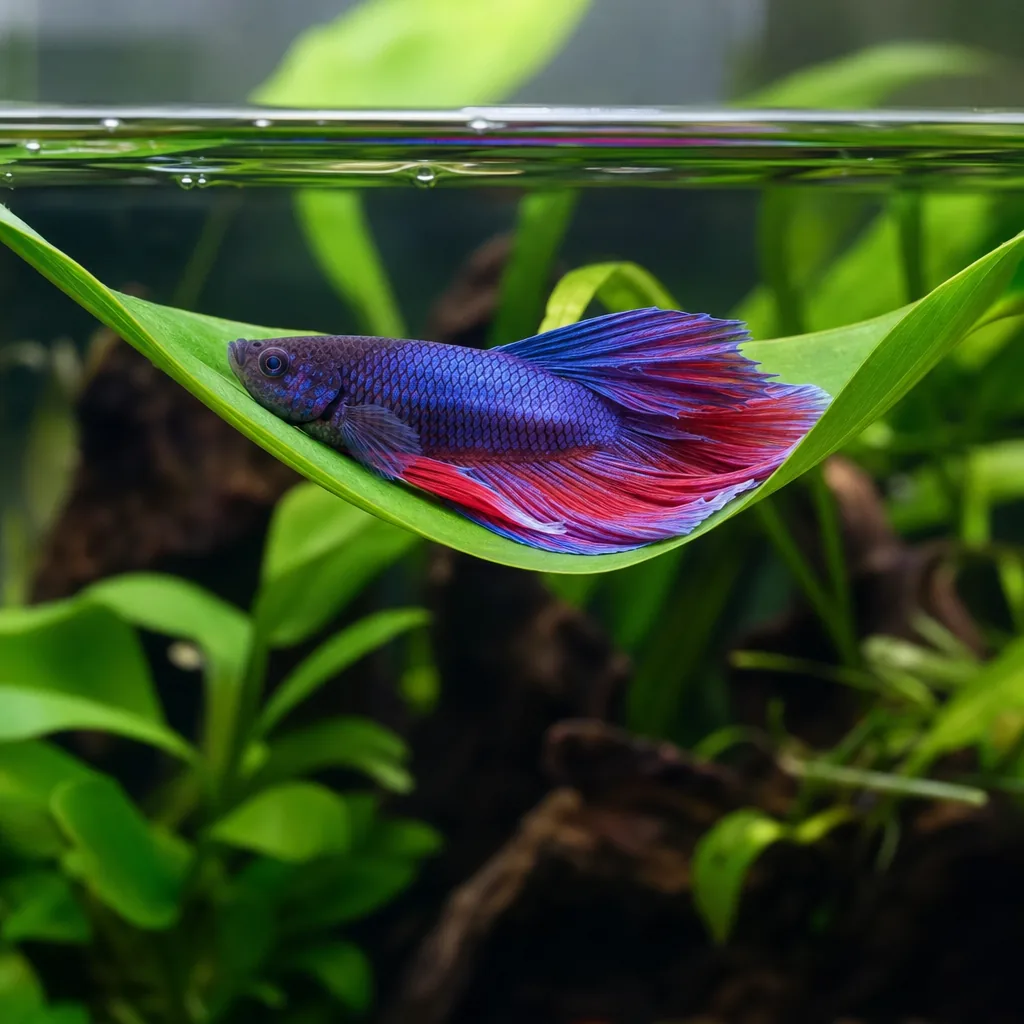
Bettas love to rest. Broad-leaved plants positioned near the top of the tank create natural resting platforms, which is healthier and more natural than relying only on a plastic leaf hammock. Anubias attached to taller driftwood and the upper leaves of a tall Cryptocoryne both work well for this. Pair them with floating cover above and you’ve recreated the layered, shaded environment a betta instinctively wants.
Quick Setup Tips for a Planted Betta Tank
- Keep flow gentle. Bettas dislike strong current, and most of these plants don’t need it either. A baffled or low-flow filter keeps both happy.
- Don’t bury rhizomes. Java fern and Anubias rhizomes must stay exposed; tie them to hardscape and only the roots go down.
- Use root tabs for crypts and bulbs. These root feeders appreciate nutrients in the substrate.
- Quarantine or rinse new plants. Snail hitchhikers and pests can ride in on store plants.
- Go slow with light. Modest lighting and a six-to-eight-hour photoperiod grow these plants while keeping algae in check.
If you want a simple planted-betta starter kit of hardy species and the basics to anchor them, take a look at our recommended gear.
The Bottom Line
You don’t need a high-tech rig to give a betta a beautiful, beneficial planted home. Start with Java fern and Anubias for indestructible structure, add crypts for fullness, and float something on top for cover. Your betta gets a more natural, secure environment, and you get a tank that mostly takes care of itself. For more planted-tank guidance, browse the rest of the blog.
Frequently Asked Questions
Do betta fish need live plants?
They don’t strictly need live plants, but bettas benefit greatly from them. Plants provide cover, resting spots, and a more stable environment that mirrors their natural vegetated habitat. Live plants also help with water quality by consuming nitrogenous waste.
Will my betta damage live plants?
Generally no. Bettas aren’t plant eaters and tend to rest on or weave through plants rather than destroy them. Choose smooth-leaved species like Anubias and Java fern so delicate fins don’t snag, and you’ll rarely see any issues.
Do I need a special light or CO2 for betta plants?
No. Every plant recommended here, including Java fern, Anubias, crypts, and floaters, thrives in low to moderate light with no CO2 injection. A modest aquarium light on a six-to-eight-hour timer is plenty.
Why are my Cryptocoryne plants melting?
Crypts commonly melt, dropping leaves, when first moved to a new tank as they adjust to different water conditions. This is normal and usually temporary. Leave the roots undisturbed and the plant will regrow from the base once settled.
Are floating plants good for bettas?
Yes, floating plants are excellent for bettas. They diffuse harsh light, provide security, and offer cover near the surface where bettas like to rest and breathe air. Just thin them regularly so they don’t form a solid mat that blocks gas exchange.