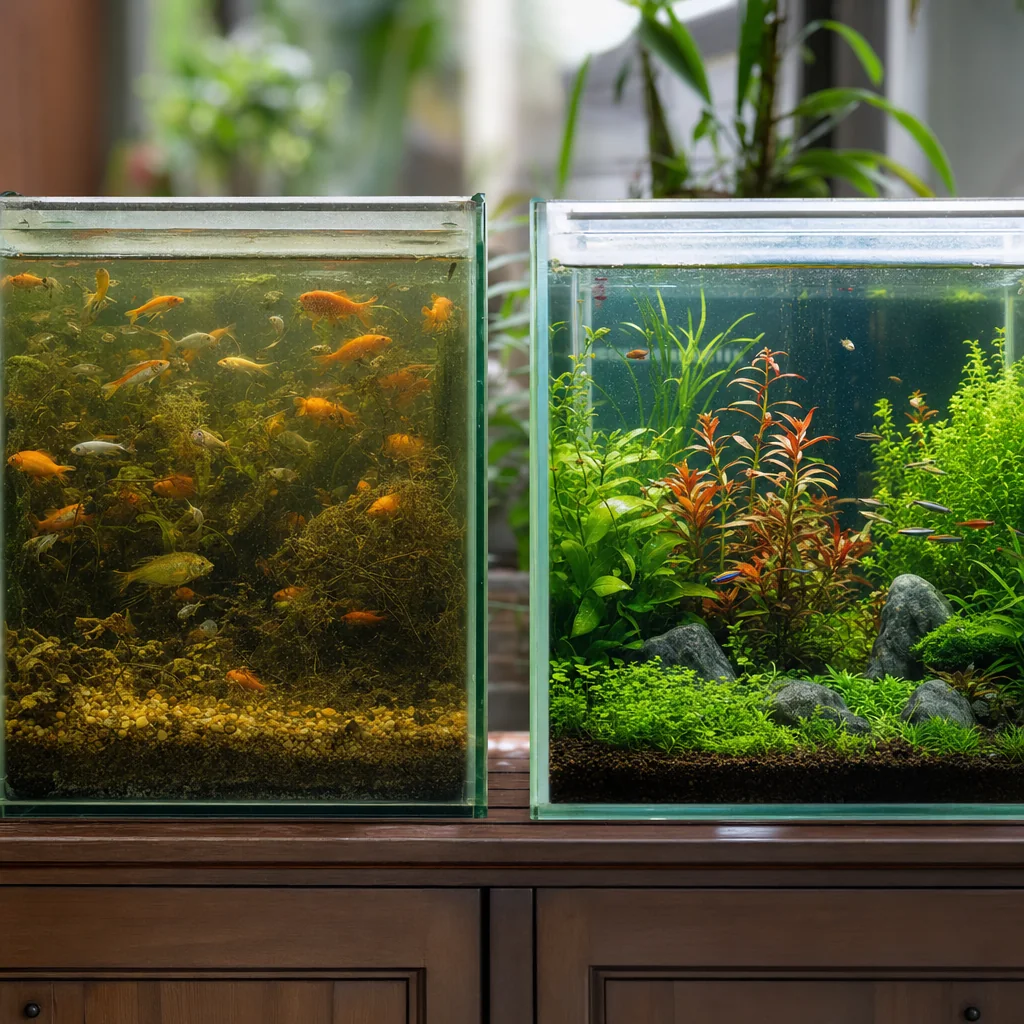
Almost everyone who quits the aquarium hobby quits in the first few months, and almost always for the same handful of reasons. The fish die, the water turns cloudy, the tank smells, and a frustrated beginner concludes that fishkeeping is just hard. It isn’t — but it’s unforgiving of a few specific early mistakes that compound fast.
The encouraging part is that these mistakes are well-known and completely avoidable once someone tells you about them. Here are the ones that sink the most first tanks, and what to do instead.
Skipping the Nitrogen Cycle
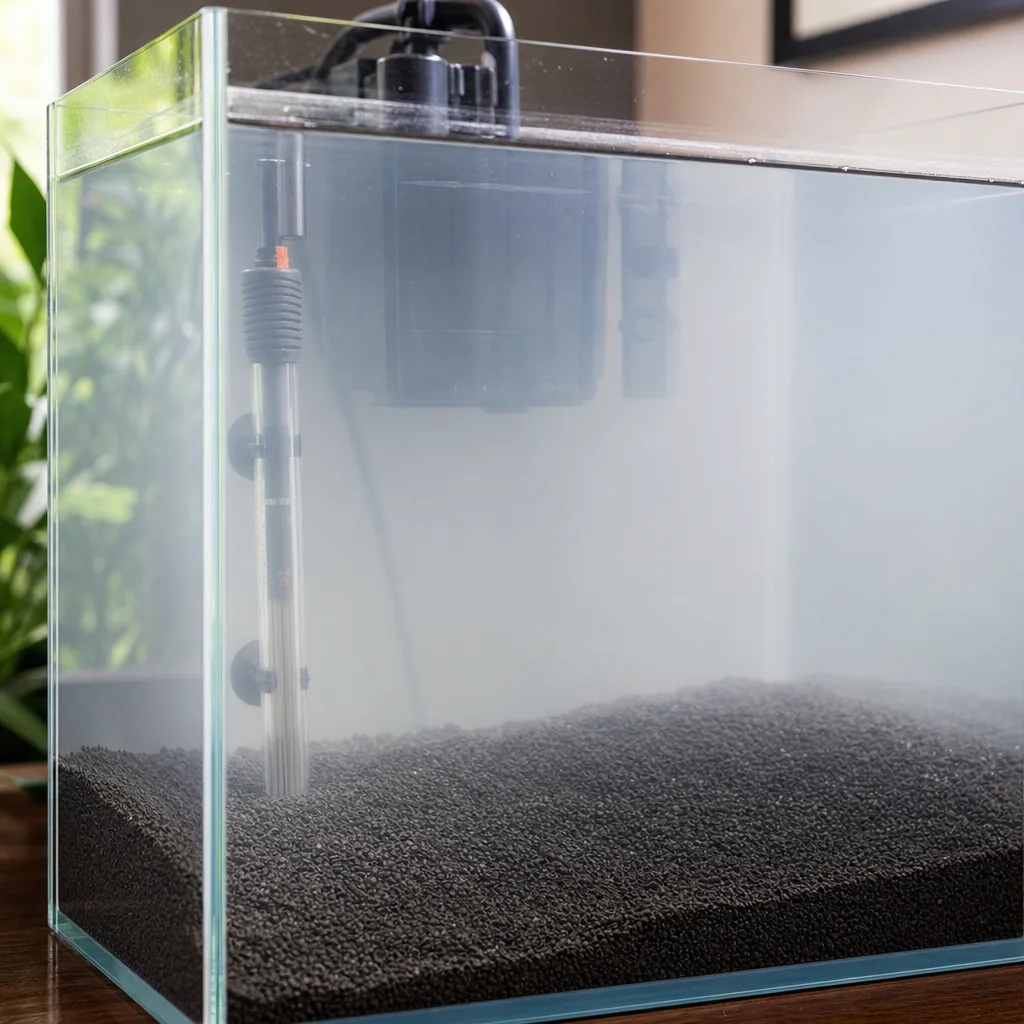
This is the big one. New keepers fill a tank, add fish the same day, and within a week the fish are gasping and dying. The cause is ammonia poisoning — a fresh tank has no beneficial bacteria to process fish waste, so toxins spike.
What to do instead
- Cycle the tank before adding fish, ideally with a fishless cycle using an ammonia source.
- Seed the new filter with media or substrate from an established tank to speed things up.
- Test for ammonia, nitrite, and nitrate, and don’t add fish until ammonia and nitrite read zero and nitrate is present.
Understanding the cycle is the foundation everything else rests on. If you only learn one concept before buying fish, make it this one.
Buying Too Many Fish, Too Fast
An empty tank looks bare, and the temptation is to fill it on day one. But every fish adds to the bioload, and a young tank’s bacteria colony can’t keep up with a sudden crowd. Overstocking also leads to aggression, stunted growth, and constant water quality battles.
Add fish gradually, a few at a time, with a week or two between additions so the biofilter can catch up. Research adult sizes, not the inch-long juveniles in the store tank — that cute little fish may need a much larger home. And quarantine new arrivals; see our quarantine guide for why.
Overfeeding
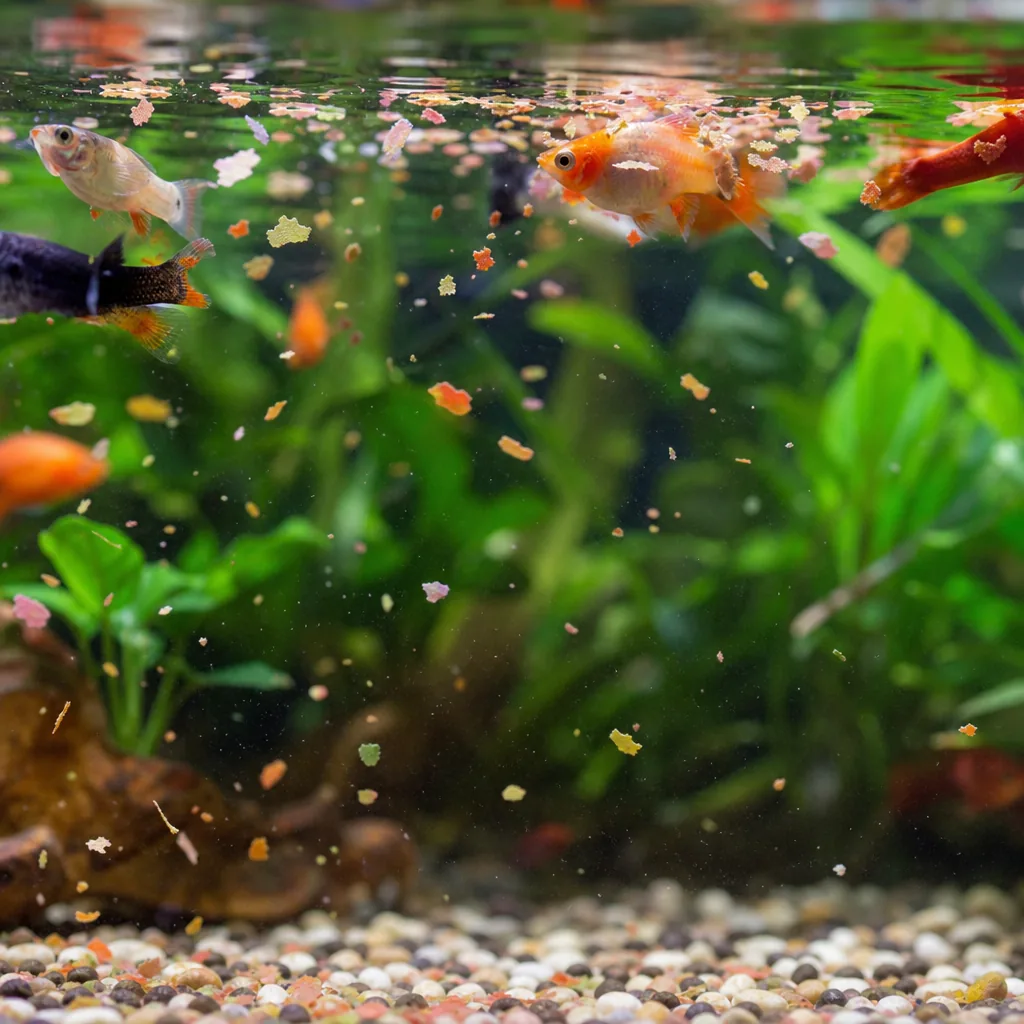
More fish die from overfeeding than underfeeding. Uneaten food rots, spikes ammonia, fuels algae, and clouds the water. Beginners feed too often and too much because the fish always look hungry — fish always look hungry.
- Feed once or twice a day, only what the fish finish in a couple of minutes.
- Skip a day occasionally; healthy fish handle it easily.
- Remove uneaten food rather than letting it sit and decay.
Choosing the Wrong Tank Size
Beginners often start with the smallest, cheapest tank, assuming small is easier. It’s actually the opposite. Small tanks have less water volume, so parameters swing fast and mistakes turn deadly in hours. A larger tank is more forgiving and more stable.
For most beginners, a 20-to-40 gallon tank hits the sweet spot of stability, stocking options, and manageable cost. Our tank size guide walks through how to choose.
Ignoring Water Testing
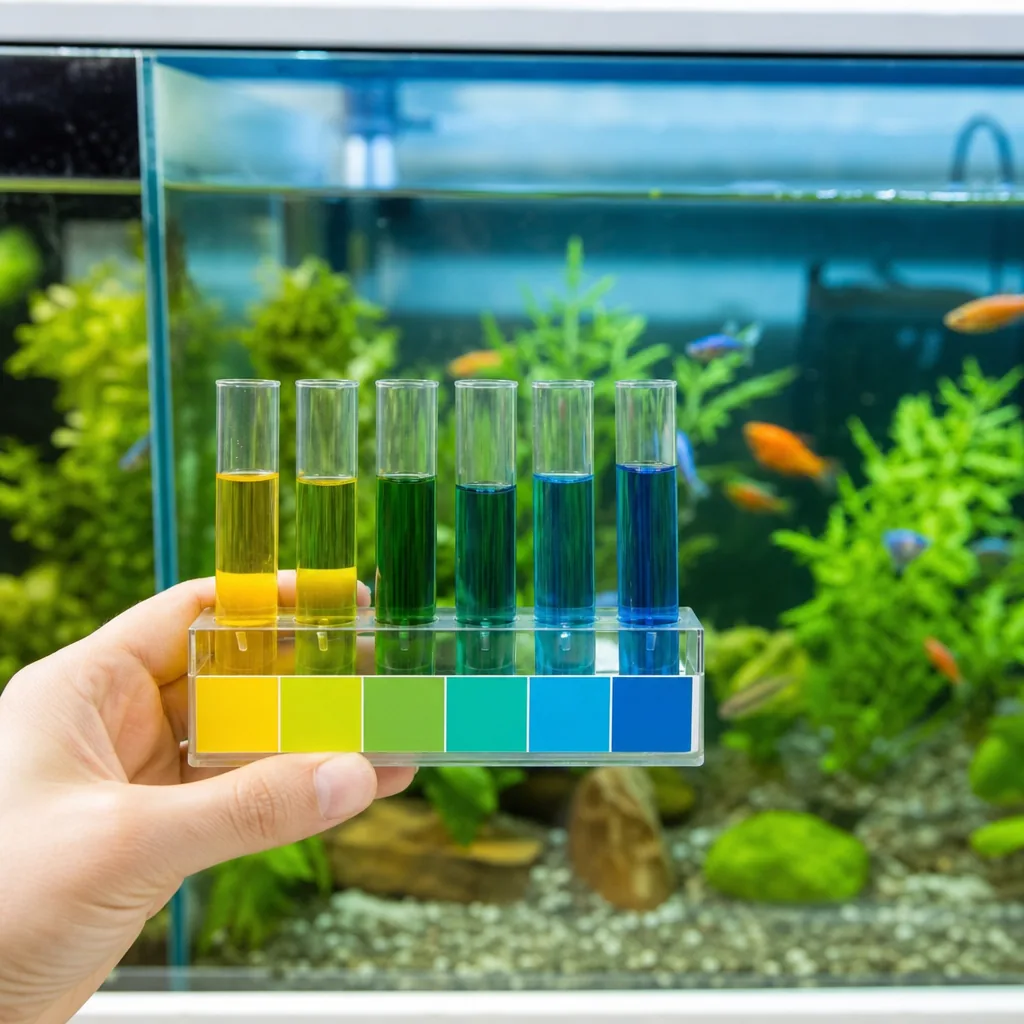
You can’t see ammonia, nitrite, or nitrate. Clear water can be toxic, and cloudy water can be harmless. The only way to know what’s happening chemically is to test. Beginners who skip testing are flying blind, and they usually only learn there’s a problem when fish start dying.
The essentials to test
- Ammonia and nitrite — should be zero in a cycled tank.
- Nitrate — keep it in a safe range with water changes.
- pH — more about stability than hitting a specific number.
A liquid test kit is a small investment that prevents big losses. Keep one on hand and use it, especially during the first few months.
Not Researching Fish Compatibility
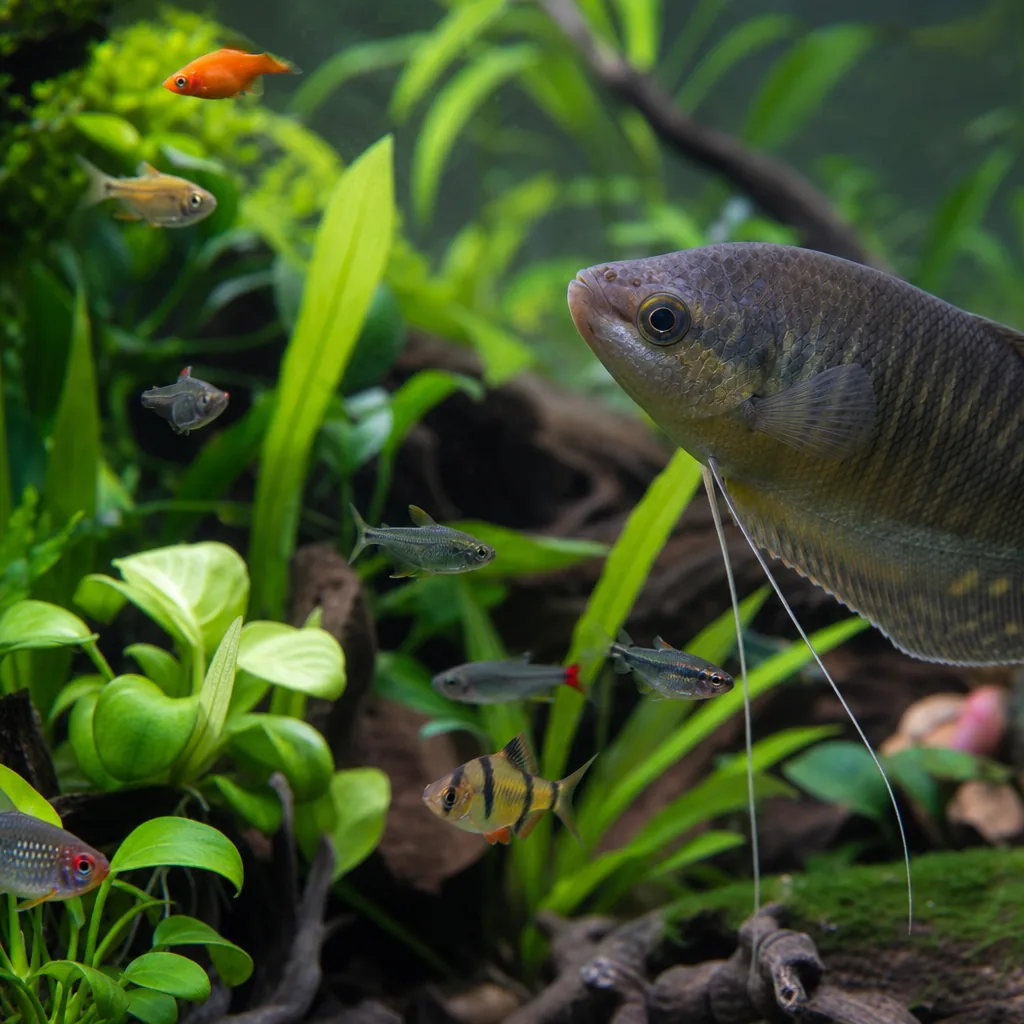
Putting fish together because they looked nice in the same store tank is a recipe for nipped fins, bullied fish, and dead bodies. Some species are aggressive, some need groups, some need specific water parameters, and some simply get far too big. A little research before buying saves a lot of grief after.
Neglecting Maintenance
The final common mistake is treating the tank as set-and-forget. Aquariums are small closed systems that need regular upkeep — water changes, filter maintenance, glass cleaning. Skip it and problems pile up quietly until they become a crisis. A consistent routine prevents nearly all of them. Build one early and stick to it.
Final Thoughts
None of these mistakes are exotic or hard to avoid — they’re just things nobody tells beginners until after the damage is done. Cycle your tank, stock slowly, feed sparingly, go a little bigger than you think, test your water, research your fish, and stay on a maintenance routine. Do those seven things and you’ll skip past the failure point that ends most people’s hobby, straight into the part where keeping a freshwater tank is genuinely relaxing.
Frequently Asked Questions
What’s the most common beginner mistake?
Adding fish to a tank that hasn’t been cycled. Without an established colony of beneficial bacteria, ammonia from fish waste quickly reaches toxic levels — this single mistake kills more first-tank fish than anything else.
How many fish can I add at once?
Just a few at a time, with a week or two between additions. This gives your biofilter time to grow and process the increased waste load instead of being overwhelmed.
Is a bigger tank really easier for beginners?
Yes — a larger water volume dilutes mistakes and keeps parameters stable, while small tanks swing dangerously fast. A 20-to-40 gallon tank is far more forgiving than a tiny starter bowl.
How do I know if I’m overfeeding?
If food drifts to the bottom uneaten, or you see leftover food after a couple of minutes, you’re feeding too much. Feed only what the fish finish quickly, once or twice a day.
Do I really need to test my water?
Yes — ammonia, nitrite, and nitrate are invisible, and clear water can still be toxic. A liquid test kit is the only way to know what’s actually happening in your tank, especially during the first few months.