
If you have battled green pond water, you have probably seen UV clarifiers recommended as the magic fix. They have a real, earned reputation, but there is also a lot of confusion about what they do and what they cannot do. Let me give you the honest version so you can decide whether one belongs on your pond.
What a UV Clarifier Actually Does
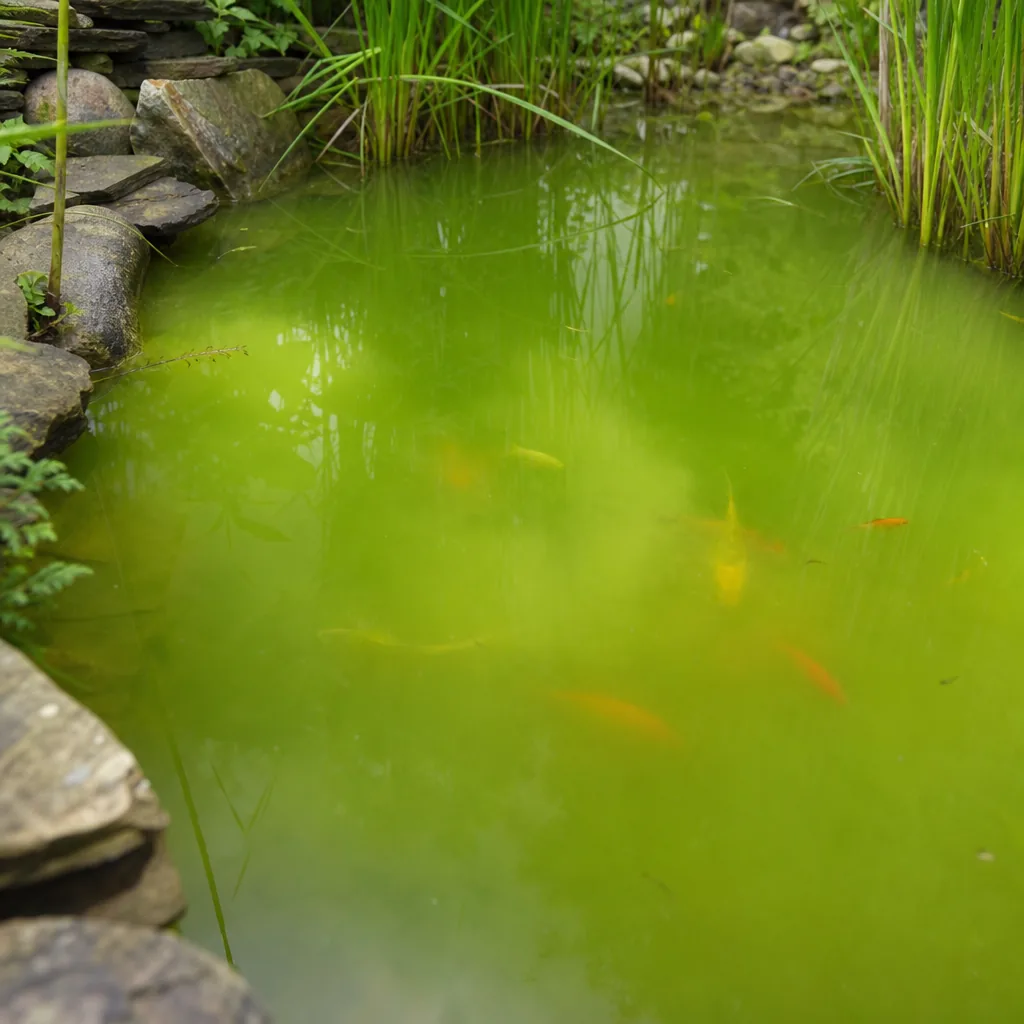
A UV clarifier is a sealed tube with an ultraviolet bulb inside. Pond water is pumped past the bulb, and the UV light disrupts the cells of free-floating algae as they flow through. The algae clump together and either settle out or get caught by your filter. Over a week or two, this clears the microscopic green algae that turns water into pea soup.
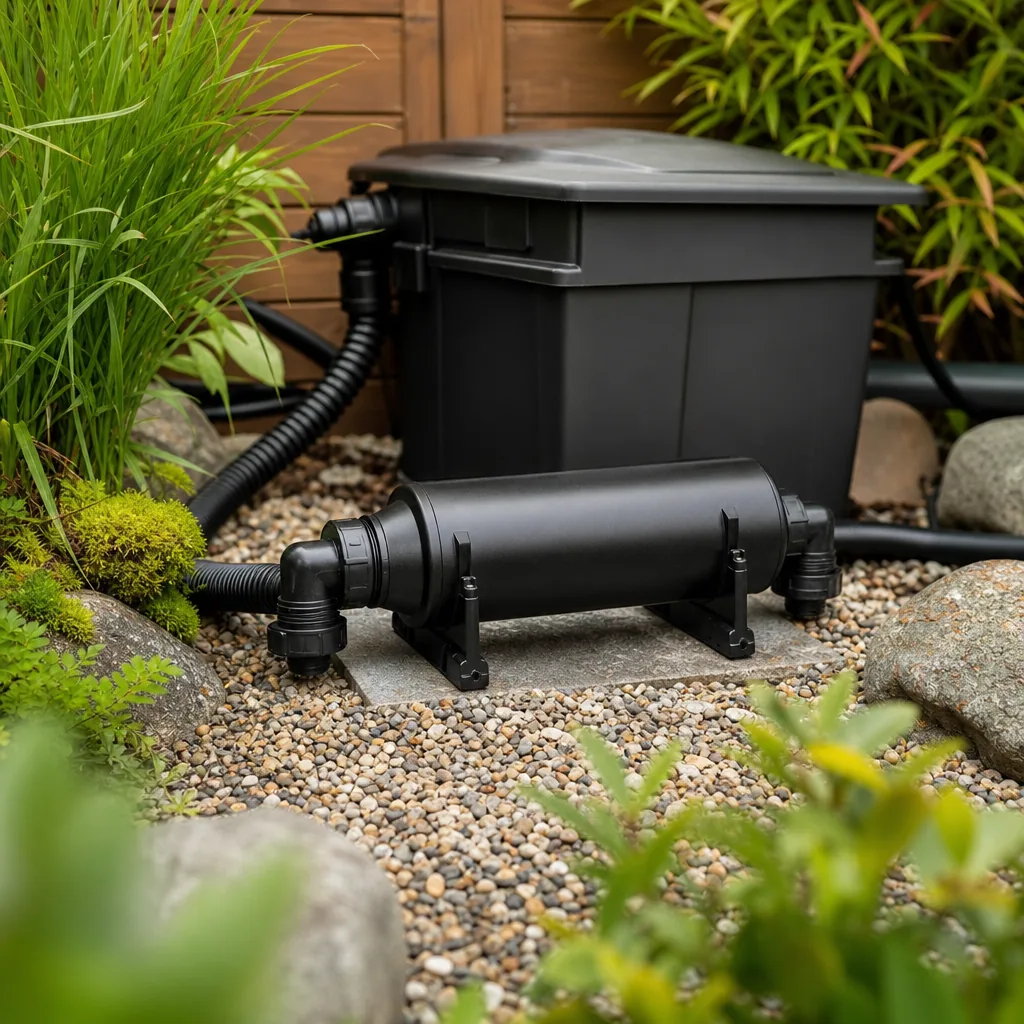
The important detail is that it treats the water passing through it. It is inline with your pump and filter, not a standalone gadget you drop in the pond. Water has to circulate through the unit repeatedly for it to work.
Does It Actually Work? Yes, With Caveats
For green water specifically, a properly sized and maintained UV clarifier works reliably. This is not marketing hype. It is one of the few pond products that does exactly what it claims. If your problem is free-floating algae, a UV unit will clear it.
But you need to understand its limits so you are not disappointed:
- It only kills free-floating algae. The stringy string algae clinging to your rocks and liner is unaffected, because it never passes through the unit.
- It does not remove nutrients. A UV clarifier treats the symptom. If overfeeding and waste keep loading the water, algae will keep trying to grow, and the moment the bulb weakens the bloom returns.
- It does not clear debris or muck. UV clears the green tint, but mechanical and biological filtration still do the heavy lifting on solids and waste.
Think of it as one layer in a system, not a replacement for good husbandry. Our guide to fixing green pond water covers the full picture of nutrients, light, and plants.
Sizing and Flow Matter More Than You Think
A UV clarifier that is too small for your pond, or one with water rushing through too fast, will not do the job. Two things determine effectiveness:
- Wattage matched to pond volume. Bigger ponds need more UV output. An undersized unit simply cannot dose enough water.
- Flow rate. Water needs enough contact time with the bulb. If your pump pushes water through too quickly, exposure drops and clarity suffers. Manufacturers publish a recommended flow range for a reason.
Get either of these wrong and you will conclude the unit does not work, when really it was mismatched.
Maintenance Is Not Optional
UV clarifiers are easy to run but do need upkeep:
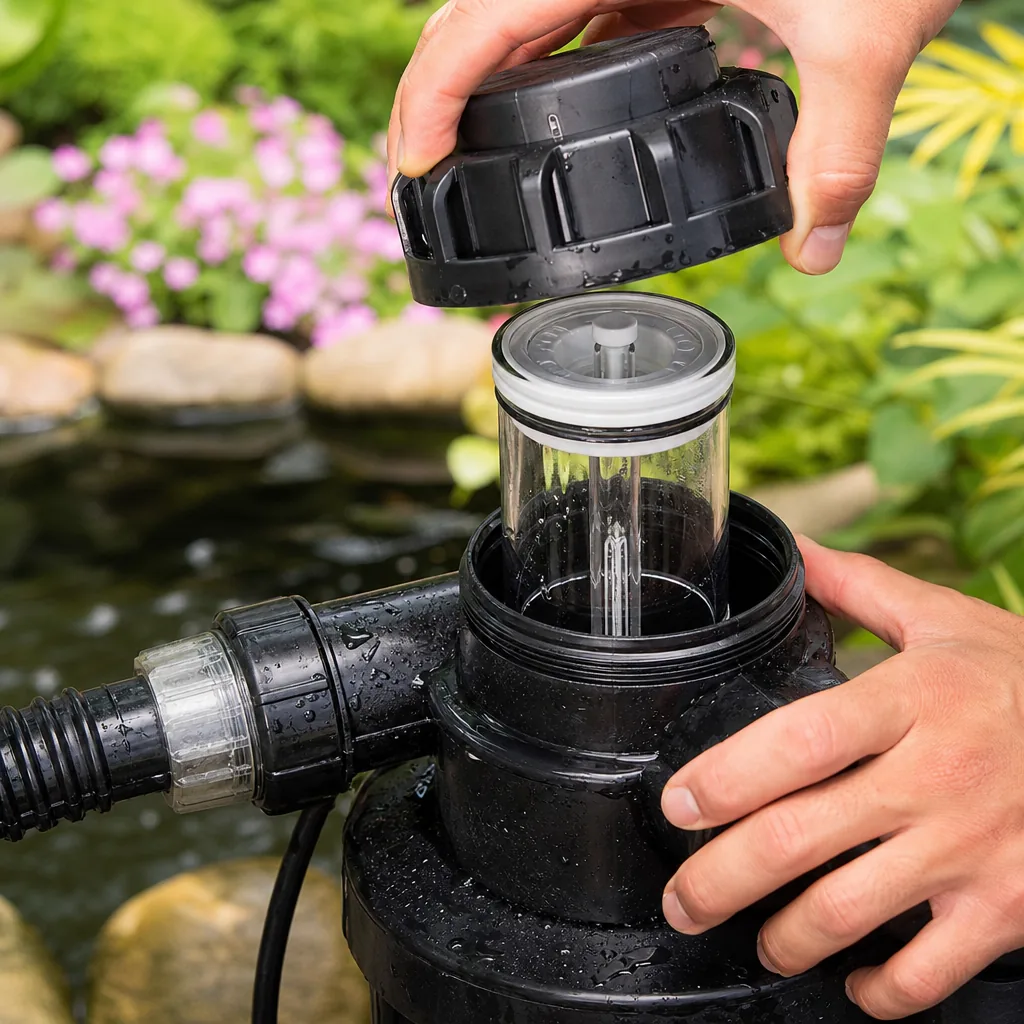
- Replace the bulb roughly once a year. UV output fades long before the bulb stops lighting up. A glowing bulb can still be too weak to clarify. This is the most common reason a previously working unit stops clearing water.
- Clean the quartz sleeve. The glass sleeve around the bulb gets a film that blocks UV. Wipe it periodically.
- Protect the bulb over winter. In freezing climates, many keepers shut the unit down and store the bulb when the pond is dormant.
Do You Need One?
Here is my honest take. If you have recurring green water despite reasonable feeding, adequate plants, and a decent filter, a UV clarifier is one of the best investments you can make. It is a targeted tool that does its one job well.
If you have never had green water, you do not need one. And if your only algae is the stringy kind on your rocks, a UV unit will not touch it. Fix the nutrient and light balance first, add plants for competition, and reach for UV when you specifically need to clear a persistent free-floating bloom. When you are ready to size one for your pond, our pond resources and gear picks can help you match wattage and flow to your setup.
Frequently Asked Questions
Will a UV clarifier clear my green pond water?
Yes, for free-floating green water it works reliably, usually within one to two weeks. It kills the microscopic suspended algae as water flows past the bulb. It does not affect stringy string algae on rocks or remove the nutrients feeding the bloom.
How often do I need to replace a UV bulb?
Roughly once a year. UV output fades well before the bulb visibly stops glowing, so a lit bulb can still be too weak to clarify. Replacing it annually is the most common fix when a unit stops clearing water.
Does a UV clarifier harm fish or beneficial bacteria?
No. The UV light is contained inside the sealed unit and only treats water passing through it. Beneficial bacteria live on filter media and pond surfaces, not free-floating in the water, so they are not affected.
What size UV clarifier do I need?
Match the wattage to your pond volume and keep the flow rate within the manufacturer’s recommended range so water gets enough contact time. An undersized unit or one with water rushing through too fast will not clear the bloom.
Do I still need a filter if I have a UV clarifier?
Yes. A UV clarifier only kills suspended algae. Your filter still handles solids and processes fish waste, and the two work together, since the clarifier makes clumped algae easier for the filter to capture.