
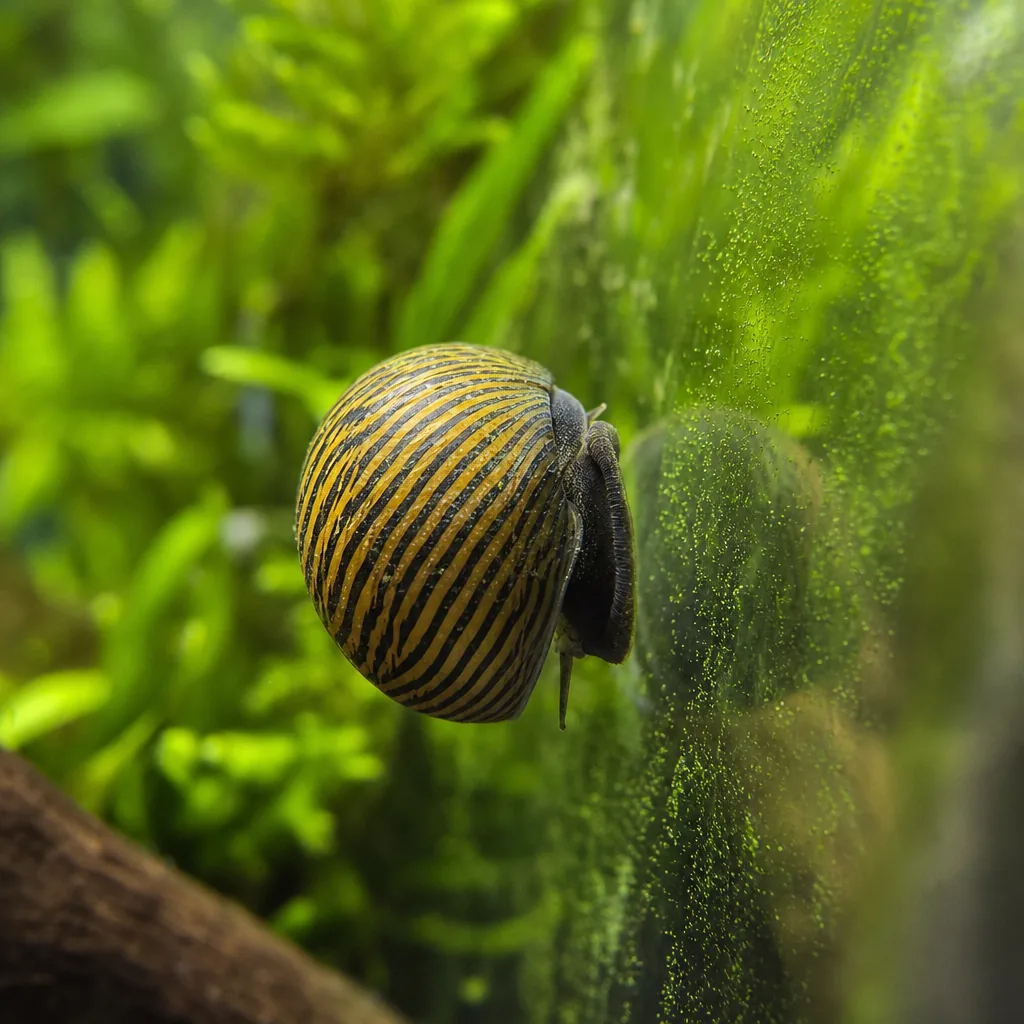
If you want an algae eater that actually works and will never turn into an infestation, the nerite snail is hard to beat. I put them near the top of any cleanup-crew recommendation because they do the one job they are hired for extremely well, and they solve the single biggest fear people have about snails: they will not breed and take over your tank. Here is why they earn that reputation, and the one quirk you need to plan around.
Why Nerites Are the Best Algae Snail
Nerite snails graze constantly and are especially good at the algae most keepers hate. They scrape hard green spot algae off glass, clean soft green film, and work over rocks, driftwood, and broad plant leaves without eating healthy plants. A couple of nerites will keep the front glass noticeably cleaner between maintenance sessions.
- Green spot algae: they are one of the few animals that reliably eat it.
- Green film and soft algae: cleared efficiently across glass and hardscape.
- Diatoms (brown algae): a favorite, which makes them great in newer tanks.
They pair well with shrimp and other peaceful inhabitants, so they slot neatly into most community setups. Our algae control guide covers how to combine grazers for the best coverage.
Will Nerite Snails Overrun My Tank?
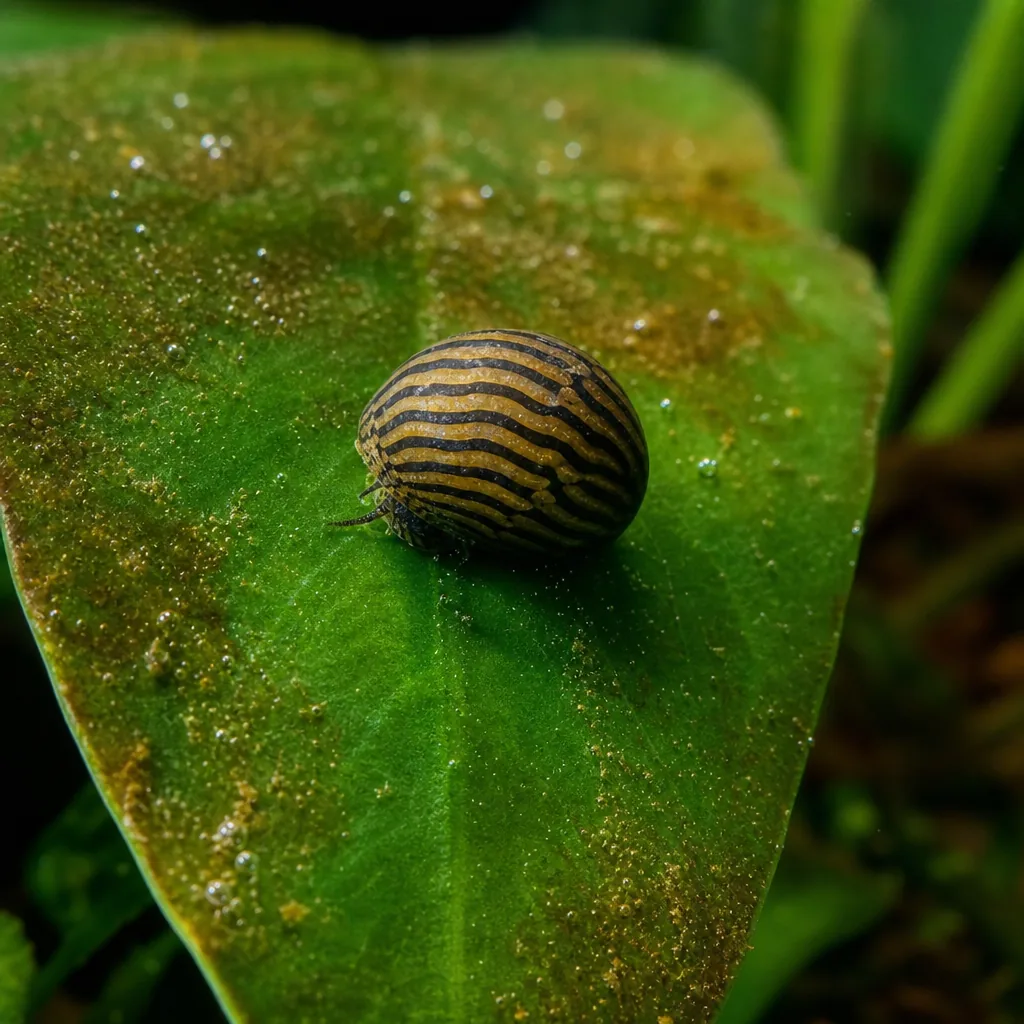
No, and this is their headline feature. Nerite snails cannot reproduce in fresh water. Females may lay small hard white eggs on surfaces, but those eggs need brackish or saltwater to hatch and develop. In a freshwater tank they simply never turn into baby snails.
That means you control the population exactly by how many you buy. Unlike bladder or pond snails, which multiply endlessly on excess food, a nerite population stays fixed. If you ever battle a pest-snail explosion, you will appreciate what a relief that is.
The One Downside: The Eggs
The trade-off is those eggs. Females deposit tiny white sesame-seed dots that are firmly stuck and mildly unsightly, especially on dark hardscape. They never hatch, so they are harmless, but they can accumulate. Keeping only males avoids it, though sexing nerites is difficult, so most keepers just scrape eggs off during maintenance or accept them.
Nerite Snail Care
Nerites are hardy and undemanding as long as the water is stable and the tank is mature enough to feed them.
- Temperature: 72-78 F suits most common nerites.
- pH: 7.0-8.5. They prefer neutral to slightly alkaline water, and soft acidic water can erode their shells over time.
- Hardness: moderate to hard. Calcium in the water keeps their shells strong.
- Ammonia and nitrite: 0 ppm. Like all invertebrates they are sensitive to poor water quality and to copper.
Feeding
In a mature tank with steady algae growth, nerites often need no supplemental food. In a spotless or brand-new tank they can actually starve, which surprises people. If algae is scarce, offer algae wafers or blanched vegetables so they don’t run out of food.
The Escape Artist Habit
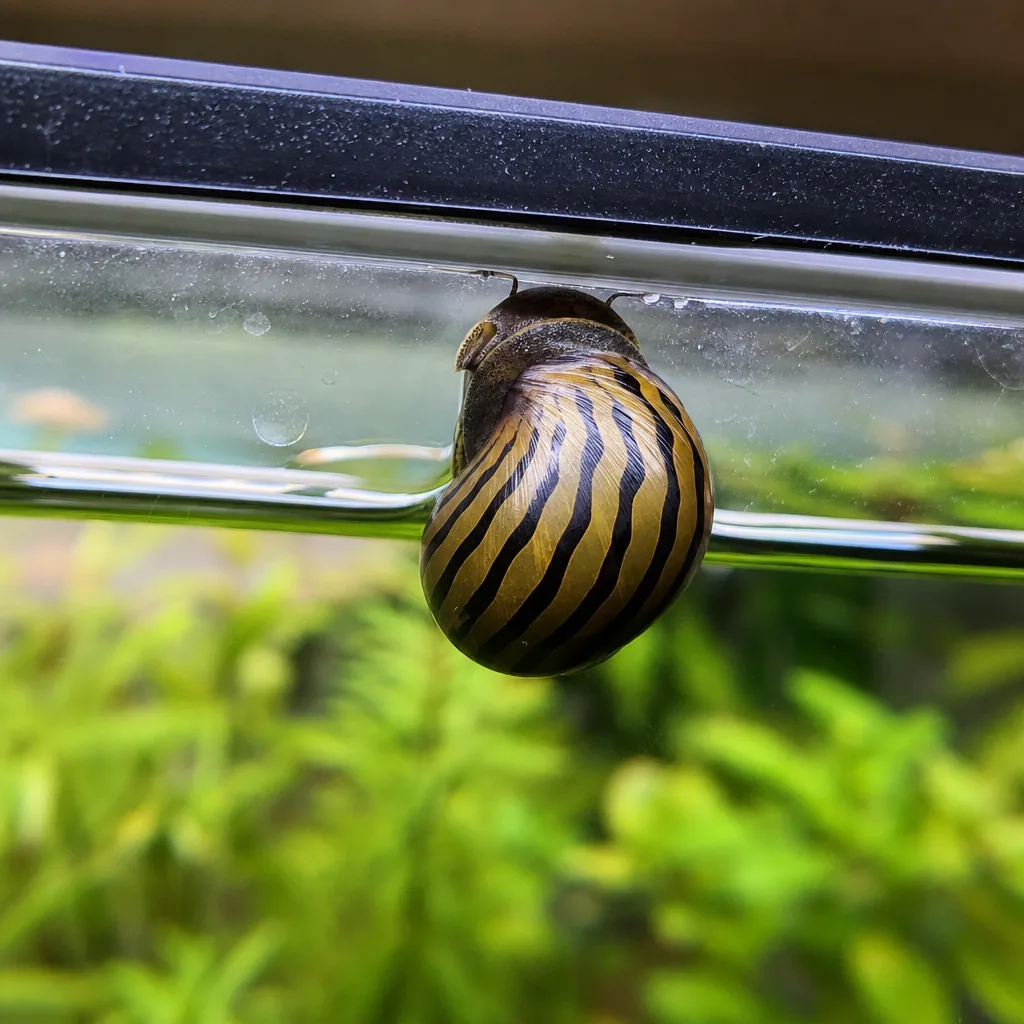
Nerites will climb, and they sometimes crawl right out of an open-top tank, especially if water quality slips or food runs low. A lid or a lower water line helps. If you find one on the floor, it may recover if it hasn’t fully dried out, so pop it back in and give it time.
Types of Nerite Snails
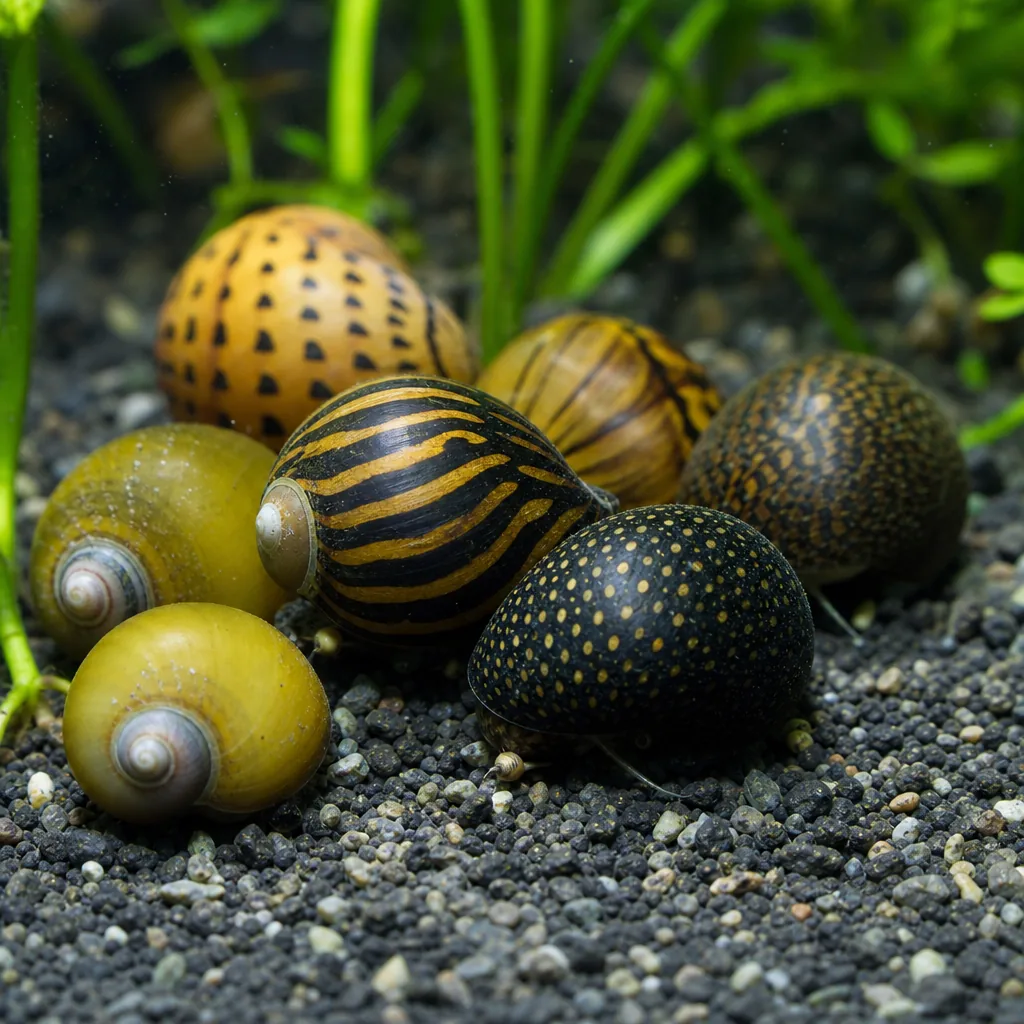
There are several common varieties, and they are largely interchangeable in care and diet. Choose on looks.
- Zebra nerite: golden shell with dark stripes, the most popular.
- Tiger nerite: similar with a bolder pattern.
- Horned nerite: smaller, with little spikes, great for planted nano tanks.
- Olive nerite: plain dark shell, an efficient grazer.
How Many Should You Get?
Because they don’t breed, stock to the algae supply, not to a hard rule. A rough starting point is one nerite per 5 to 10 gallons, then adjust. Too many in a clean tank and they run short of food; too few in an algae-heavy tank and they can’t keep up. If you are building a cleanup crew, our recommended gear page covers what to pair them with.
The Short Version
Nerite snails are the algae eater to reach for when you want real cleaning power without any risk of an infestation. Keep the water hard enough to protect their shells, make sure there is enough algae to feed them, put a lid on the tank, and live with a few harmless eggs. In return you get one of the most effective, lowest-drama cleaners in the hobby.
Frequently Asked Questions
Do nerite snails eat all types of algae?
They eat most soft algae, green film, diatoms, and are one of the few that reliably clear green spot algae. They do not eat hair algae or black beard algae well.
Will nerite snails reproduce in my freshwater tank?
No. Their eggs need brackish or saltwater to hatch, so they cannot multiply in fresh water. You control the population entirely by how many you buy.
Why do nerite snails leave white spots everywhere?
Those are unfertilized eggs laid by females. They are harmless and never hatch in fresh water, but they stick firmly and can be scraped off during maintenance.
How many nerite snails should I keep?
Roughly one per 5 to 10 gallons is a starting point, but stock to your algae supply. Too many in a clean tank can starve.
Why did my nerite snail climb out of the tank?
Nerites are natural climbers and may leave the water if quality drops or food runs low. Use a lid, and return escapees to the water if they haven’t fully dried out.