
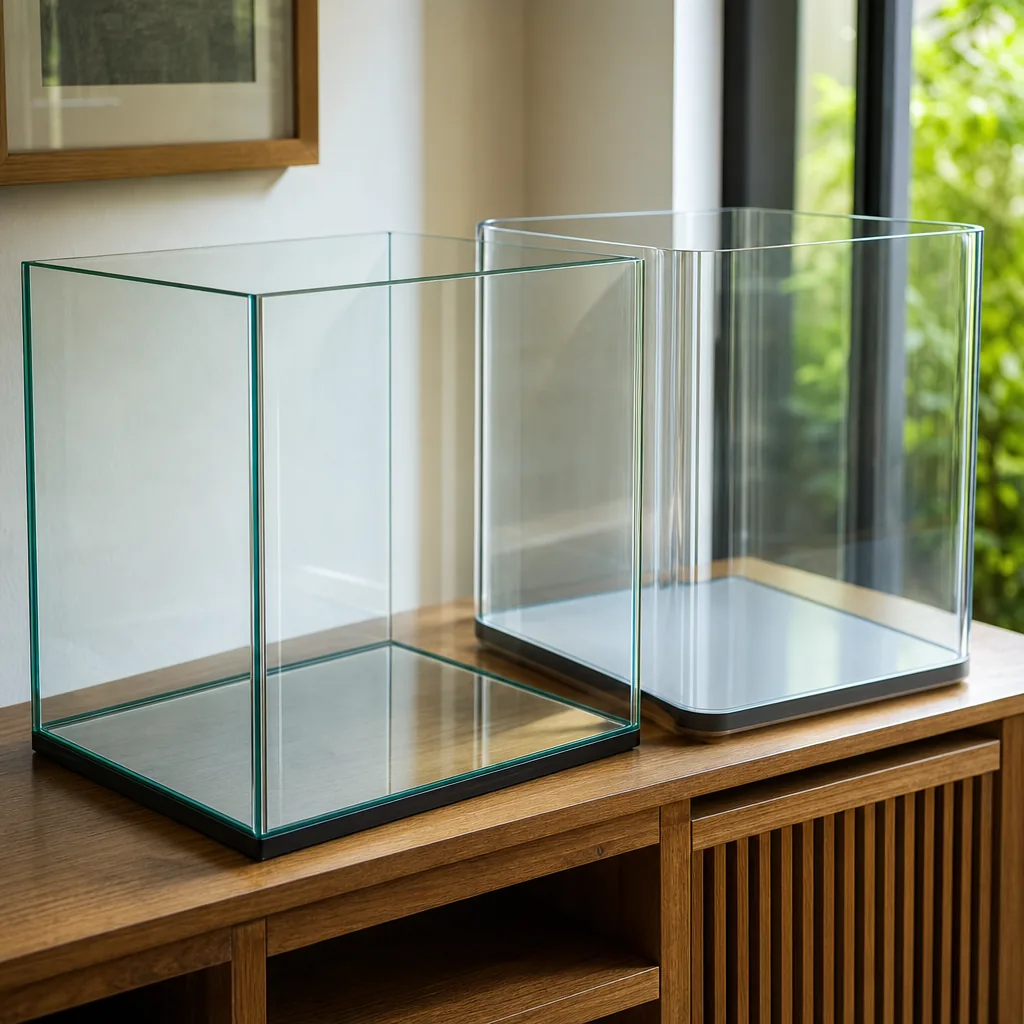
When you buy your first serious aquarium, the glass versus acrylic question comes up fast, and both camps have loud opinions. The truth is that neither is universally better. They are genuinely different materials with different strengths, and the right choice depends on your tank size, your budget, and how you plan to live with it. Let me lay out the real tradeoffs.
The Short Version
Glass is cheaper, more scratch-resistant, and holds up to hard water and cleaning tools better. Acrylic is much lighter, stronger against impact, offers clearer viewing at large sizes, and can be shaped into curves, but it scratches easily and costs more. For most standard home tanks, glass is the sensible default. For very large or unusually shaped tanks, acrylic starts to make sense.
Weight and Handling
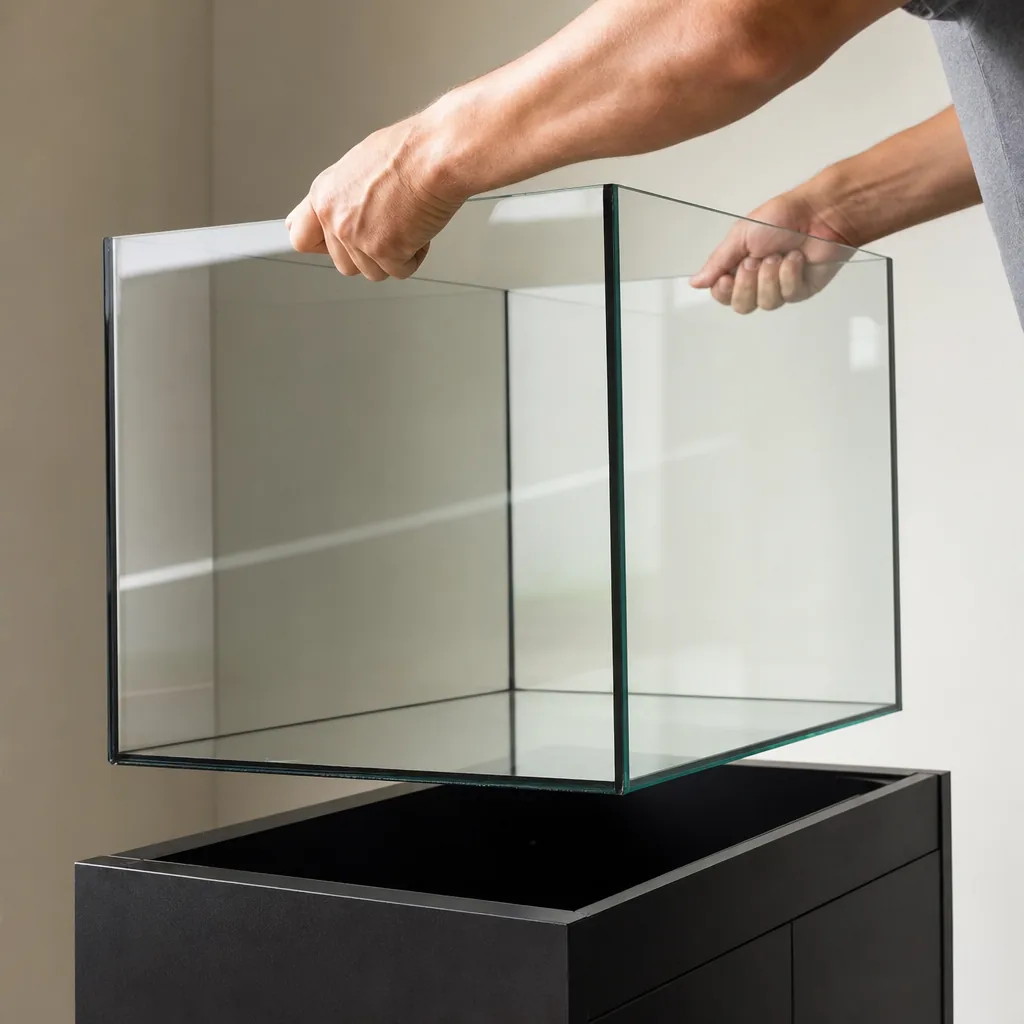
This is one of the biggest practical differences. Acrylic weighs a fraction of what glass does for the same tank size. On a small tank the difference is minor, but on a large one it is dramatic. A big glass aquarium can be genuinely difficult and risky to move, while the acrylic equivalent is far more manageable.
Lighter also means less stress on your stand and floor, though any large tank full of water is heavy regardless of the material. If you expect to move the tank, or you are working with a large volume, acrylic has a clear edge.
Scratch Resistance
Here glass wins decisively. Glass shrugs off algae scrapers, magnetic cleaners, and the occasional bump of gravel far better than acrylic. Acrylic scratches easily, and even careful cleaning can leave marks over time if a bit of substrate gets trapped under your cleaning pad.
The saving grace is that acrylic scratches can often be buffed and polished out, whereas a scratch in glass is permanent. But day to day, if you want a surface you do not have to baby, glass is the more forgiving choice.
Clarity and Viewing
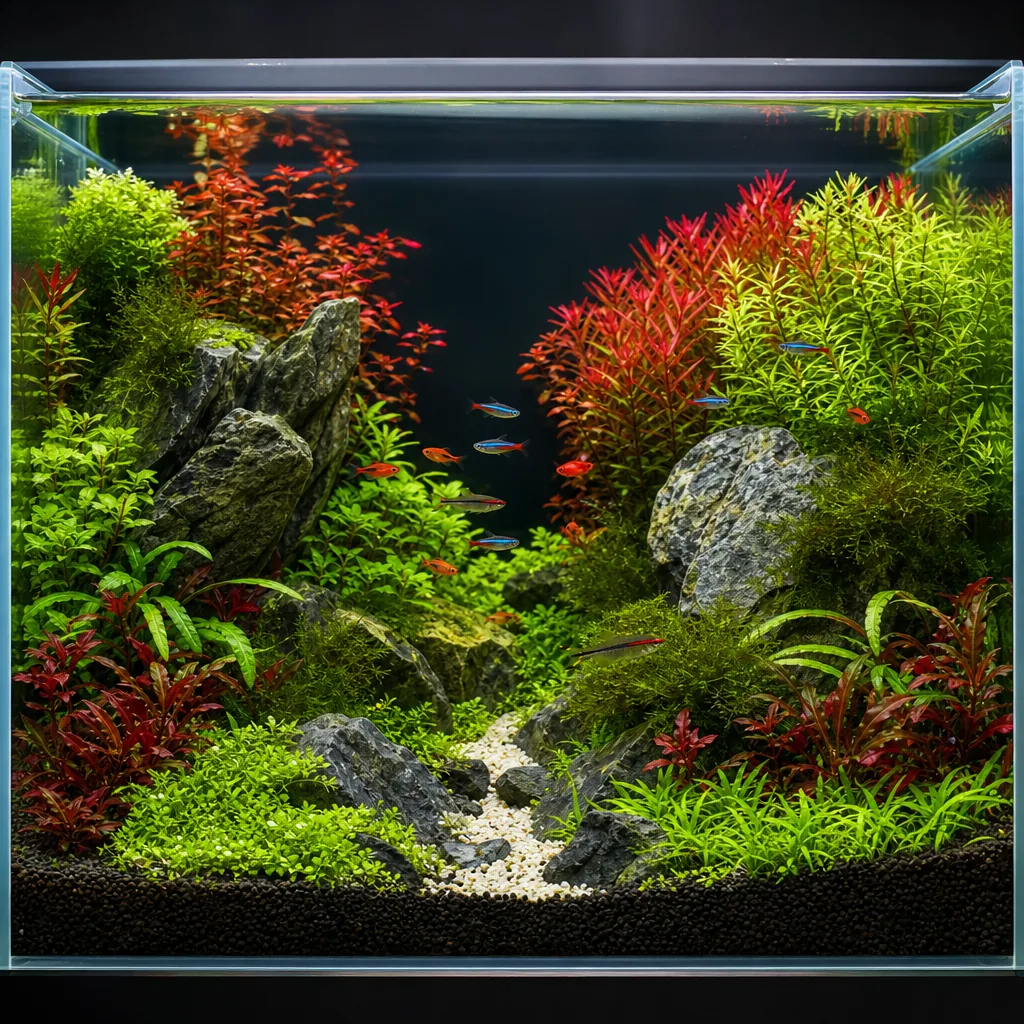
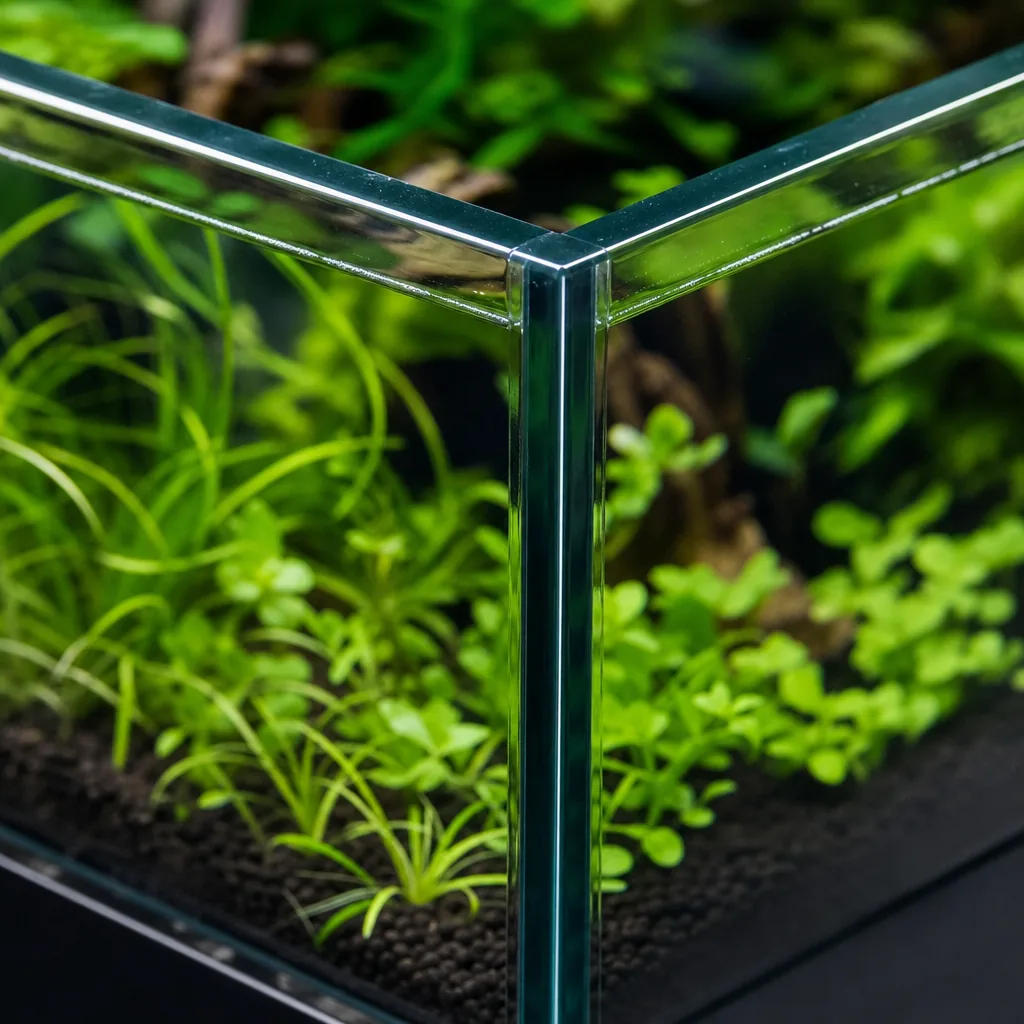
On small and medium tanks, modern glass looks excellent, and low-iron glass is exceptionally clear with very little green tint. On very large tanks, though, thick glass starts to show a green edge and some distortion, while acrylic stays crystal clear at any thickness. Acrylic also allows curved and seamless panels for a distortion-free wraparound view.
So for a standard tank you will not notice a clarity difference worth mentioning. For a large showpiece, acrylic pulls ahead.
Strength and Safety
Acrylic is more impact-resistant and less likely to shatter, which some keepers value in busy households. Glass can crack or break under a sharp impact, though quality tanks are built to handle normal use without issue. Acrylic also flexes slightly rather than failing suddenly. For most home setups this difference is minor, but it matters more at very large volumes where the forces involved are higher.
Cost
Glass is generally the more affordable option, especially in standard sizes where it is mass produced. Acrylic tends to cost more, and the gap can widen for custom shapes. If budget is a priority and you want a common tank size, glass usually gives you more for your money.
Which Should You Buy?
Match the material to your situation:
- Choose glass if you want a standard-size tank, you are budget conscious, you want a scratch-resistant surface, or you keep hardware-heavy setups where cleaning tools get used often. This covers the majority of freshwater and reef keepers.
- Choose acrylic if you are going very large, you need to move the tank periodically, you want a custom or curved shape, or absolute clarity on a big showpiece matters most to you.
Both materials serve the hobby well, and plenty of thriving tanks are built from each. Whichever you pick, the tank is only one piece of the puzzle. Filtration, lighting, and stable water quality matter far more to your fish than the material of the walls. Our freshwater and saltwater guides cover building out the rest of the system, and our gear picks can help you match equipment to your tank.
Frequently Asked Questions
Is glass or acrylic better for a beginner aquarium?
For most beginners, glass is the better default. It is more affordable, far more scratch-resistant, and forgiving of everyday cleaning tools. Acrylic makes more sense once you move to very large or custom-shaped tanks.
Does acrylic scratch more easily than glass?
Yes, significantly. Acrylic scratches from cleaning pads and trapped substrate much more readily than glass. The upside is that acrylic scratches can often be buffed out, while scratches in glass are permanent.
Which is clearer, glass or acrylic?
On small and medium tanks they look nearly identical, especially with low-iron glass. On very large tanks, thick glass can show a green tint and slight distortion, while acrylic stays crystal clear and allows curved, seamless panels.
Is acrylic lighter than glass?
Yes, substantially. Acrylic weighs a fraction of glass for the same tank size. The difference is minor on small tanks but dramatic on large ones, making acrylic much easier to move and gentler on your stand and floor.
Is one safer than the other?
Acrylic is more impact-resistant and less likely to shatter, and it flexes rather than failing suddenly, which some keepers prefer in busy homes. Quality glass tanks handle normal use fine, so for most home setups the difference is minor.