
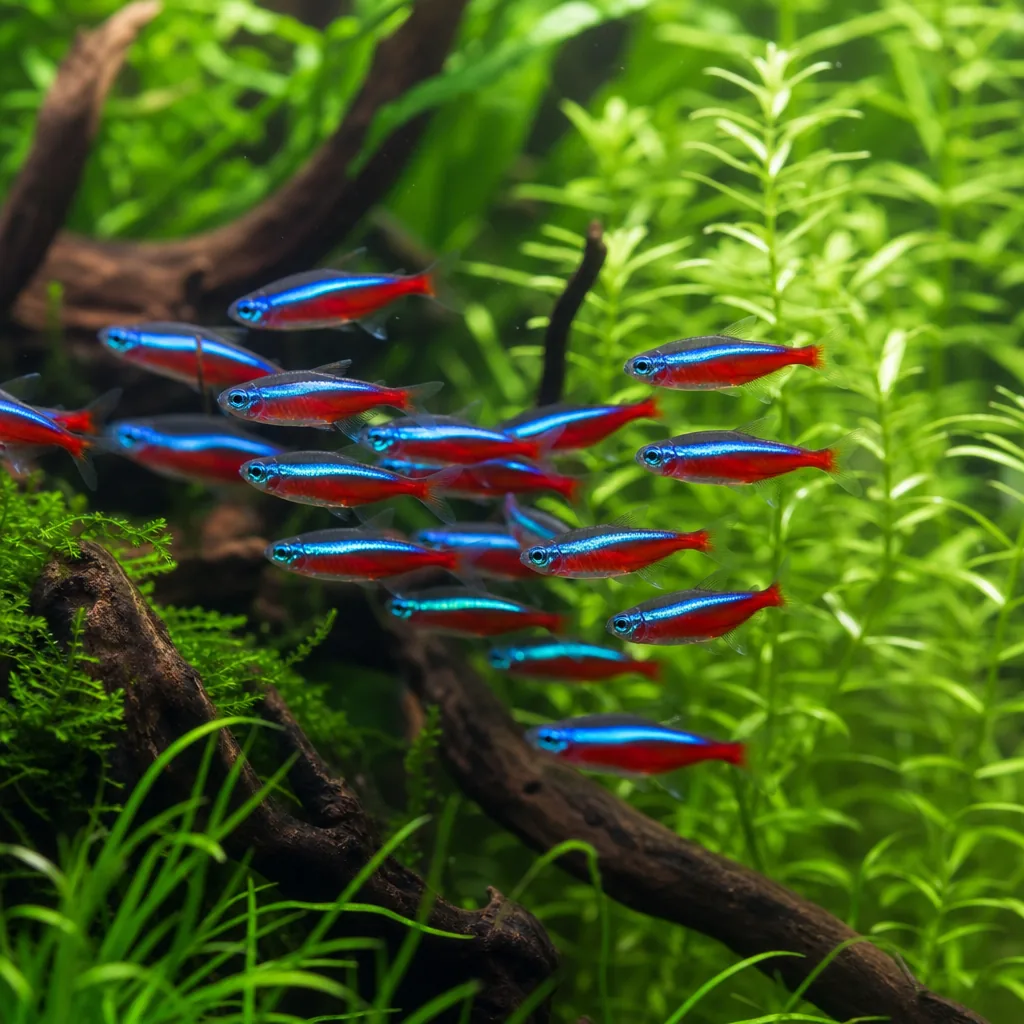
Neon tetras are one of the first fish most people bring home, and they get a reputation for being fragile that they don’t fully deserve. The truth is they are hardy once they are in a stable, mature tank, but they are terrible at surviving the shock of a brand-new setup or swings in water chemistry. Get the environment right and a school of neons will glow for years with very little fuss.
Are Neon Tetras Good Beginner Fish?
Yes, with one caveat: they are a poor choice as the very first fish in an uncycled tank. Neons are sensitive to ammonia and nitrite, which spike hard during a new tank’s cycle. If you cycle the aquarium first and add neons to established water, they are forgiving and long-lived. Skip the cycle and you will lose them, then blame the fish instead of the setup.
Tank Size and Schooling
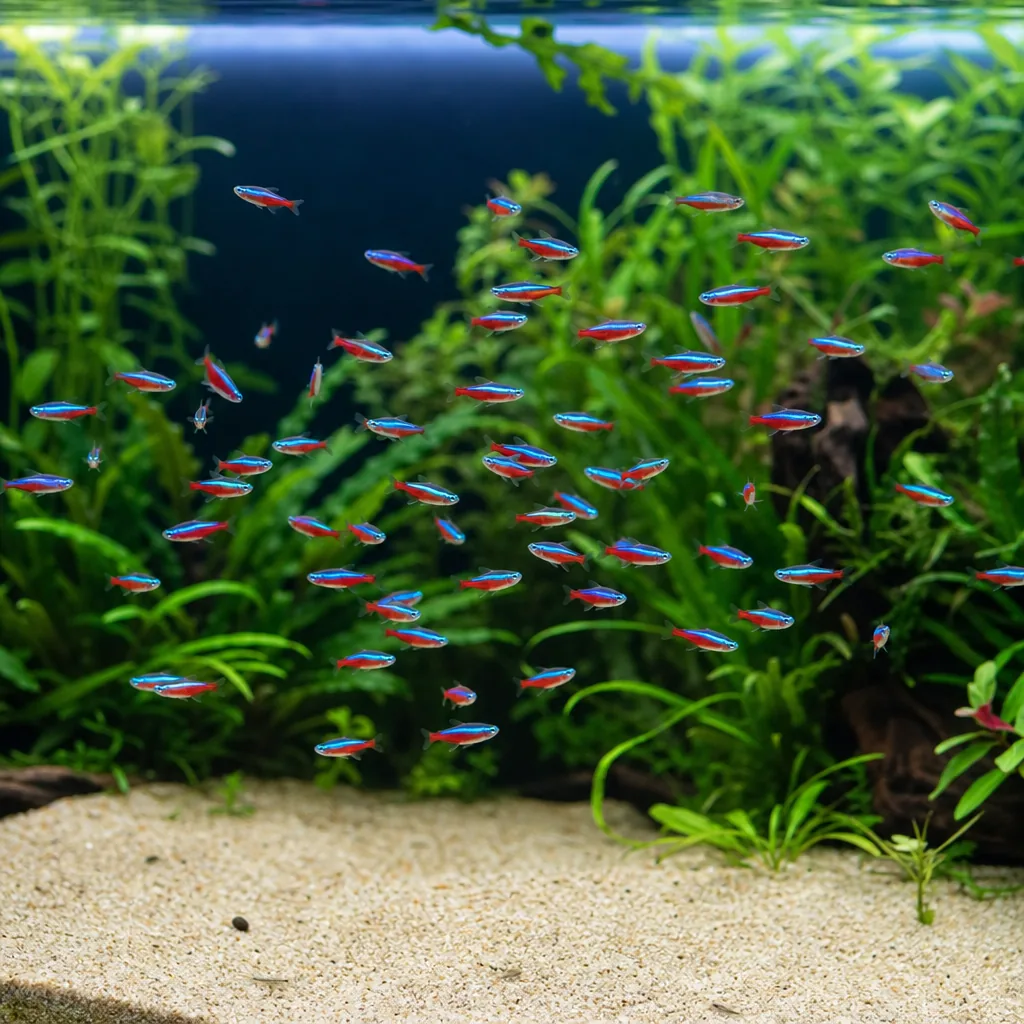
Neons are shoaling fish. A single neon or a pair is a stressed neon, and stress is what opens the door to disease. Keep them in groups of at least six, and honestly a group of ten or more looks and behaves far better. In a bigger school they spread out, color up, and stop hiding.
- Minimum tank size: 10 gallons for a small school, 20 gallons if you want a proper display group.
- Group size: 6 absolute minimum, 10+ preferred.
- Swimming zone: they occupy the middle of the water column, so pair them with bottom dwellers to fill out the tank.
Because they are small and clustered, neons pair beautifully with a planted layout. If you are building a community, our freshwater care guides cover tank-mate matching in more depth.
Water Parameters
Neon tetras come from soft, acidic blackwater in South America, and while tank-bred stock tolerates a range, they show their best color and health in the conditions they evolved for.
- Temperature: 70-78 F. They actually prefer the cooler end of the tropical range, which makes them a poor match for fish that want 82 F+.
- pH: 6.0-7.0 is ideal; they will live at slightly higher but soft and acidic is the target.
- Hardness: soft, roughly 1-10 dGH.
- Ammonia and nitrite: 0 ppm, always. Nitrate under 20 ppm.
Stability matters more than hitting a perfect number. A tank held steady at pH 7.2 will keep healthier neons than one that bounces between 6.5 and 7.5 every week.
Feeding
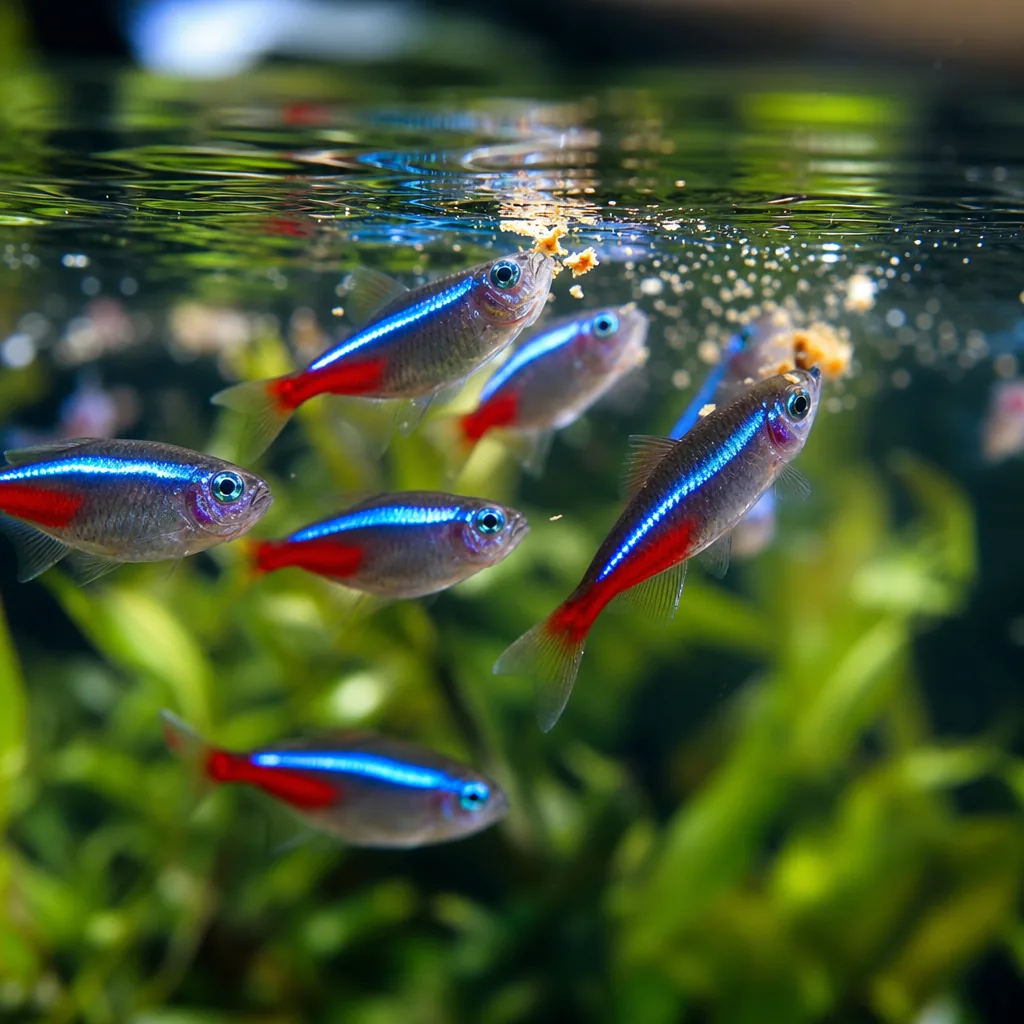
Neons have tiny mouths, so match the food to the fish. A quality micro pellet or crushed flake as a staple, rotated with small frozen or live foods, keeps them colorful and active.
- Feed small amounts once or twice a day, only what they clear in a couple of minutes.
- Rotate in frozen daphnia, cyclops, or baby brine shrimp for variety and conditioning.
- Overfeeding fouls the water and is a leading cause of the parameter swings that stress neons.
Neon Tetra Disease: The One to Know
Neon tetra disease (NTD) is caused by a microsporidian parasite, Pleistophora hyphessobryconis. It is the reason the species has its fragile reputation, and it is important to understand because there is no reliable cure once a fish is infected.
Signs of NTD
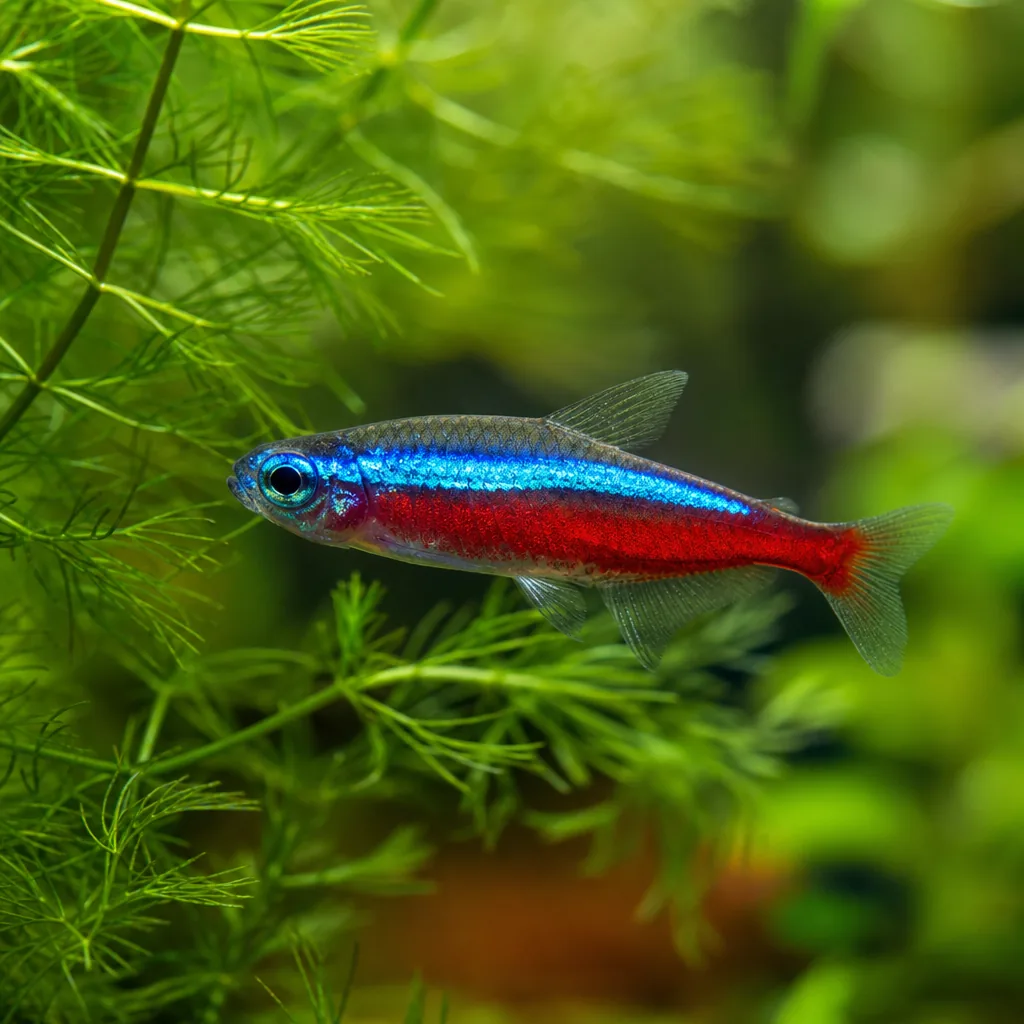
- Fading or loss of the blue-red stripe, often starting in the middle of the body.
- A restless, erratic swimming pattern and difficulty schooling.
- A lumpy or curved spine as the muscle tissue is damaged.
- Progressive wasting despite eating.
Because there is no treatment, management is about prevention and containment. Remove visibly affected fish promptly to stop other fish from eating the infected tissue, which is how it spreads. Quarantine all new fish before adding them to the display.
Don’t Confuse It With False NTD
A bacterial infection called false neon tetra disease produces similar fading and can be treated with an appropriate antibacterial medication. Because you cannot always tell them apart visually, quarantining and treating for bacterial infection is a reasonable first step while you watch the fish.
Other Common Problems
- Ich: white salt-like spots, usually triggered by temperature swings or new-fish stress. Treat with gradual warming and an ich medication.
- Ammonia poisoning: gasping, clamped fins, and deaths in a new tank point to an incomplete cycle, not disease.
- Bullying stress: too-small a school or aggressive tank mates will wash out their color fast.
If you are outfitting a first community tank, a stable heater, gentle filtration, and a reliable test kit do more for neon survival than any medication. You can see the basics we point beginners toward on our recommended gear page.
The Short Version
Cycle the tank, keep them in a real school, hold your water soft, acidic, and steady, and quarantine anything new. Do that and neon tetras are not fragile at all. They are one of the best value, best looking small fish in the hobby, and a healthy school moving as one is a genuinely calming thing to watch.
Frequently Asked Questions
How many neon tetras should I keep together?
At least six, but ten or more is better. Larger schools reduce stress, improve color, and stop the fish from hiding, which in turn lowers their risk of disease.
Can neon tetras live in a 10 gallon tank?
Yes, a small school of six or so does well in a cycled, planted 10 gallon. If you want a larger display group or a community, step up to 20 gallons.
Is neon tetra disease contagious to other fish?
Yes. The parasite spreads when fish eat infected tissue, and it can affect other tetras and some related species. Remove affected fish promptly and quarantine all newcomers.
Why are my neon tetras losing their color?
Color loss can come from stress, poor water quality, cool sleep coloration at night, or disease such as NTD or a bacterial infection. Check parameters first, then watch for other symptoms.
What temperature do neon tetras need?
70 to 78 F. They prefer the cooler end of the tropical range, so avoid pairing them with fish that require very warm water.