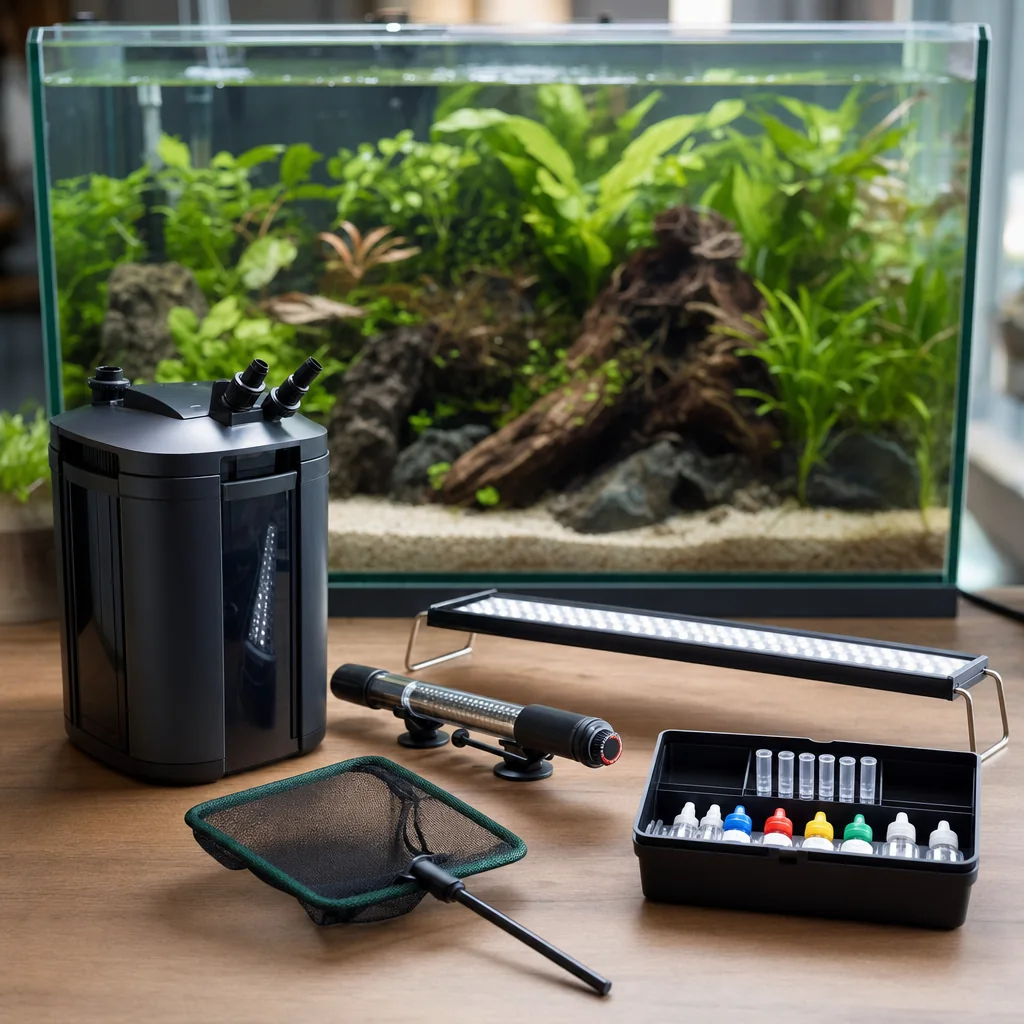
Walking into the hobby for the first time, the equipment list can feel overwhelming, and the upsells at the fish store don’t help. The truth is that a successful first aquarium needs a fairly short list of genuinely essential gear, plus a few quality-of-life additions. Get the essentials right and skip the gimmicks, and you’ll set up a healthy tank without overspending. This checklist walks through everything a beginner actually needs, why each item matters, and what you can safely add later.
This is written with a beginner freshwater setup in mind, the recommended starting point, but most of it applies broadly.
The Non-Negotiable Essentials
Start here. Every one of these earns its place.
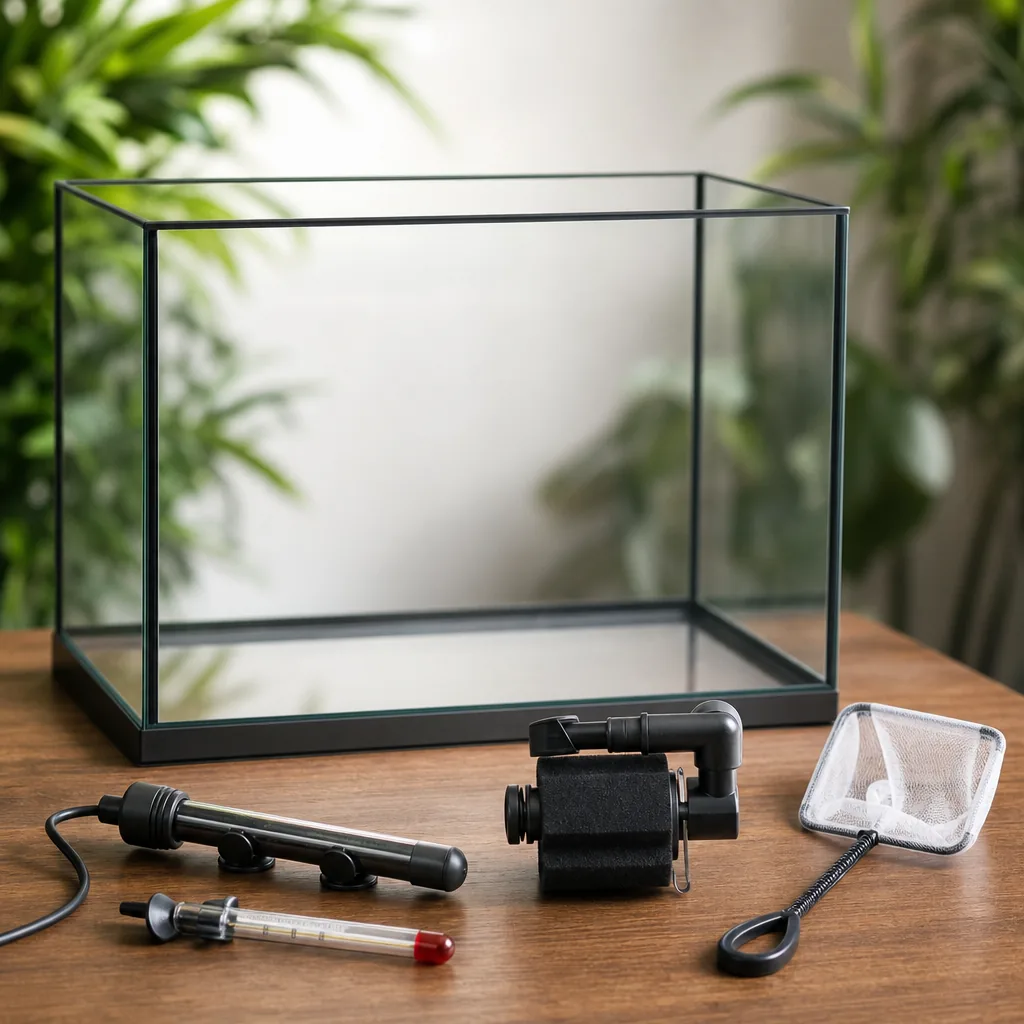
1. The Tank (and a Lid)
Bigger is more forgiving for beginners, because more water volume means more stable temperature and chemistry. A small tank swings fast and punishes mistakes; a larger one buffers them. Don’t start as small as you think, and get a lid or hood to reduce evaporation and keep jumpers in.
2. Filter
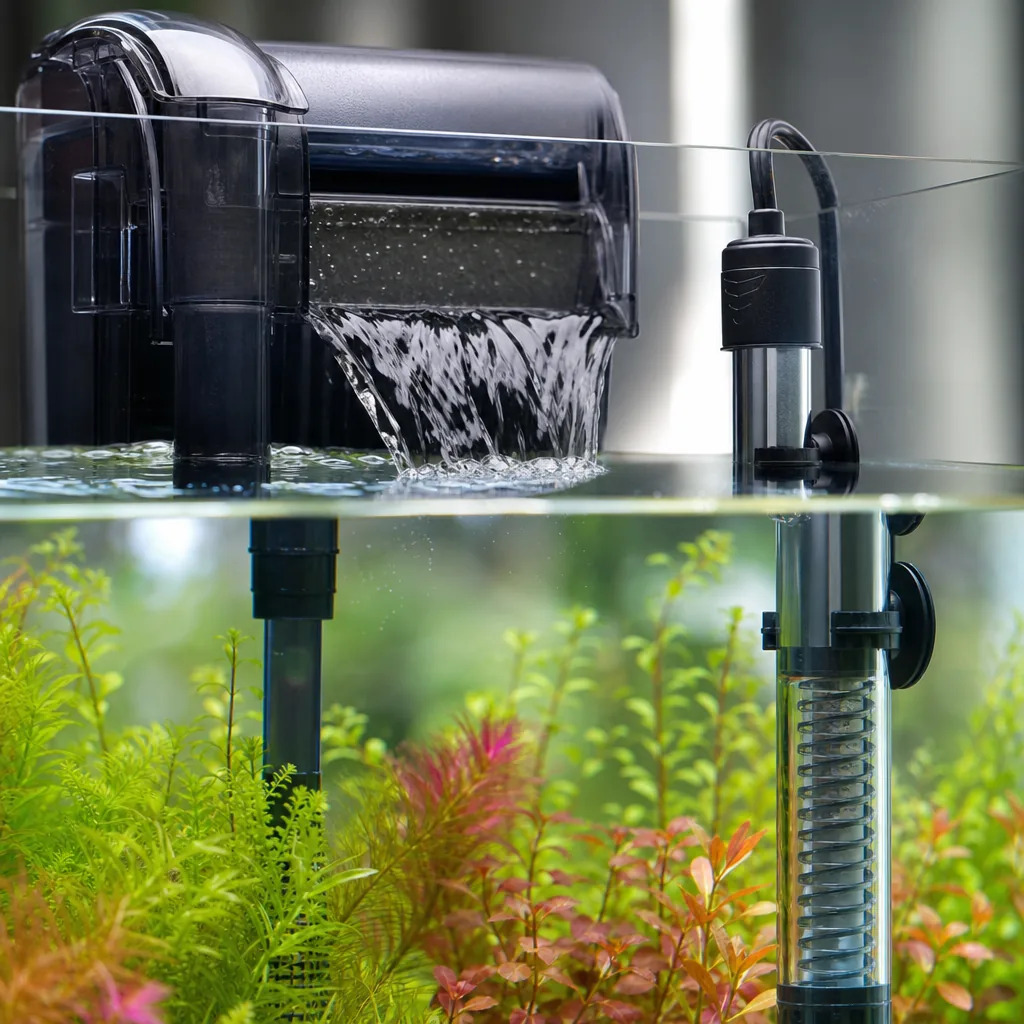
The filter is the heart of the system. It provides mechanical filtration (trapping debris), biological filtration (housing the beneficial bacteria that process fish waste), and water movement. Match the filter’s rating to your tank size, and if anything, size up slightly. This is not the place to economize.
3. Heater
Most popular beginner fish are tropical and need stable warmth, typically in the mid-to-upper 70s Fahrenheit. A heater sized to your tank volume, ideally with a thermostat, keeps temperature steady. Pair it with a thermometer so you can actually verify the temperature rather than trusting the dial.
4. Thermometer
Cheap, essential, and constantly overlooked. You need to know the real water temperature, not what the heater claims. A simple stick-on or in-tank thermometer does the job.
5. Substrate
Gravel or sand on the bottom isn’t just decorative; it houses beneficial bacteria and anchors plants. Choose based on your goals: inert gravel or sand for a simple setup, or a nutrient-rich aquasoil if you’re planning a planted tank.
6. Water Conditioner (Dechlorinator)
Tap water contains chlorine or chloramine that’s harmful to fish and lethal to your beneficial bacteria. A dechlorinator neutralizes it instantly and is used at every water change. You cannot skip this one.
7. A Water Test Kit
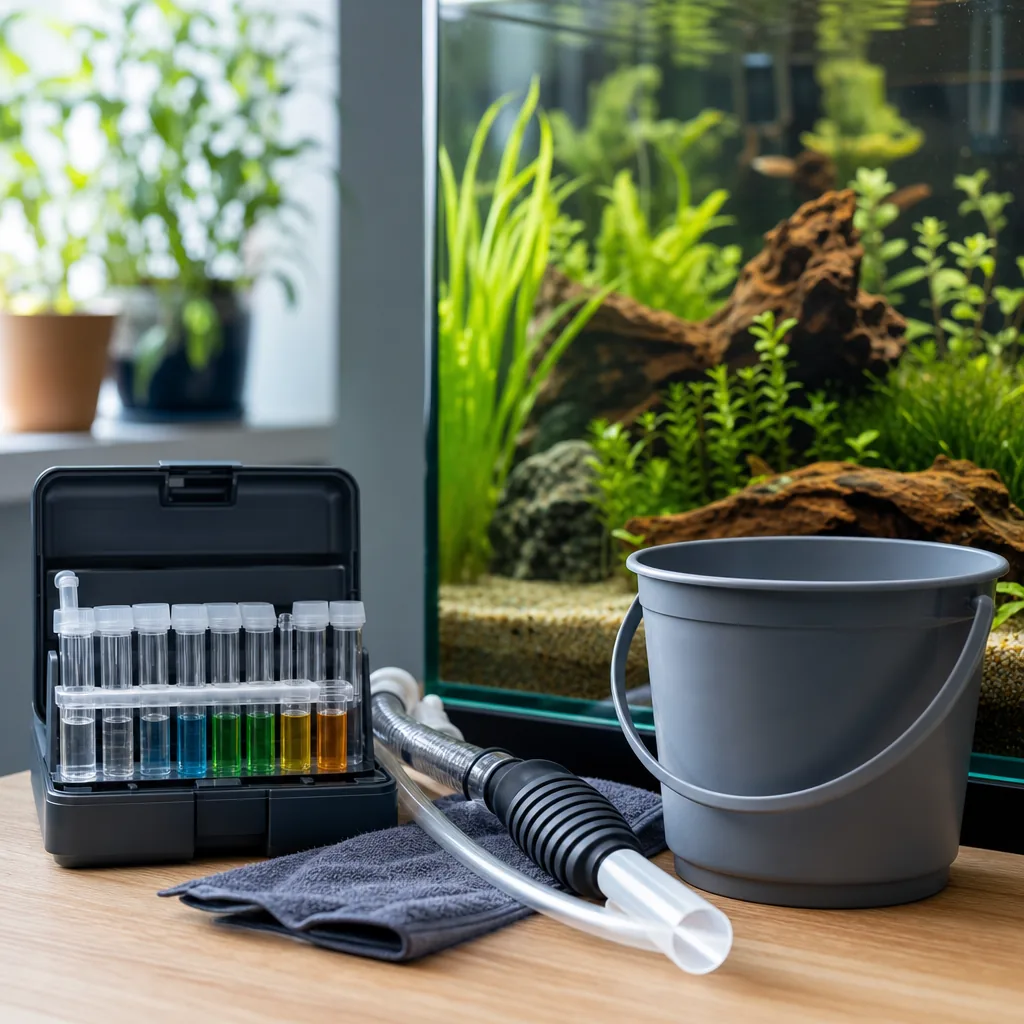
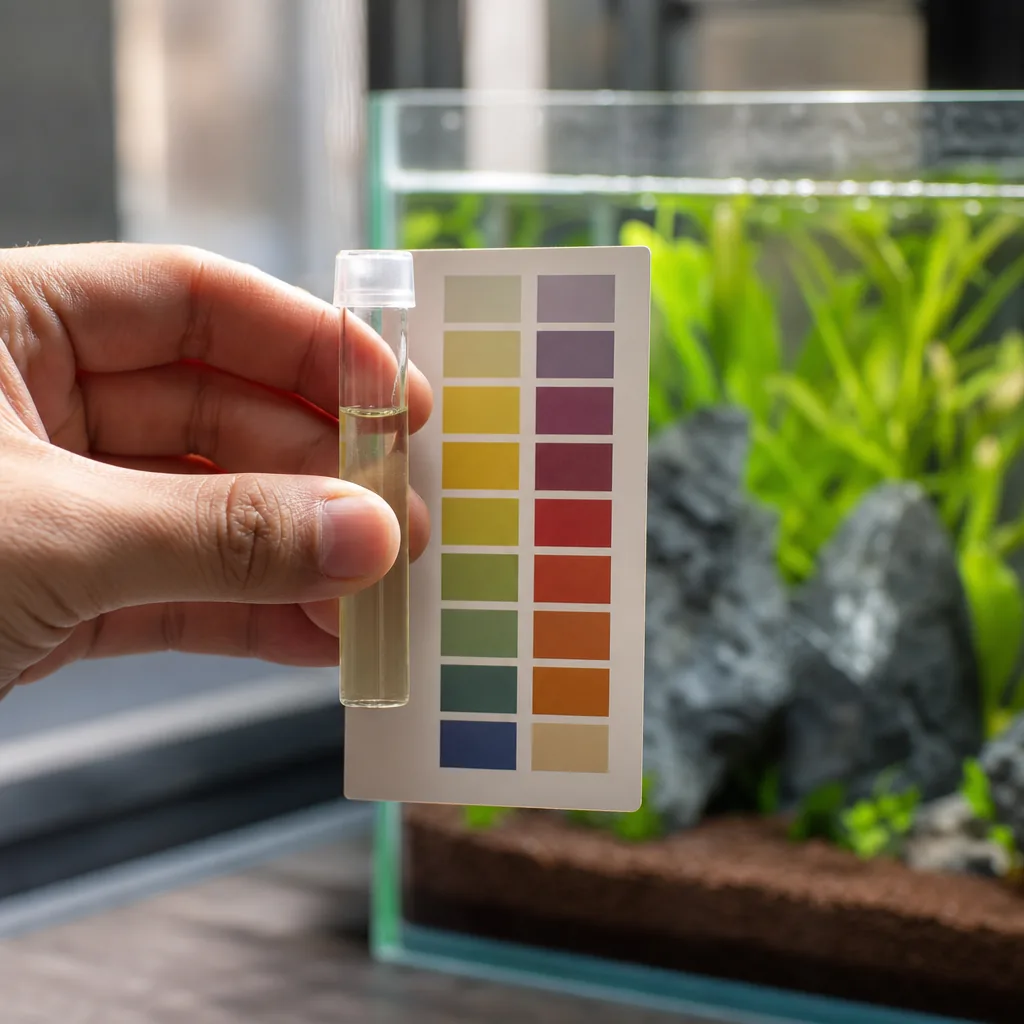
This is the item beginners most often skip and most regret skipping. A liquid test kit for ammonia, nitrite, nitrate, and pH lets you monitor the nitrogen cycle and catch problems before they kill fish. During your tank’s cycle and beyond, testing is how you actually know what’s happening in the water. Treat it as essential, not optional.
The Strongly Recommended Add-Ons
Not strictly required to keep fish alive, but they make the hobby far easier and your tank healthier.
- Light: needed if you want live plants, and nice for viewing. A timer keeps the photoperiod consistent and helps control algae.
- Gravel vacuum / siphon: makes water changes easy and lets you remove waste from the substrate at the same time.
- Algae scraper or magnet cleaner: for keeping the glass clear.
- Fish net and a dedicated bucket used only for aquarium water (never one that’s held soap or chemicals).
- Beneficial bacteria supplement: can help kick-start the nitrogen cycle in a new tank.
You can find beginner-friendly versions of all of these in our recommended gear.
What You Can Skip (At Least at First)
The store will try to sell you plenty you don’t need on day one:
- Fancy chemical additives and “cure-all” treatments. A good dechlorinator and water changes solve most problems; reactive dosing causes more than it fixes.
- CO2 systems, unless you’re committing to a high-tech planted tank. Most beginner plants don’t need it.
- Elaborate decorations before the tank is even cycled. Function first, then decorate.
The One Step No Equipment Replaces: Cycling
Before fish go in, your tank needs to establish its beneficial bacteria colony through the nitrogen cycle. No piece of equipment skips this. Run the filter, dose ammonia or a bacteria starter, and use your test kit to watch ammonia and nitrite rise and then fall to zero as nitrate appears. Only then is the tank ready for fish. Rushing this step is the number one beginner mistake, and your test kit is what protects you from it.
A Printable-Style Checklist
- Tank with lid
- Filter (sized up slightly)
- Heater plus thermometer
- Substrate
- Water conditioner / dechlorinator
- Liquid water test kit
- Light with timer (for plants/viewing)
- Gravel vacuum and dedicated bucket
- Algae scraper and fish net
- Optional bacteria starter
The Bottom Line
You don’t need a cart full of gadgets to start strong. Cover the essentials, a properly sized tank, filter, heater, conditioner, and a test kit you’ll actually use, add the few quality-of-life tools, and skip the upsells until you know you need them. Get the basics right and cycle the tank before stocking, and you’ve set yourself up for success. Not sure which type of setup to commit to? Read our freshwater vs saltwater vs pond comparison first.
Frequently Asked Questions
What equipment do I absolutely need for a first aquarium?
The non-negotiables are a tank with a lid, a properly sized filter, a heater and thermometer, substrate, water conditioner to remove chlorine, and a liquid water test kit. Everything else, like lights, a gravel vacuum, and cleaning tools, is strongly recommended but secondary to those core items.
Do I really need a water test kit?
Yes, absolutely. A test kit for ammonia, nitrite, nitrate, and pH is how you monitor the nitrogen cycle and catch dangerous water conditions before they kill fish. It’s the single item beginners skip most and regret most. A liquid kit is more accurate than test strips.
Is a bigger tank really easier for beginners?
Generally yes. A larger water volume buffers temperature and chemistry swings, so mistakes have less immediate impact and the tank is more stable. Very small tanks swing fast and punish errors. Don’t start as small as you might assume.
Do I need a CO2 system for my plants?
Not for a beginner setup. Most easy beginner plants like Java fern, Anubias, and crypts grow fine with modest light and liquid fertilizer, no CO2 required. CO2 systems are for high-tech planted tanks and are an unnecessary expense and complication when starting out.
Can I add fish as soon as the tank is set up?
No. The tank must first cycle to establish beneficial bacteria that process fish waste, which takes a few weeks. Adding fish to an uncycled tank exposes them to toxic ammonia and nitrite. Run the filter, use your test kit, and wait until ammonia and nitrite read zero before stocking.