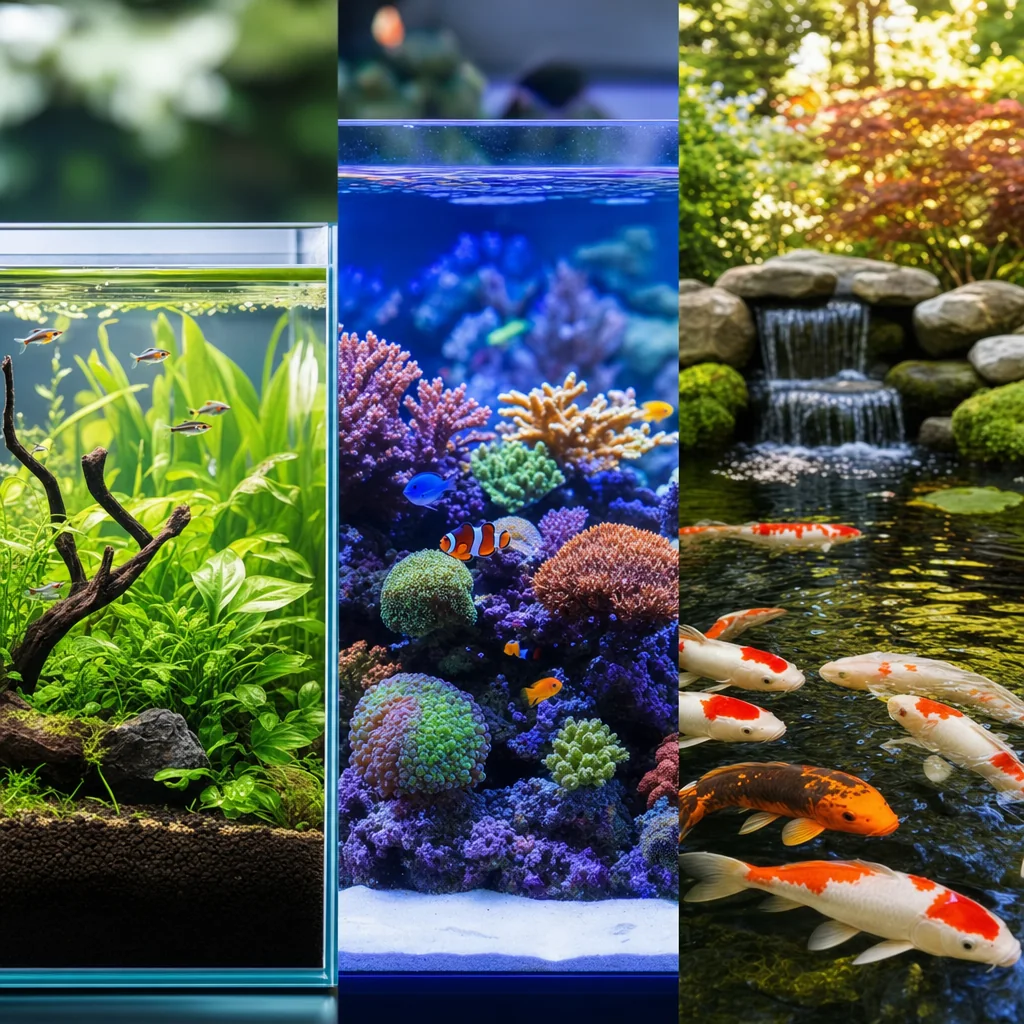
Getting into the aquatic hobby means making one big decision up front: freshwater aquarium, saltwater aquarium, or backyard pond? They’re three genuinely different hobbies that happen to share some equipment. Each has its own cost profile, learning curve, time commitment, and payoff. Picking the one that fits your budget, space, and temperament is the difference between a hobby you love for years and a tank you tear down in frustration after three months. This is an honest comparison to help you choose well the first time.
There’s no single right answer, only the right answer for you. Let’s break each one down.
Freshwater Aquariums: The Best Starting Point
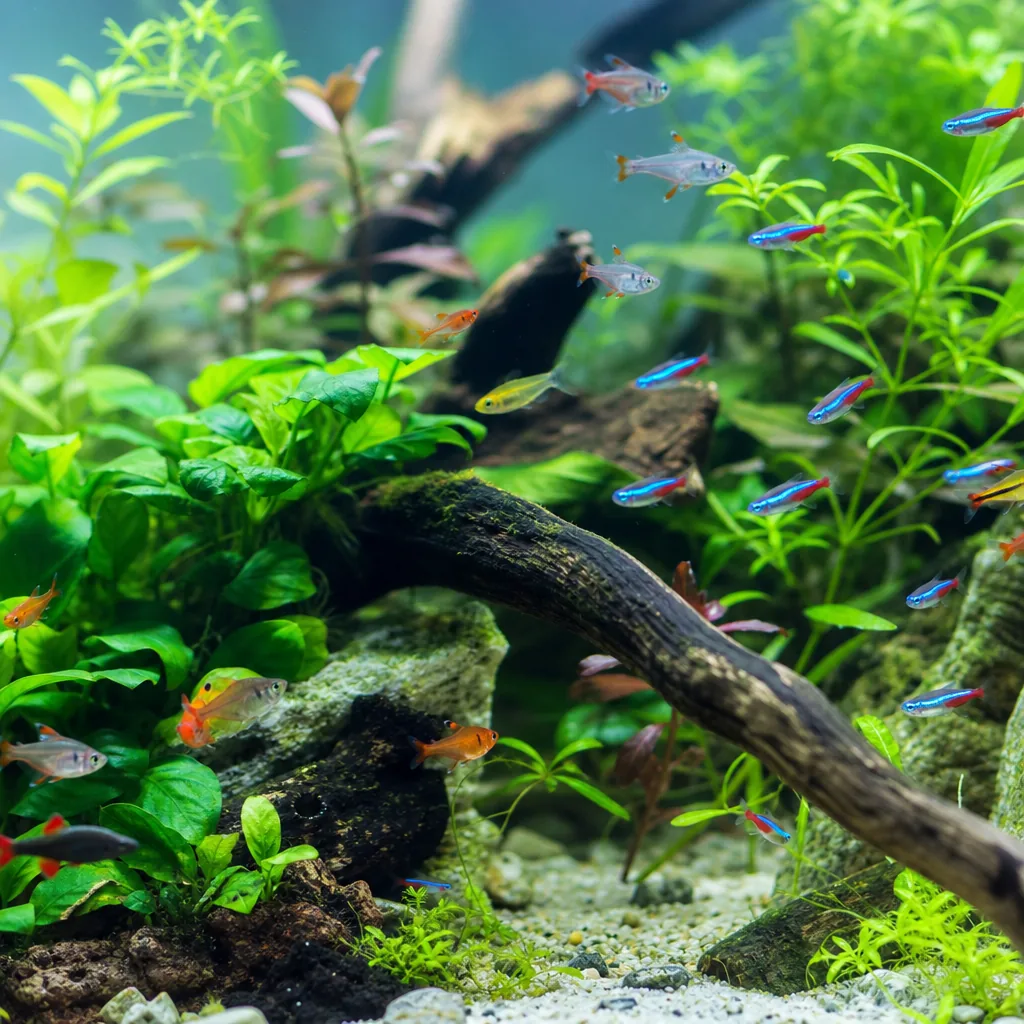
For most beginners, freshwater is the recommended entry into the hobby, and for good reason. It’s the most forgiving of mistakes, the most affordable, and offers an enormous range of fish and plants.
Why freshwater wins for beginners
- Lower cost across equipment, fish, and ongoing maintenance.
- More forgiving water chemistry. Freshwater fish tolerate a wider margin of error while you learn the ropes.
- Huge variety, from community tropicals to planted aquascapes to species tanks.
- Simpler equipment. A filter, heater, light, and the basics get you started.
The trade-offs
You won’t get the jaw-dropping color of a reef tank, and freshwater still requires real commitment: cycling the tank, regular water changes, and not overstocking. But the stakes of a mistake are lower, which is exactly what you want while learning.
Saltwater Aquariums: Stunning, But Demanding
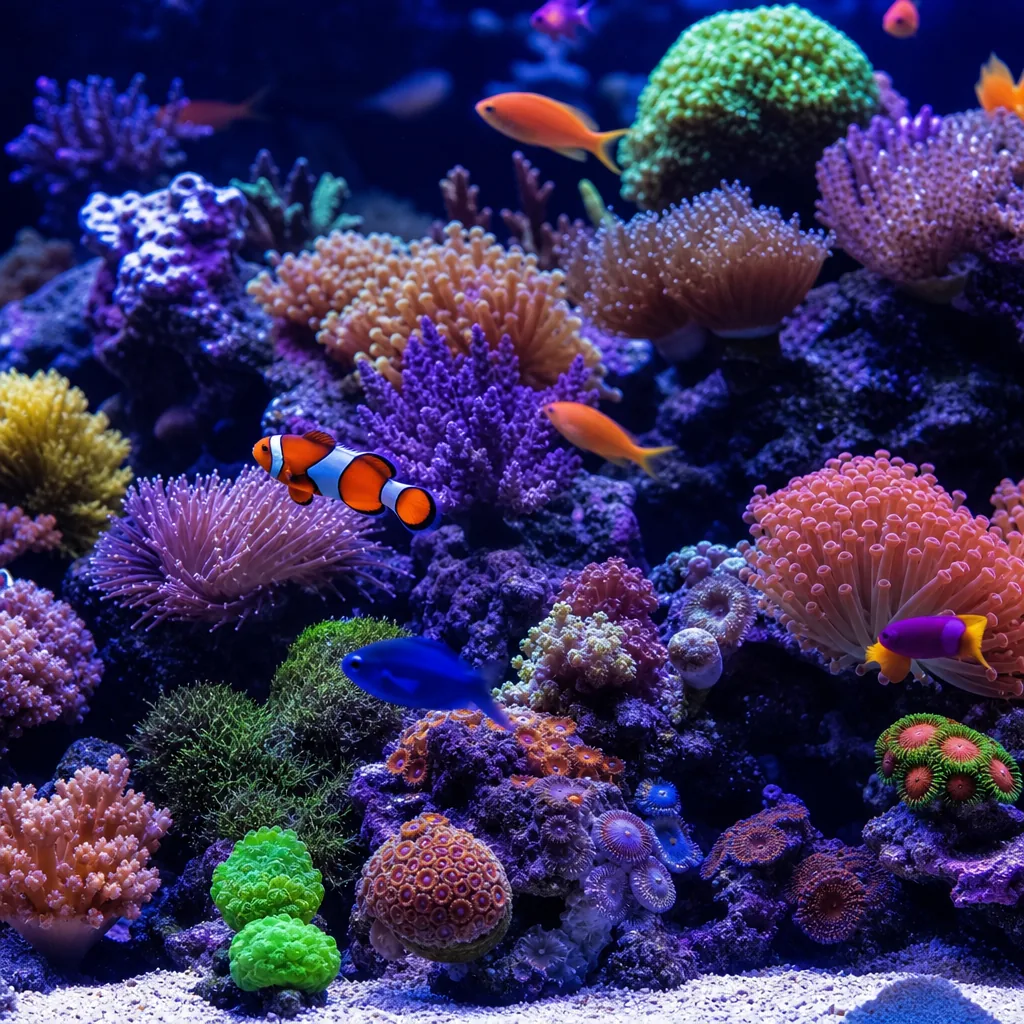
A saltwater reef tank is the showstopper of the hobby, vivid corals, dazzling fish, a living slice of the ocean. But it asks more of you in every dimension.
What saltwater demands
- Higher cost. Live rock, protein skimmers, quality lighting for corals, salt mix, testing equipment, and the livestock itself all add up.
- Tighter water parameters. Salinity, alkalinity, calcium, and more need monitoring and stability. Corals are far less forgiving than hardy freshwater fish.
- More equipment and testing. Expect to test water regularly and maintain more gear.
- A steeper learning curve. Mistakes are costlier, both financially and for the livestock.
Who it’s for
Saltwater rewards the patient, detail-oriented hobbyist who enjoys the technical side and wants the visual payoff. Many keepers cut their teeth on freshwater first, then graduate to a reef once they’ve internalized the fundamentals. There’s no shame in starting freshwater and working up.
Backyard Ponds: A Different Hobby Entirely
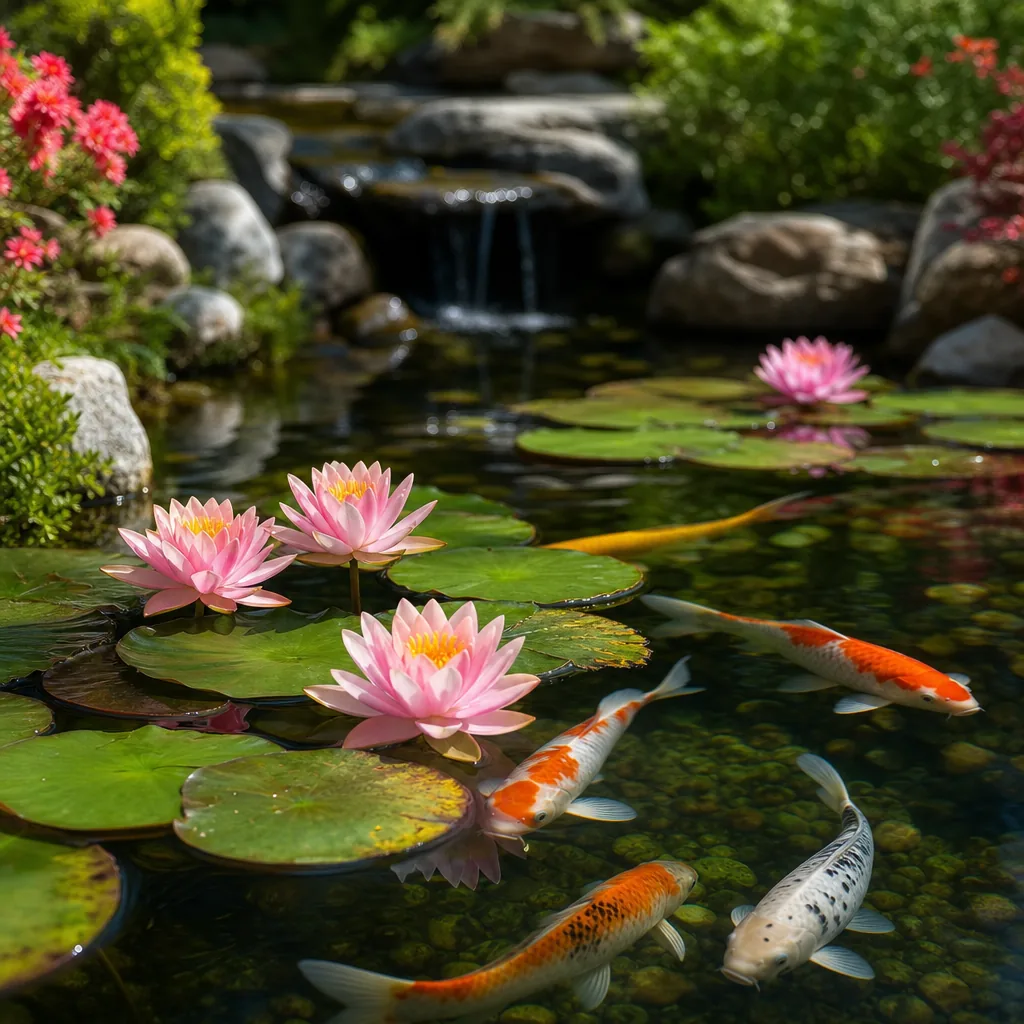
A pond moves the hobby outdoors and changes its character completely. It’s larger scale, season-driven, and tied to your yard and climate rather than your living room.
What makes ponds appealing
- Scale and presence. A pond becomes a feature of your landscape, with koi or goldfish you can enjoy from the patio.
- Stability through volume. Large water volumes buffer chemistry and temperature swings, which can make day-to-day chemistry less fussy than a small tank.
- A blend of gardening and fishkeeping, with aquatic plants playing a big role.
What ponds ask in return
- Upfront construction. Digging, lining, and plumbing a pond is real physical work.
- Seasonal care. You’ll deal with algae in summer and winterizing in cold climates.
- Space and climate. You need the yard for it, and your climate shapes what’s possible.
A Quick Side-by-Side
- Lowest cost and easiest to learn: freshwater aquarium.
- Most visually stunning, most demanding: saltwater reef.
- Biggest scale, outdoor and seasonal, blends with gardening: backyard pond.
Think about your real constraints: indoor space versus yard, budget, how much time you’ll genuinely give it, and whether you want a low-stakes start or are ready for a technical challenge.
How to Choose
- New to the hobby, limited budget, indoor space: start with a freshwater aquarium. It’s the smart on-ramp.
- Experienced or detail-driven, want the wow factor: saltwater reef is your goal, ideally after some freshwater grounding.
- Have a yard, enjoy outdoor projects, want scale: a pond is a rewarding, distinct hobby.
Whichever you pick, start with solid equipment and resist the urge to overstock early. You can browse beginner-appropriate gear for all three in our recommended picks.
The Bottom Line
Freshwater is the forgiving, affordable starting point. Saltwater is the stunning but demanding next level. Ponds are a larger-scale, outdoor hobby all their own. None is better in absolute terms, only better suited to your space, budget, and how you like to spend your time. Choose honestly and you’ll enjoy it for years. For your next step, see our essential equipment checklist for beginners.
Frequently Asked Questions
Should a beginner start with freshwater or saltwater?
Almost always freshwater. It’s more affordable, the water chemistry is more forgiving of beginner mistakes, and there’s an enormous variety of fish and plants. Many hobbyists start freshwater to learn the fundamentals, then move up to a saltwater reef later.
Is a saltwater tank really that much harder than freshwater?
It’s more demanding rather than impossibly hard. Saltwater requires tighter, more stable water parameters, more equipment and testing, and mistakes are costlier, especially with corals. With grounding in freshwater fundamentals first, the jump is very manageable.
Is a pond easier or harder than an aquarium?
It’s different. The large water volume of a pond can make day-to-day chemistry more stable than a small tank, but ponds require significant upfront construction and seasonal care like summer algae control and winterizing. It blends gardening with fishkeeping and needs outdoor space.
Which option is the cheapest to start?
A freshwater aquarium is generally the most affordable across equipment, livestock, and ongoing maintenance. Saltwater carries higher costs for lighting, skimmers, salt, and testing gear. Ponds vary widely depending on size and construction but involve meaningful upfront investment.
Can I keep a pond if I live somewhere with cold winters?
Yes, but you’ll need to build with enough depth for fish to overwinter in an unfrozen refuge and follow proper winterizing steps each fall. Hardy fish like koi and goldfish overwinter well in a deep, properly prepared pond. Very shallow ponds in harsh climates may require moving fish indoors.