
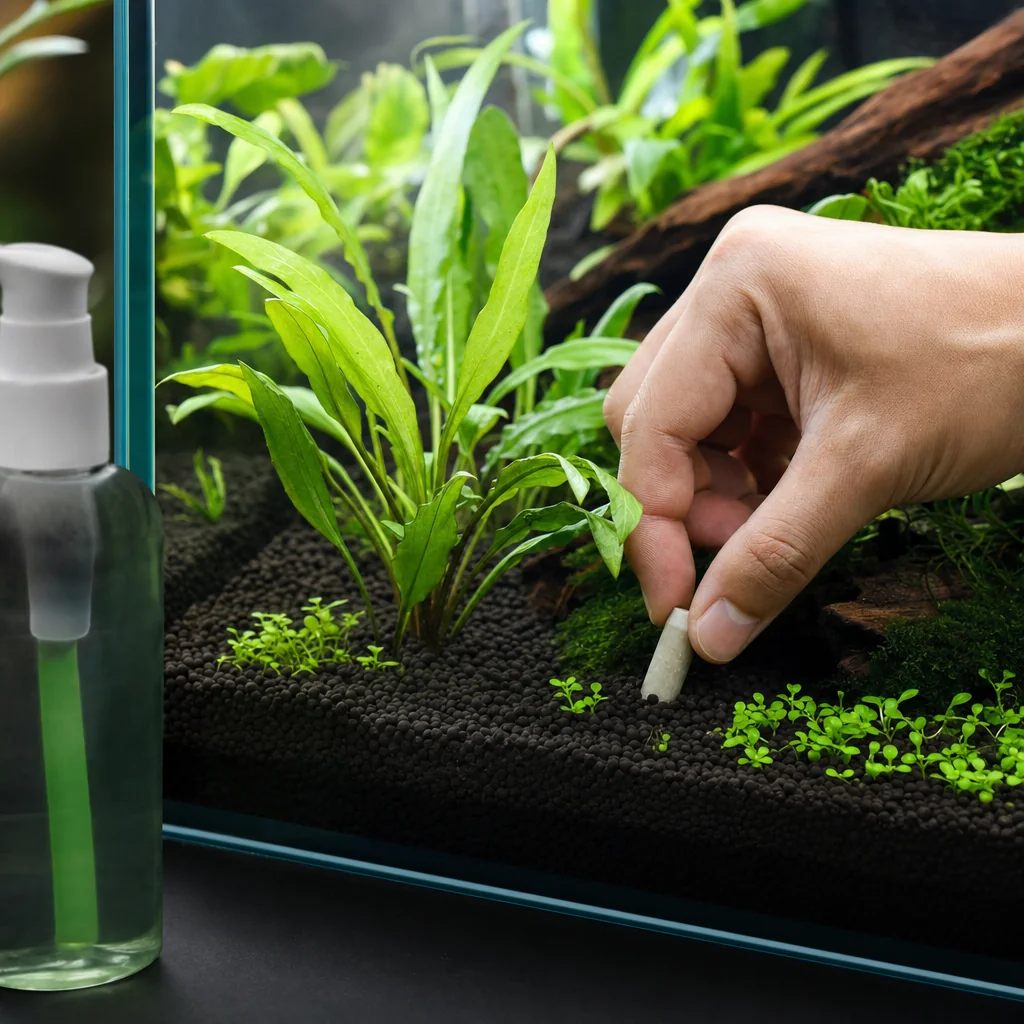
If your aquarium plants are throwing pale new leaves, melting older ones, or just sitting there refusing to grow, the problem is almost always nutrients, not light. And once you start shopping for fertilizers, you run into the same fork in the road every planted-tank keeper hits: do you push capsules into the substrate, or dose liquid into the water column? The honest answer is that they do different jobs, and the plants you keep should decide which one you reach for first.
Let’s break down what each one actually does, which plants care, and how to dose without accidentally feeding an algae bloom instead of your freshwater plants.
How Aquarium Plants Actually Take Up Nutrients
Plants pull nutrients from two places: their roots and their leaves. The split isn’t even across species, and that single fact explains the whole root-tab-versus-liquid debate.
Root feeders
Heavy root feeders store and absorb most of their nutrition through the substrate. These are your big rosette plants and rhizome-free crowd:
- Amazon swords and other Echinodorus
- Cryptocoryne (crypts)
- Vallisneria
- Most foreground carpeting plants once rooted
These plants reward you for putting nutrients where their roots can reach. A sword that’s been starving in plain gravel will often double its growth within a few weeks of a root tab pressed in near its base.
Column feeders
Plants without substantial root systems pull nutrients straight out of the water through their leaves and stems:
- Anubias and Java fern (rhizome plants tied to rock or wood)
- Mosses
- Floating plants like frogbit and duckweed
- Fast-growing stem plants in their upper portions
For these, root tabs do almost nothing. They live in the water column, so that’s where their food has to be.
What Root Tabs Do Well
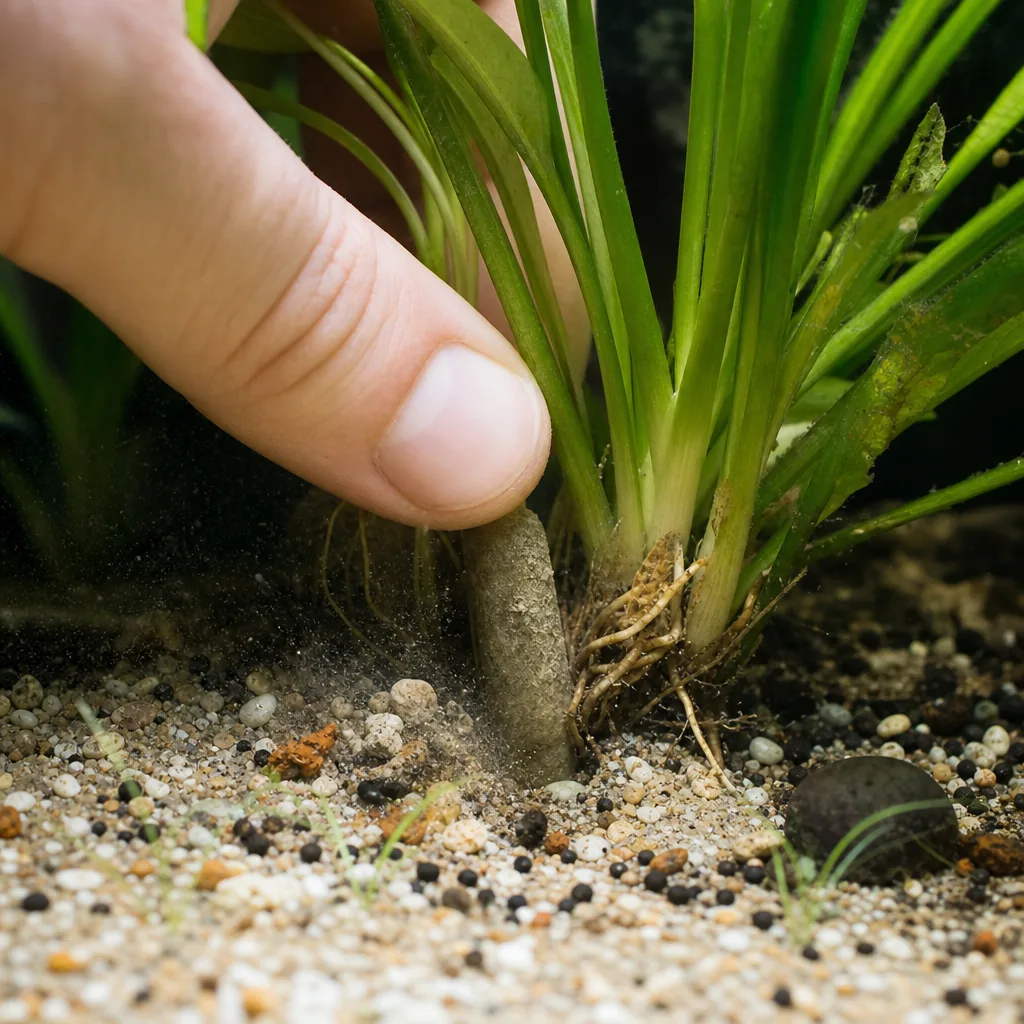
Root tabs are concentrated nutrient capsules you bury in the substrate, usually an inch or two down near a plant’s roots. They’re a slow-release, targeted delivery system, and they shine in a few specific situations.
They’re the clear winner for inert substrates. If you’re running plain gravel, pool-filter sand, or any substrate that holds no nutrients of its own, root tabs are how you give heavy root feeders something to dig into. They also keep nutrients localized, which means less of that fertilizer drifts into the open water where algae can grab it.
The trade-off is control. A tab might last one to three months depending on the brand and your plant load, and you can’t easily pull it back out once it’s in. Over-tabbing a small tank can spike ammonia as the capsule breaks down, so start conservative, especially in a newer setup.
What Liquid Fertilizers Do Well
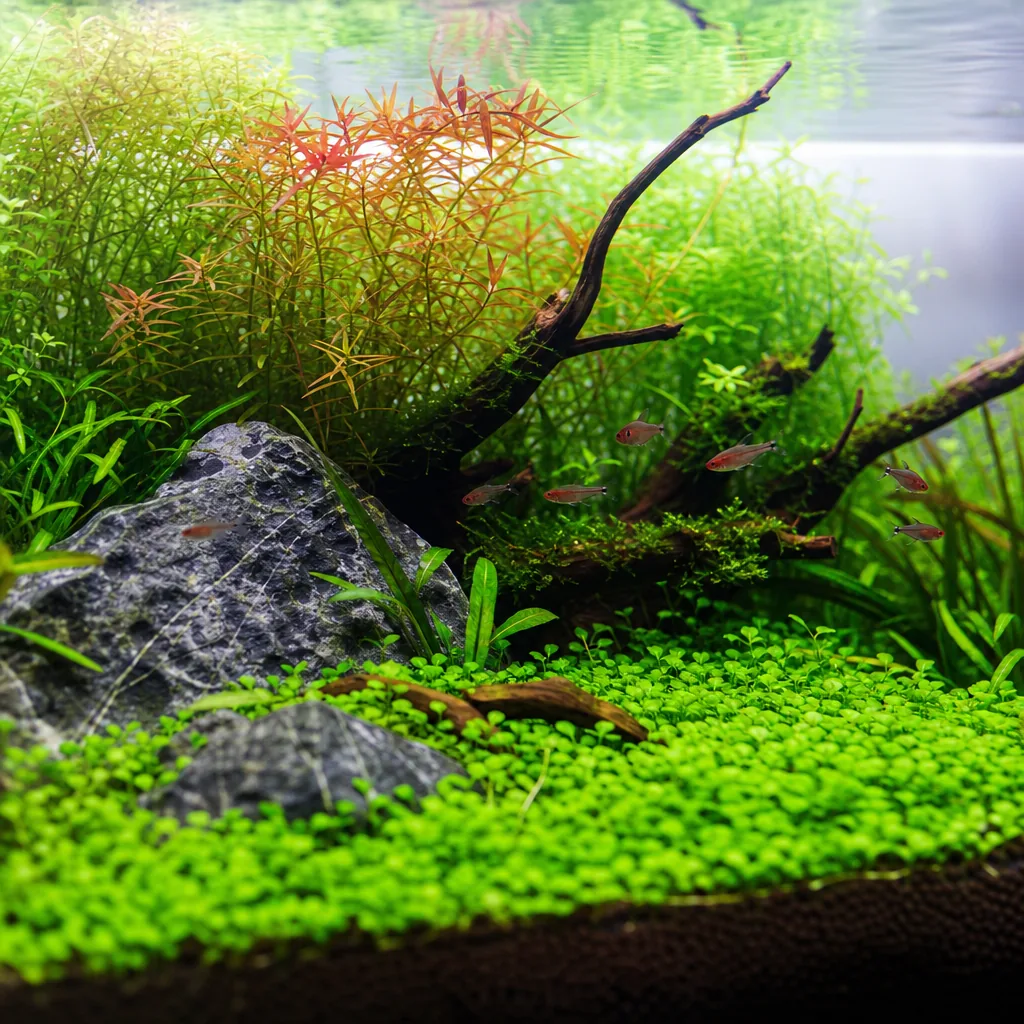
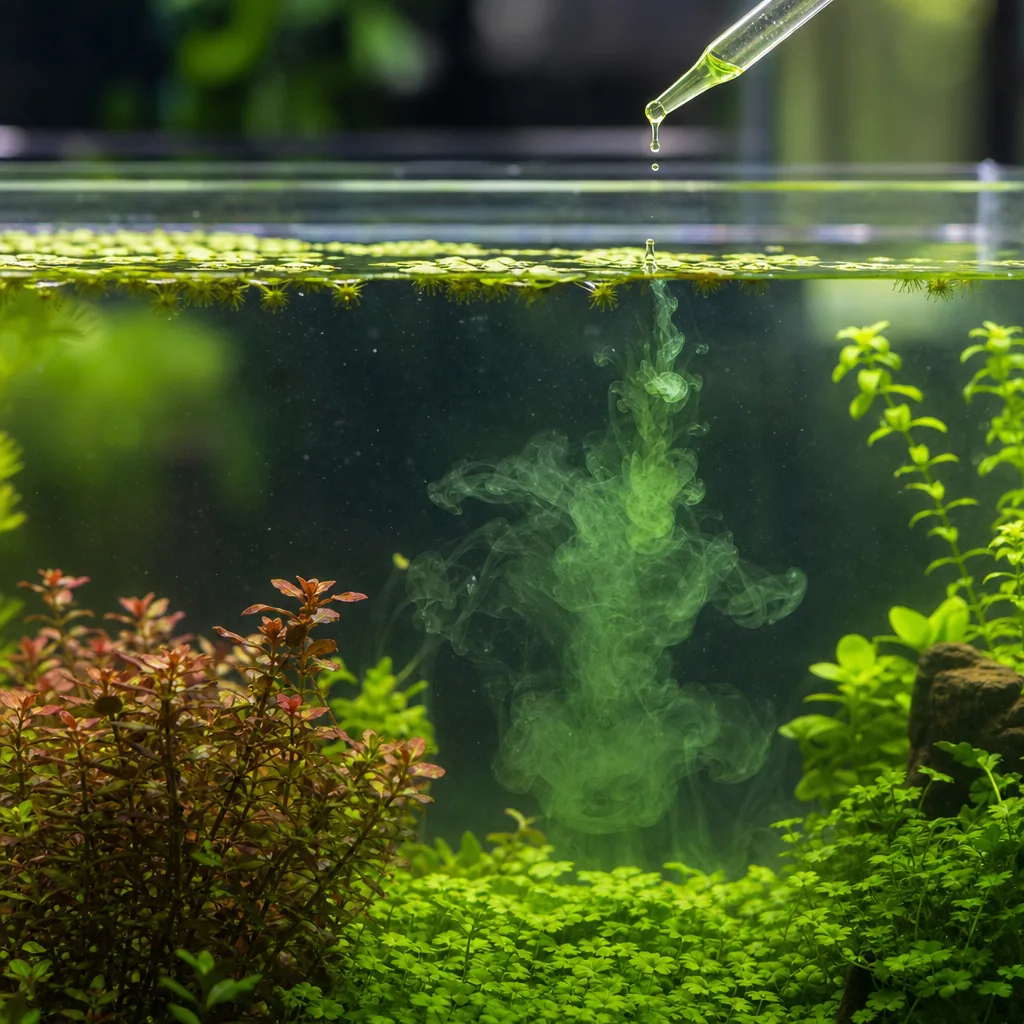
Liquid ferts dose the entire water column at once, feeding column feeders directly and topping up the trace elements and macronutrients that even root feeders use through their leaves. They’re flexible in a way tabs simply aren’t.
- You can adjust on the fly. See deficiency symptoms? Dose more. Getting algae? Pull back. The feedback loop is fast.
- They feed everything that touches the water. One dose reaches your Anubias, your floaters, and the leaves of your swords simultaneously.
- They suit mixed and rhizome-heavy tanks where there’s not much rooting going on.
The catch is that whatever your plants don’t use is available to algae. Liquid dosing demands a bit of discipline: consistent, modest doses on a schedule beat occasional heavy pours every time.
So Which One Should You Use?
For most planted tanks, the right answer is both, weighted toward what you actually grow.
- Mostly rhizome and floating plants (Anubias, Java fern, mosses, frogbit): liquid fertilizer is your backbone. Skip tabs unless you add root feeders later.
- Mostly heavy root feeders (swords, crypts, vals) in inert substrate: root tabs are non-negotiable, with a light liquid dose for trace elements.
- A mixed community tank: run a regular liquid dose for the column and spot-place root tabs under your big rooted plants. This is the most common winning combo.
If you’re running a nutrient-rich aquasoil substrate, you may be able to lean on the substrate alone for the first several months and add liquid only once the soil starts to exhaust.
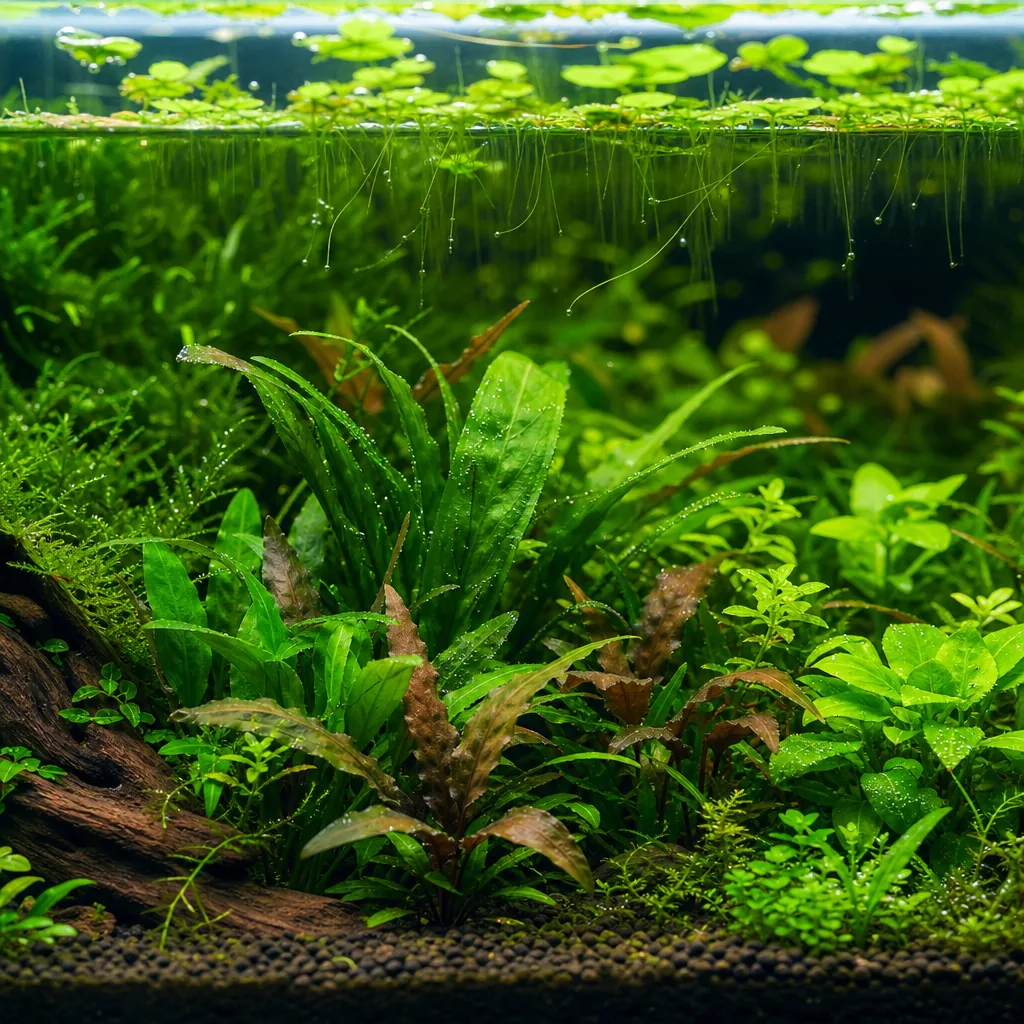
Dosing Without Feeding Algae
Fertilizer doesn’t cause algae on its own; an imbalance between light, CO2, and nutrients does. Keep these habits and you’ll stay on the plant side of that balance:
- Start at half the recommended liquid dose and work up while watching for deficiency symptoms.
- Keep your photoperiod sensible, typically six to eight hours, before you blame fertilizer for algae.
- Stay consistent with water changes; they reset accumulated nutrients and keep things stable.
- Press root tabs deep enough that they don’t leach a cloud of nutrients into the open water.
Browse our plant care picks if you want a starting point for tabs and liquid ferts that won’t overcomplicate a beginner setup.
The Bottom Line
Root tabs feed the roots; liquid ferts feed the water. Match the tool to the plant, and when in doubt on a mixed tank, use a light hand with both. Get the feeding right and most of the frustrating melting, stunting, and pale-leaf problems sort themselves out. For more planted-tank fundamentals, keep reading the blog.
Frequently Asked Questions
Can I use root tabs and liquid fertilizer at the same time?
Yes, and in a mixed planted tank that’s usually the best approach. Root tabs feed heavy rooted plants through the substrate while liquid ferts feed column and rhizome plants through the water. Just start both at modest doses and adjust based on growth.
How often should I replace root tabs?
Most root tabs last one to three months depending on the brand and how hungry your plants are. Heavy root feeders showing slower growth or paler new leaves are your cue to re-dose. Press fresh tabs near the root zone, not randomly across the substrate.
Do plants like Anubias and Java fern need root tabs?
No. These are rhizome plants that you tie to rock or wood rather than plant in substrate, so they feed almost entirely from the water column. Liquid fertilizer is what keeps them healthy; root tabs are wasted on them.
Will liquid fertilizer cause algae?
Not by itself. Algae blooms come from an imbalance between light, CO2, and nutrients, often too much light or inconsistent dosing. Keep a sensible photoperiod, dose modestly and consistently, and do regular water changes to stay balanced.
Do I need fertilizer if I use nutrient-rich aquasoil?
Often not at first. A quality aquasoil can carry a tank for several months on its own. Once growth slows and the soil starts to exhaust, begin adding liquid ferts and consider root tabs for heavy feeders.