
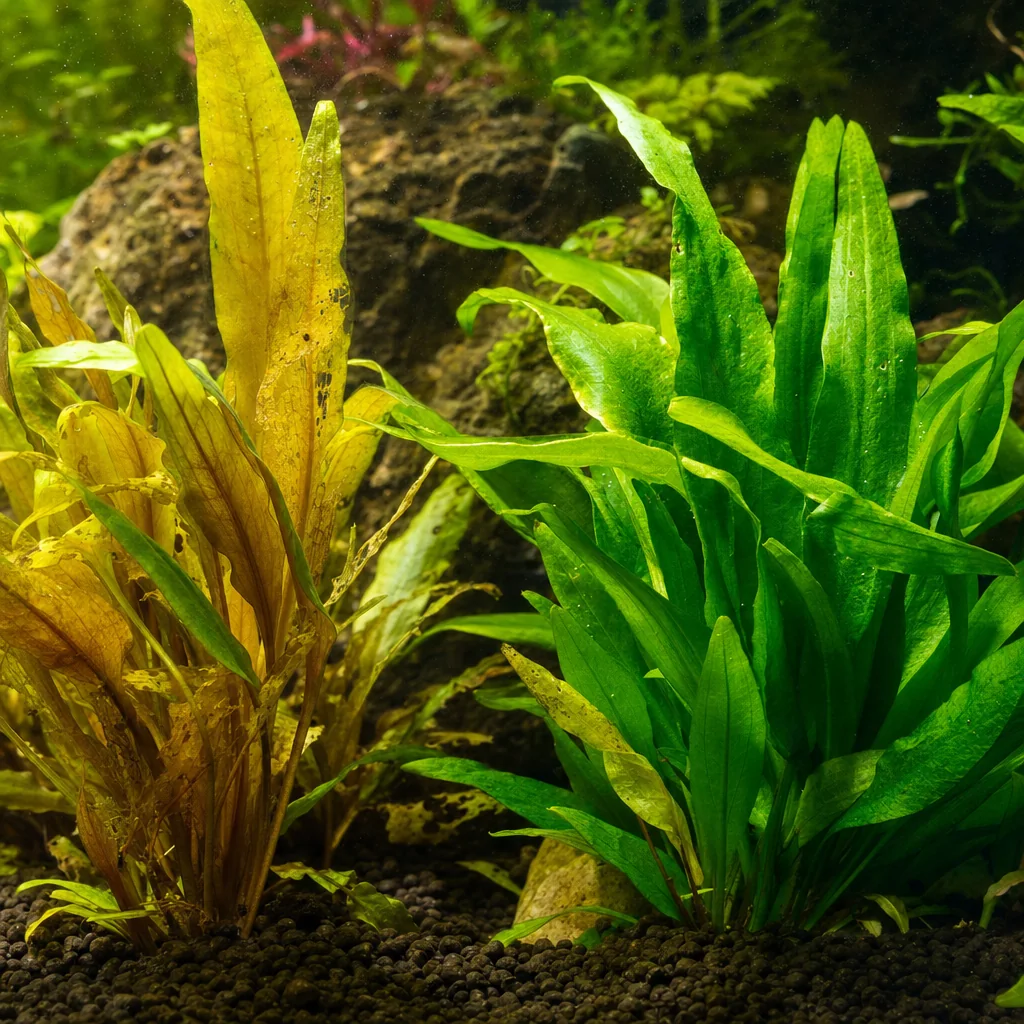
Watching new plants turn to mush in your tank is demoralizing, and it sends a lot of beginners running for the nearest forum convinced they have killed everything. Often they have not. Plant melt is frequently a temporary, even normal, response to change rather than a death sentence, and the plants that look worst in week two can be thriving by week six. That said, persistent dying usually points to a real problem you can fix. This guide separates the normal from the serious and gives you a practical path back to healthy plants.
Normal Melt Versus Real Trouble
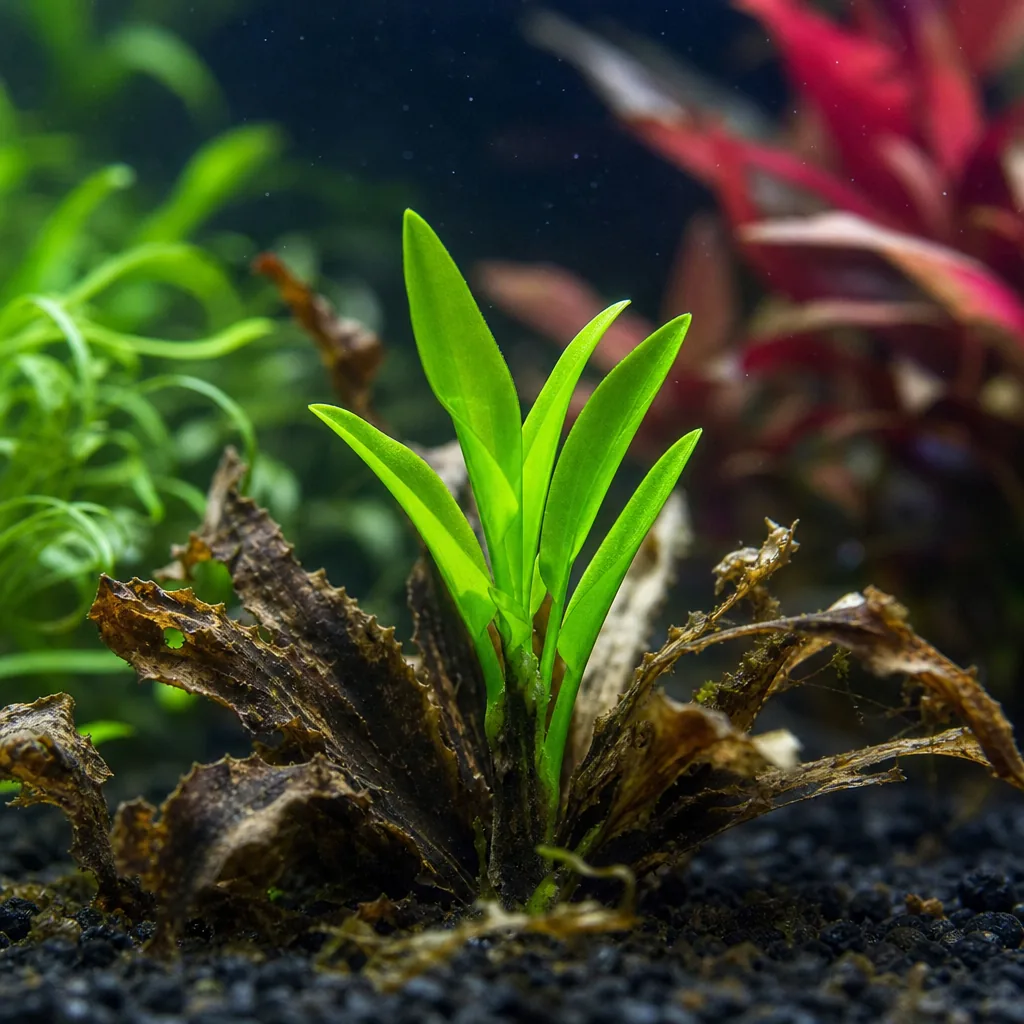
The first thing to understand is that not all melting is bad. Many plants are grown emersed, meaning out of water, at the farm. When they go underwater in your tank, their emersed leaves die off and the plant regrows submersed leaves suited to its new life. This transition melt is normal and temporary.
How to Tell the Difference
- Normal transition melt: older leaves die back while the roots and crown stay firm, and you eventually see new growth emerging.
- Real trouble: the whole plant deteriorates, new growth is stunted or absent, roots rot, or the problem spreads and worsens over weeks.
If you see new growth, the plant is adapting and you should leave it alone. If everything is going downhill with no new leaves, dig into the causes below.
The Common Causes of Dying Plants
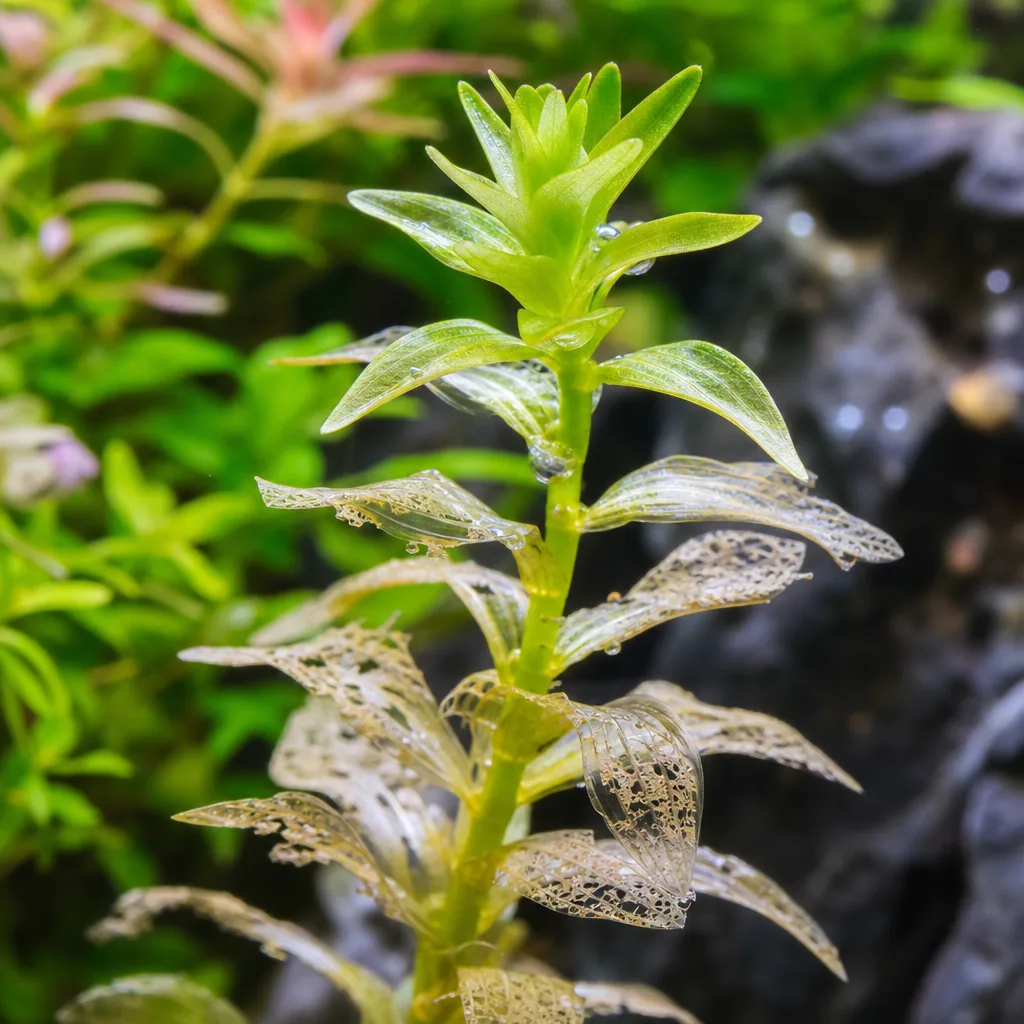
When plants genuinely struggle, the cause almost always falls into one of a few buckets.
Not Enough Light
Plants that get too little light slowly thin out, drop lower leaves, and fade. If your plants are stretching toward the light or losing color, intensity or duration may be too low for the species you chose.
Nutrient Deficiency
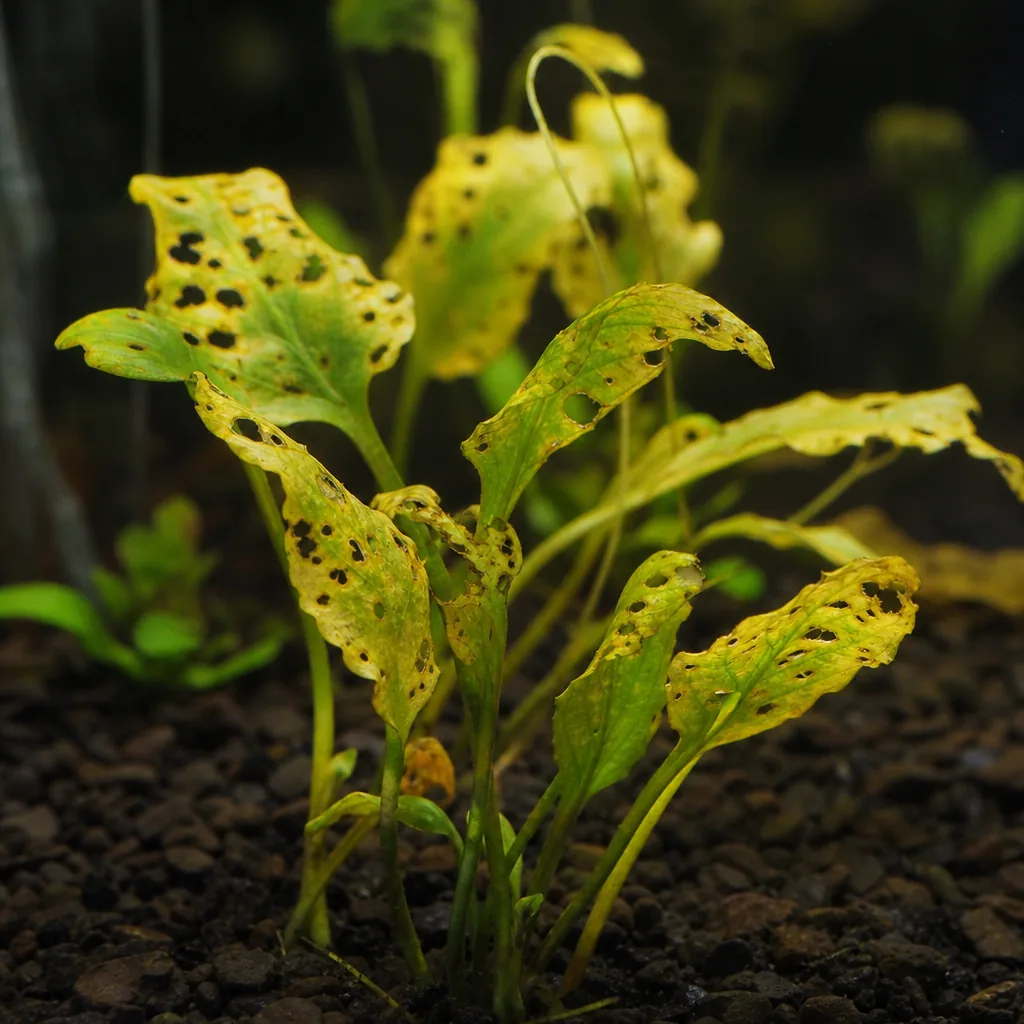
Plants need a balance of nutrients, and a shortage shows up in the leaves. Yellowing, holes, stunted growth, and poor color often trace back to missing nutrients. A comprehensive fertilizer and root tabs for rooted plants address most deficiencies.
Buried Rhizomes
For plants like anubias and java fern, burying the rhizome in substrate causes it to rot. These plants must be attached to wood or rock with the rhizome exposed.
Wrong Plant for the Tank
Sometimes the issue is simply that a demanding plant was placed in a tank that cannot support it, such as a high-light, CO2-dependent species in a low-tech setup. The plant is not defective; it is in the wrong home.
If you suspect this, our guides to low-light plants and the low-tech planted tank help you match plants to conditions, and the shop lists beginner-friendly species.
A Practical Recovery Plan
When plants are struggling, work through this in order rather than changing everything at once.
- Check for new growth first. If it is there, the plant is adapting. Be patient and remove only fully dead leaves.
- Confirm the rhizome is free on anubias and java fern, and reposition any buried plants onto hardscape.
- Evaluate lighting. Make sure intensity and photoperiod suit your plants, neither too little nor excessive.
- Start sensible dosing. Add a comprehensive fertilizer and root tabs to rule out deficiency.
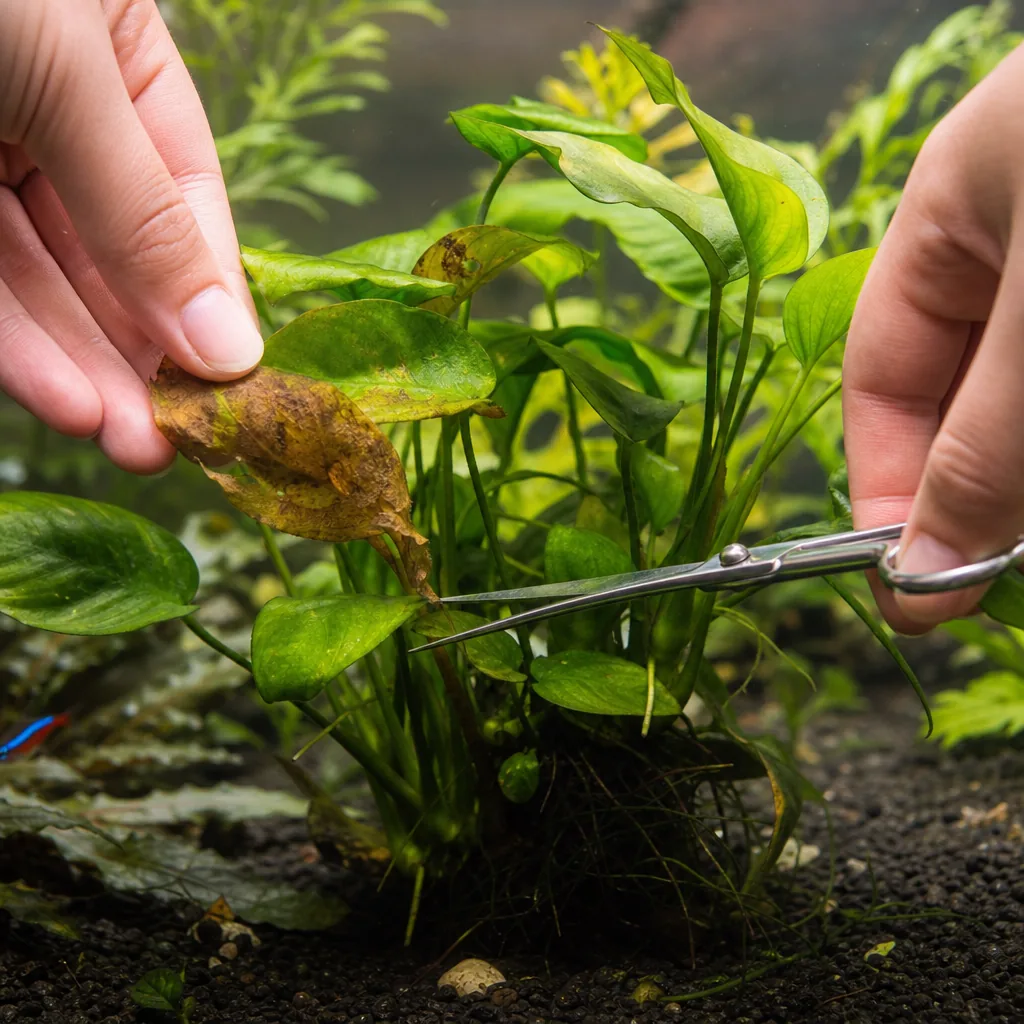
- Trim away the dead. Removing rotting leaves prevents them from fouling the water and lets the plant put energy into new growth.
Patience Is Part of the Fix
The hardest advice to follow is also the most important: give struggling plants time. Most adjustments take weeks to show results because plants respond slowly. Tearing the tank apart, swapping fertilizers daily, or pulling plants that are quietly regrowing usually does more harm than the original problem. Make one sensible change, give it a few weeks, and judge by whether new growth appears.
Preventing the Problem Next Time
Most plant deaths are preventable with a few habits: choose plants suited to your light and equipment, keep rhizomes exposed, provide modest consistent nutrients, and expect a transition period when adding new plants. Buy from healthy sources and do not overstock a young tank with demanding species before you understand its conditions.
From Melting to Thriving
Plant melt is rarely the catastrophe it looks like in the moment. Distinguish normal transition from real decline, fix the common causes of light, nutrients, and buried rhizomes, make changes one at a time, and above all be patient. Plants want to grow, and given the right conditions and a little time, most recover and flourish. For more on building a planted tank that thrives from the start, browse the freshwater hub.
Frequently Asked Questions
Is it normal for new aquarium plants to melt?
Yes, very often. Many plants are grown out of water at the farm, and their emersed leaves die back when submerged while the plant regrows underwater leaves. If the roots and crown stay firm and new growth appears, the plant is simply adapting.
How do I know if my plant is dying or just adjusting?
Look for new growth. If old leaves die back but new ones emerge and the roots stay firm, the plant is adjusting. If the whole plant declines with no new growth and the problem worsens over weeks, there is a real issue to address.
Why are my plant leaves turning yellow?
Yellowing usually points to a nutrient deficiency. A comprehensive liquid fertilizer plus root tabs for rooted plants addresses most cases. Insufficient light can also cause fading and lower-leaf loss.
Why is my anubias or java fern rotting?
The most likely cause is a buried rhizome, the thick stem the leaves grow from. These plants must be attached to wood or rock with the rhizome exposed, never planted in the substrate, or it rots.
Should I remove melting leaves?
Remove fully dead or rotting leaves so they do not foul the water, but leave any that are still partly healthy. Trimming away the dead lets the plant direct its energy into new growth and keeps the tank cleaner.