
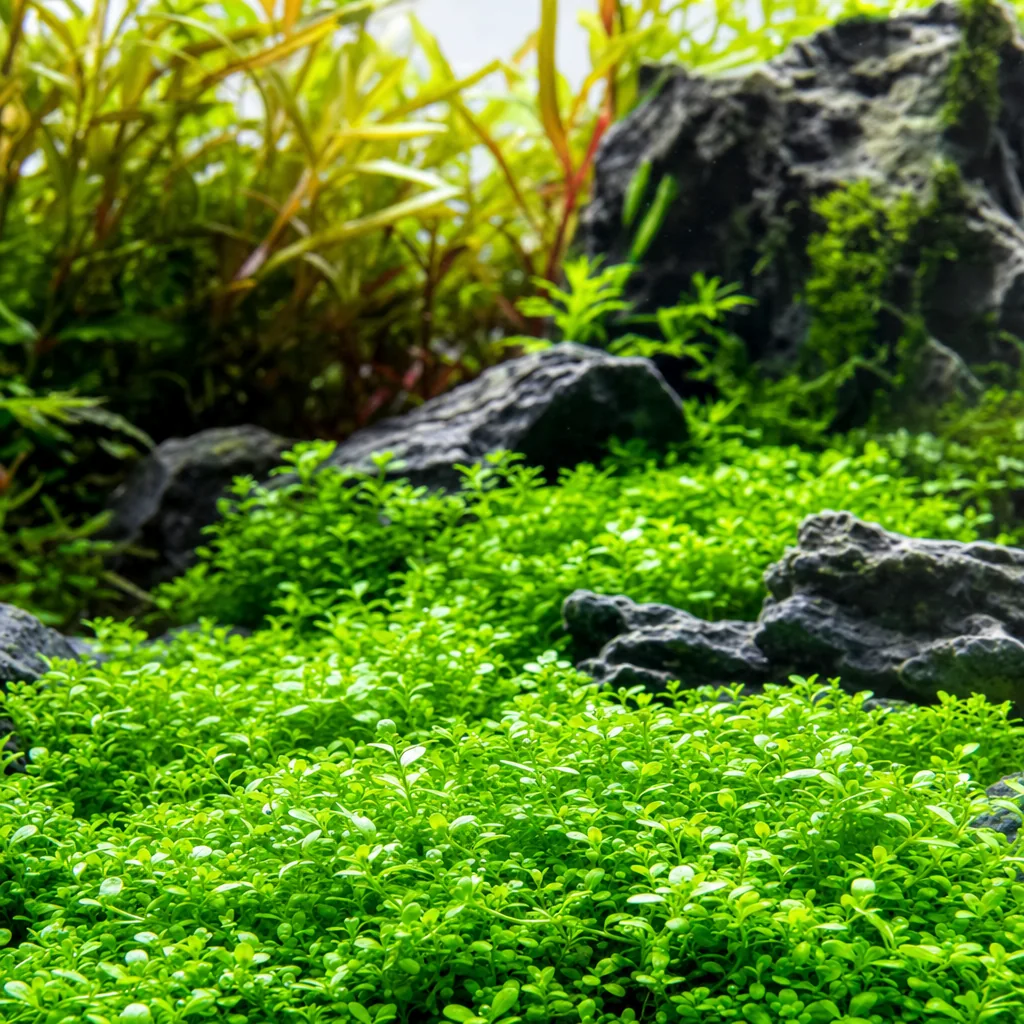
A dense green carpet spreading across the foreground is one of the most striking effects in aquascaping, and it is also one of the most commonly botched. New hobbyists buy a carpeting plant, scatter it across the substrate, and wonder why it turns to mush or refuses to spread. Carpets are absolutely achievable, but they reward the keeper who understands what these plants need and who is willing to give them time. This guide walks through choosing the right plant, planting it correctly, and providing the conditions that let a carpet fill in.
Understanding What a Carpet Needs
Most true carpeting plants are demanding by aquarium-plant standards. They grow low and dense, which means they need plenty of light reaching the substrate and, in most cases, CO2 to grow vigorously enough to spread before algae takes hold. There are easier carpeting options for lower-tech tanks, but the lushest, tightest carpets generally call for a high-tech approach.
Being honest with yourself about this upfront saves frustration. If you are not ready for strong light and CO2, choose a more forgiving carpeting plant and accept slower, looser coverage.
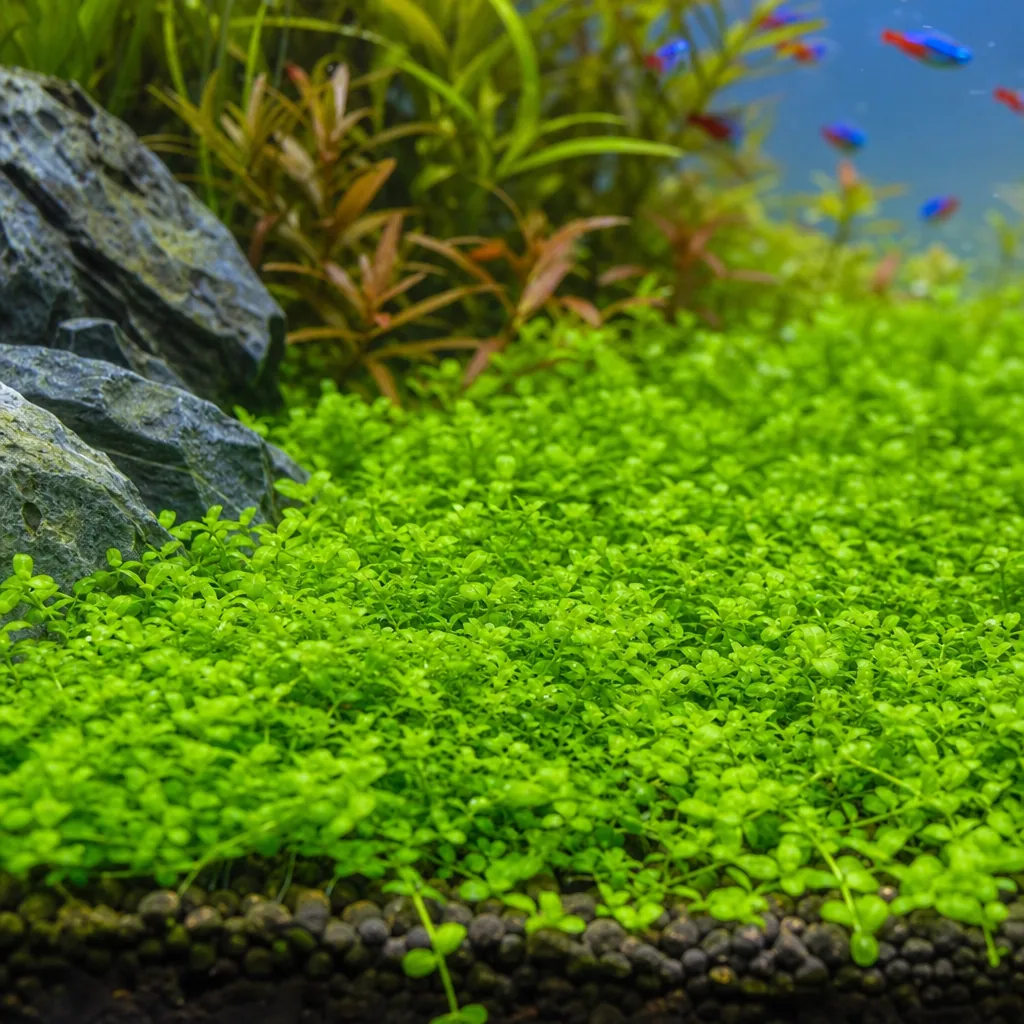
Choosing the Right Carpeting Plant
Match the plant to your setup and ambitions.
Demanding, High-Impact Carpets
The tightest, most manicured carpets come from small-leaved species that genuinely need strong light and CO2 to thrive. These produce the showpiece lawns you see in competition tanks, but they punish under-equipped tanks with melt and algae.
More Forgiving Carpets
Some carpeting and foreground plants spread reasonably in moderate conditions, including certain grasses and creeping species. They may grow taller or looser than the showpiece carpets, but they let a lower-tech keeper achieve a green foreground without a full high-tech build.
You can find both categories among the planted-tank selections in our shop, and our CO2 guide helps you decide whether injection fits your goals.
Planting for Success
How you plant a carpet matters enormously. Done poorly, the plants float free, rot, or grow in patchy clumps.
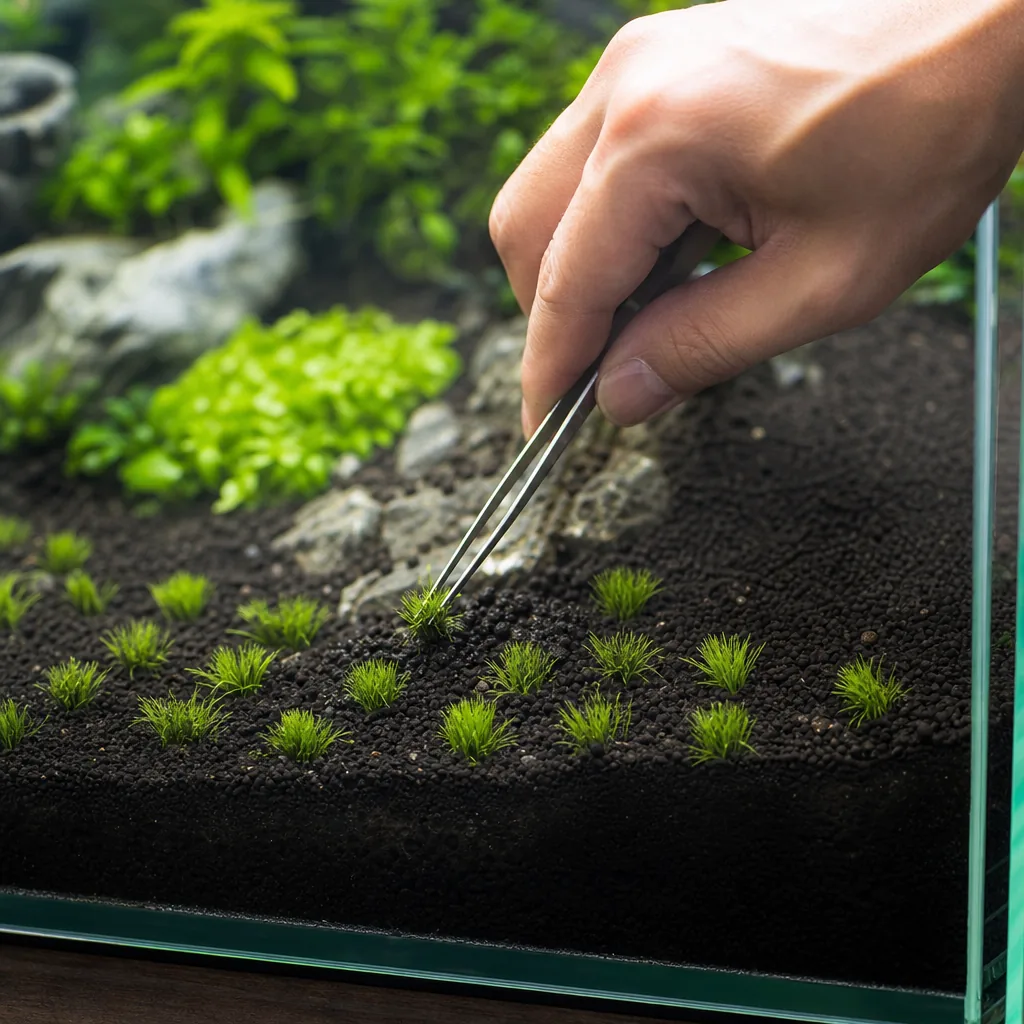
- Separate into small portions. Divide your plants into many small clumps rather than planting big bunches. More starting points means faster, more even coverage.
- Plant into the substrate, not on top. Use tweezers to push each small portion gently into the substrate so the roots anchor and the plant does not drift up.
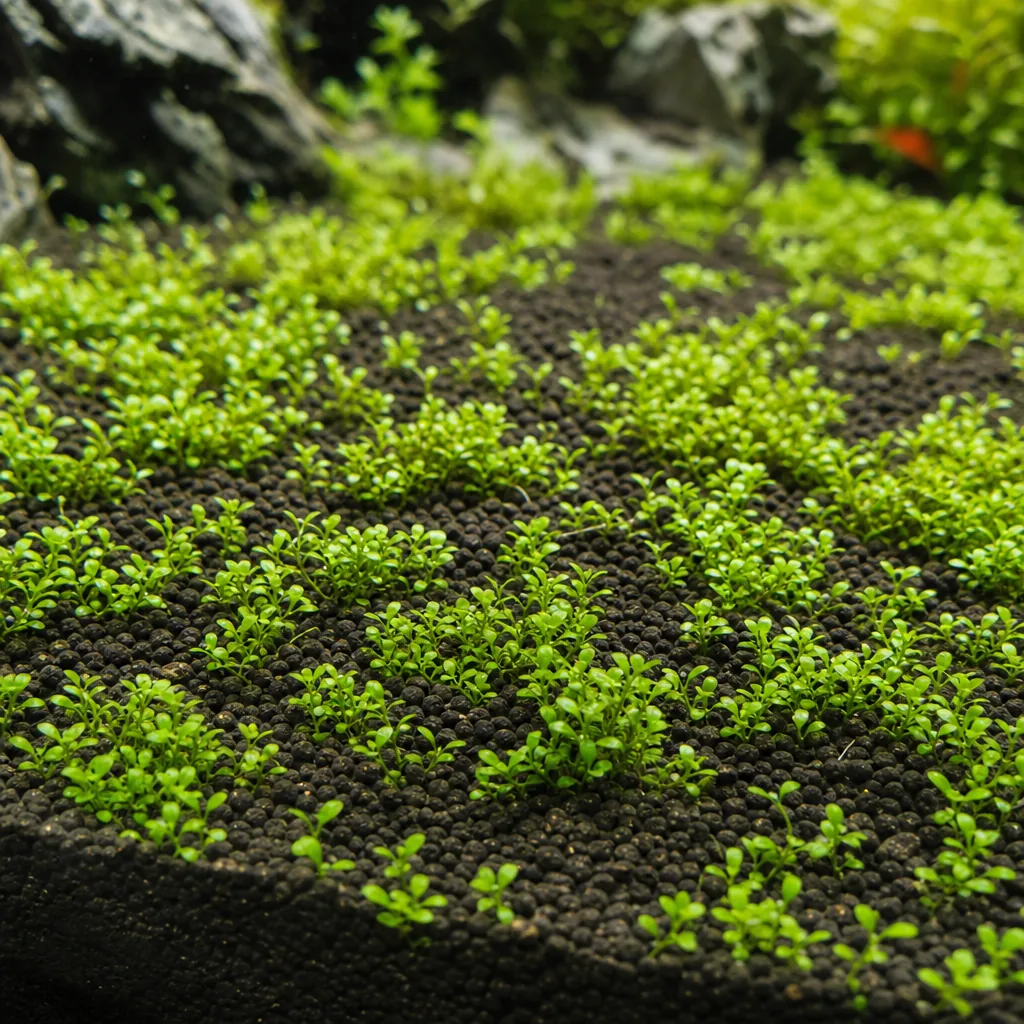
- Space them out. Leave gaps between clumps so they can spread into the open space. They will fill in.
- Consider the dry-start method. Some hobbyists grow carpets emersed in a humid, water-free tank before flooding, which establishes a strong base before algae can compete.
Providing the Right Conditions
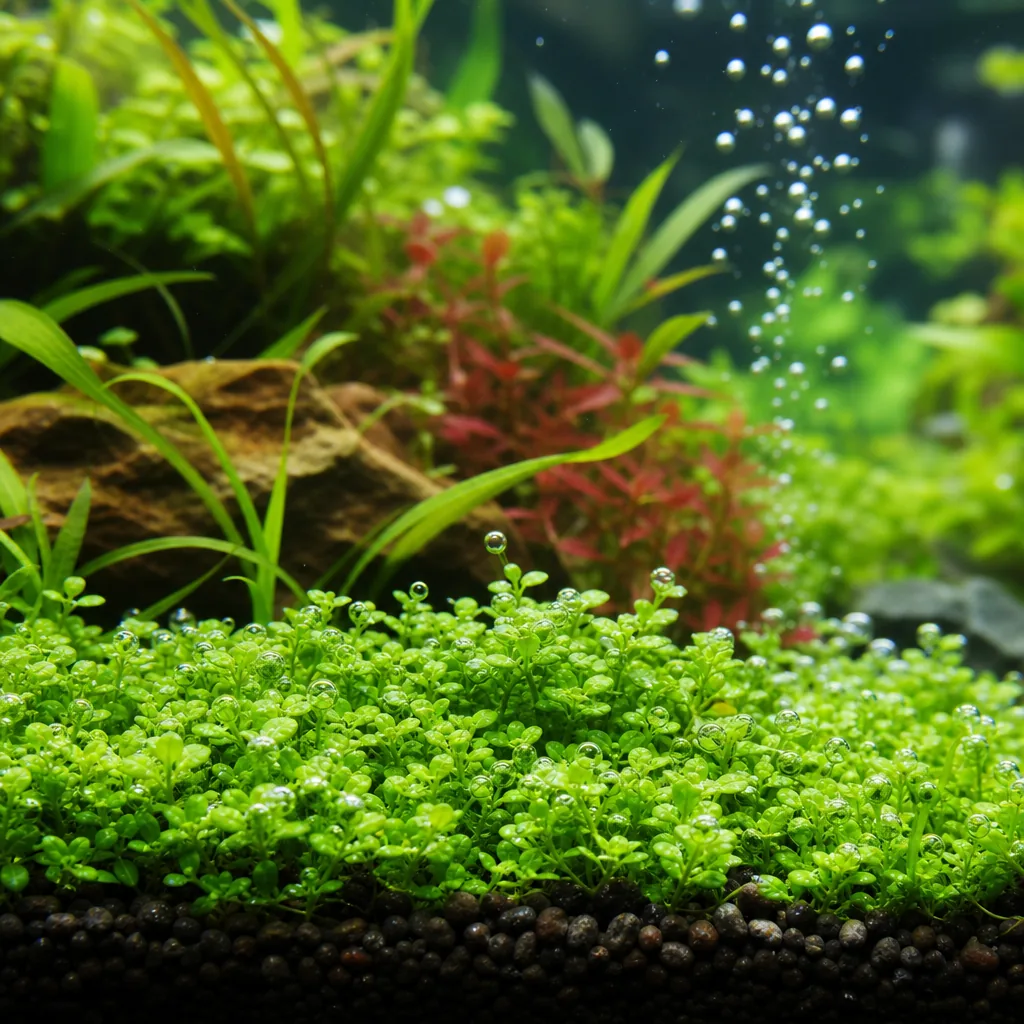
Once planted, the carpet needs consistent conditions to spread.
- Light reaching the bottom. A carpet lives at the substrate, the furthest point from the light, so adequate intensity at that depth is essential.
- CO2 for demanding species. For the tightest carpets, stable CO2 is usually what separates success from a slow failure.
- A nutrient-rich substrate. Carpets feed heavily through their roots, so an active plant substrate or root tabs support vigorous spreading.
- Good circulation. Flow distributes CO2 and nutrients across the carpet and discourages algae from settling on slow-establishing plants.
The Patience Factor
This is the part nobody wants to hear: a carpet takes time. In the first weeks the plants establish roots and may barely seem to move. Then they begin sending out runners and spreading horizontally, and coverage accelerates. Resist the urge to overhaul the tank if early progress looks slow. Trimming the carpet once it establishes actually encourages it to grow denser and more horizontal, so light maintenance trimming becomes part of keeping it tight.
Avoiding the Common Failures
Most carpet failures trace back to a few mistakes: planting clumps too large and sparse, insufficient light at the substrate, skipping CO2 on a demanding species, or losing patience and disturbing the plants before they root. Algae outcompeting a slow-establishing carpet is the other frequent killer, which circles back to giving the plants the conditions to grow faster than the algae.
From Bare Substrate to Green Lawn
Growing a carpet is a rewarding project that comes down to matching the plant to your setup, planting small portions deep into a rich substrate, delivering light and CO2 to the bottom of the tank, and giving the plants weeks to establish and spread. Choose realistically, plant carefully, stay patient, and you will watch bare substrate transform into a living green lawn. For more on arranging a carpet within a full layout, see our aquascaping basics guide and the freshwater hub.
Frequently Asked Questions
Do carpeting plants need CO2?
The tightest, most manicured carpets generally need CO2 to grow fast and dense enough to outcompete algae. Some hardier carpeting plants spread in moderate conditions without it, but they tend to grow taller and looser.
How do I plant a carpet so it fills in evenly?
Divide the plants into many small clumps and push each gently into the substrate with tweezers, spacing them out. More starting points spread faster, and leaving gaps lets the plants fill the open space with runners.
Why won’t my carpet spread?
Common reasons are too little light reaching the substrate, missing CO2 on a demanding species, planting clumps too large and sparse, or disturbing the plants before they root. Algae outcompeting slow plants is another frequent cause.
How long does it take to grow a carpet?
Expect weeks. The plants spend the first stretch establishing roots with little visible spread, then accelerate as they send out runners. Patience is essential, and trimming once established encourages denser, more horizontal growth.
What is the dry-start method?
It is growing carpeting plants emersed in a humid, water-free tank before flooding it. This lets the carpet establish a strong root base without competing against algae, then you slowly fill the tank once it has taken hold.