
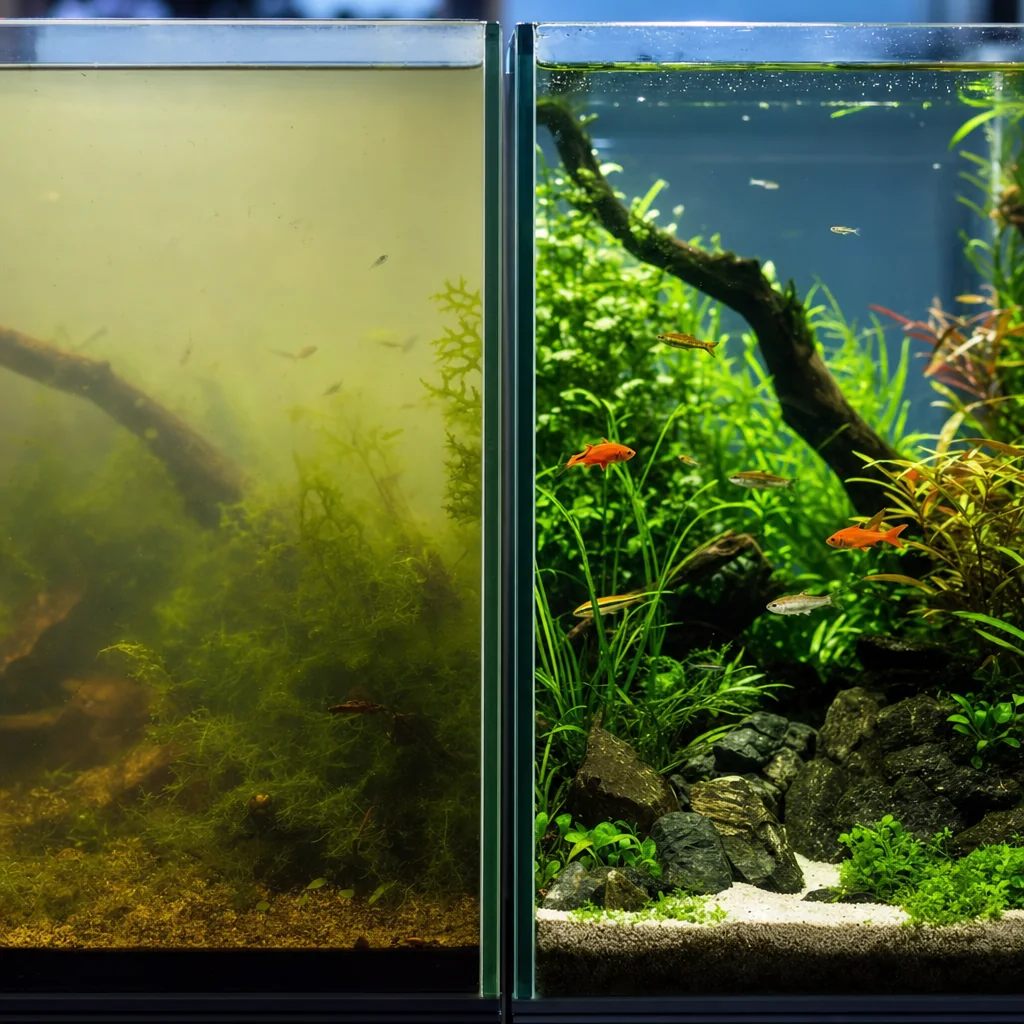
Cloudy water is one of the most common things a new aquarist panics over, and most of the time the panic is unnecessary. The trick is knowing which kind of cloudiness you’re looking at, because the fix for one is the opposite of the fix for another. White haze, green tint, and brown murk each tell a different story.
Here’s how to read what your water is telling you and respond correctly instead of making things worse with the wrong reaction.
White or Gray Cloudiness
This is the most common type, and there are two main causes depending on timing.
Substrate Dust (Day One)
If the cloudiness appears right after setup, it’s almost always fine particles from gravel or sand you didn’t rinse thoroughly enough. It’s harmless and settles or filters out within a day or two. The lesson is to rinse substrate until the water runs clear next time. Our setup guides cover this step.
Bacterial Bloom (First Few Weeks)
A milky white haze in a newer tank is usually a bacterial bloom, a population explosion of free-floating bacteria responding to available nutrients. It looks alarming but is a normal phase in a maturing tank. The worst thing you can do is panic-clean or replace the filter, which only prolongs it. Keep up light maintenance, avoid overfeeding, and let it clear on its own as the system balances.
Green Water
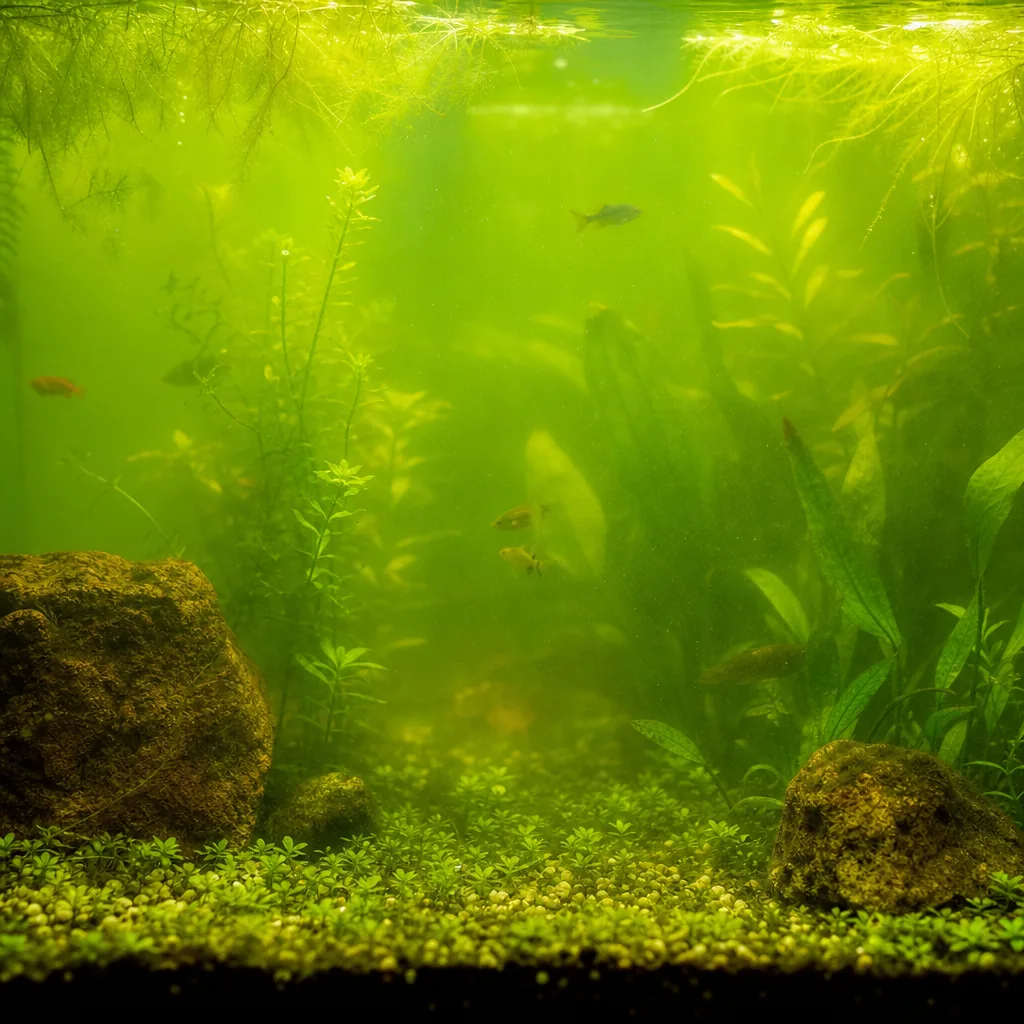
Green water is an algae bloom, microscopic algae multiplying in suspension. It’s driven by two things: too much light and too many nutrients. Common triggers include direct sunlight on the tank, leaving lights on too long, and excess nutrients from overfeeding or skipped water changes.
- Reduce the light period and move the tank out of direct sun.
- Cut back on feeding and increase water changes to lower nutrients.
- Be patient; starving the algae of light and food is what actually solves it.
Live plants help by competing with algae for the same nutrients, which is one reason planted tanks tend to stay clearer.
Brown or Yellow Water
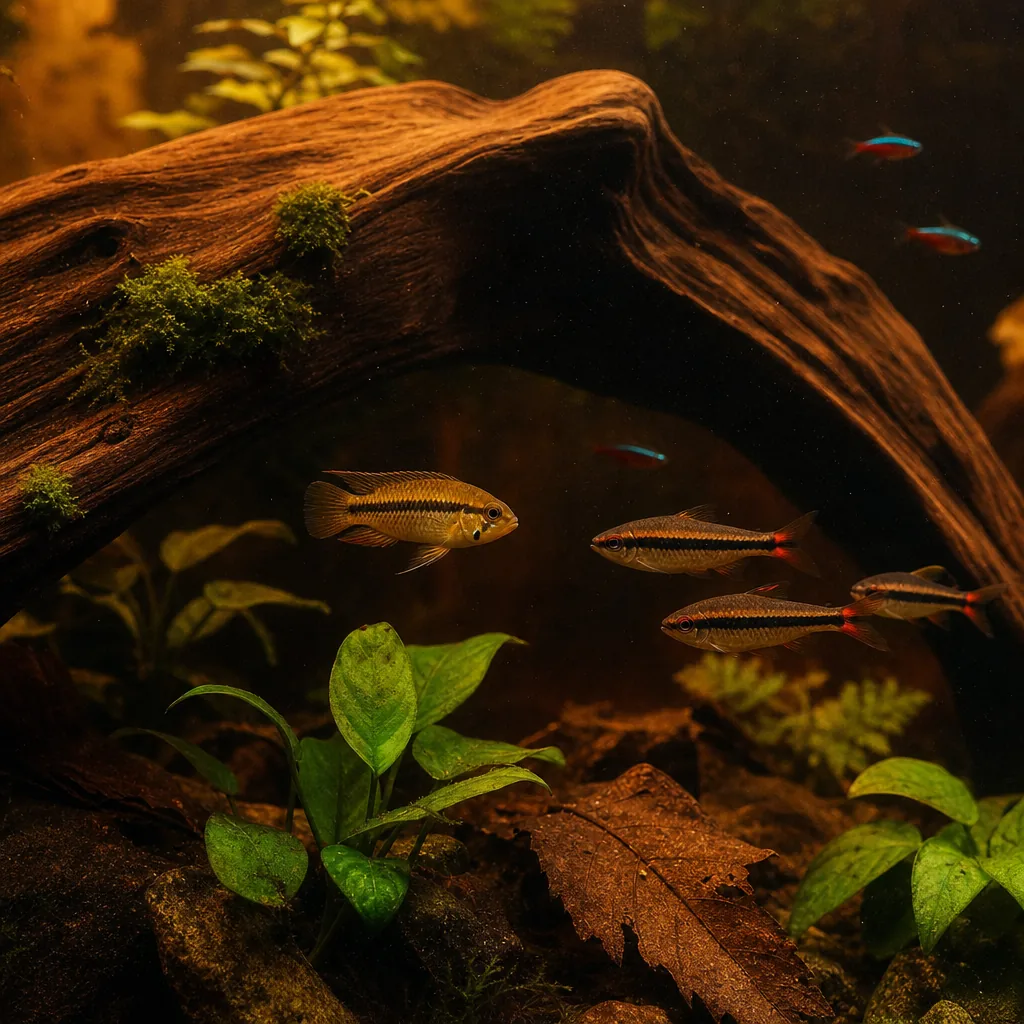
Brownish, tea-colored water usually comes from tannins leaching out of new driftwood, which is harmless and even beneficial for some species. It fades over weeks, and pre-soaking driftwood speeds the process. If the tint is more of a cloudy brown, suspect stirred-up substrate or, less pleasantly, decaying organic matter you should track down and remove.
The Universal Fixes
Whatever the color, a few habits prevent most cloudiness and support clearing.
- Don’t overfeed. Excess food is the root of countless water problems. Feed small amounts the fish finish quickly.
- Keep up water changes. Regular partial changes remove the nutrients that fuel blooms.
- Maintain, don’t sterilize, the filter. Rinse media in old tank water so you keep your beneficial bacteria.
- Resist quick-fix chemicals. Clarifiers clump particles but don’t address the cause, and they can mask the real issue.
Good filtration does a lot of quiet work here; if your tank chronically struggles to clear, your filter may be undersized for the bioload. Compare options in our filtration guides.
Cloudy water is usually the tank talking, not the tank failing. Identify the color, match it to the cause, and respond with patience rather than panic. Most cloudiness clears on its own once you stop overfeeding and let the biology balance out. For more troubleshooting, browse the blog.
Frequently Asked Questions
Is cloudy aquarium water dangerous to fish?
Usually not. A bacterial bloom or leftover substrate dust is harmless and clears on its own. The cloudiness itself rarely harms fish, though the overfeeding behind it can, so address the cause.
How long does a bacterial bloom last?
Typically several days to a couple of weeks as a new tank matures. Avoid panic-cleaning the filter, keep feeding light, and let the system balance itself. It clears once the bacteria settle.
Why is my aquarium water green?
Green water is a suspended algae bloom caused by too much light and excess nutrients. Reduce the light period, keep the tank out of direct sun, cut back feeding, and increase water changes.
Should I use a water clarifier?
Clarifiers clump particles so the filter can catch them, but they don’t fix the underlying cause. They can also mask the real problem, so it’s better to correct feeding, lighting, and maintenance.
Why did my water turn brown?
Most often it’s tannins leaching from new driftwood, which is harmless and fades over time. Pre-soaking driftwood helps. Cloudy brown water can also mean stirred substrate or decaying matter to remove.