
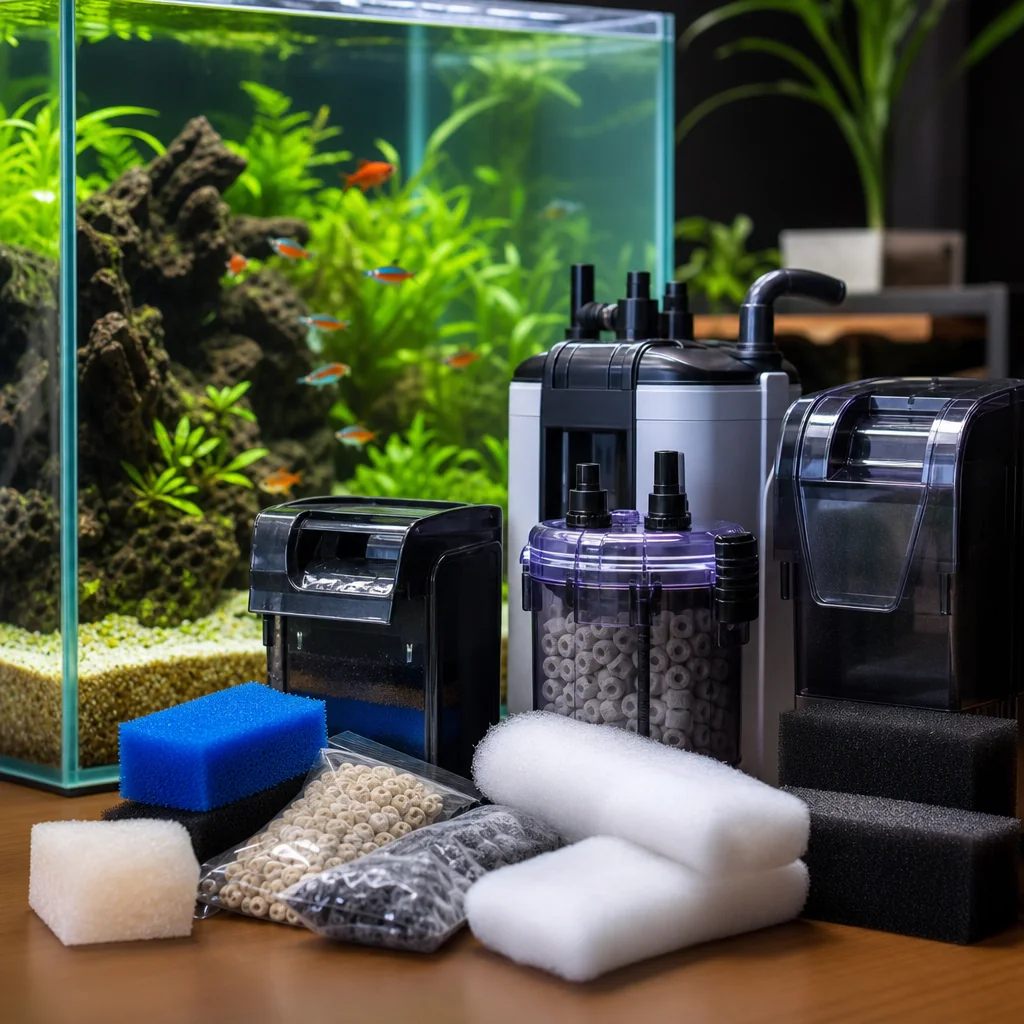
Ask ten fishkeepers which filter is best and you’ll get ten answers, half of them contradictory. The truth is there’s no single “best” filter, only the right one for your tank, your stock, and how much maintenance you actually want to do. This guide walks you through how filtration really works and how to match a filter to your setup without overpaying or under-filtering.
What a Filter Actually Does: The Three Jobs
Before you compare models, understand that “filtration” is really three separate jobs. A good filter handles all three, but it does each one with different media.
1. Mechanical Filtration
This is the part most people picture: physically trapping floating debris like uneaten food, fish waste, and plant bits. Sponges, filter floss, and foam pads do this work. Mechanical media needs the most frequent cleaning because it clogs first, and a clogged pad chokes your flow.
2. Biological Filtration
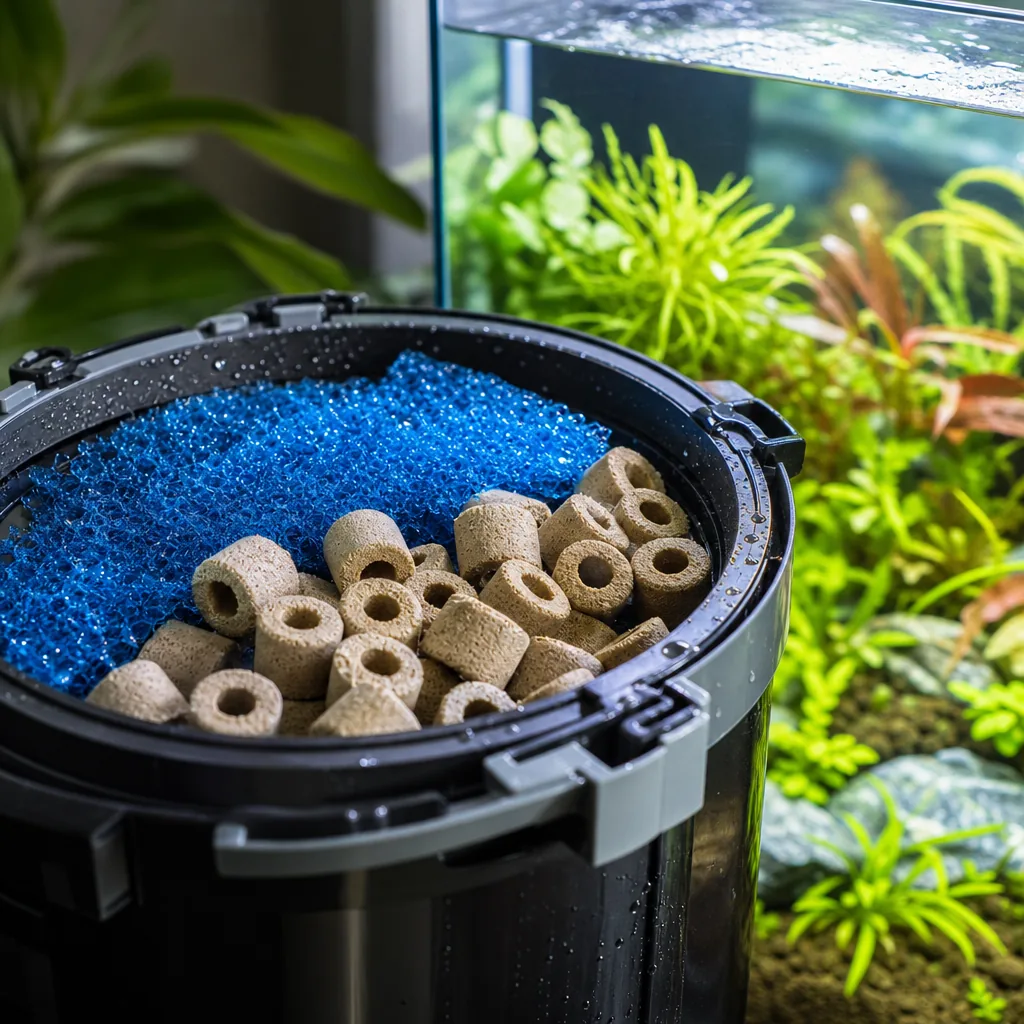
This is the job that actually keeps fish alive. Beneficial bacteria colonize porous surfaces and convert toxic ammonia into nitrite, then into far less harmful nitrate. Biological media (ceramic rings, bio-balls, porous blocks, or even a mature sponge) should almost never be replaced or deep-cleaned, because doing so dumps your bacterial colony and can crash the tank.
3. Chemical Filtration
This is optional polishing. Activated carbon pulls out tannins, odors, and some medications; specialty resins target ammonia, phosphate, or nitrate. Most healthy, established tanks don’t strictly need chemical media running full-time, but it’s handy for clearing discoloration or removing meds after treatment.
If you want to dig deeper into building a balanced system, our freshwater setup hub walks through how filtration ties into stocking and water changes.
The Main Filter Types (and When Each One Wins)
Hang-On-Back (HOB)
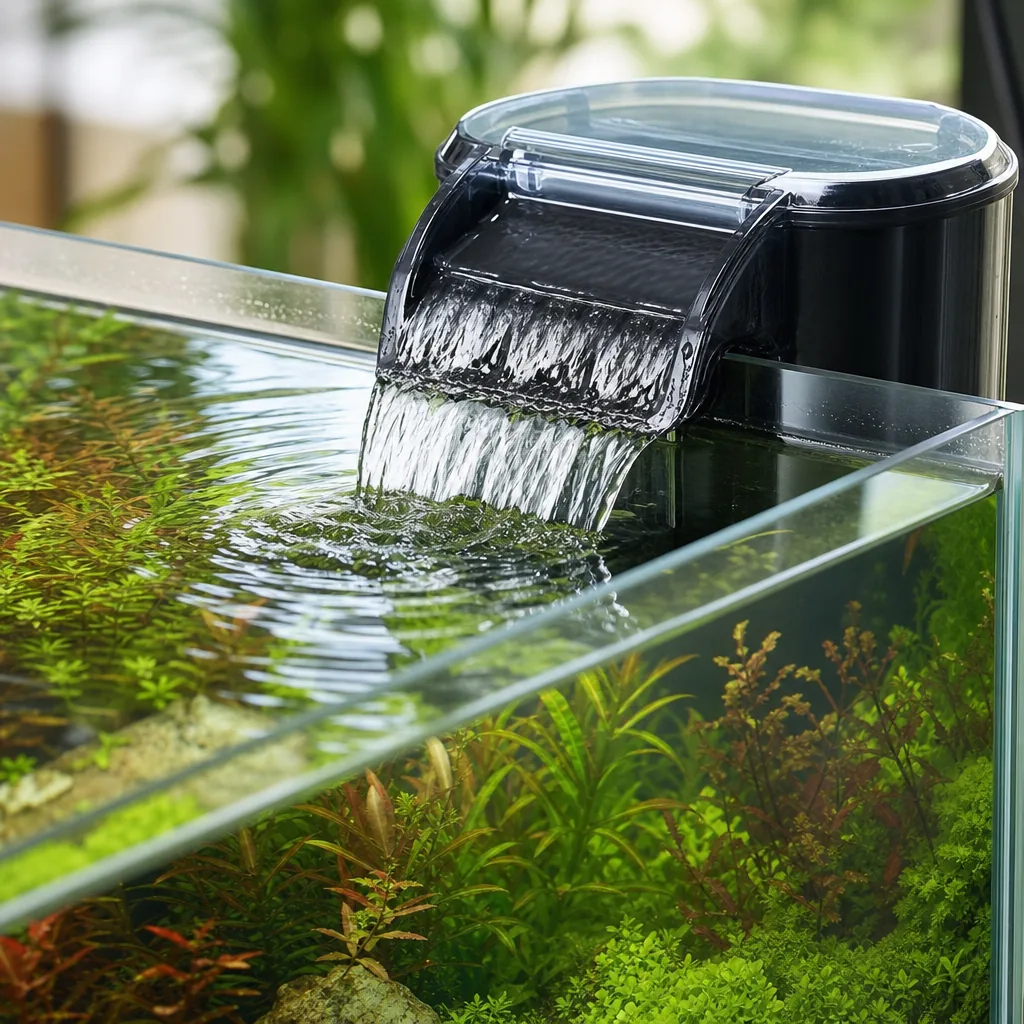
The default starter filter for good reason. It hangs off the rim, draws water up through media, and spills it back in.
- Pros: Cheap, easy to access, simple to clean, great surface agitation for oxygen.
- Cons: Limited media space, can be a touch noisy if the water level drops, takes up rim space.
- Best for: Beginners and tanks up to roughly 55 gallons with moderate stocking.
Canister
A sealed external unit that pushes water through large trays of media before returning it via spray bar or nozzle.
- Pros: Huge customizable media capacity, quiet, hidden in the cabinet, excellent for heavily stocked or planted tanks.
- Cons: Pricier, more parts to maintain, and a messier (if infrequent) cleaning job.
- Best for: Tanks 40 gallons and up, big messy fish, or anyone who wants top-tier filtration with minimal visible hardware.
Sponge
An air-pump-driven sponge that doubles as mechanical and biological media.
- Pros: Dirt-cheap, gentle flow, no risk of sucking up fry or shrimp, fantastic biological surface area.
- Cons: No chemical filtration, not much for very large or messy tanks, the air pump adds a hum.
- Best for: Shrimp tanks, fry grow-outs, hospital/quarantine tanks, and nano setups.
Internal
A compact powered unit that sits fully submerged inside the tank.
- Pros: Inexpensive, self-contained, good for tanks without rim clearance.
- Cons: Takes up in-tank real estate, limited media, you get wet to service it.
- Best for: Small tanks, turtles, or as supplemental flow and filtration.
Sump
A second tank, usually hidden in the stand, where water is filtered and equipment is stashed before being pumped back up.
- Pros: Massive capacity, hides heaters and other gear, adds water volume for stability, endlessly customizable.
- Cons: The most complex and expensive option, needs a drilled tank or overflow box, more plumbing to go wrong.
- Best for: Large freshwater systems and most serious reef tanks. If you’re heading toward saltwater, our saltwater section covers sump-based reef builds in detail.
How to Size a Filter: Turnover and GPH
Filter strength is rated in GPH (gallons per hour), the volume of water it can move. The rule of thumb is “turnover,” meaning how many times your full tank volume passes through the filter each hour.
- 4x turnover is a reasonable minimum for lightly stocked tanks.
- 6x to 10x turnover is the sweet spot for most community tanks and anything moderately stocked.
- 10x and up suits messy fish (think cichlids or goldfish) or heavily planted aquascapes.
So a 40-gallon tank aiming for 8x turnover wants a filter rated around 320 GPH. One important caveat: treat the box rating as optimistic. Manufacturers test with no media and no head height. Add media, hose, and the climb back up to the tank, and real-world flow drops noticeably. When in doubt, size up rather than down, then dial back flow if it’s too strong for your fish.
Media Basics: Loading Your Filter Right
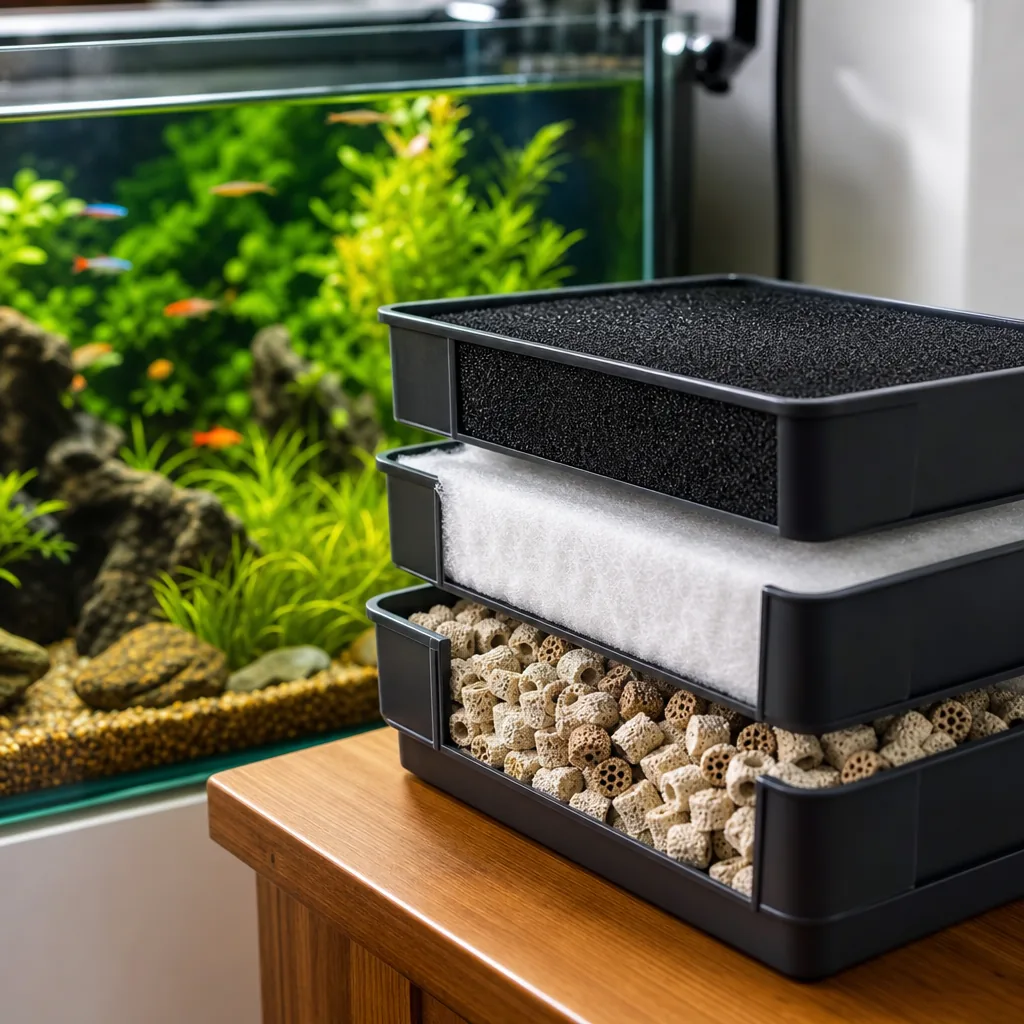
The order media sits in matters because water should hit the coarsest mechanical stage first and the finest last.
- First: Coarse sponge or foam to catch big debris.
- Middle: Biological media (ceramic rings, porous blocks) where bacteria live.
- Last: Fine floss to polish, and optional chemical media like carbon.
The single most important habit: never replace all your media at once. If you swap a worn sponge, keep the old biological media in place so the bacterial colony stays intact. Stagger changes by weeks. You’ll find filter media, sponges, and replacement cartridges in our gear shop alongside the filters themselves.
Maintenance That Keeps Fish Healthy
A filter is only as good as its upkeep, and the most common beginner mistake is cleaning it the wrong way.
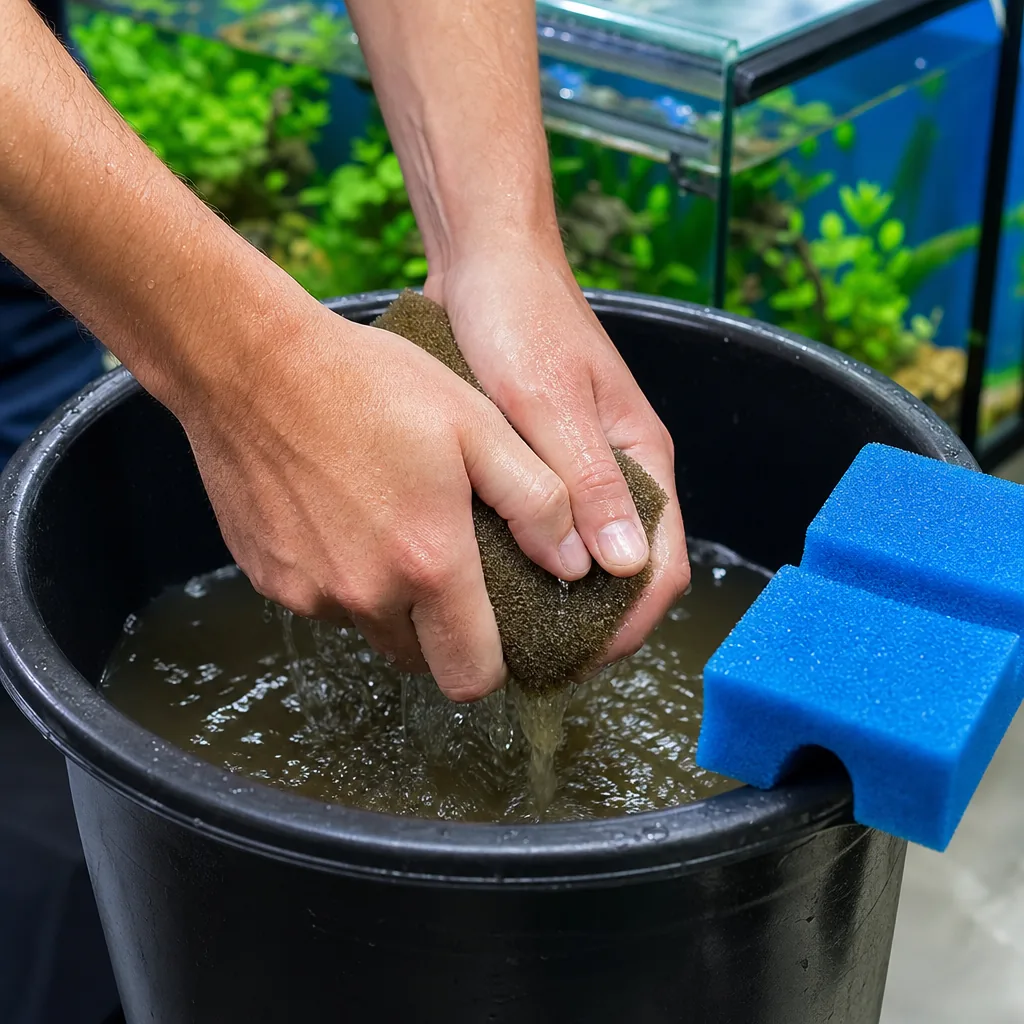
- Rinse mechanical media in old tank water, never under the tap. Chlorine and chloramine in tap water kill beneficial bacteria.
- Clean on a schedule, not on a panic. Most tanks do well with a mechanical rinse every 2 to 4 weeks. If flow visibly weakens sooner, clean sooner.
- Leave biological media alone beyond a gentle swish if it’s truly gunked.
- Check the impeller a few times a year. A buildup of slime or debris there is the usual culprit behind sudden flow loss and rattling noise.
- Pair filtration with water changes. A filter converts ammonia to nitrate but doesn’t remove nitrate; regular water changes do. A reliable test kit tells you whether your filter and change schedule are actually keeping up.
Bottom Line
Pick a filter by matching the type to your tank size and stocking, then size it for 6x to 10x turnover and assume the real flow will be lower than the box claims. Load your media coarse-to-fine, protect your biological bacteria by never deep-cleaning everything at once, and rinse in old tank water. Get those fundamentals right and the filter quietly does its job for years. For more setup walkthroughs, browse the AquaticRig blog.
Disclosure: AquaticRig participates in affiliate programs, including the Amazon Associates Program. As an Amazon Associate we earn from qualifying purchases. Some links on this page are affiliate links, which means we may earn a commission at no extra cost to you if you make a purchase. This never affects our recommendations. See our full affiliate disclosure for details.
Frequently Asked Questions
What size filter do I need for my aquarium?
Look for a filter rated to turn over roughly 4-6 times your tank volume per hour. When in doubt, slightly oversizing is better than undersizing.
What are the main types of aquarium filters?
The common types are hang-on-back (HOB), canister, sponge, and internal filters. HOB and sponge suit most beginners, while canisters excel on larger or planted tanks.
Is a canister or HOB filter better?
HOB filters are cheaper and easy to maintain; canisters hold more media and run quieter, which is ideal for bigger or heavily stocked tanks. Both work well when sized correctly.
How often should I clean my filter?
Rinse the media every 3-4 weeks in old tank water, never tap water, which kills beneficial bacteria. Replace mechanical pads only when they are falling apart.
Do sponge filters work for bigger tanks?
They are best for small tanks, fry, and shrimp, but you can run multiple sponge filters or pair one with another filter type on larger setups.