
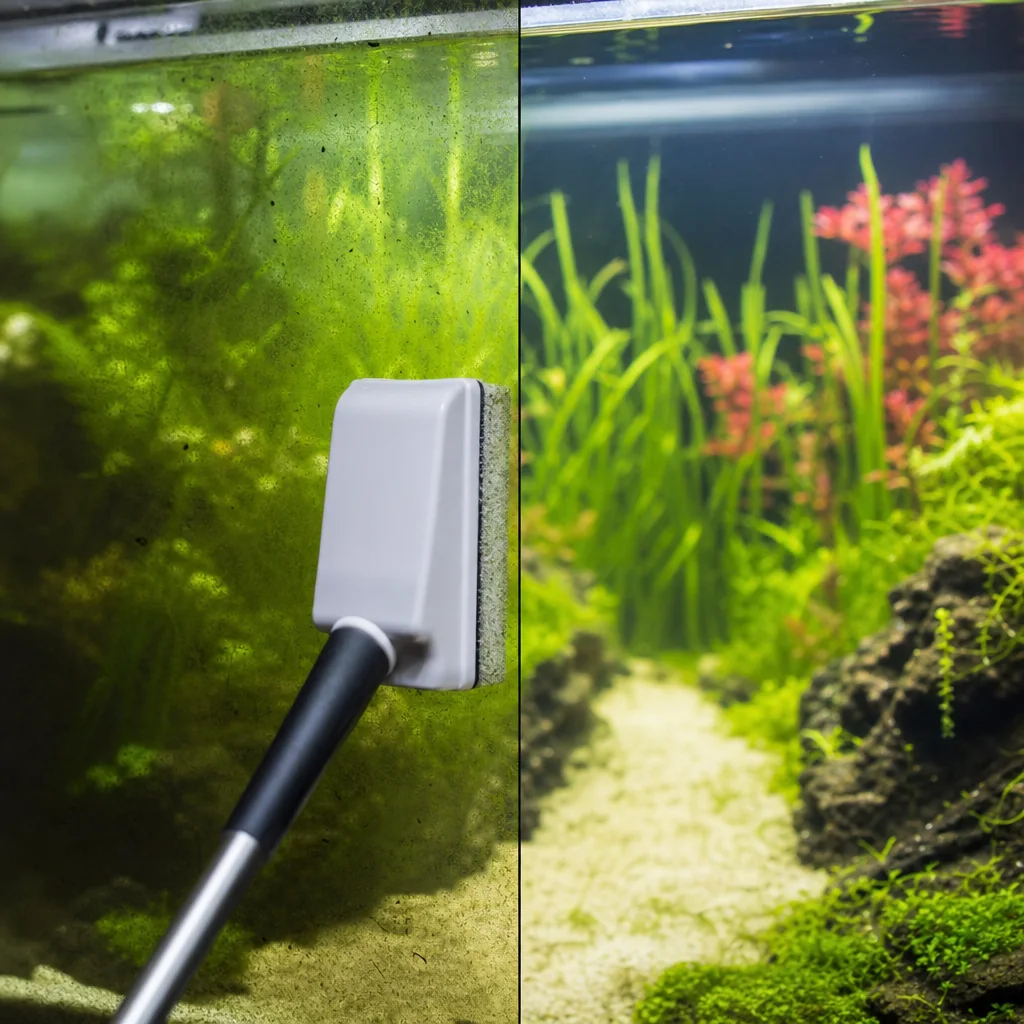
Every aquarium gets algae. It’s not a sign you’re a bad fishkeeper, it’s a sign your tank is alive. The goal isn’t a sterile, algae-free glass box, it’s a balance where algae stays as a minor nuisance instead of taking over. Here’s why it shows up and how to deal with each type.
Why Algae Appears
Algae needs two things to bloom: light and nutrients. When either is in excess relative to what your plants and livestock consume, algae fills the gap. The usual culprits are:
- Too much light — long photoperiods, a fixture that’s too strong, or direct sunlight hitting the tank.
- Excess nutrients — overfeeding, overstocking, infrequent water changes, and decaying plant matter all dump nitrate and phosphate into the water.
- An immature tank — new setups haven’t built up the bacteria and plant mass to compete with algae yet, so the first month or two is often the worst.
Keep that light-plus-nutrients equation in mind, because every fix below comes back to it.
The Common Types and How to Beat Them
Brown Diatoms
Soft brown dust coating glass, substrate, and decorations in a brand-new tank. This is the classic “new tank” algae, fueled by silicates and an unsettled system. The good news: it usually goes away on its own as the tank matures.
Fix: Wipe the glass, gentle siphon during water changes, and wait it out. A few nerite snails or otocinclus catfish will graze it happily. Don’t overreact, this one is temporary.
Green Spot Algae
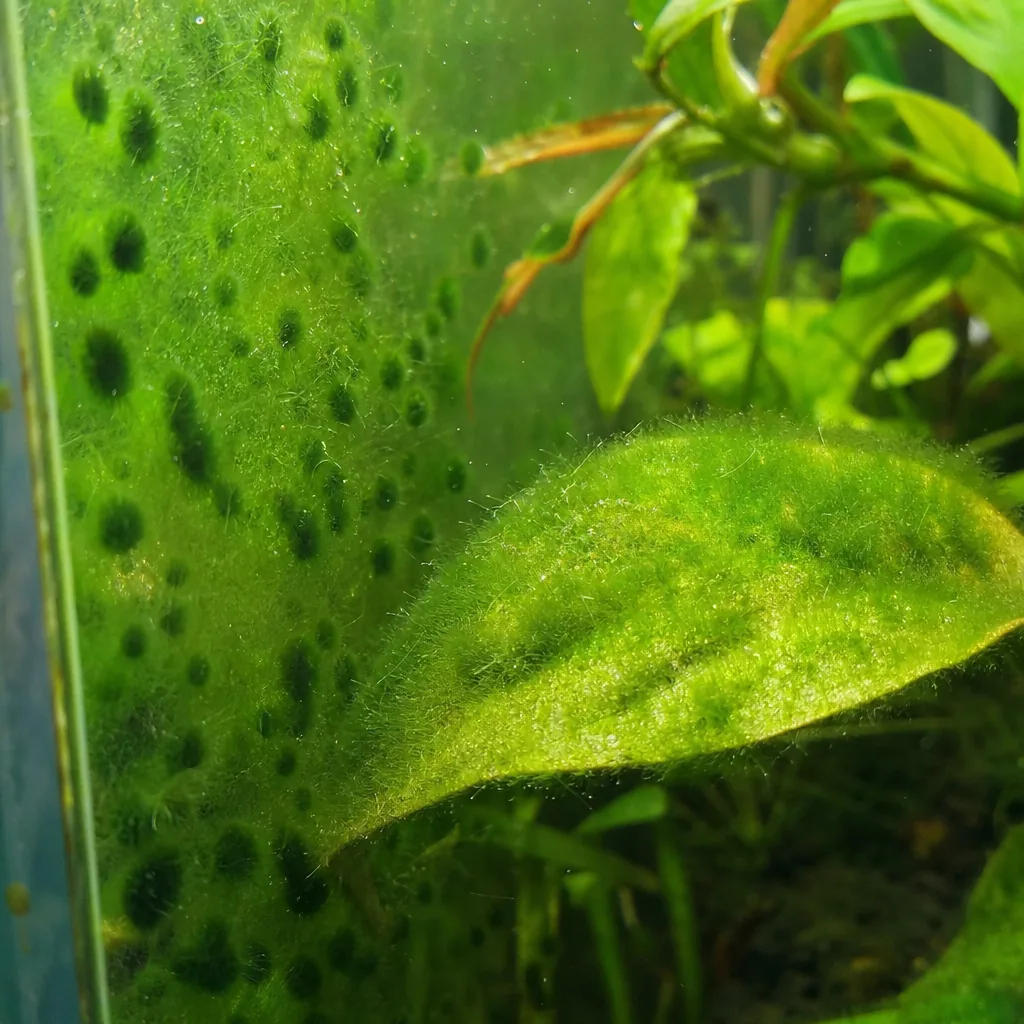
Hard little green dots, most often on the glass and on slow-growing leaves like anubias. It’s stubborn and scrapes off rather than wipes.
Fix: A razor blade or plastic scraper for glass, and a magnet cleaner for routine upkeep. Green spot is often linked to low phosphate in planted tanks, so it can paradoxically ease up with a balanced fertilizer dose. Reducing light intensity helps too.
Green Water
The whole tank turns pea-soup green because free-floating algae has bloomed in the water column. It’s frustrating because you can’t wipe it off, it’s suspended everywhere.
Fix: Free-floating algae responds well to a UV sterilizer, which clears the water in a few days by killing the cells as they pass through. A 3-day total blackout (cover the tank, lights off) combined with reduced feeding also starves it out. Then address the root cause: less light and fewer nutrients.
Hair / String Algae
Long green threads that drape off plants, hardscape, and equipment. Usually a sign of too much light and excess nutrients together, common in tanks pushing high light without enough plant growth to keep up.
Fix: Manually twirl it out with a toothbrush or your fingers, then cut the photoperiod back and tighten up on feeding and water changes. Amano shrimp are one of the few cleanup crew members that genuinely eat it. Fast-growing plants like hornwort will outcompete it for nutrients.
Black Beard Algae (BBA)
Dark, fuzzy tufts that look like a tiny black beard clinging to leaf edges, driftwood, and equipment. It’s the one most hobbyists dread because it’s tough and hand-removal is hard.
Fix: BBA is often tied to unstable CO2 or carbon levels and high light. Spot-treating affected spots with a liquid carbon product or diluted hydrogen peroxide (lights off, applied with a syringe to the algae directly) will turn it red and kill it. Improve flow, lower light, and stay consistent with maintenance. Siamese algae eaters are among the few fish that actually eat established BBA.
Cleanup Crew Options
Animals won’t fix an underlying imbalance, but the right grazers keep things in check and reduce how often you scrub. Match the worker to the job:
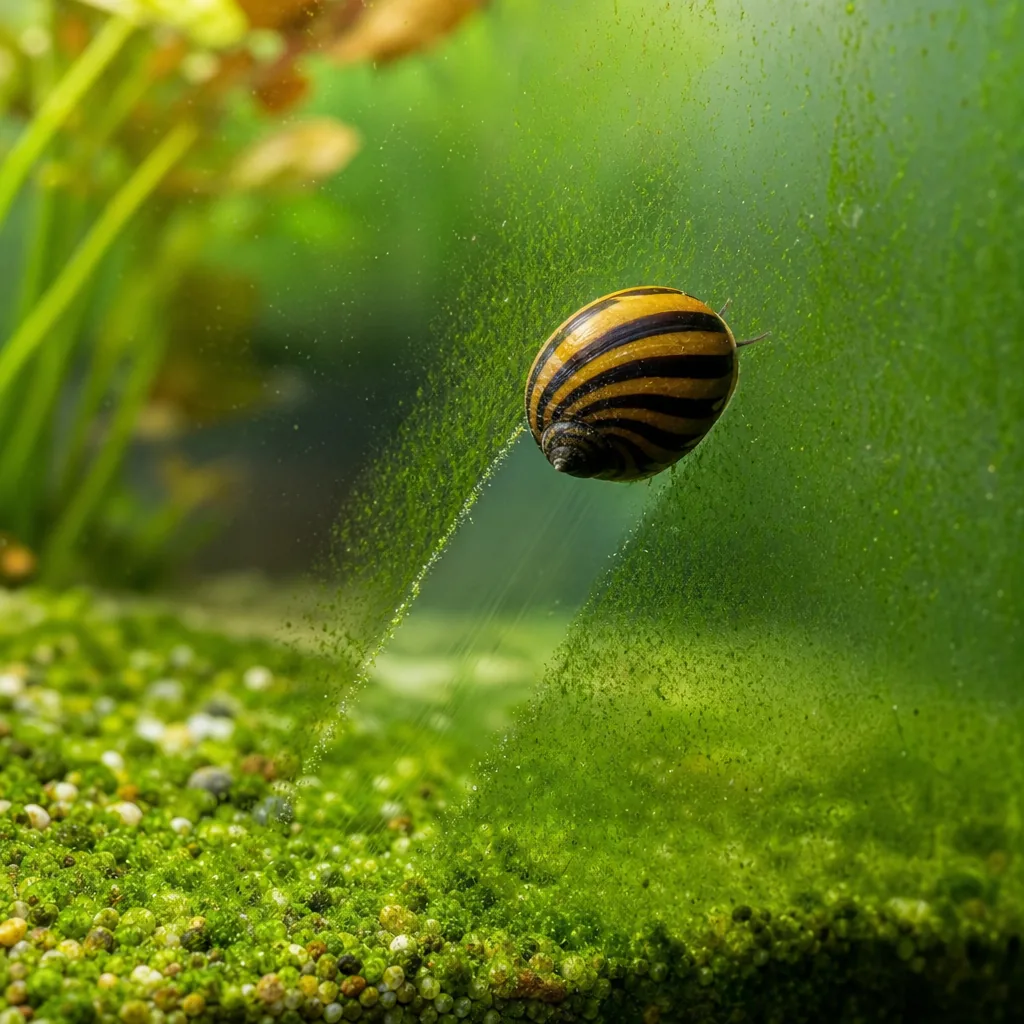
- Nerite snails — outstanding on green spot and diatoms, and they won’t breed and overrun the tank in freshwater.
- Amano shrimp — the best all-around algae shrimp, especially on hair algae and soft growth.
- Otocinclus — peaceful little catfish that vacuum diatoms and soft film off plants and glass.
- Siamese algae eaters — one of the few that tackle black beard algae as it grows.
- Bristlenose plecos — solid grazers that stay smaller than common plecos.
Make sure your tank is mature and well-fed before adding these, since a brand-new tank may not have enough algae to sustain them. A simple magnet cleaner and an algae scraper are still worth keeping on hand for the glass; you’ll find both in our shop.
A Balanced-Tank Prevention Plan
Reactive scrubbing is a losing game. Prevention is mostly about not feeding the algae in the first place.
- Put your light on a timer. Start at 7 to 8 hours a day. More hours and more intensity favor algae, not your enjoyment.
- Block direct sunlight. A tank by a sunny window is an algae factory. Move it or shade it.
- Feed less than you think. Only what fish finish in a couple of minutes, and skip a day now and then. Uneaten food is pure algae fuel.
- Stay on water changes. Regular partial changes export the nitrate and phosphate algae feeds on. Consistency beats occasional big cleanups.
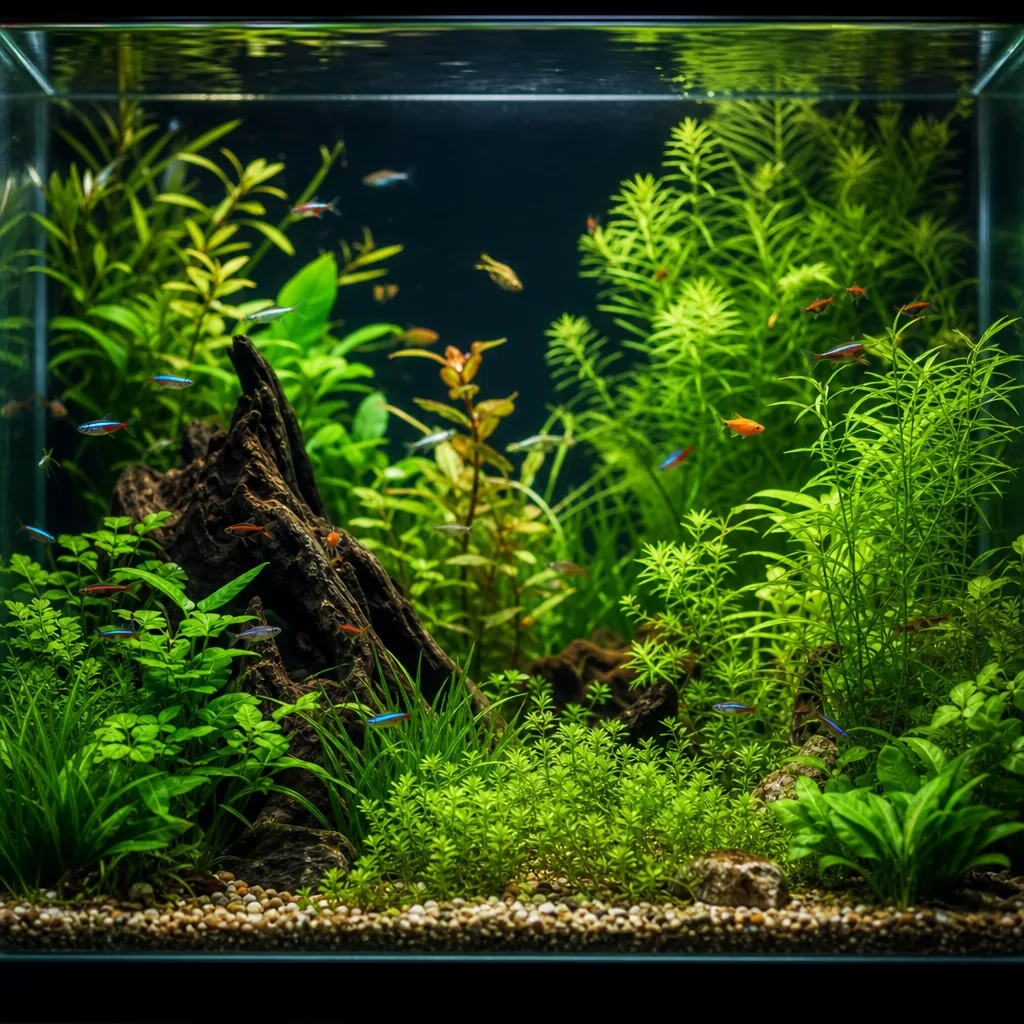
- Grow plants. A well-planted tank is the single best algae control because the plants outcompete it for the same nutrients and light. Fast growers help most early on.
- Don’t overstock. Fewer fish means less waste means fewer nutrients for algae.
Get those six habits right and algae fades into the background. New planted-tank keepers should also read our guide on beginner-friendly plants over on the blog, and pond keepers fighting string algae and green water will find dedicated advice in our pond section.
Bottom Line
Algae is a symptom, not the disease. Identify the type, do a quick manual cleanup, add the right grazers, and then fix the real cause by cutting light and nutrients. A planted, lightly-stocked, well-maintained tank rarely has serious problems. For more setup and maintenance help, browse our freshwater guides or pick up scrapers and cleanup gear in the shop.
Frequently Asked Questions
Why does my aquarium keep getting algae?
Algae thrives on a combination of excess light and excess nutrients from overfeeding or infrequent water changes. Reducing both is the core fix.
How do I get rid of green algae?
Cut the lighting period to 6-8 hours, do regular water changes, avoid overfeeding, and wipe the glass. Algae eaters like nerite snails help too.
Is some algae normal in a tank?
Yes. A little algae is natural and even healthy. The goal is control, not total elimination, and a balanced, lightly stocked tank keeps it in check.
What causes brown algae in a new tank?
Brown diatom algae is common in tanks under a few months old as nutrients stabilize. It usually fades on its own, and nerite snails or otocinclus speed it up.
Will more water changes reduce algae?
Often yes. Water changes export the nutrients algae feeds on. Pair them with controlled lighting and careful feeding for the best results.