
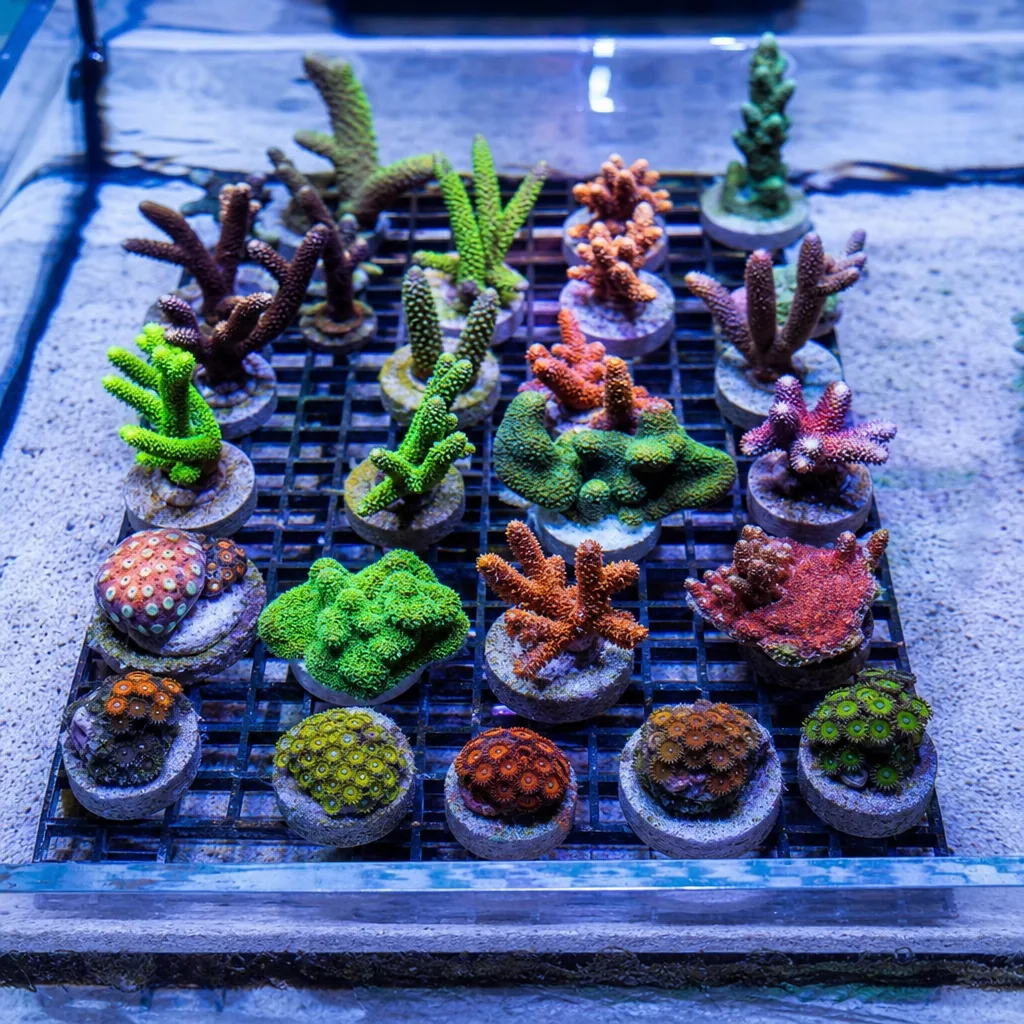
The first time you take a cutter to a coral you paid good money for, your hands will shake. Mine did. But fragging is one of the most rewarding skills in the hobby: it lets you shape colonies, trade with other reefers, and rescue a coral that is getting shaded or crowded. Done cleanly, the parent colony heals over and you get a new coral for free. Done carelessly, you invite infection. The difference is almost entirely about preparation and cleanliness.
Why Frag in the First Place?
People frag for practical and social reasons. A fast-growing colony can shade its neighbors or outgrow its spot; cutting it back keeps your aquascape balanced. Fragging also spreads your risk, so if disease or a pest hits, you may still have a piece somewhere else. And trading frags is how most of us built our collections without going broke. Whatever the reason, the coral does not care why you are cutting it, only that you do it cleanly.
Gather Your Tools First
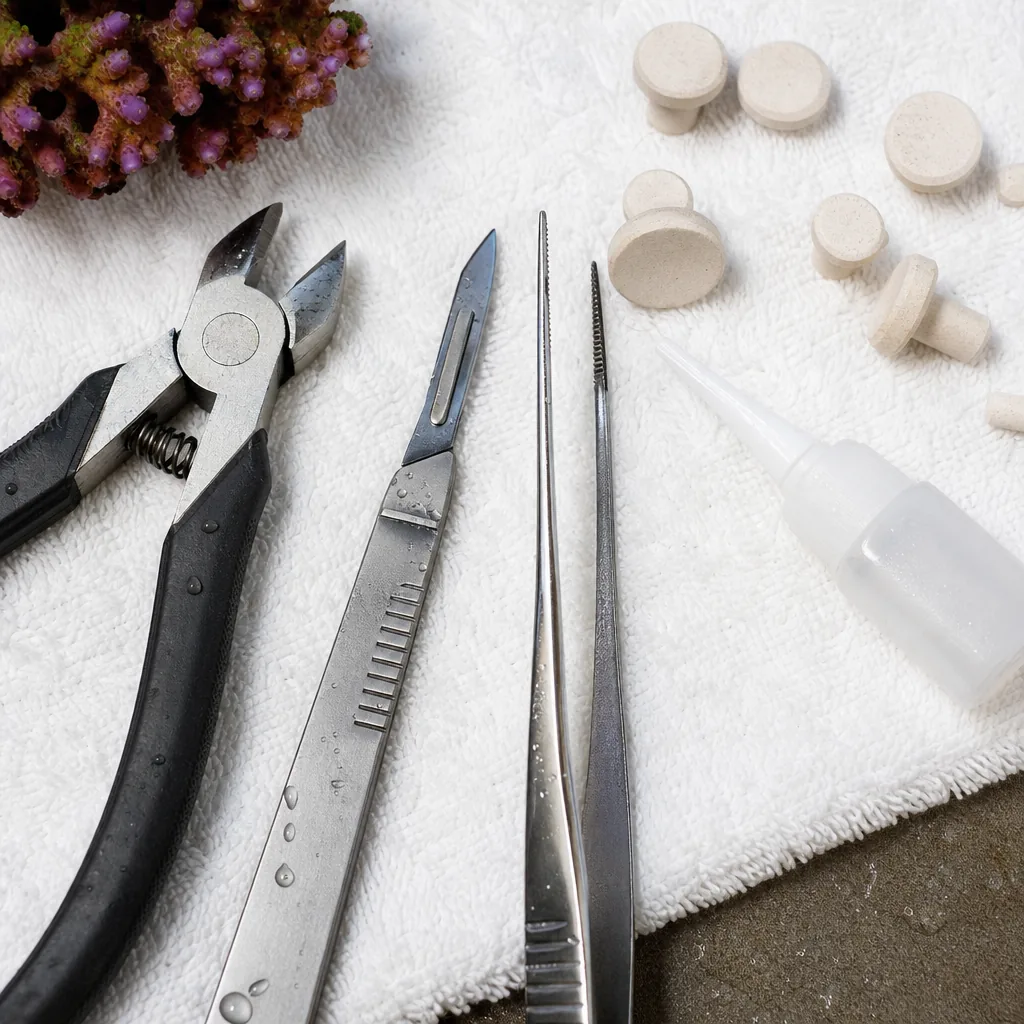
Set everything up before you remove a single coral from the water. Scrambling for a tool while a colony sits out drying is how accidents happen.
- Coral cutters or bone cutters for branching corals, a band saw or tile saw for large stony bases.
- A sharp razor blade or scalpel for soft corals and encrusting types.
- Frag plugs or small tiles for mounting.
- Cyanoacrylate (super glue) gel, coral-safe epoxy, or both.
- A separate container of tank water for the freshly cut frags.
- Nitrile gloves and eye protection – some corals, especially zoanthids, carry toxins.
You can find fragging kits and plugs in the shop, but any clean, sharp cutter beats a dull one.
A Safety Word on Zoanthids
Zoanthids and palythoa can contain palytoxin, which is genuinely dangerous. Never frag them near heat, never scrape a dry colony that can aerosolize, and always wear gloves and eye protection. If you have any open cuts, cover them. This is not scaremongering; it is the one coral job where the safety gear is non-negotiable.
How to Cut Different Coral Types
Soft corals (leathers, mushrooms)
Soft corals are the friendliest place to start. With a clean razor, slice a lobe or a section from the parent. Many soft corals will simply detach a piece if you nick the base and let it go. Mushrooms can be cut across the disc, and each half usually regrows. Let cuttings sit in low flow until they attach.
LPS (large polyp stony)
LPS with clear branching skeletons, like some Euphyllia, can be cut between heads with bone cutters. Aim to cut the skeleton, not the flesh, and give each frag at least one full head. Fleshy LPS on a solid plate are harder and often better left to experienced fraggers with a saw.
SPS (small polyp stony)
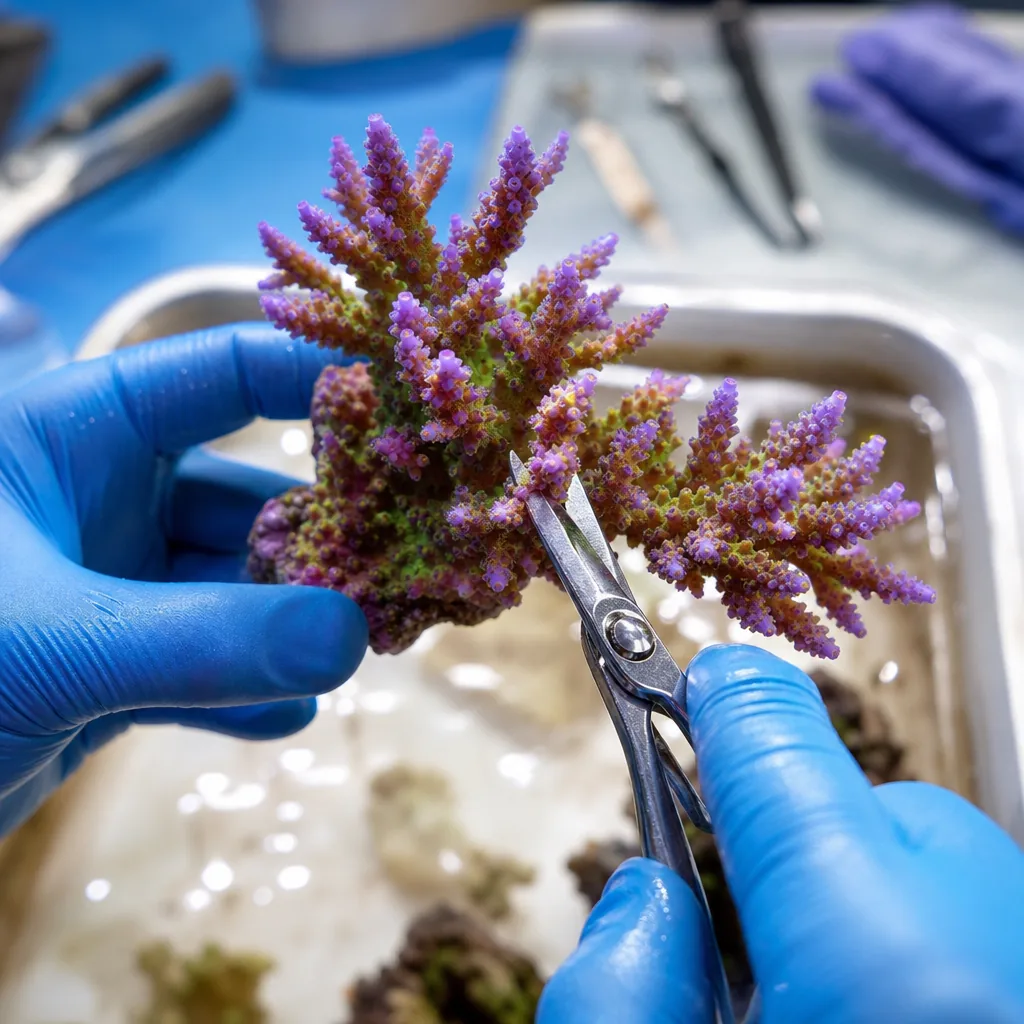
SPS such as Acropora frag easily: snip a branch tip an inch or two long with coral cutters. These are forgiving to cut and quick to heal, which is why they dominate the frag-trading world.
Mounting and Recovery
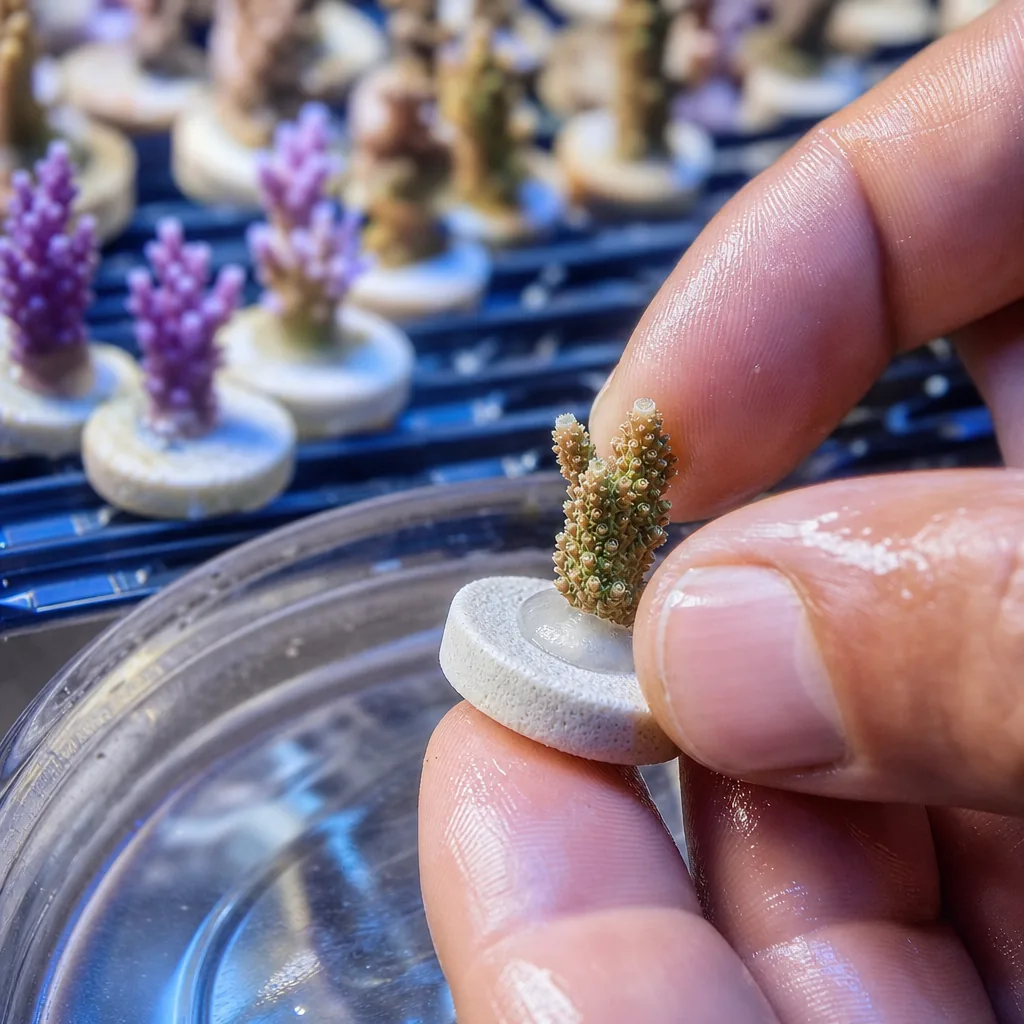
Dry the base of the frag plug with a paper towel, apply a dab of super glue gel, and press the coral’s base or skeleton onto it. For soft corals that will not glue well, you can use a rubber band or a small crevice to hold them until they attach naturally. Work quickly but do not rush; a frag can be out of water for a short time without harm.
After mounting, place frags in an area of lower light and moderate flow for a week or two while they recover, then move them toward their permanent spot gradually. Expect some tissue recession at the cut for a few days; that is normal healing, not death.
Aftercare That Prevents Infection
Cutting a coral is a wound, and clean water speeds healing. Keep your parameters stable, avoid big swings, and do not overfeed in the days after fragging. Some reefers add a coral dip to freshly cut frags to reduce infection and knock off pests before the frag goes back in. Watch both the parent and the frag for a week; healthy corals seal over cleanly. For the water-quality side of recovery, our saltwater care guides and other reef how-tos cover keeping parameters steady.
Start with a hardy soft coral or an SPS branch, keep your tools clean, and you will be surprised how forgiving corals are. Before long you will be handing frags to friends instead of buying them.
Fragging tools: Coral RX dip, curved stainless scissors for soft corals, and long tweezers to place frags.
Frequently Asked Questions
Will fragging hurt the parent colony?
A clean cut is a wound that heals over within days to a week in a healthy, stable tank. Careless cuts or dirty tools are what cause problems, not the act of fragging itself.
What is the easiest coral to frag for a beginner?
Soft corals like leathers and mushrooms, and SPS branch tips such as Acropora, are the most forgiving. Start there before attempting fleshy LPS.
Do I need gloves to frag corals?
Yes, especially for zoanthids and palythoa, which can contain dangerous palytoxin. Wear nitrile gloves and eye protection and never frag them near heat.
What glue should I use to mount frags?
Cyanoacrylate super glue gel works for most hard corals and skeletons. Coral-safe epoxy helps on larger or awkward bases, and some reefers use both together.
How long until a frag recovers after cutting?
Expect minor tissue recession at the cut for a few days, then healing over one to two weeks. Keep it in lower light and moderate flow while it settles.