
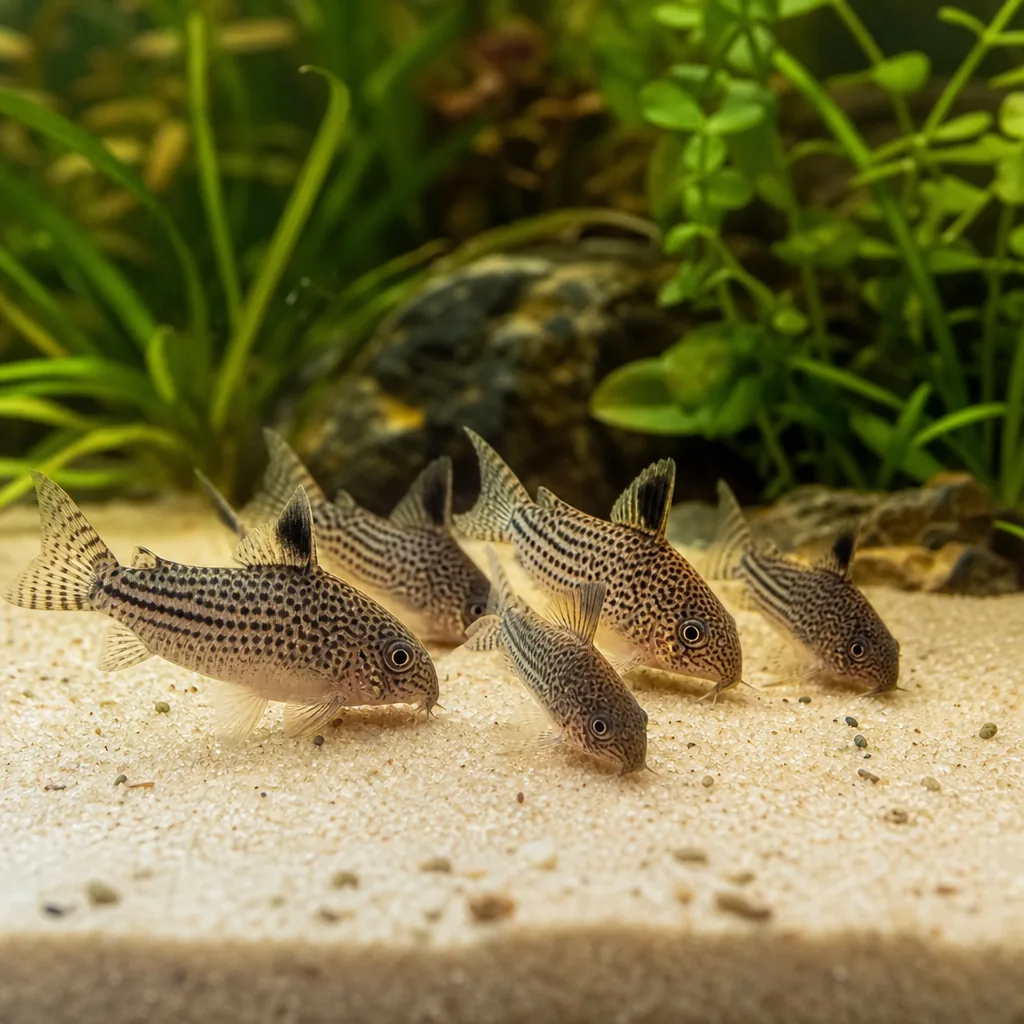
Corydoras catfish, cories to most of us, are among the most likable fish in the hobby. They are peaceful, endlessly busy, and they add real personality to the bottom of a tank. But they are frequently kept wrong, usually in groups that are too small or on substrate that slowly wears them down. Here is how to keep them thriving.
Why Cories Are Such Great Bottom Dwellers
Cories spend their days snuffling along the substrate looking for food, and watching a group work the bottom of the tank together is genuinely entertaining. They are peaceful to a fault, compatible with most community fish, and they help pick up leftover food, though it is a myth that they will survive on scraps alone.
They also have a charming habit of darting to the surface for a quick gulp of air. This is normal. Cories can breathe atmospheric air through their gut, and an occasional surface dash is nothing to worry about. Frequent, frantic surfacing, however, can signal poor water quality.
How Many Corydoras Do You Need?
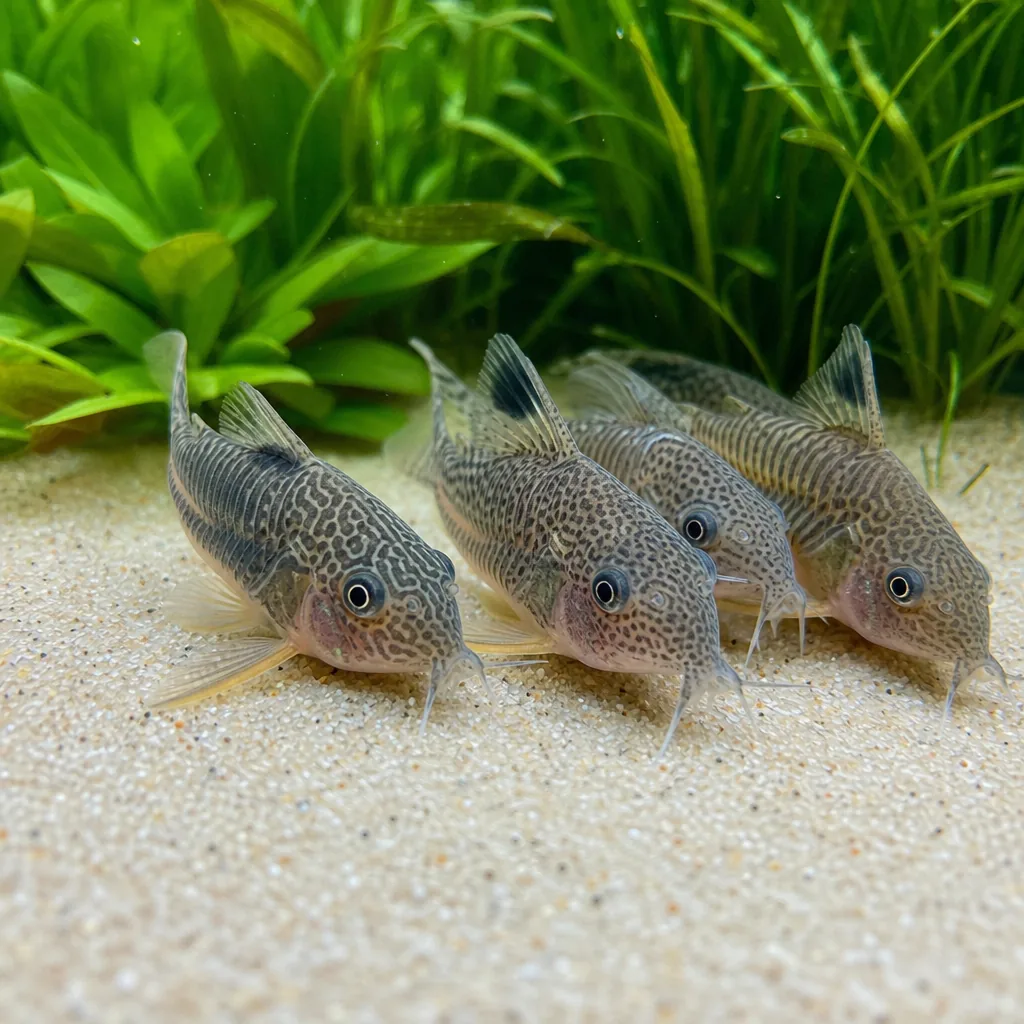
This is the single most important thing to get right. Cories are shoaling fish, which means they need the company of their own kind to feel secure. Kept alone or in pairs, they become shy, stressed, and often stop displaying their natural behavior.
Keep a group of at least six of the same species. More is better. A proper shoal is not just about welfare, it is what makes them fun to watch, because that is when they group up and forage together. Mixing several different cory species in the same tank works, but each species shoals most naturally with its own kind, so try to keep meaningful numbers of each.
Substrate: The Detail That Makes or Breaks Their Health
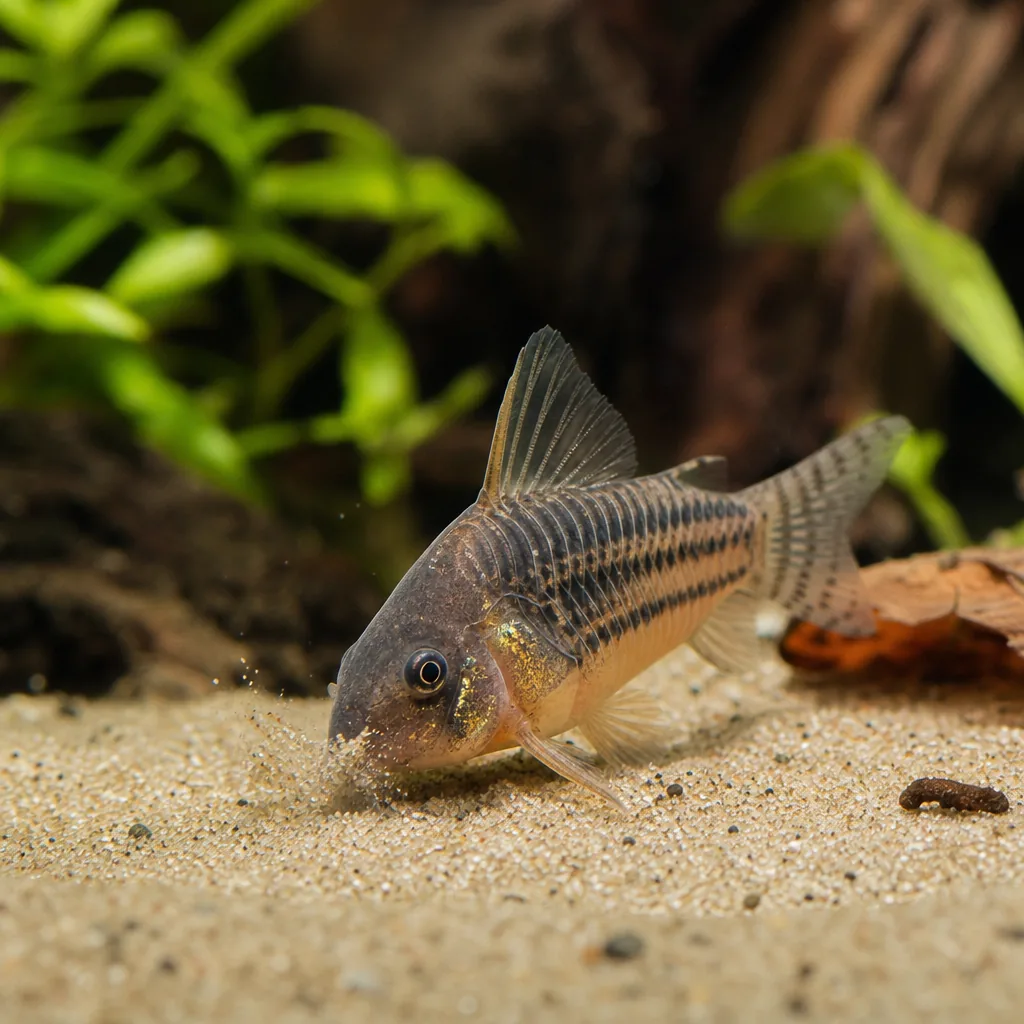
Cories constantly root through the substrate with their delicate barbels, the whisker-like sensory organs around their mouths. Sharp gravel wears those barbels down and can lead to infection and eroded barbels, which hampers their ability to find food.
Use smooth substrate. The best choices are:
- Fine, rounded sand, which they can sift naturally.
- Smooth, small-grained gravel with no sharp edges.
Just as important is keeping that substrate clean. Detritus trapped in the substrate is a common cause of barbel erosion and bacterial issues, so regular gentle vacuuming matters for cories specifically.
Tank Setup and Water
Cories are small but active, so give them floor space rather than height. A longer tank suits them better than a tall one. Provide some cover with plants, driftwood, or caves where they can rest, since they appreciate shaded spots during the day.
They prefer stable, clean water and are sensitive to poor conditions, so a well-maintained filter and consistent water changes are non-negotiable. Most common cory species do well at typical community temperatures, though a few prefer cooler water, so check the needs of your specific species before buying.
Feeding Corydoras Properly
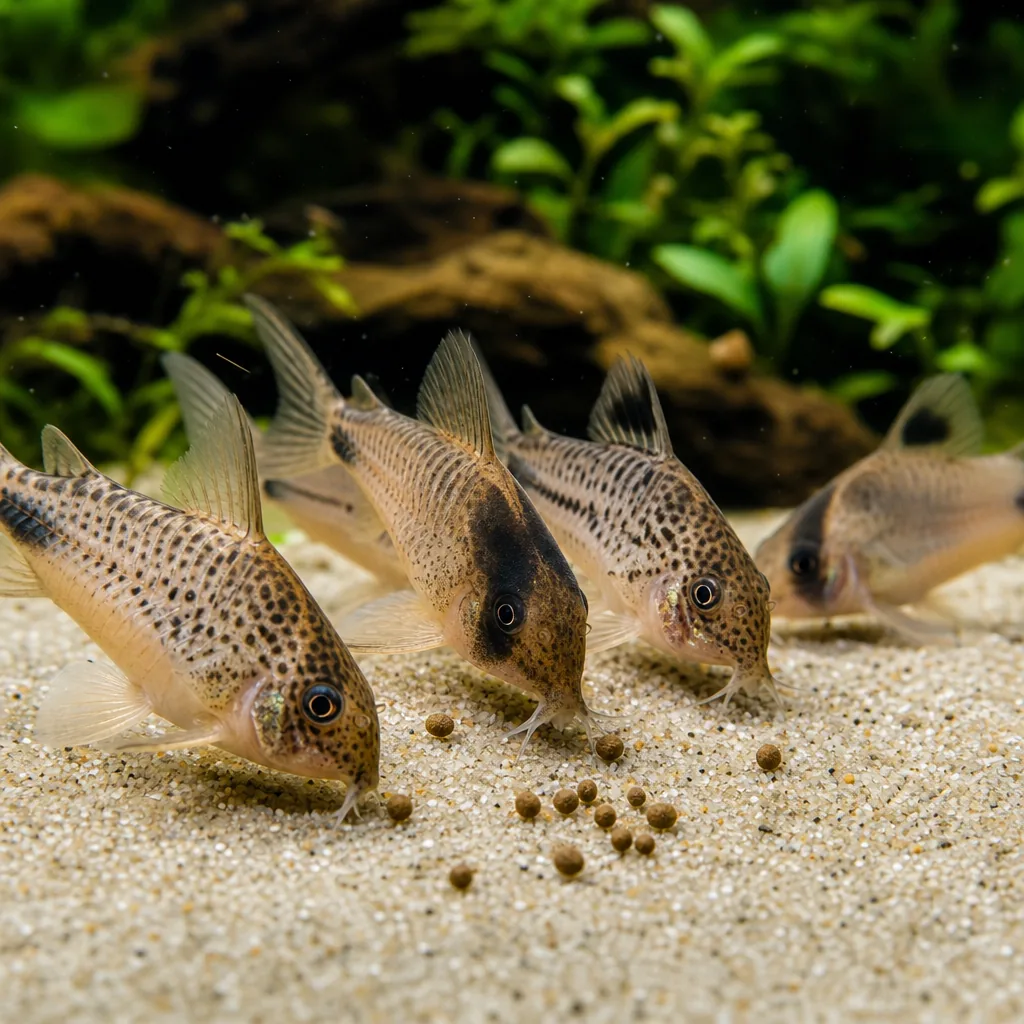
Do not rely on leftovers. Cories need their own food that actually reaches the bottom. Sinking pellets or wafers are the staple, supplemented with frozen or live foods like bloodworms and brine shrimp as treats.
Feed after lights out or in dim conditions if faster tankmates are stealing everything before it sinks. Make sure each cory is actually getting fed, because a slowly starving bottom dweller is easy to overlook when the mid-water fish look fat and happy.
Common Mistakes to Avoid
- Keeping too few, which leaves them stressed and hidden.
- Sharp gravel that erodes their barbels over time.
- Assuming they eat scraps and never feeding them directly.
- Dirty substrate that leads to barbel and skin infections.
Avoid those four and cories are remarkably easy and rewarding to keep.
The Bottom Line
Corydoras are the perfect bottom dwellers when you honor two rules: keep them in a real group of six or more, and give them smooth, clean substrate to root through. Add proper sinking food and stable water, and you will have a busy, peaceful crew that brings the lower third of your tank to life.
For smooth sand, sinking foods, and gentle filtration, take a look at our shop. You can find more community stocking and compatibility guidance in our freshwater section, and additional care guides across the blog.
Frequently Asked Questions
How many corydoras should I keep together?
Keep at least six of the same species. Cories are shoaling fish and become stressed and hidden in smaller groups. More is better, and a proper shoal is when they display their natural foraging behavior.
Can corydoras live on gravel?
They can live on smooth, rounded gravel, but sharp gravel wears down their delicate barbels and can cause infections. Fine sand or smooth small-grained gravel is much safer for them.
Why does my cory keep darting to the surface?
Occasional trips to gulp air are normal, since cories can breathe atmospheric air through their gut. Frequent, frantic surfacing can indicate poor water quality, so test your water if it becomes constant.
Do corydoras clean the tank?
They help by foraging for leftover food, but they do not clean the tank on their own and should never rely only on scraps. Feed them dedicated sinking pellets or wafers.
Can I mix different corydoras species?
Yes, different cory species coexist peacefully. Each species shoals most naturally with its own kind, so keep meaningful numbers of each species rather than one of several types.