
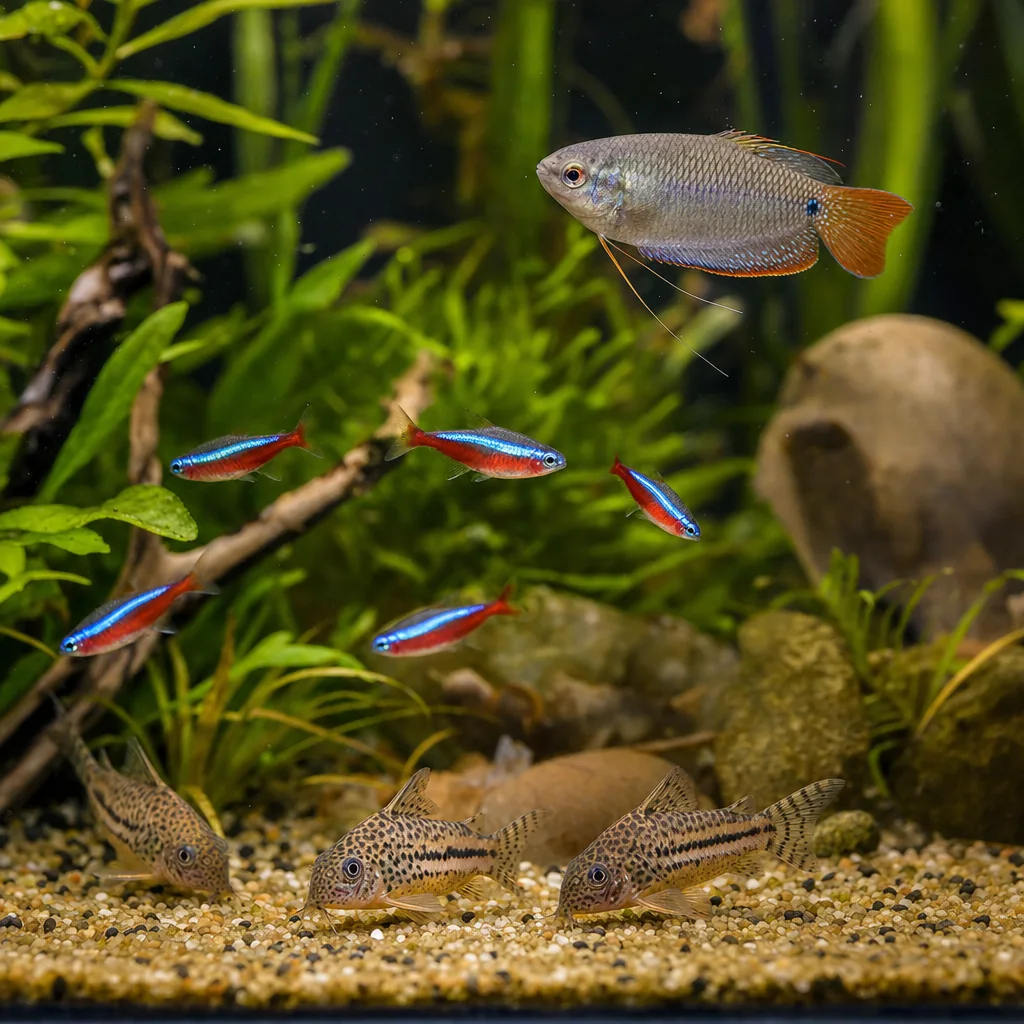
The single fastest way to ruin a new tank is to walk into a fish store, pick whatever looks pretty, and dump it all together. A community aquarium isn’t just a collection of fish that tolerate the same water — it’s a deliberate mix of temperaments, swimming zones, and sizes that lets every animal feel secure. Get it right and the tank practically runs itself. Get it wrong and you’ll be fishing out nipped fins and stressed-out victims for months.
This guide walks through how to actually plan a peaceful community tank: what to consider before buying, the species that reliably play well together, and the combinations that look fine on paper but blow up in practice.
What “Community” Really Means
A community fish is one that won’t harass, eat, or out-compete its neighbors under normal conditions. That’s it. It has nothing to do with how colorful the fish is or how cheap it is at the store. Three things drive compatibility more than anything else:
- Temperament — peaceful, semi-aggressive, or aggressive. Mixing across these lines is where most failures start.
- Adult size — if a fish can fit another fish in its mouth, eventually it will try. Plan around the size animals will reach, not the size they are in the bag.
- Water parameters — temperature, pH, and hardness ranges need to overlap. A cool-water fish and a warm-water fish will never both thrive in the same heater setting.
If you’re still deciding on equipment, our freshwater setup pages cover the filtration and heating decisions that make a stable community possible in the first place.
Stock by Swimming Zone
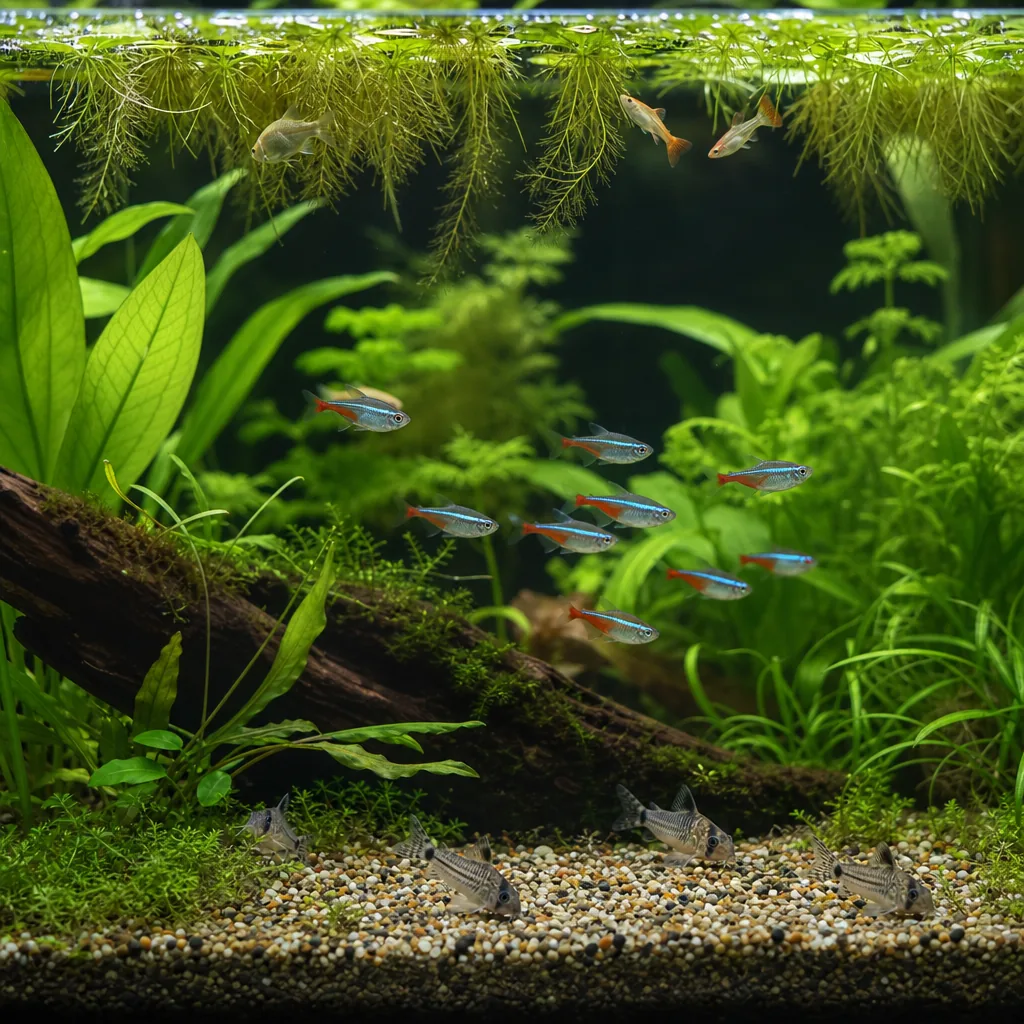
One trick experienced hobbyists use is to fill the tank vertically, not just by headcount. Fish that occupy different levels rarely compete, and the tank looks busier and more natural.
Top dwellers
Hatchetfish and many livebearers spend their time near the surface. Pair these with a tight-fitting lid — surface fish are notorious jumpers.
Mid-water schoolers
Tetras, rasboras, and danios make up the visual heart of most community tanks. Keep them in groups of six or more; a lone schooling fish is a stressed, washed-out shadow of what it should be.
Bottom feeders
Corydoras catfish, kuhli loaches, and bristlenose plecos work the substrate and rarely bother anyone. Cories especially are happiest in groups, so plan for a small squad rather than a single fish.
Reliable Peaceful Combinations
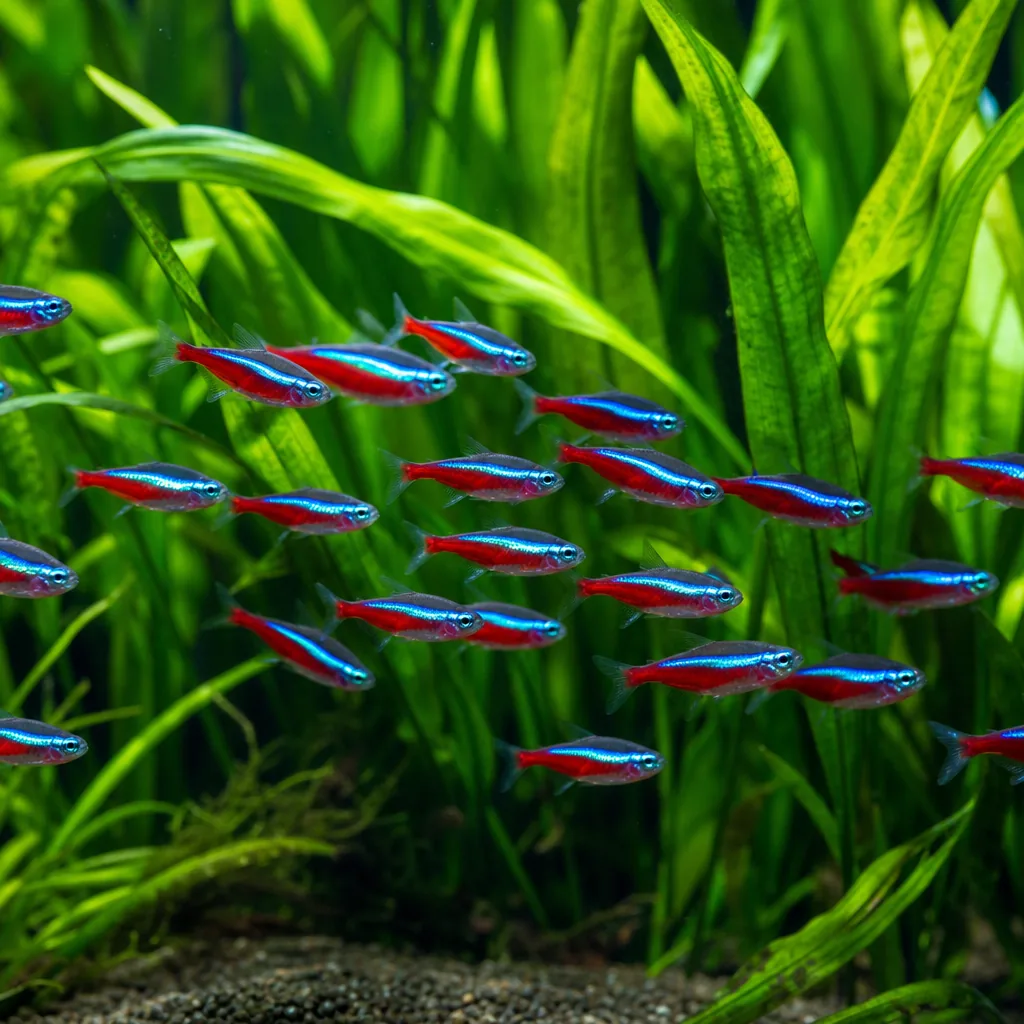
These groups have earned their reputation as community staples because they’re forgiving, widely available, and genuinely easygoing:
- Small schooling tetras — neons, cardinals, ember tetras, rummynose. Tight schoolers that add movement and color without aggression.
- Rasboras — harlequins and chili rasboras are calm, hardy, and pair beautifully with planted setups.
- Corydoras catfish — peaceful bottom crew that helps keep the substrate tidy.
- Livebearers — platies and guppies are colorful and adaptable, though they breed readily, so expect fry.
- Honey gourami — a centerpiece fish far gentler than its larger gourami cousins.
- Otocinclus and nerite snails — quiet algae crew that earns its keep.
The Combinations to Avoid
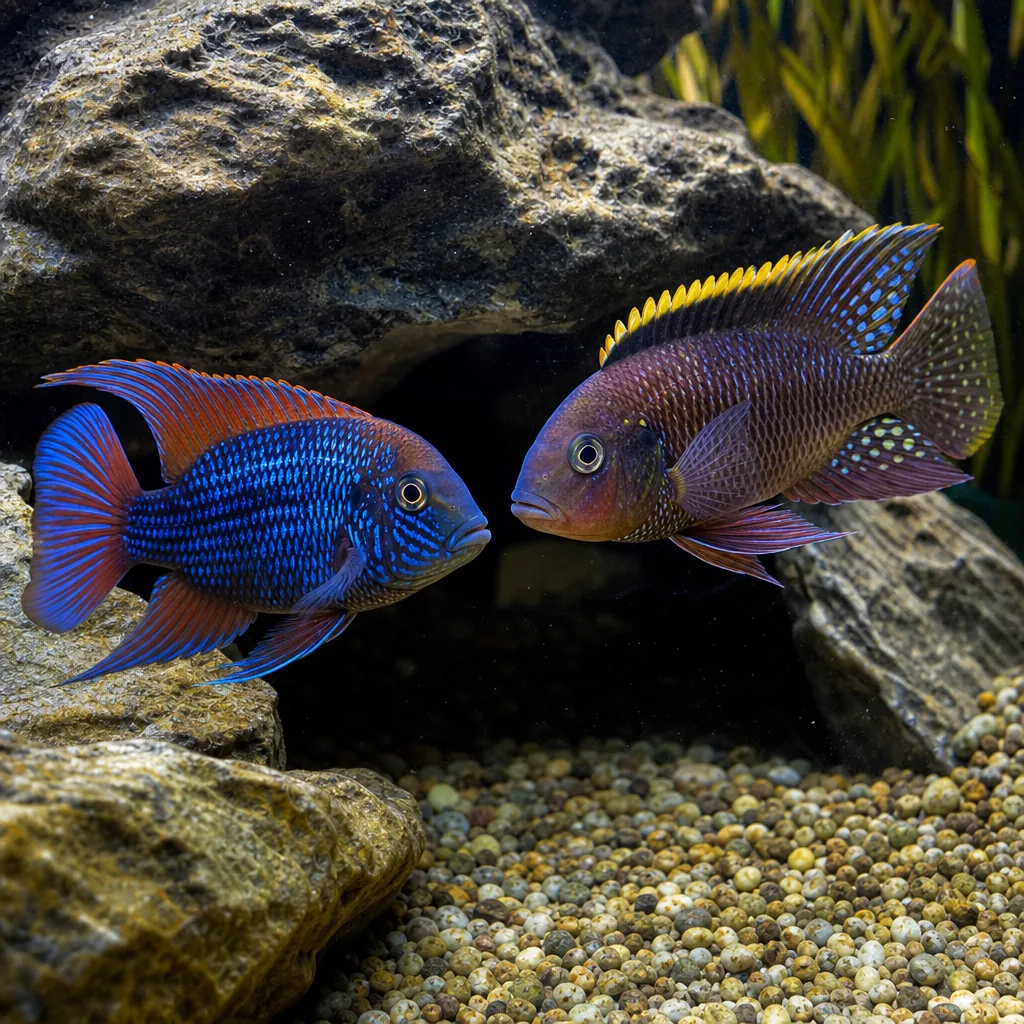
Plenty of “community” fish get sold without warning labels. A few classic mismatches:
- Tiger barbs with long-finned fish — barbs are committed fin-nippers, and bettas, angelfish, and fancy guppies are exactly the trailing targets they go after.
- Angelfish with tiny tetras — an adult angel will happily eat neons it can fit in its mouth. Pair angels with larger, faster schoolers instead.
- Bettas with anything flashy — a male betta may tolerate calm tankmates, but bright, long-finned fish read as rivals.
- Multiple bottom-territorial species — two plecos in a small tank will eventually fight over caves.
When in doubt, look up the adult temperament before you buy. A five-minute check saves a tank full of regret.
Group Sizes and the Golden Ratio
Understocking schooling fish is a quiet, common mistake. Six is the practical minimum for most tetras and rasboras; ten or more looks and behaves far better. Tighter schools mean calmer, bolder, more colorful fish because the group provides the security a single specimen never gets.
For semi-aggressive species kept in groups — some barbs, for example — larger numbers actually reduce aggression by spreading it out rather than concentrating it on one unlucky individual.
Don’t Forget the Cleanup Crew
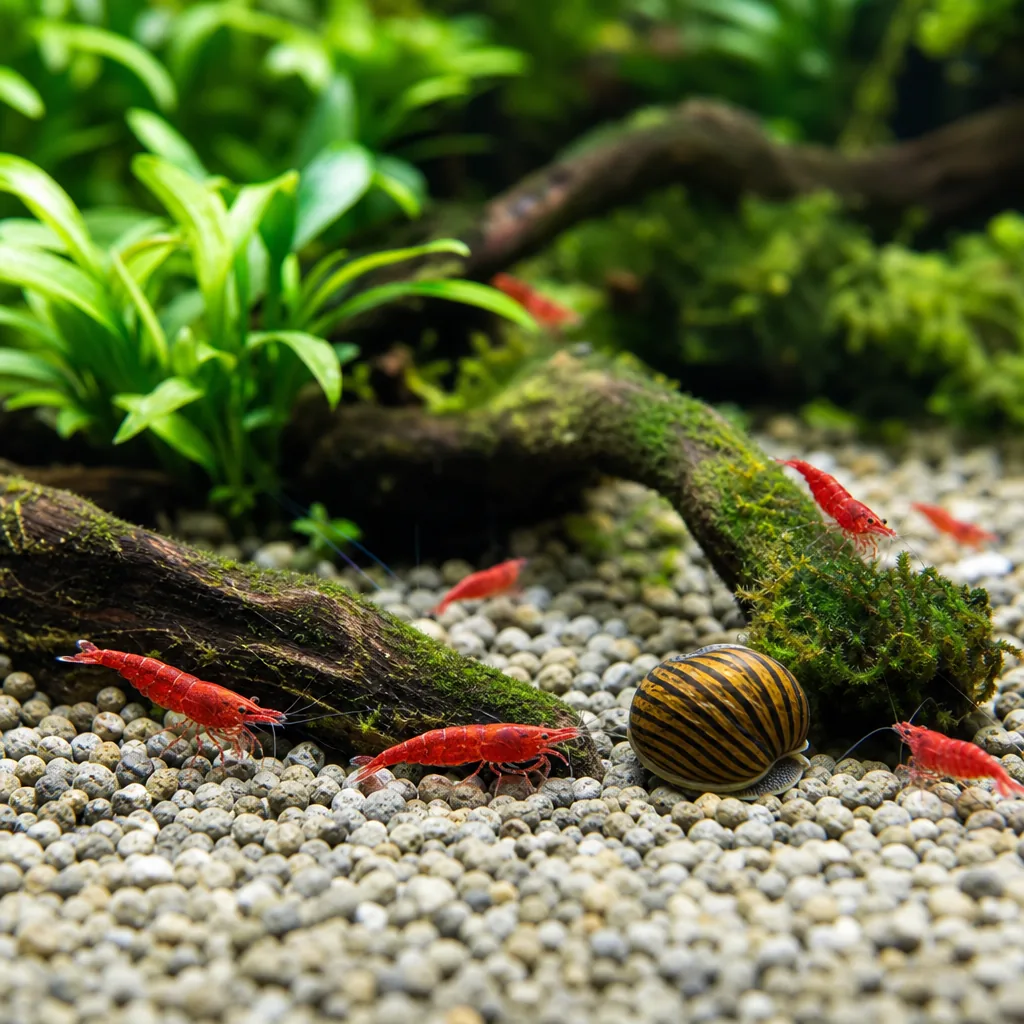
Snails and shrimp round out a community without adding any aggression. Nerite snails won’t overpopulate in freshwater, amano shrimp tackle algae, and cherry shrimp add color if your fish are small enough not to hunt them. Browse our recommended gear for the heaters, filters, and lighting that keep a planted community stable enough for invertebrates to thrive.
Conclusion
A great community tank is planned, not assembled. Match temperaments, respect adult sizes, fill all three swimming zones, and keep schooling fish in real groups. Do that and you’ll spend your time enjoying the tank instead of refereeing it. Start with a few hardy, peaceful staples, let the system settle, and add slowly — the best communities are the ones you didn’t rush. For more setup help, browse the AquaticRig blog.
Frequently Asked Questions
How many fish can I put in a community tank?
A rough starting point is to stock lightly and add slowly, watching that your filtration and water changes keep pace. Adult size and bioload matter far more than headcount, so plan around the size fish will reach, not their current size.
Can aggressive and peaceful fish ever live together?
Occasionally, in very large tanks with lots of cover and careful selection, but it’s risky for beginners. It’s safer to build the whole stocking list around one temperament tier so no single fish becomes a target.
Why do my schooling fish hide all the time?
Usually because the group is too small. Schooling species feel exposed in low numbers, so increasing the group to six or more — ideally ten — almost always brings them out into the open.
Do I need a bottom-dweller in a community tank?
You don’t strictly need one, but bottom feeders like corydoras add activity to an otherwise empty layer and help keep leftover food from rotting in the substrate. They’re peaceful and make most communities feel more complete.
What’s the easiest community fish for a true beginner?
Hardy livebearers like platies and tetras such as ember or harlequin rasboras are very forgiving of minor mistakes. They tolerate a range of conditions while you learn, which makes them ideal first residents.