
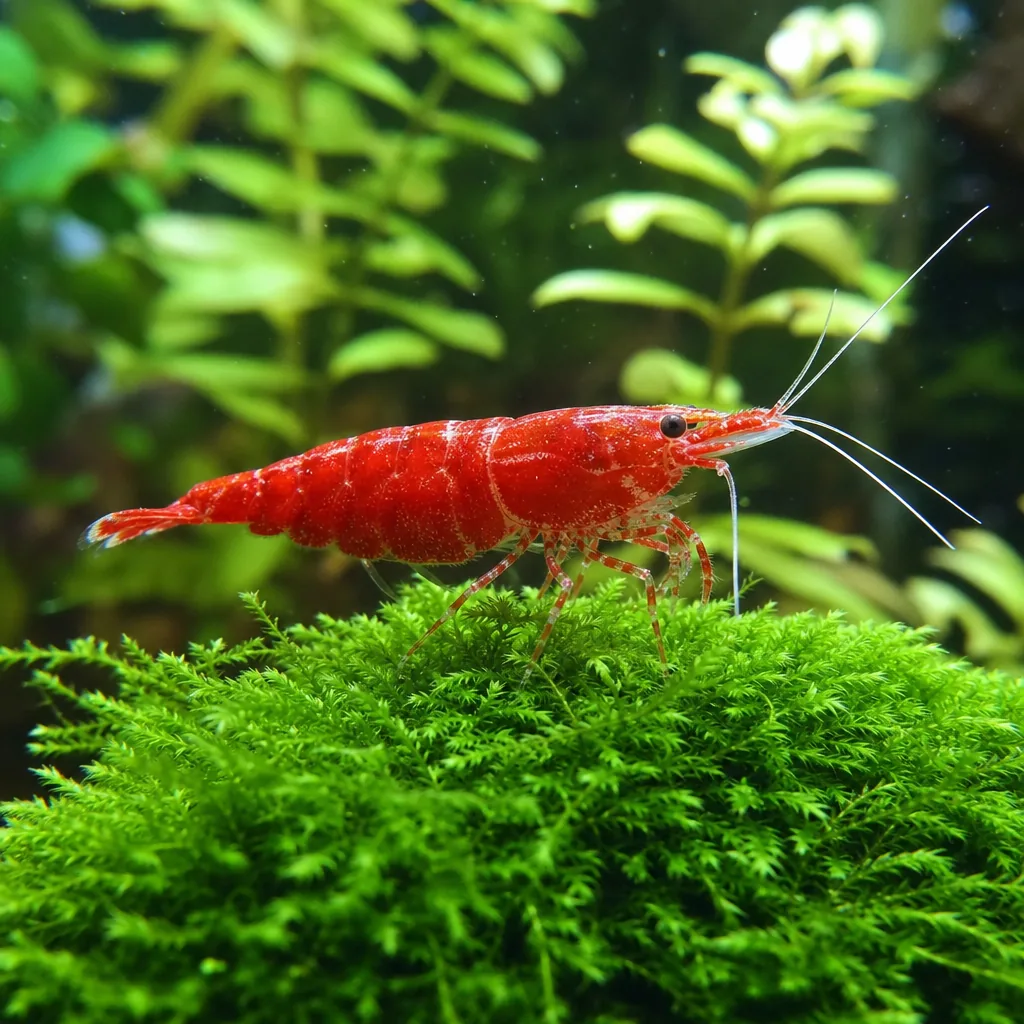
Red cherry shrimp are the invertebrate I recommend to almost anyone who wants something alive, colorful, and genuinely low maintenance. Once they settle into a stable tank they breed on their own, clean up leftover food, and give you a little world to watch without demanding much back. The trick is not keeping them alive so much as keeping the conditions steady enough that they thrive and multiply.
Why Cherry Shrimp Are Beginner Friendly
Neocaridina davidi, the red cherry shrimp, is one of the most forgiving freshwater invertebrates you can buy. Unlike the fussier Caridina species, they tolerate a wide range of water and don’t need special substrate to buffer their pH. Give them a cycled, mature tank with some algae and biofilm and they largely run themselves.
Tank Size and Setup
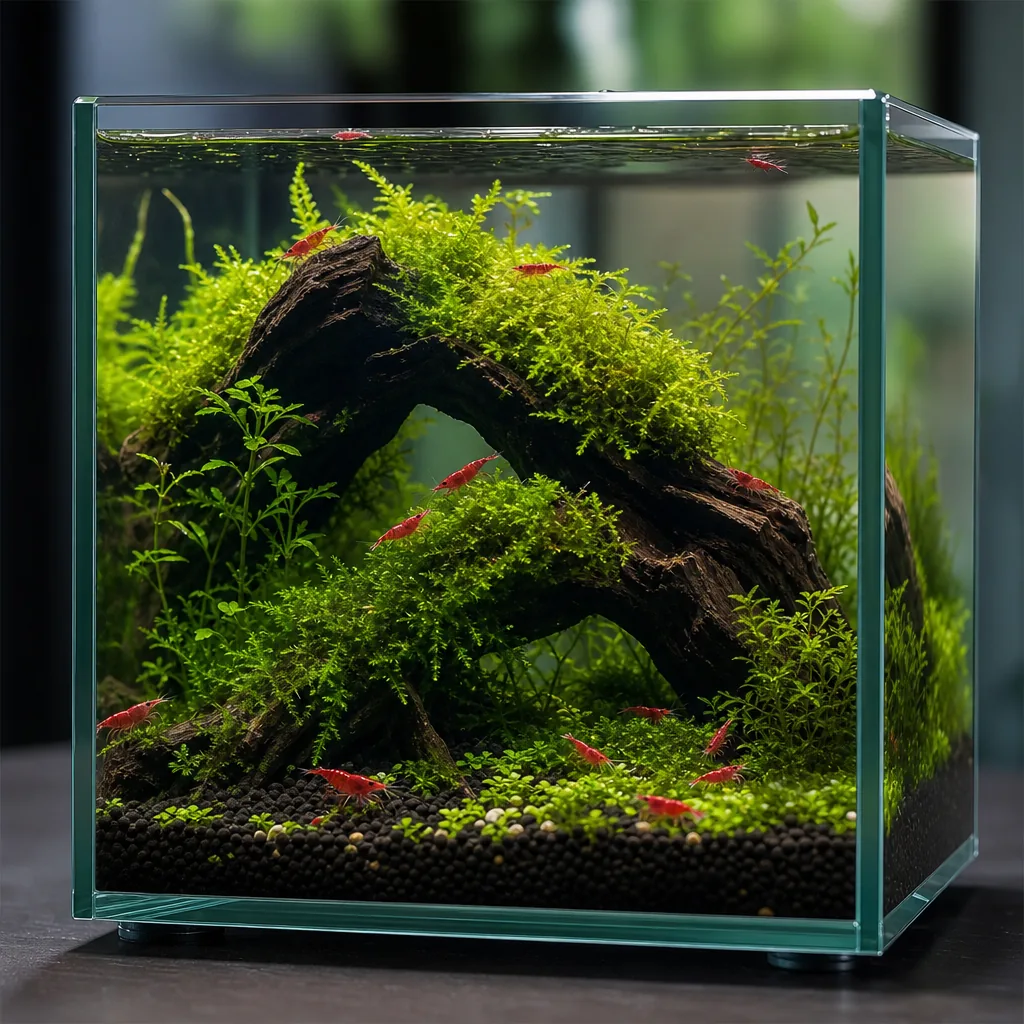
You don’t need much room. A colony can start in as little as 5 gallons, though 10 gallons gives you more stability and room for the population to grow.
- Filtration: use a sponge filter or cover any intake with a pre-filter sponge. Baby shrimp are tiny and get sucked into standard intakes easily.
- Plants and moss: mosses, floating plants, and leaf litter give shrimplets cover and grazing surface. Java moss is a colony favorite.
- Substrate: inert gravel or sand is fine for Neocaridina. Buffering active soils are for Caridina.
A mature tank matters more than a big one. Shrimp graze on the biofilm that grows on surfaces over time, so let a tank run for a few weeks before adding them. For layout ideas, our planted tank guides cover the kind of setup shrimp love.
Water Parameters
Neocaridina prefer neutral to slightly alkaline, moderately hard water, which is the opposite of what many tetras want. That is worth knowing before you mix them into a community.
- Temperature: 65-78 F. They breed reliably in the low-to-mid 70s. They actually do fine at room temperature, so a heater is often optional.
- pH: 6.5-8.0, with 7.0-7.5 a comfortable target.
- Hardness: moderate. GH around 6-12 gives them the minerals they need to molt properly.
- Ammonia and nitrite: 0 ppm. Nitrate under 20 ppm. Shrimp are far more sensitive to ammonia than most fish.
Watch the Copper and the Molts
Copper is toxic to shrimp, so avoid medications and plant fertilizers that contain it. And a proper molt depends on minerals, mainly calcium. If shrimp die mid-molt or fail to molt, a lack of GH is a common culprit; a remineralizer fixes it.
Breeding Cherry Shrimp
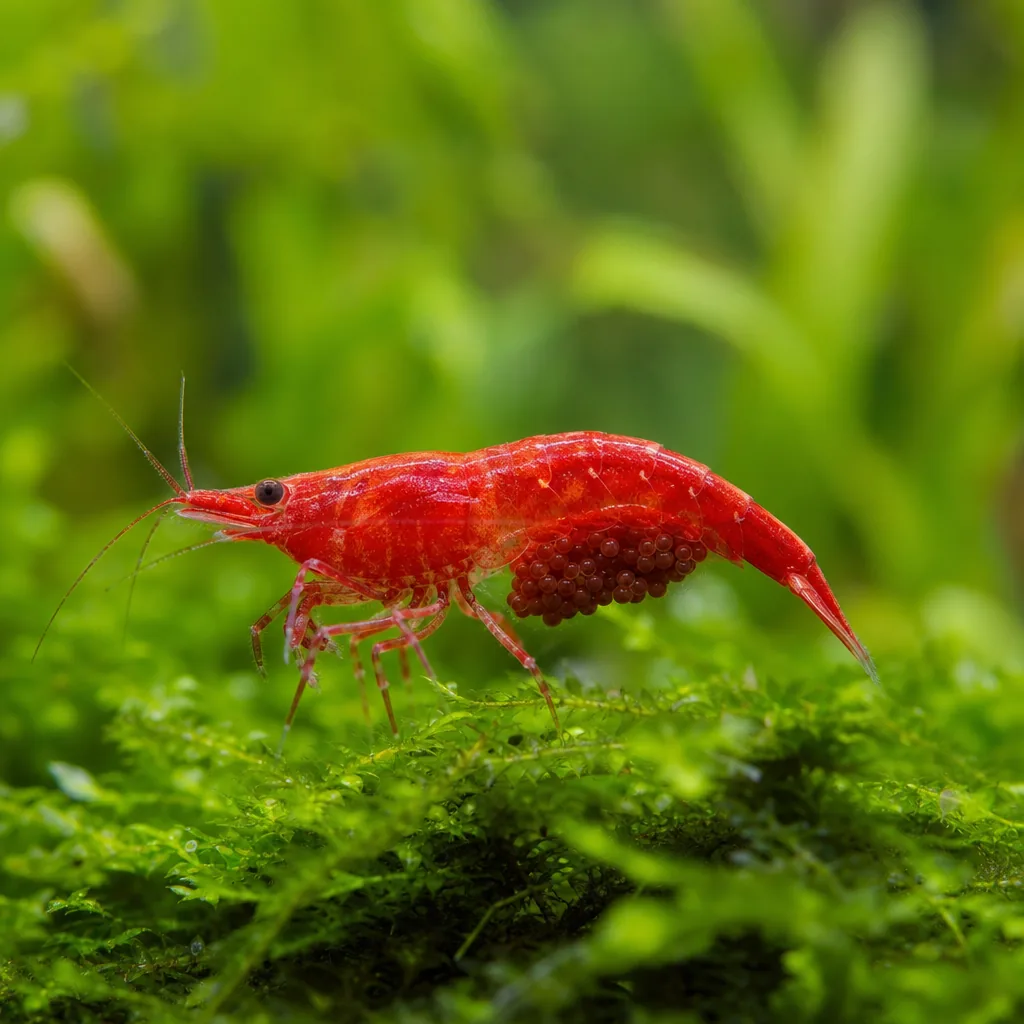
Here is the good news: if your shrimp are healthy, breeding is not something you do, it is something that happens. A stable, well-fed colony of both sexes will produce young on its own.
- A gravid (berried) female carries a clutch of eggs under her tail, fanning them with her legs for a few weeks.
- She releases fully formed miniature shrimp, not larvae, so there is no special rearing stage as with amano shrimp.
- To protect shrimplets, avoid fish that eat them and keep plenty of moss and cover.
To get stronger color over generations, cull ruthlessly by keeping and breeding only your deepest red individuals, or simply enjoy the natural mix. Feeding a varied diet and keeping water stable does more for color than anything else.
Feeding
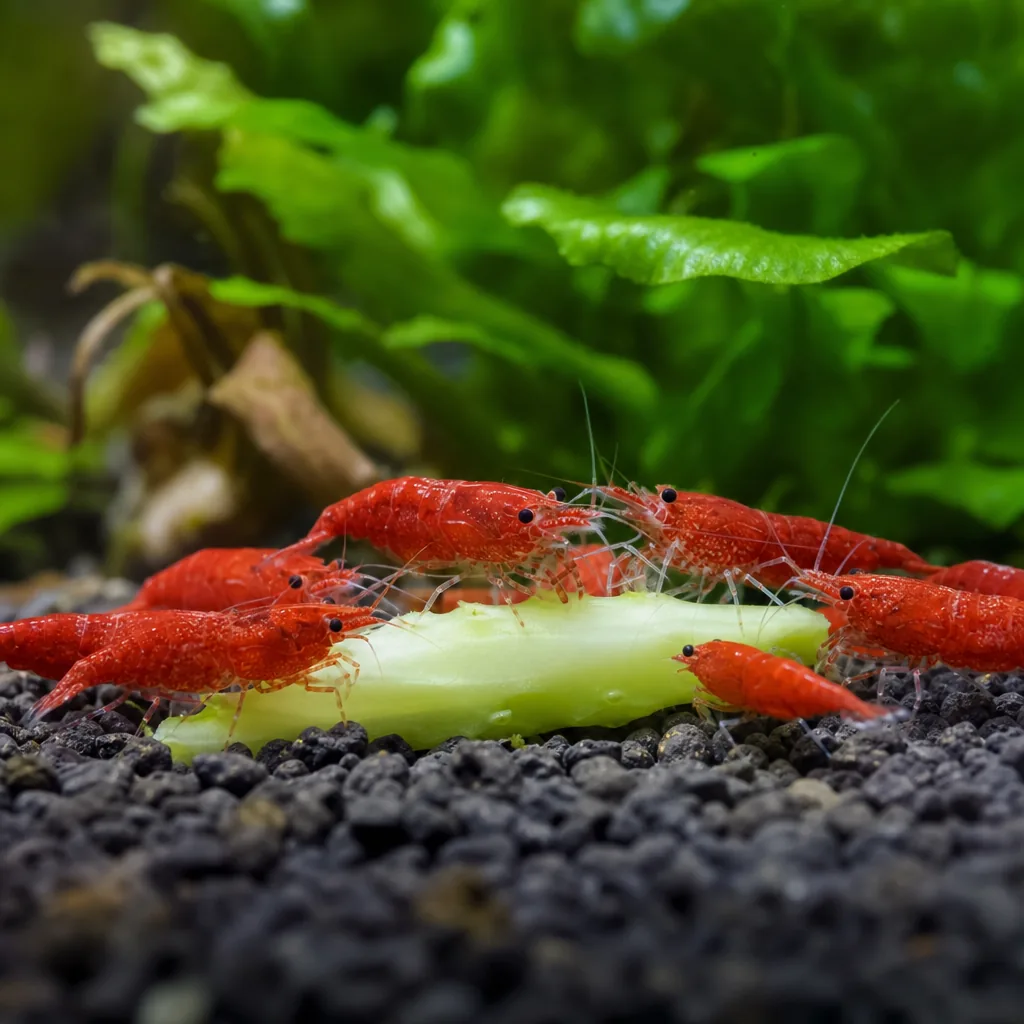
In a mature planted tank shrimp graze constantly on biofilm and algae, so they need very little supplemental food.
- Feed a small amount of shrimp-specific food or blanched vegetables (zucchini, spinach) a few times a week.
- Remove uneaten food after a couple of hours to protect water quality.
- Occasional protein and foods with added minerals support molting and growth.
Tank Mates
The honest answer is that the safest cherry shrimp tank has no fish at all, because almost any fish will eat shrimplets given the chance. If you want a community, choose the smallest, most peaceful tank mates and accept that fewer babies will survive.
- Generally safe: other dwarf shrimp, nerite snails, otocinclus, and very small peaceful fish like pygmy corydoras.
- Risky but common: small tetras and rasboras will pick off babies but usually leave adults alone.
- Avoid: cichlids, bettas (hit or miss), gouramis, angelfish, and anything with a mouth big enough to bother an adult.
Snails make great companions and never bother shrimp. If you want to round out the cleanup crew, see our recommended invertebrate gear.
The Short Version
Cycle a small tank, add moss and inert substrate, keep the water neutral, moderately hard, and copper-free, and feed lightly. Do that and a handful of cherry shrimp turns into a self-sustaining colony that cleans, breeds, and rewards you for barely lifting a finger.
Frequently Asked Questions
How fast do cherry shrimp breed?
In a stable, well-fed tank, healthy females carry eggs continuously and a small starter group can grow into a large colony within a few months.
Do cherry shrimp need a heater?
Not always. They tolerate 65 to 78 F and often do fine at room temperature, though the low-to-mid 70s encourages the most reliable breeding.
Will fish eat my cherry shrimp?
Most fish will eat shrimplets and some will eat adults. The safest colonies are shrimp-only; if you keep fish, choose the smallest, most peaceful species and provide heavy cover.
Why are my cherry shrimp dying during molting?
Failed molts usually point to a lack of minerals, especially calcium, so check your GH. Copper in medications or fertilizers is another common killer.
What do cherry shrimp eat?
Mostly biofilm and algae in a mature tank, supplemented with shrimp food and blanched vegetables a few times a week. Feed lightly to protect water quality.