
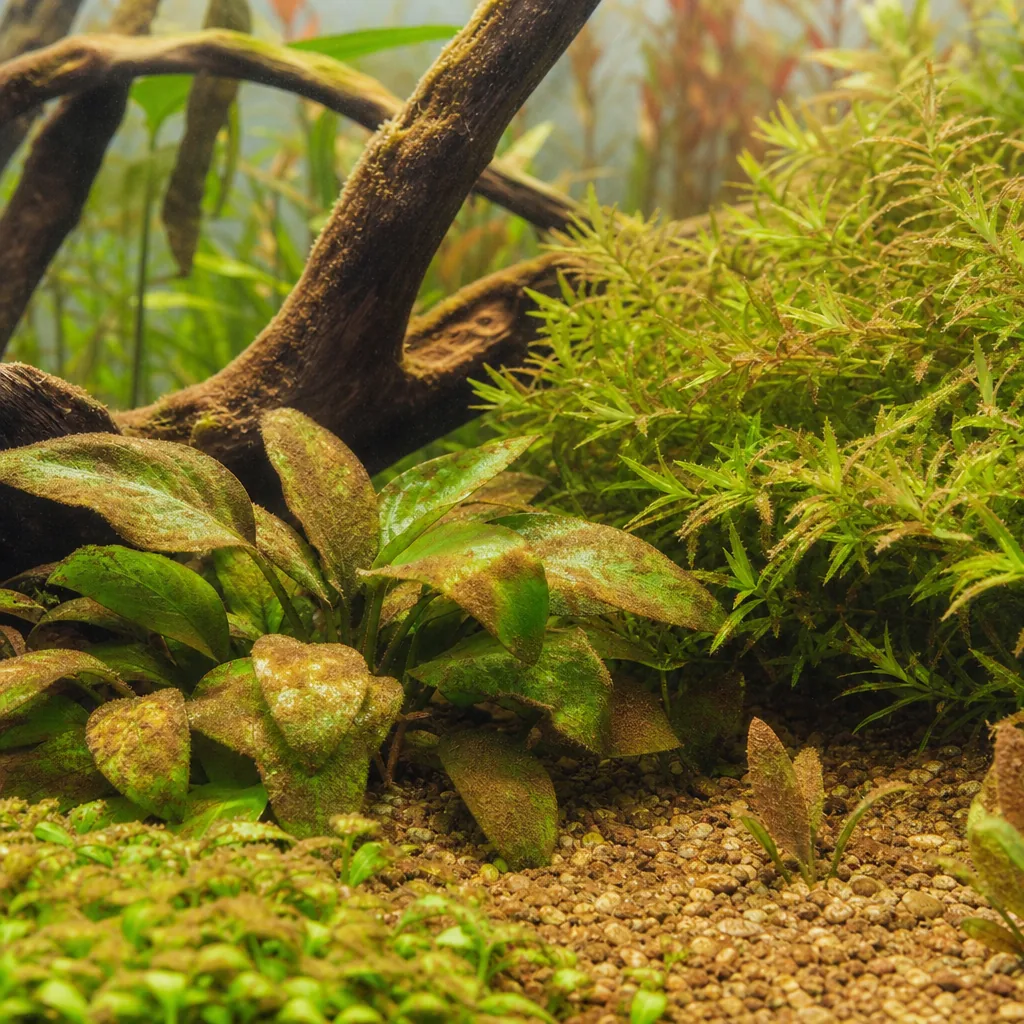
If your new tank has developed a brown, dusty film over the glass, gravel, and decor within the first few weeks, do not panic. This is a diatom bloom, and it is one of the most predictable stages of a young aquarium. Almost every new setup goes through it, and in most cases it clears on its own once the tank matures. Understanding why it happens takes the worry out of it and helps you speed it along.
What Brown Diatoms Actually Are
Diatoms are single-celled algae with silica-based shells. Unlike green algae, they show up as a soft brown coating that looks almost like dust or dirt smeared across surfaces. You can usually wipe it off the glass easily, only to watch it return a day or two later. That wipe-and-return cycle is the signature of a diatom bloom rather than a tougher algae type.
They are harmless to fish and plants. They are unsightly, but they are not a sign that you did something wrong.
Why New Tanks Get Them
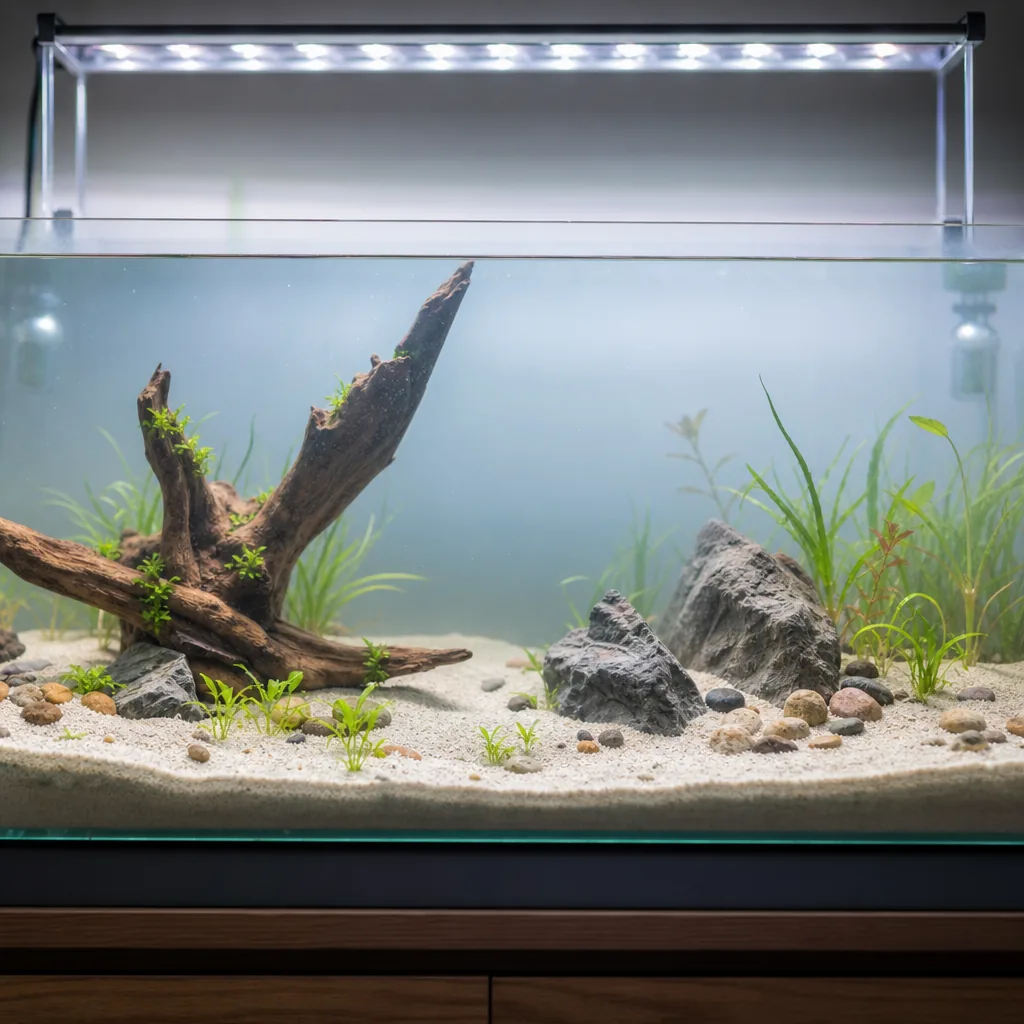
Diatoms bloom because a brand-new tank offers them a perfect, temporary environment. Several conditions line up in the first weeks:
- Excess silica: new substrate, decor, and sometimes source water release silica, which diatoms feed on directly.
- Available nutrients: an immature tank has not yet developed the balance to consume nutrients efficiently.
- An unestablished ecosystem: the bacteria and plants that will eventually compete for resources are still developing.
In short, the tank has plenty of food and no established community to use it up, so diatoms move in first. As the tank matures, that window closes.
The Good News: It Is Usually Self-Limiting
The most important thing to understand is that a diatom bloom typically resolves itself. As the available silica gets used up and the tank’s biological balance establishes, the diatoms lose their advantage and fade, often as quickly as they appeared. For most new tanks this happens within a few weeks to a couple of months.
That means the number one strategy is patience. If you are still early in setting up, our new tank guide covers what a normal maturing timeline looks like.
How to Help It Clear Faster
While patience does most of the work, a few habits shorten the phase and keep it under control:
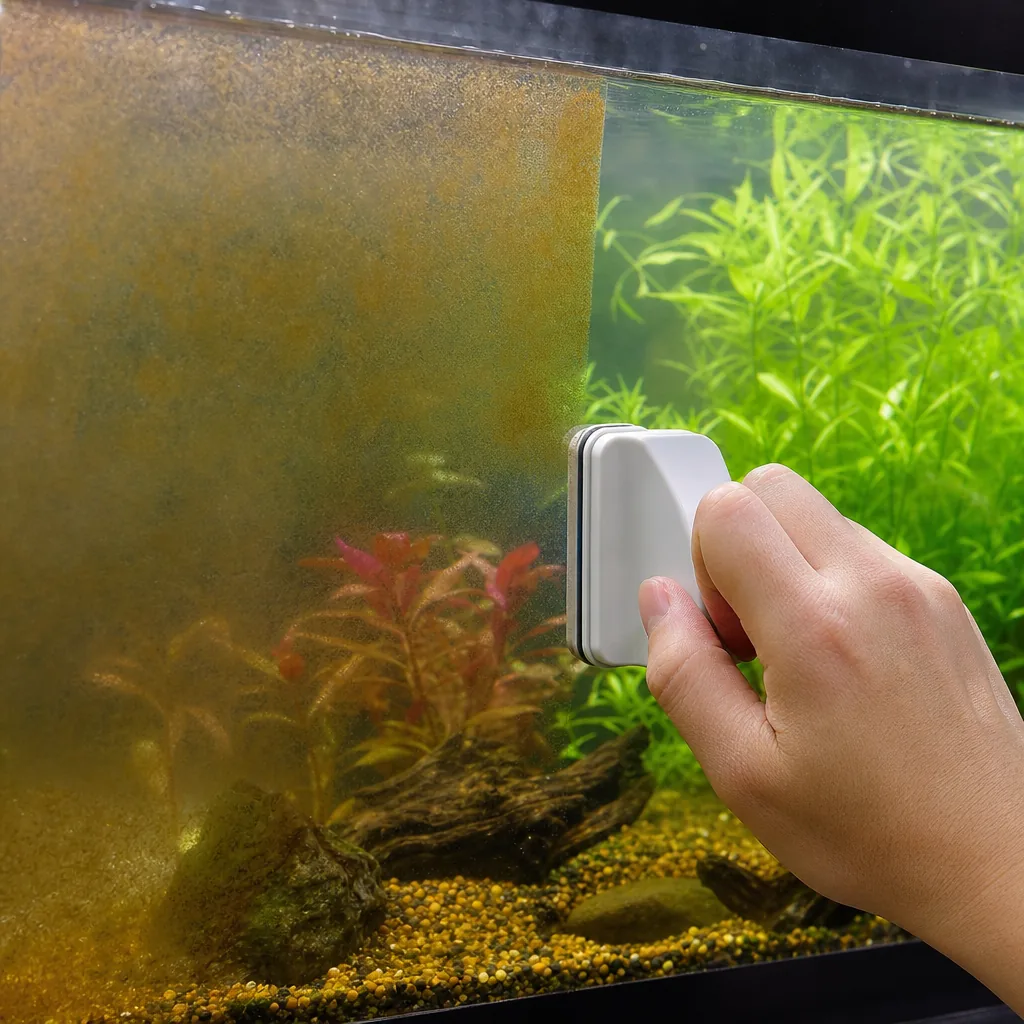
- Wipe surfaces regularly: clean the glass and siphon brown film off the substrate during water changes to physically export it.
- Keep up water changes: regular changes remove nutrients and, if your tap water is high in silica, dilute it.
- Do not overfeed: excess food adds nutrients that feed the bloom.
- Give plants a head start: healthy plants compete for nutrients and help the tank mature faster.
Avoid the temptation to attack it with chemicals. Diatoms are a normal phase, and a maturing tank will handle it better than any additive.
A Cleanup Crew That Loves Diatoms
Some tank inhabitants genuinely enjoy grazing on diatoms and can keep surfaces clean during the bloom:
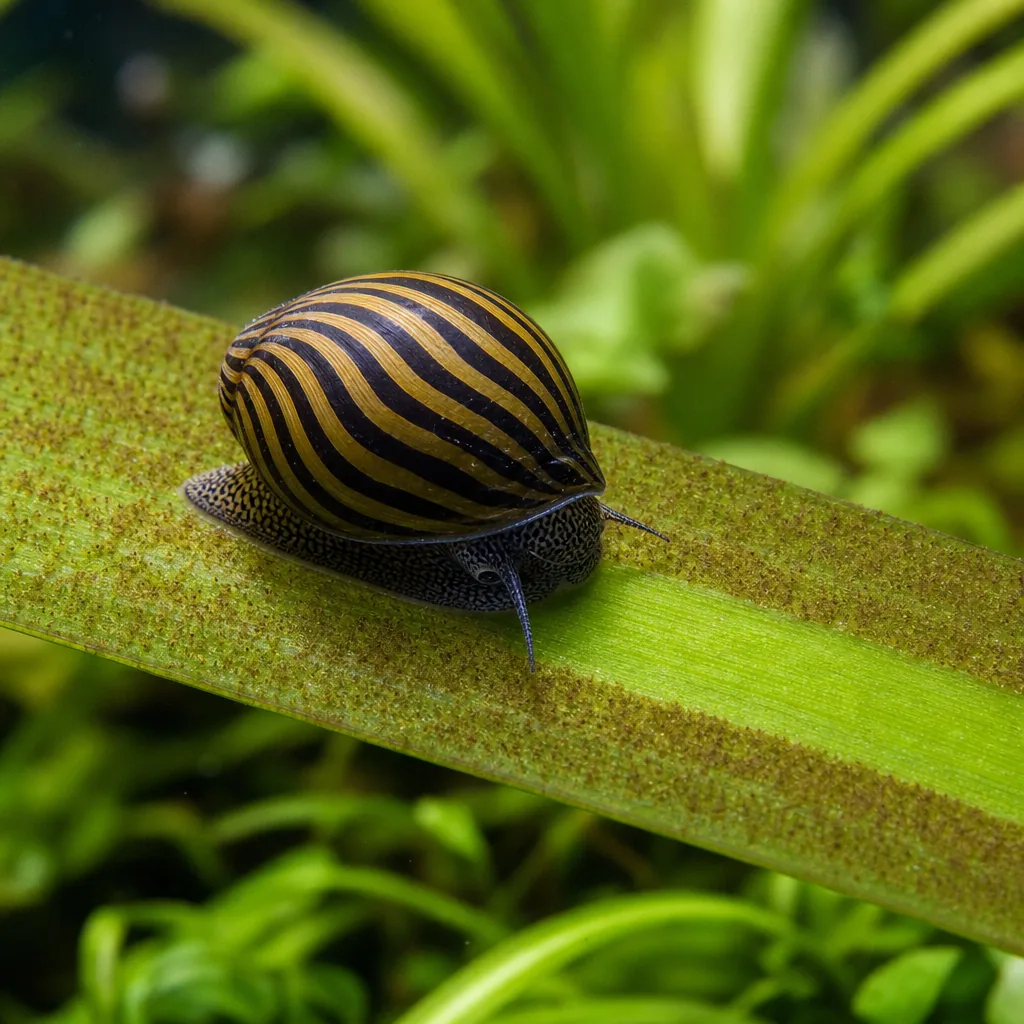
- Nerite snails are excellent at scraping diatoms off glass and hardscape.
- Otocinclus catfish graze soft brown film readily, though they should go into an established tank, not a brand-new one.
- Various snails will help clear substrate and decor.
Add grazers once the tank is a little more settled rather than the day you set it up, so they have a stable environment to move into.
When to Be Concerned
Brown film in a new tank is normal. But if a mature, established tank suddenly develops a persistent diatom problem months down the line, that is worth investigating. In that case, look at your source water silica, nutrient levels, and lighting, because something has shifted the balance. For a fresh setup, though, the brown dust is just part of the process.
Ride it out, keep up your maintenance, and the tank will clear. For test kits, cleanup crew, and maintenance tools, see our gear picks, and browse the blog for more new-tank guidance.
Frequently Asked Questions
What is the brown dust in my new aquarium?
It is a diatom bloom, a type of algae with silica shells that appears as a soft brown film on glass, substrate, and decor. It is harmless to fish and plants and is a normal stage in a maturing tank.
Why do new tanks get brown diatoms?
New tanks release silica from substrate and decor, have nutrients that nothing is efficiently using yet, and lack an established ecosystem. Diatoms exploit that temporary window before the tank matures.
Will brown diatoms go away on their own?
Usually yes. As the silica gets used up and the tank’s biology establishes, diatoms lose their advantage and fade, typically within a few weeks to a couple of months. Patience is the main strategy.
How can I make diatoms clear faster?
Wipe surfaces and siphon the film during regular water changes, avoid overfeeding, and grow healthy plants to compete for nutrients. Nerite snails and otocinclus in an established tank also graze diatoms readily.
Should I worry if diatoms appear in an old tank?
A sudden diatom problem in a mature tank is worth investigating. Check your source water silica, nutrient levels, and lighting, since something has shifted the balance. In a new tank, though, it is completely normal.