
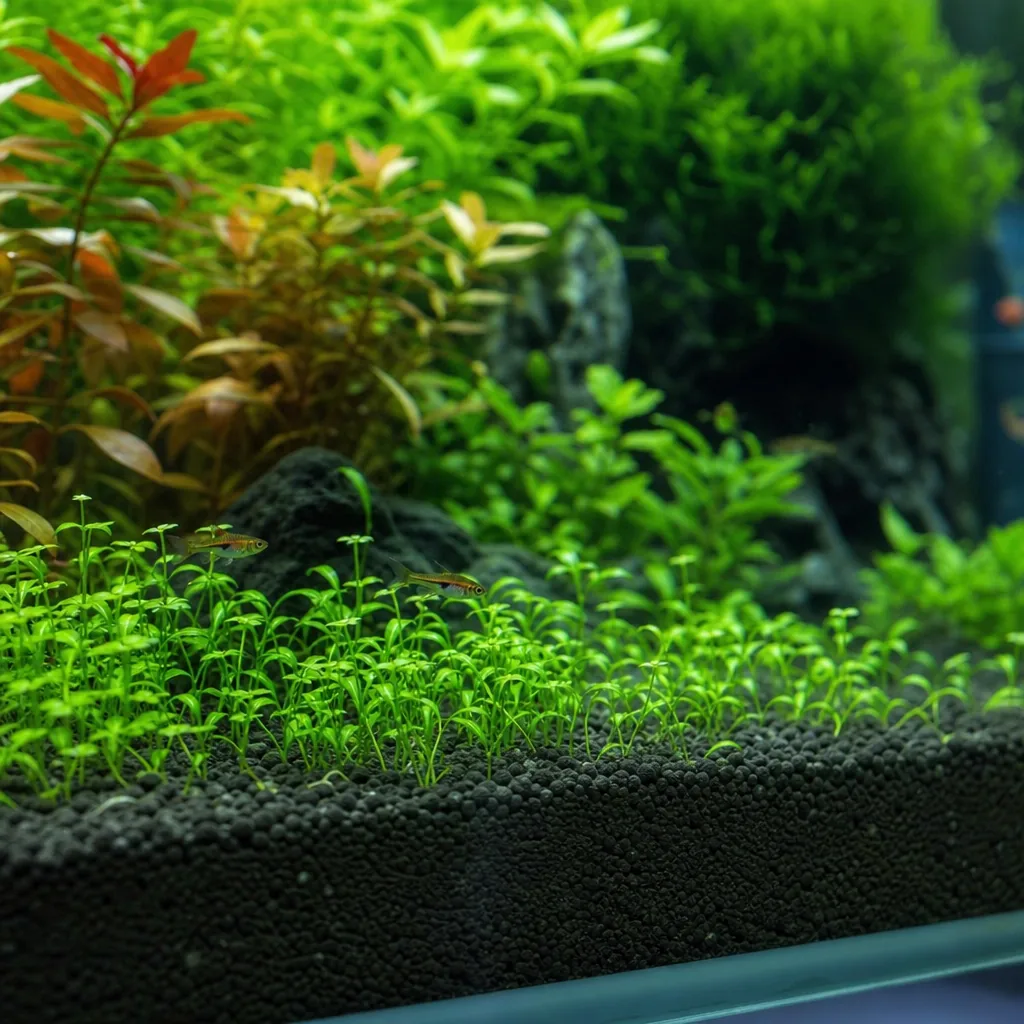
Substrate is the one part of a planted tank you cannot easily change later without tearing everything down, so it is worth getting right the first time. It is not just decoration underfoot; for many plants it is the primary source of food and the anchor that keeps a scape stable. Choosing well up front saves you from a frustrating rebuild six months in.
What Substrate Actually Does
A planted-tank substrate has three jobs. It physically anchors plant roots so stems and rooted species stay put. It can supply nutrients to root-feeding plants. And it hosts beneficial bacteria that support the tank’s biological filtration. Different substrate types are better at some of these jobs than others, which is why there is no single “best” for every tank.
The key distinction is whether a substrate is nutrient-rich (active) or inert. Active substrates feed plants and often alter water chemistry; inert substrates hold plants in place but supply little or no nutrition on their own.
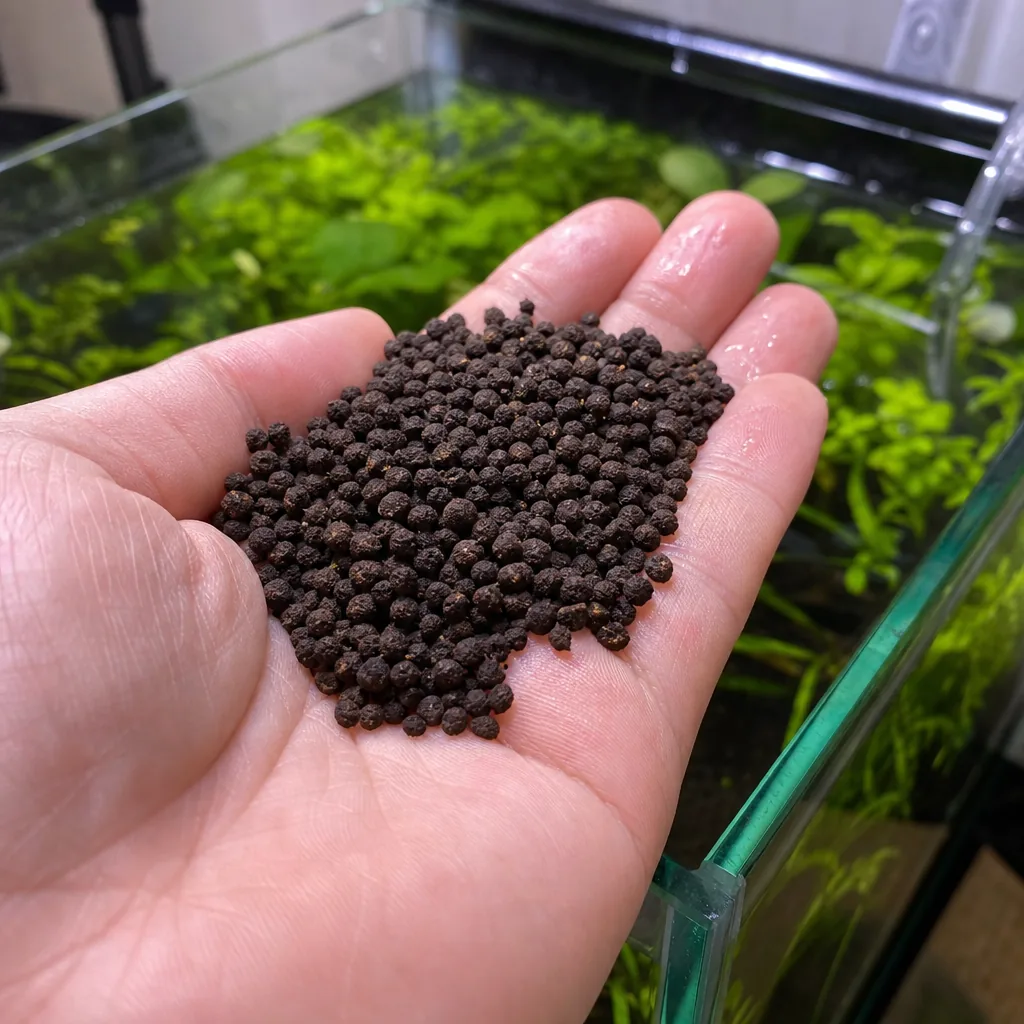
Aqua Soil (Active Substrate)
Aqua soils are baked, nutrient-rich granules made specifically for planted tanks, and they are the go-to for demanding, high-tech scapes. They come loaded with nutrients that root-feeding plants draw on directly, and they typically lower and buffer pH, creating slightly soft, acidic water that most aquarium plants and many soft-water fish and shrimp prefer.
- Strengths: excellent plant growth from day one, great for carpeting plants and heavy root feeders, buffers toward soft acidic water.
- Trade-offs: more expensive, the nutrient load depletes over one to a few years and eventually needs supplementing or replacing, and fresh aqua soil often leaches ammonia during the first weeks. That initial ammonia means you should cycle the tank before adding sensitive livestock.
If you are building a serious planted aquascape with carpeting plants, aqua soil is usually worth the cost. Pair it with the fertilizer and CO2 approaches covered on our blog for best results.
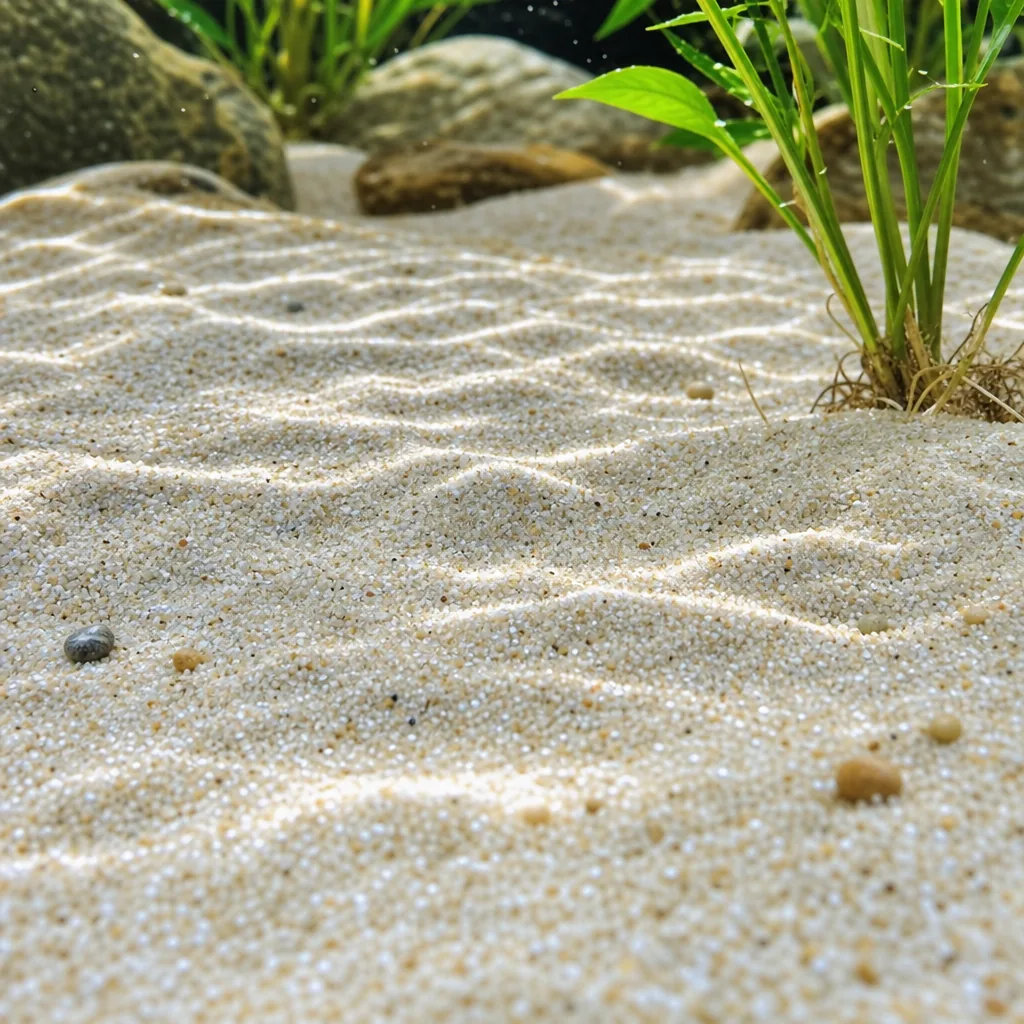
Inert Gravel and Fine Substrates
Inert substrates like aquarium gravel, quartz, and similar materials do not add nutrients or change water chemistry. On their own they support plants that feed mainly from the water column, and rooted plants can grow in them if you supplement with root tabs pushed into the substrate near the roots.
- Strengths: inexpensive, long-lasting, chemically stable, and available in many grain sizes and colors. It never depletes and never crashes your water chemistry.
- Trade-offs: no built-in nutrition, so root-heavy plants need root tabs, and it does not buffer water for soft-water setups.
Inert gravel is a solid, low-fuss choice for low-tech tanks, water-column feeders, and keepers who prefer simple, stable water. Grain size matters: too coarse and detritus falls between the stones, too fine and it can compact.
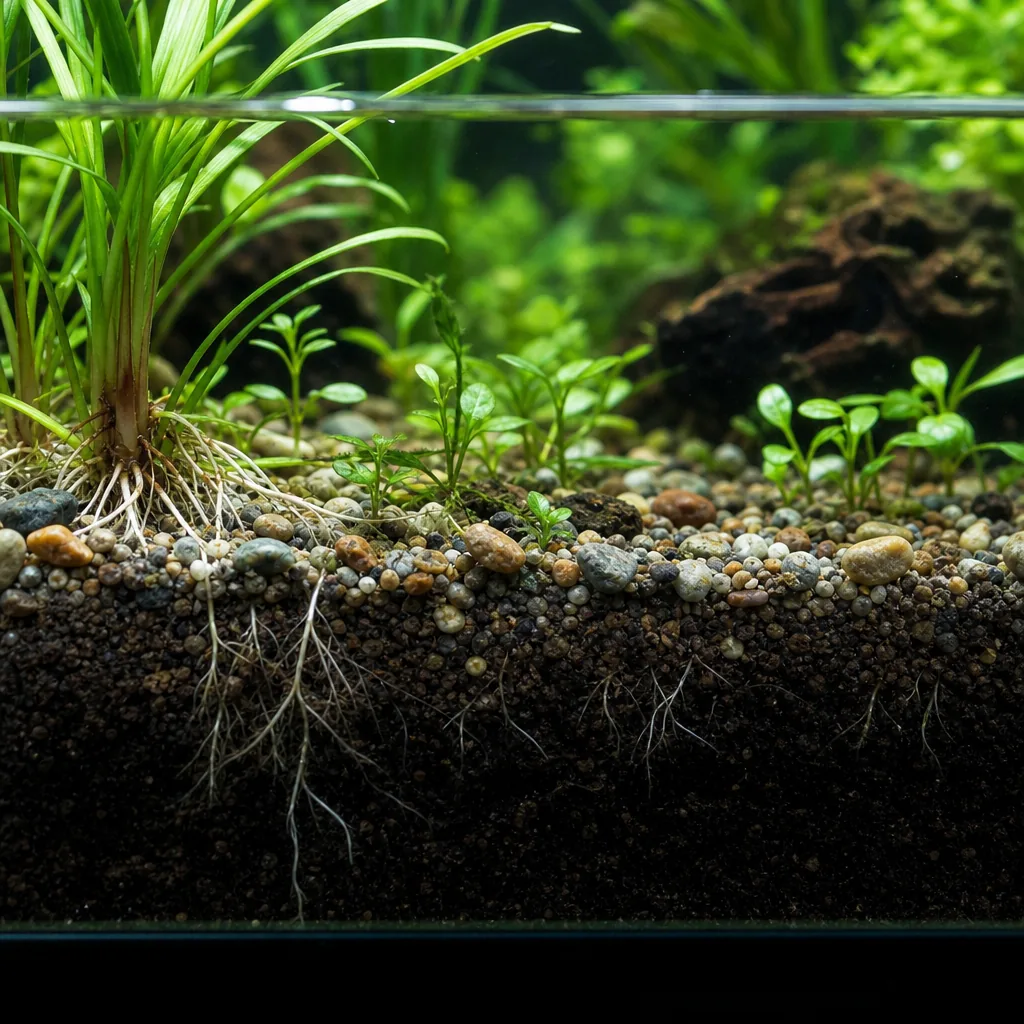
Sand
Fine sand looks natural, shows off the colors of bottom-dwelling fish, and is the right choice for species that sift or burrow. For plants, sand is inert, so rooted species rely on root tabs, and its fine grain means you must watch for compaction that can trap gas pockets. A shallow-to-moderate sand bed with occasional gentle stirring around the roots handles this fine.
Sand is also popular for certain biotope and bottom-feeder setups; if your stocking leans that way, check compatibility in our freshwater guides before committing.
Capped Substrate (Dirt Under Gravel or Sand)
A budget-friendly, high-growth option is a capped substrate: a layer of nutrient-rich material such as an aquarium-appropriate soil on the bottom, topped, or “capped,” with a layer of inert sand or fine gravel. The bottom layer feeds the roots for years while the cap keeps it from clouding the water and washing away.
- Strengths: excellent, long-lasting nutrition at low cost; the dirt layer can feed plants for years.
- Trade-offs: more involved to set up, and if you disturb it deeply during rescaping the nutrient layer can cloud the water. Uprooting large plants can release trapped material.
Capped setups suit patient keepers who want lush growth without buying large volumes of aqua soil. Plan the layout carefully, because heavy rescaping is messy once the layers are in place.
How to Choose for Your Tank
Match the substrate to your plants and your tolerance for maintenance rather than to what looks best in a photo.
- High-tech scape with carpets and heavy root feeders: aqua soil, or a capped soil setup if budget matters more than convenience.
- Low-tech tank with hardy plants and water-column feeders: inert gravel with root tabs where needed.
- Bottom-dweller or burrowing species: sand, supplemented with root tabs for any rooted plants.
- Soft-water shrimp or plant showcase: aqua soil for its buffering and nutrients.
Whatever you choose, buy enough to build a bed roughly two to three inches deep, sloped a little higher at the back for depth and root room. You can find substrate options and root supplements in the shop. Get this layer right and the plants above it become far easier to keep for years.
Frequently Asked Questions
What is the difference between active and inert substrate?
Active substrates like aqua soil supply nutrients to roots and often lower and buffer pH toward soft acidic water. Inert substrates like gravel and sand hold plants in place but add no nutrition on their own, so they need root tabs for heavy root feeders.
Do I need aqua soil for a planted tank?
No, but it makes demanding plants and carpets much easier. Low-tech tanks with hardy plants do fine on inert gravel plus root tabs. Choose based on how demanding your plants are.
Why does fresh aqua soil cause an ammonia spike?
New aqua soil leaches ammonia during its first weeks as it settles. Cycle the tank fully before adding sensitive fish or shrimp so the ammonia is processed by your biological filter first.
How deep should planted-tank substrate be?
Aim for about two to three inches, sloped a bit higher toward the back. That gives roots room to spread and adds a sense of depth to the layout.
What is a capped substrate?
It is a nutrient-rich bottom layer, such as aquarium soil, topped with inert sand or fine gravel. The cap keeps the nutrient layer from clouding the water while the bottom feeds roots for years at low cost.