
The difference between a tank that looks like a fish box and one that stops people in their tracks is almost never the equipment. It is design. Aquascaping is the art of arranging hardscape and plants into a layout that feels intentional and natural, and the encouraging truth is that a few simple principles will take a beginner most of the way there. You do not need competition-level skill or expensive plants to build something you are proud of. You need a plan and an understanding of how the eye reads a layout.
This guide covers the core principles, how to use hardscape and plants, and the planning steps that lead to a layout you will actually enjoy.
Start With a Concept
The most common beginner mistake is buying plants and rocks first and arranging them later. Strong aquascapes start with a concept. Do you want a wild, jungly tank, a clean and minimal layout, or a natural scene that looks like a slice of riverbed? Picking a direction before you shop keeps your purchases coherent and stops you from ending up with a jumble of mismatched elements.
The Design Principles That Matter
A handful of principles do most of the heavy lifting in good aquascaping.
A Focal Point
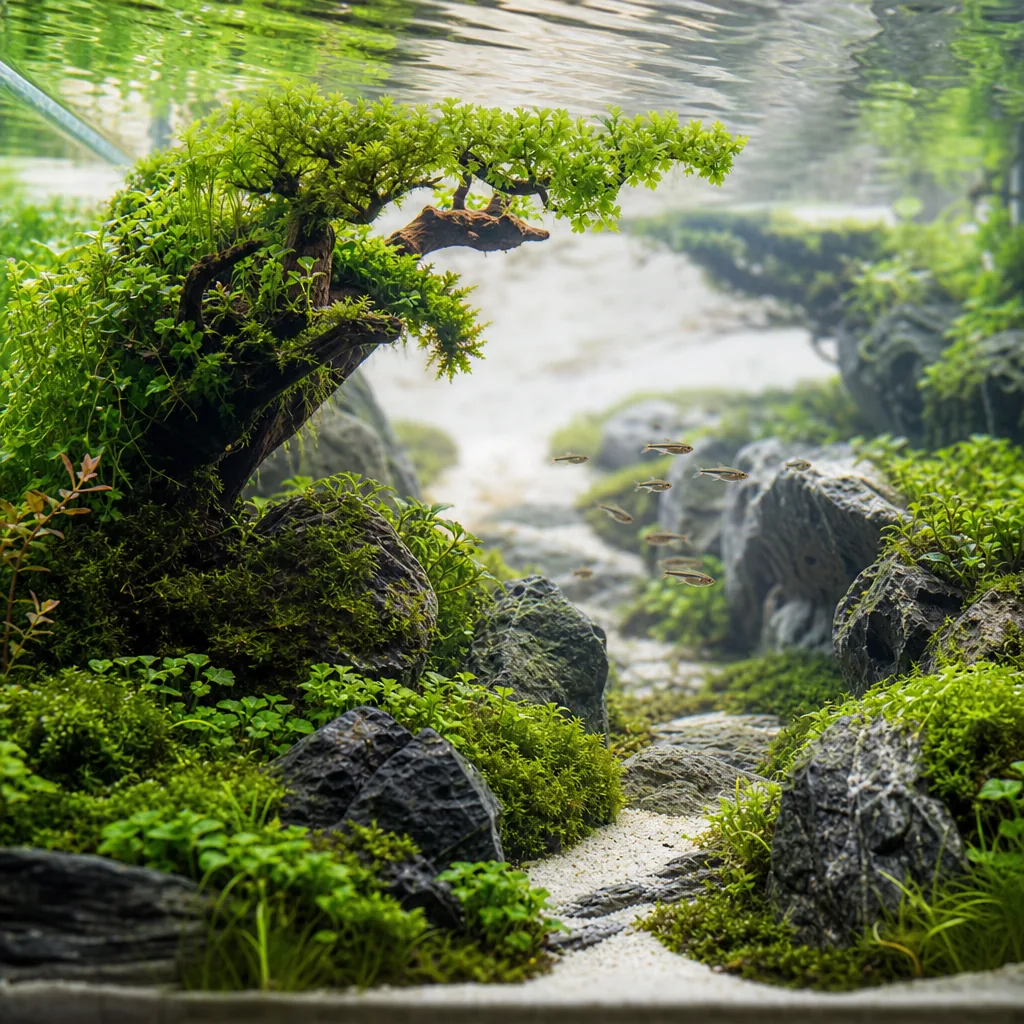
Every layout needs a place for the eye to land. This might be a striking piece of wood, a dominant rock, or a particularly colorful plant. Rather than centering it, placing the focal point off-center generally feels more natural and dynamic.
Depth and Layering
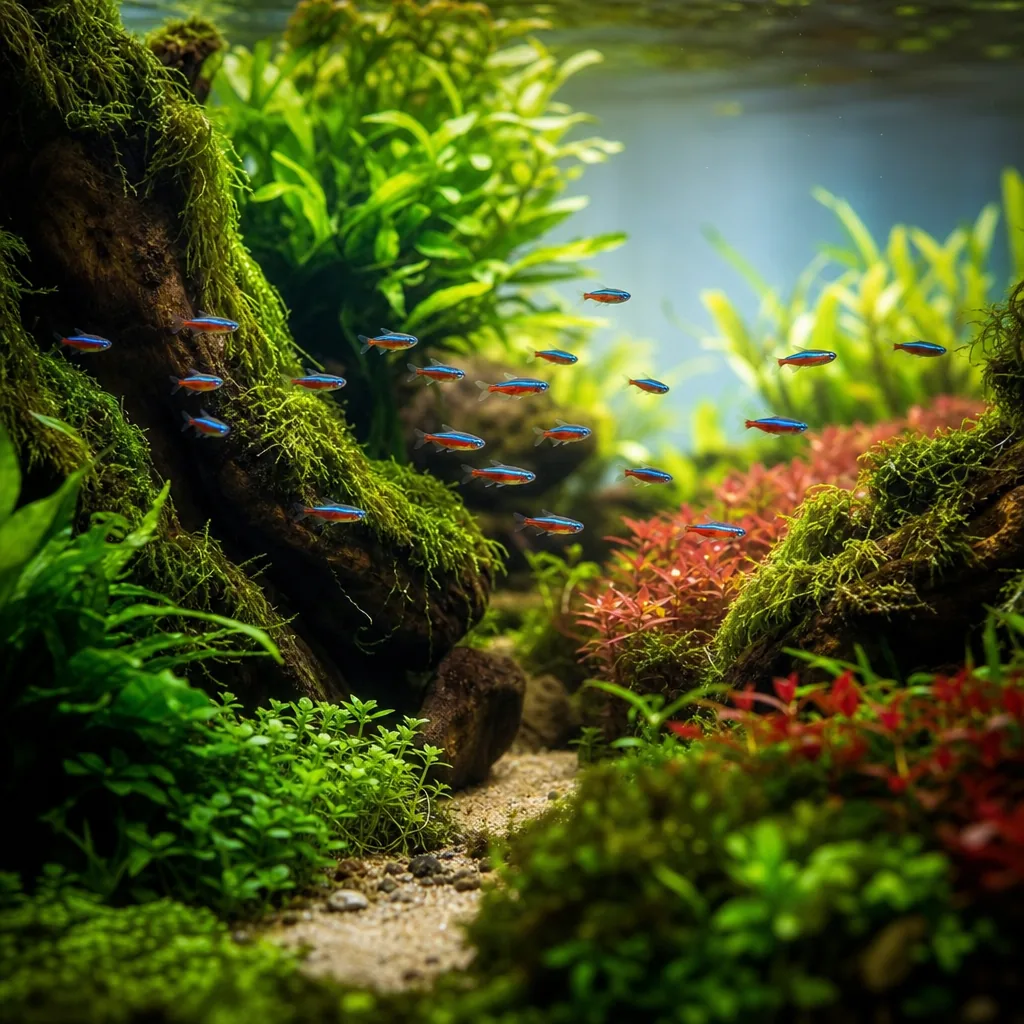
A flat layout looks lifeless. Create the illusion of depth by using foreground, midground, and background zones, with shorter elements in front and taller ones behind. Sloping the substrate up toward the back exaggerates this and makes a small tank feel larger.
Negative Space
Resist the urge to fill every inch. Open areas of substrate or water give the eye room to rest and make planted areas feel more deliberate. Some of the most admired layouts are defined by what they leave empty.
Odd Numbers and Natural Grouping
Groupings of rocks or plants generally look more natural in odd numbers and in varied sizes, mimicking how things appear in nature rather than in a tidy row.
Working With Hardscape
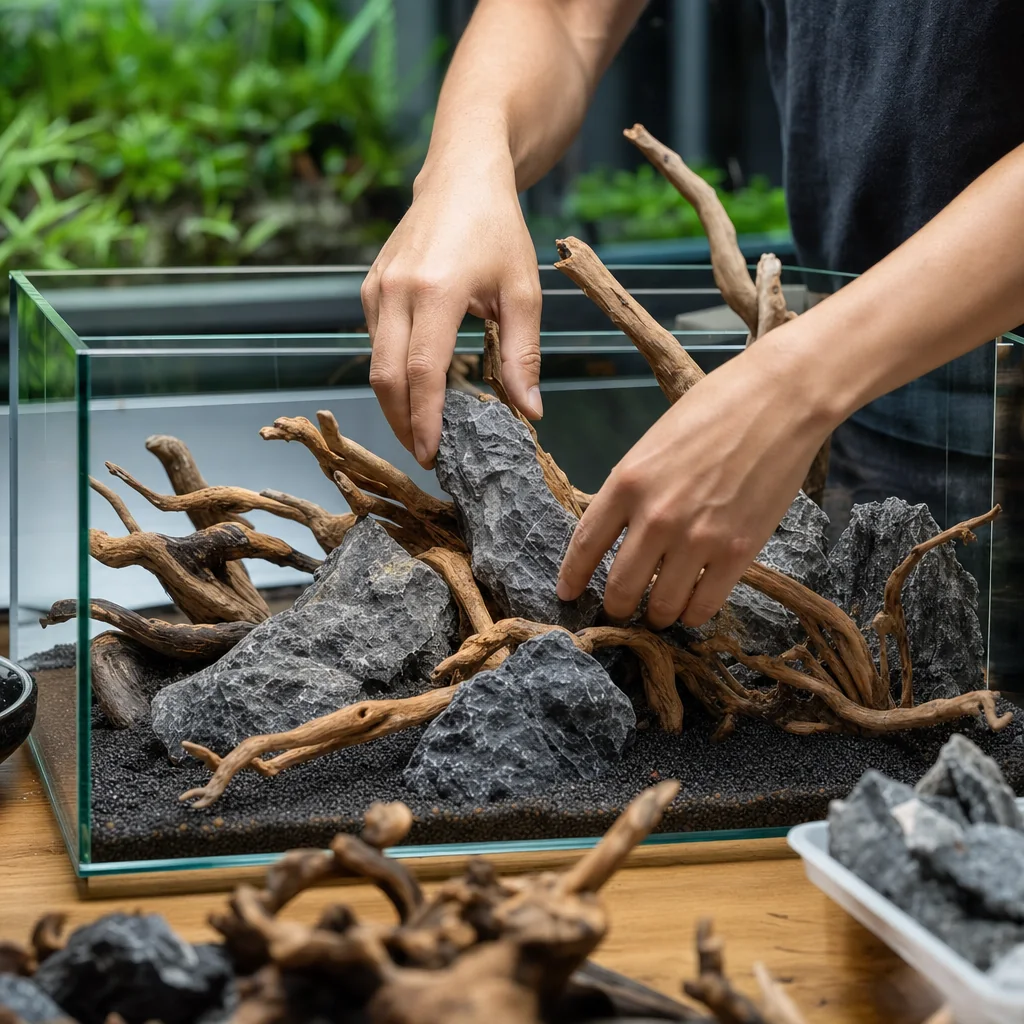
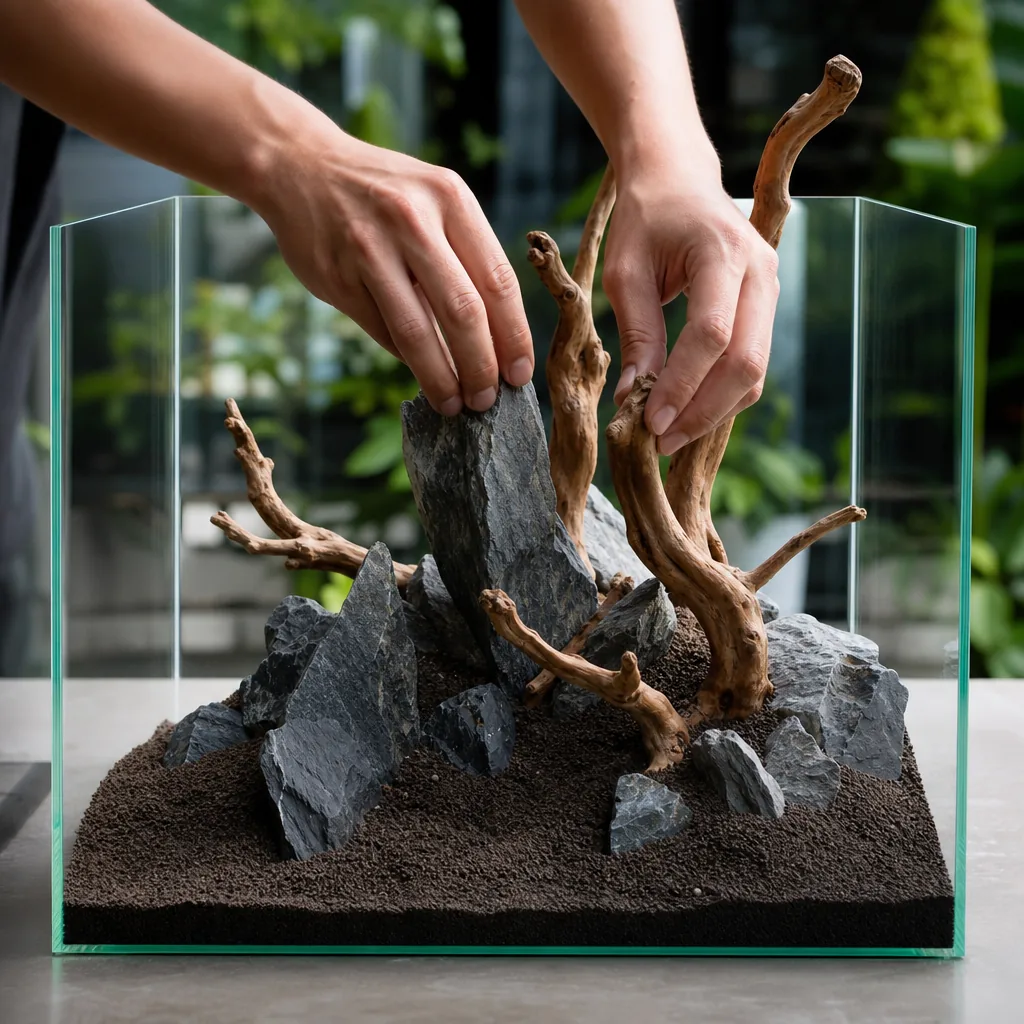
Hardscape, meaning the rock and wood, is the skeleton of your layout, and getting it right before adding plants is far easier than fixing it later.
- Choose a consistent material. Mixing many different rock types or wood styles usually looks chaotic. Pick one and repeat it.
- Build structure first. Arrange hardscape to establish your focal point, depth, and flow before a single plant goes in.
- Anchor and stabilize. Make sure rocks are stable and wood is secured so nothing shifts later.
You can find aquascaping hardscape and tools in our shop, and our low-light plants guide covers forgiving plants that suit a first layout.
Placing Plants by Zone
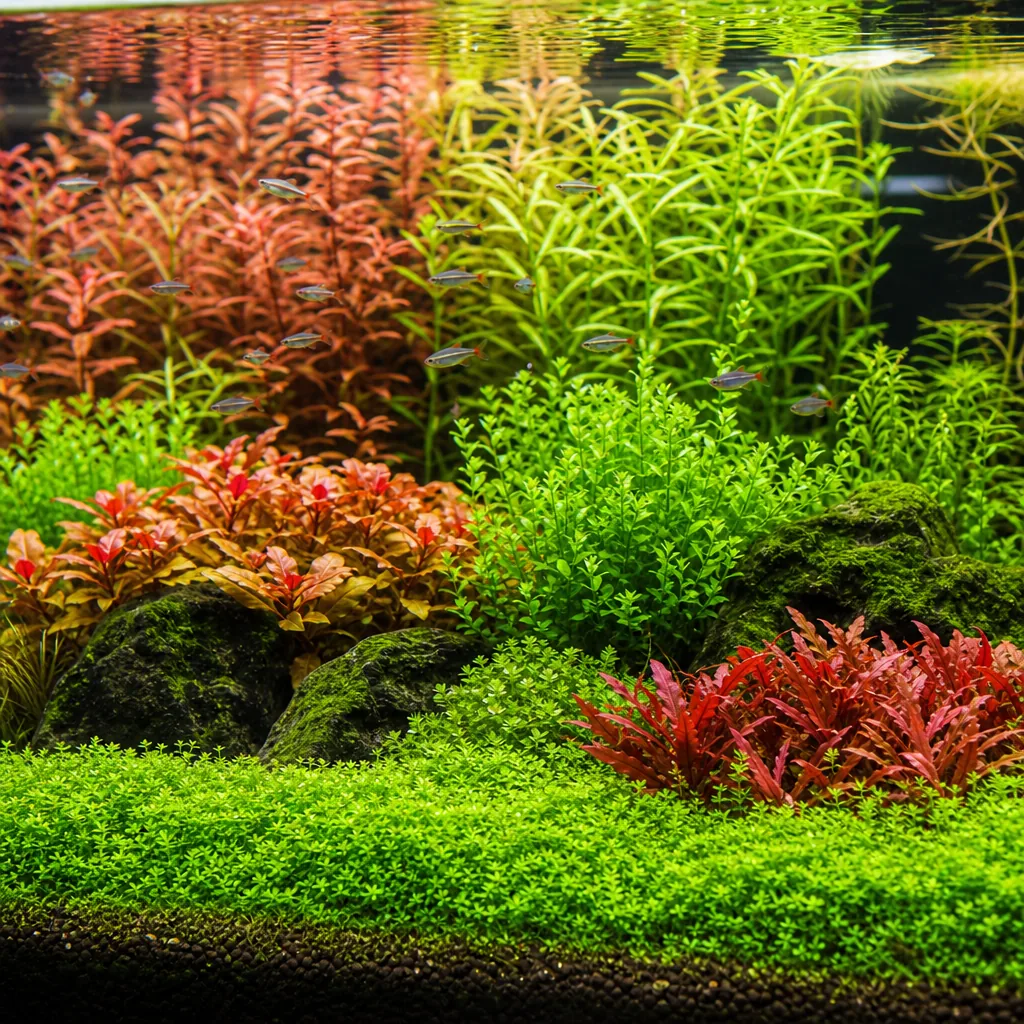
With hardscape set, plants bring the layout to life. Think in zones.
- Foreground: low, small plants or a carpet at the front, where detail shows and height would block the view.
- Midground: medium plants and accent species that bridge front and back, often tucked around hardscape.
- Background: taller, faster-growing plants that fill the rear and frame the scene.
For beginners, hardy plants like anubias, java fern, and cryptocoryne make excellent building blocks, and a green carpet is a rewarding next step covered in our carpeting guide.
Planning Before You Plant
A little planning prevents a lot of redoing. Before filling the tank, lay out your hardscape dry and live with it for a day or two. Take photos and view them on a screen, which reveals balance problems your eye misses in person. Adjust until the structure feels right, then plant. It is far easier to move a rock in an empty tank than after everything is established.
Letting It Grow In
A freshly planted aquascape rarely looks like the final vision, and that is expected. Plants need weeks to root, spread, and fill the spaces you left for them. The negative space you carefully preserved and the gaps between plant groups will close in as the tank matures. Trimming as plants grow shapes the layout over time, so think of aquascaping as ongoing gardening rather than a one-time arrangement.
Your First Layout, Done Right
A great first aquascape comes down to starting with a concept, applying a few timeless principles of focal point, depth, and negative space, building solid hardscape before planting, and arranging plants by zone. Plan it dry, plant it thoughtfully, and let it grow in. Do that and your first layout will look intentional and alive rather than thrown together. For plant choices and full setup guidance, explore the freshwater hub and more design ideas on the blog.
Frequently Asked Questions
Where should I put the focal point in my aquascape?
Place it off-center rather than in the middle. An off-center focal point, such as a striking piece of wood or a dominant rock, feels more natural and dynamic and gives the eye a clear place to land.
How do I make a small tank look bigger?
Create depth by sloping the substrate up toward the back, using foreground, midground, and background zones, and preserving negative space. Shorter elements in front and taller ones behind exaggerate the sense of distance.
Should I add hardscape or plants first?
Always set your hardscape first. The rock and wood form the skeleton of the layout, establishing your focal point, depth, and flow. It is far easier to arrange structure in an empty tank than to fix it after planting.
What plants are best for a first aquascape?
Hardy, forgiving species like anubias, java fern, and cryptocoryne are ideal building blocks. They tolerate a range of conditions, do not require CO2, and let you focus on learning design rather than fighting to keep plants alive.
Why doesn’t my aquascape look as good as the photos?
Most likely it just needs time to grow in. A freshly planted layout looks sparse until plants root, spread, and fill the gaps over weeks. Regular trimming as it matures shapes the scape into the fuller, more finished look you are after.