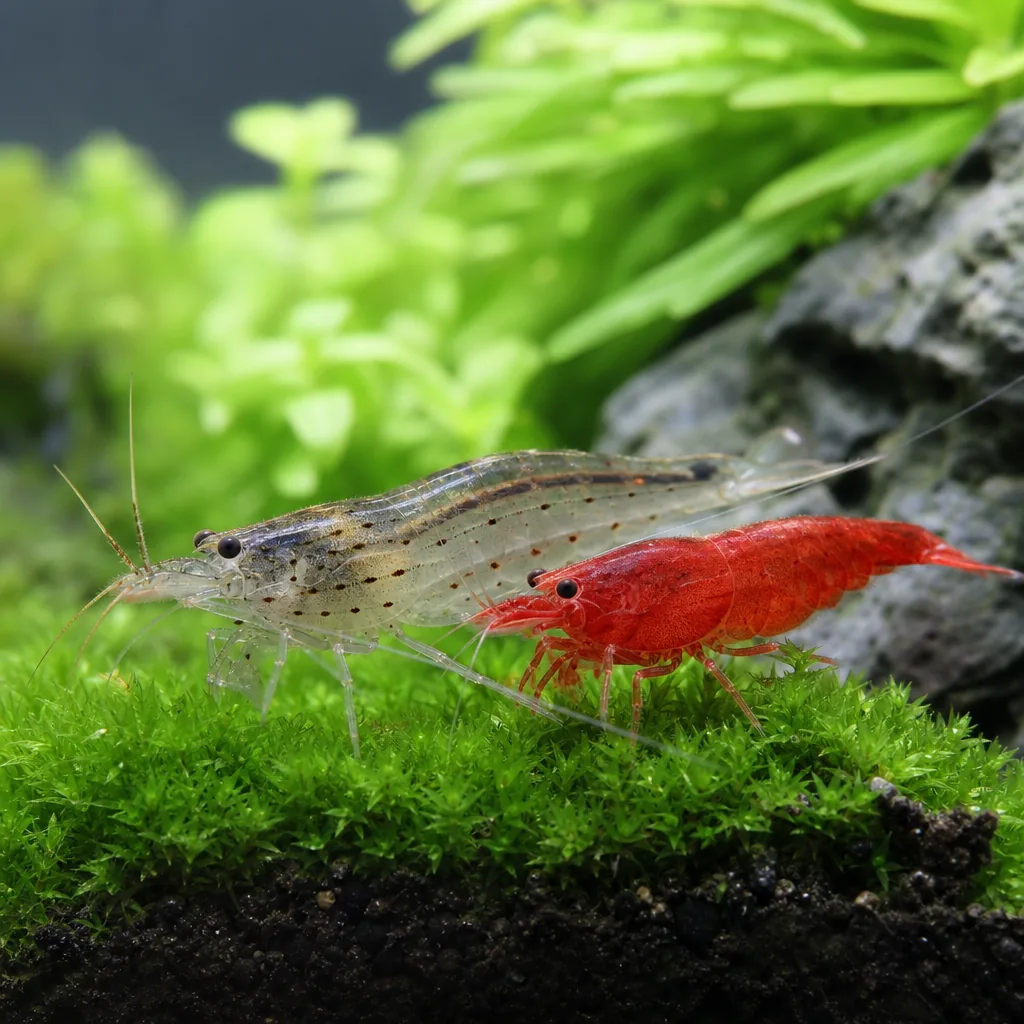
This is one of the most common questions I get from people setting up a planted tank, and the honest answer is that it depends entirely on what you want the shrimp to do. Amano shrimp and cherry shrimp are both excellent, but they solve different problems. One is a workhorse algae eater; the other is a colorful colony that reproduces on its own. Pick based on your goal and you won’t be disappointed.
The Quick Answer
- Want the best algae cleanup crew? Choose amano shrimp.
- Want color and a self-sustaining colony? Choose cherry shrimp.
- Want both? Many keepers run amanos and cherries together, and they coexist fine.
Meet the Two Shrimp
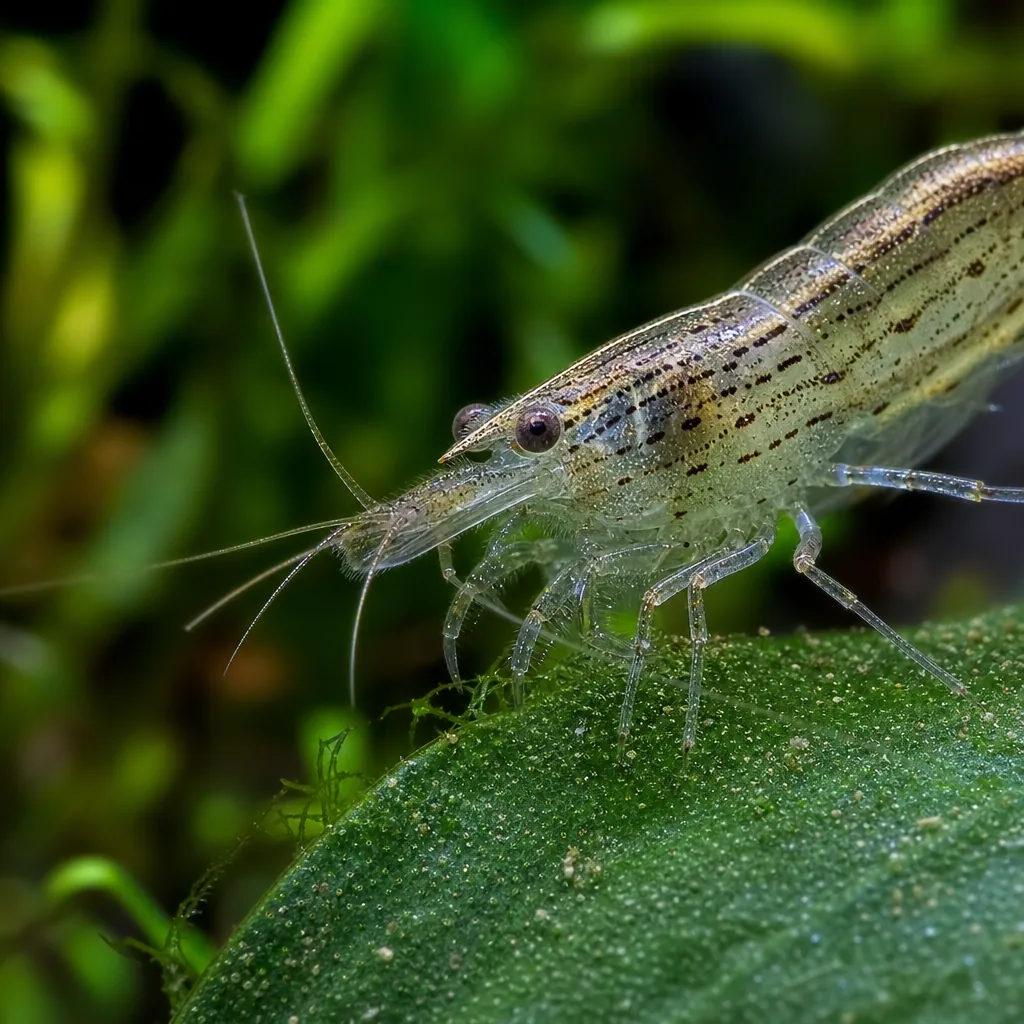
Amano shrimp (Caridina multidentata) are larger, translucent, and famous as algae eaters. Cherry shrimp (Neocaridina davidi) are smaller, bright red, and famous for breeding. That size and color difference drives almost every practical decision between them.
Algae Eating: Amano Wins
If your main reason for buying shrimp is to knock back algae, amanos are the stronger pick, full stop. They are bigger, eat more, and are more willing to tackle tougher algae like hair and thread algae that cherries often ignore. A few amanos will do more visible cleanup than a much larger group of cherries.
Cherries still graze constantly on soft algae and biofilm, and in numbers they contribute, but individually they simply eat less. For a persistent algae problem in a mid-size planted tank, amanos are the tool. Our algae control guide walks through the full cleanup-crew approach.
Breeding: Cherry Wins Easily
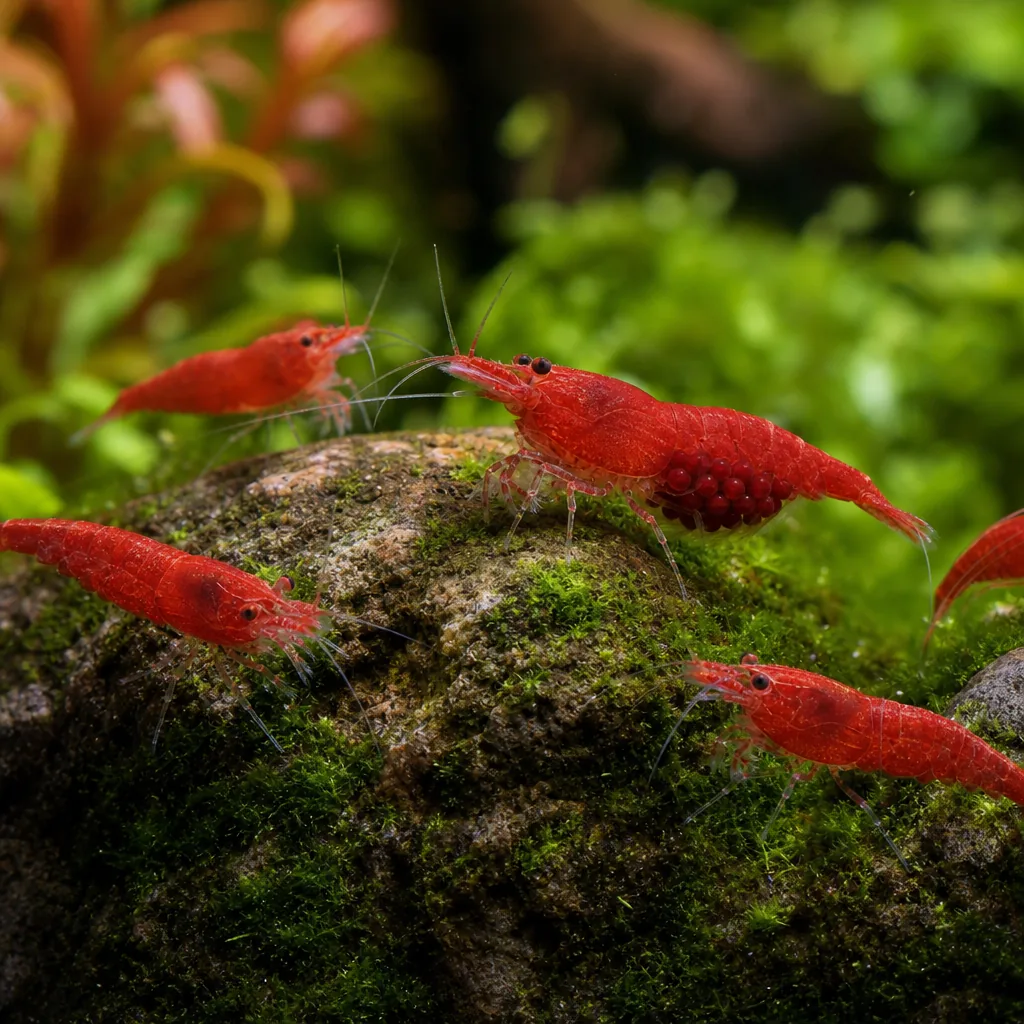
Here is the biggest practical difference. Cherry shrimp breed readily in a normal freshwater tank; a healthy group becomes a colony with no intervention. Amano shrimp effectively cannot breed in a home freshwater tank.
Amano larvae require brackish water to survive their planktonic stage, then must transition back to fresh water. Replicating that at home is difficult and rarely succeeds, so in practice amanos are a one-time purchase that will not replace themselves. Cherries, by contrast, pay for themselves over time.
Color and Looks
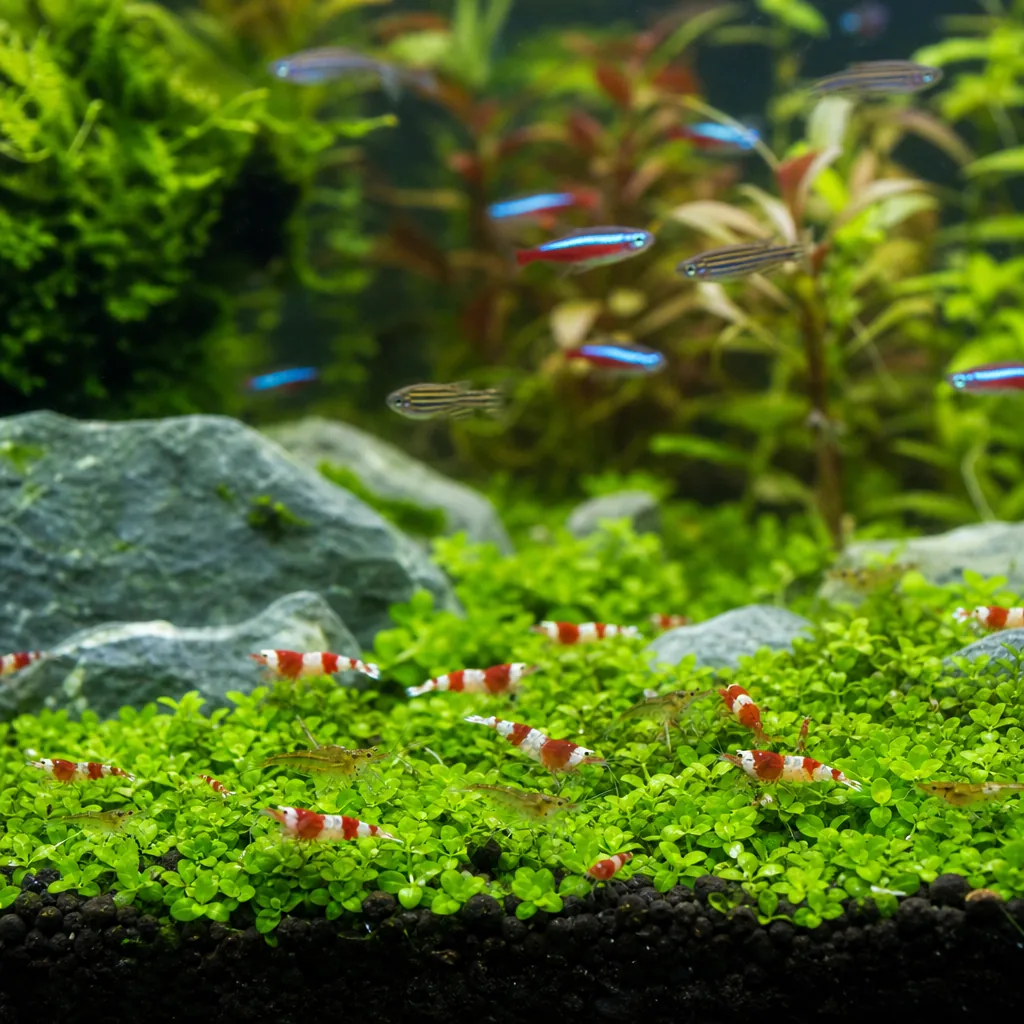
Cherry shrimp win on pure visual appeal. Their solid red pops against green plants and dark substrate, and Neocaridina come in many color strains. Amanos are larger and interesting to watch but their translucent, speckled body is subtle rather than showy.
Water Parameters
Both are hardy, but their preferences differ slightly, which matters when you match them to fish.
- Amano shrimp: 65-78 F, pH about 6.0-7.6, adaptable to a wide range.
- Cherry shrimp: 65-78 F, pH about 6.5-8.0, they like moderately hard water with enough minerals to molt.
- Both: 0 ammonia and nitrite, low nitrate, and absolutely no copper.
Tank Mates and Safety
Size changes the risk picture. Adult amanos are large enough that most community fish leave them alone, which makes them a safer choice in a tank with tetras, rasboras, or other small fish. Cherry shrimp, and especially their babies, are bite-sized and get eaten by many fish, so a breeding colony does best with few or no fish.
- Amanos: good in peaceful community tanks; still avoid large or aggressive fish.
- Cherries: best in a shrimp-focused tank if you want the colony to grow.
Cost Over Time
Amanos cost more up front and never reproduce, so you replace them as they age out. Cherries cost less and multiply, so a small starter group is often the last shrimp purchase you make. If long-term value matters, cherries have the edge; if immediate algae power matters, amanos earn their price.
So Which Should You Get?
- New planted tank fighting algae, community fish present: amano shrimp.
- Shrimp-only or lightly stocked tank, want color and a growing colony: cherry shrimp.
- Larger established tank and you can’t decide: run both. They don’t compete or crossbreed, and together they cover cleanup, color, and reproduction.
Whichever you choose, cycle the tank first, keep the water stable, and avoid copper. If you are assembling a cleanup crew, our recommended invertebrate gear covers the sponge filters and food that keep both species healthy.
The Short Version
Amano for muscle, cherry for color and colony. They are not really competitors so much as specialists, and the best planted tanks often use both. Match the shrimp to the job and either one will earn its place.
Frequently Asked Questions
Do amano shrimp eat more algae than cherry shrimp?
Yes. Amanos are larger, eat more, and tackle tougher algae like hair algae that cherries usually ignore, making them the stronger algae cleanup crew.
Can amano shrimp breed in a freshwater tank?
Not practically. Their larvae need brackish water to develop, which is very hard to replicate at home, so amanos rarely reproduce in a home aquarium.
Can I keep amano and cherry shrimp together?
Yes. They coexist peacefully, do not crossbreed, and together cover algae cleanup, color, and reproduction. Just avoid fish that eat the smaller cherries.
Which shrimp is better for beginners?
Both are hardy, but cherry shrimp are often better value because they breed and replace themselves. Amanos are better if algae control is your main goal.
Do cherry shrimp and amano shrimp need copper-free water?
Yes, both do. Copper is toxic to shrimp, so avoid medications and plant fertilizers that contain it in any shrimp tank.