
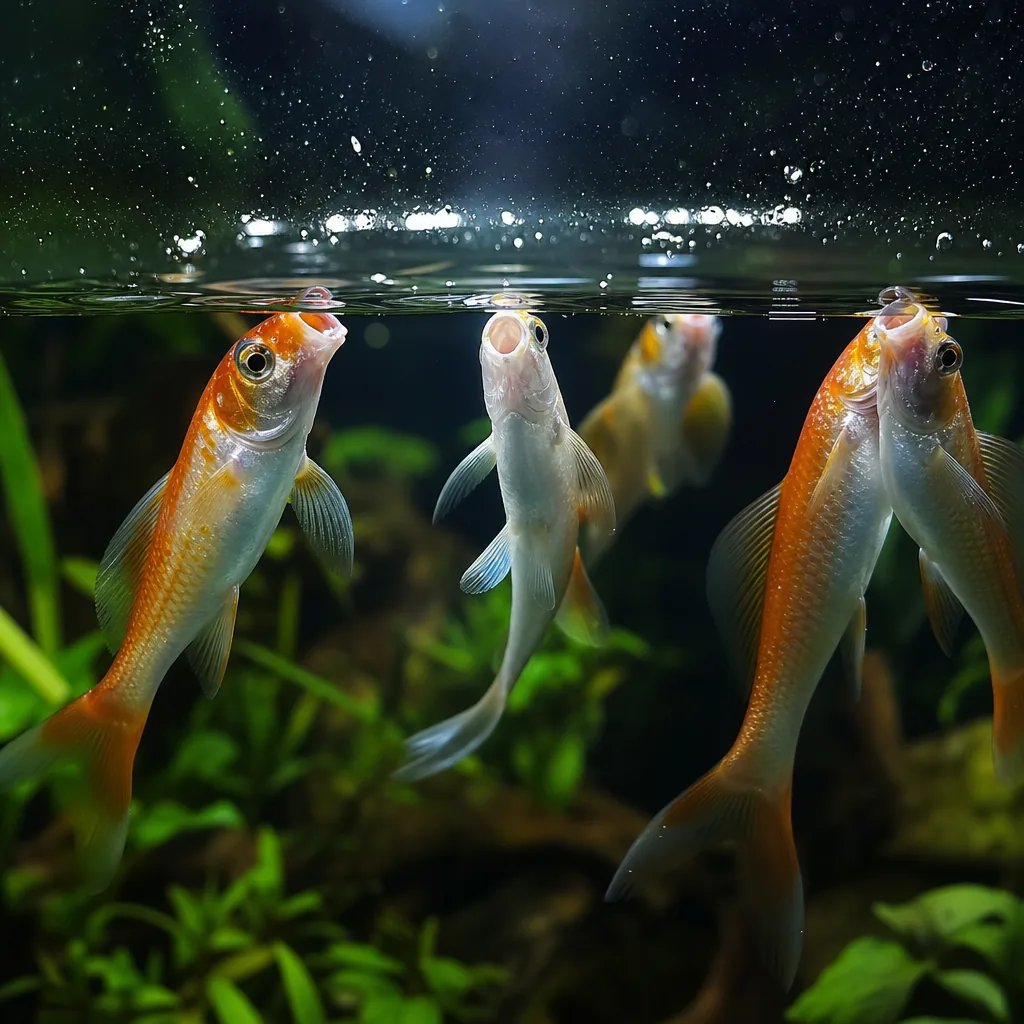
When your fish start hanging near the surface and gulping, it is one of the clearest distress signals in the hobby, and it almost always means something in the water has gone wrong. The good news is that most causes are fixable in minutes once you know what to look for. The bad news is that a few of them will kill a tank overnight if you ignore them, so it pays to act rather than wait and see.
What Gasping at the Surface Actually Means
The very top film of water holds the most dissolved oxygen because that is where gas exchange with the air happens. When fish crowd that layer and breathe hard, they are telling you the rest of the water column does not have enough oxygen to keep them comfortable, or that something is irritating their gills. It is a behavior, not a disease, and it points you toward the environment rather than the individual fish.
Do not confuse it with normal behavior. Labyrinth fish like bettas and gouramis take deliberate gulps of air at the surface, and some fish feed off the top. True distress looks different: rapid gill movement, fish clustered at the surface even away from the filter output, and often clamped fins or listlessness.
Cause 1: Low Dissolved Oxygen
This is the most common trigger. Oxygen drops when water is warm, when the surface is calm, when a tank is overstocked, or when a filter or air pump has quietly failed. Warm water simply holds less oxygen, which is why summer heat waves and heater malfunctions cause sudden gasping.
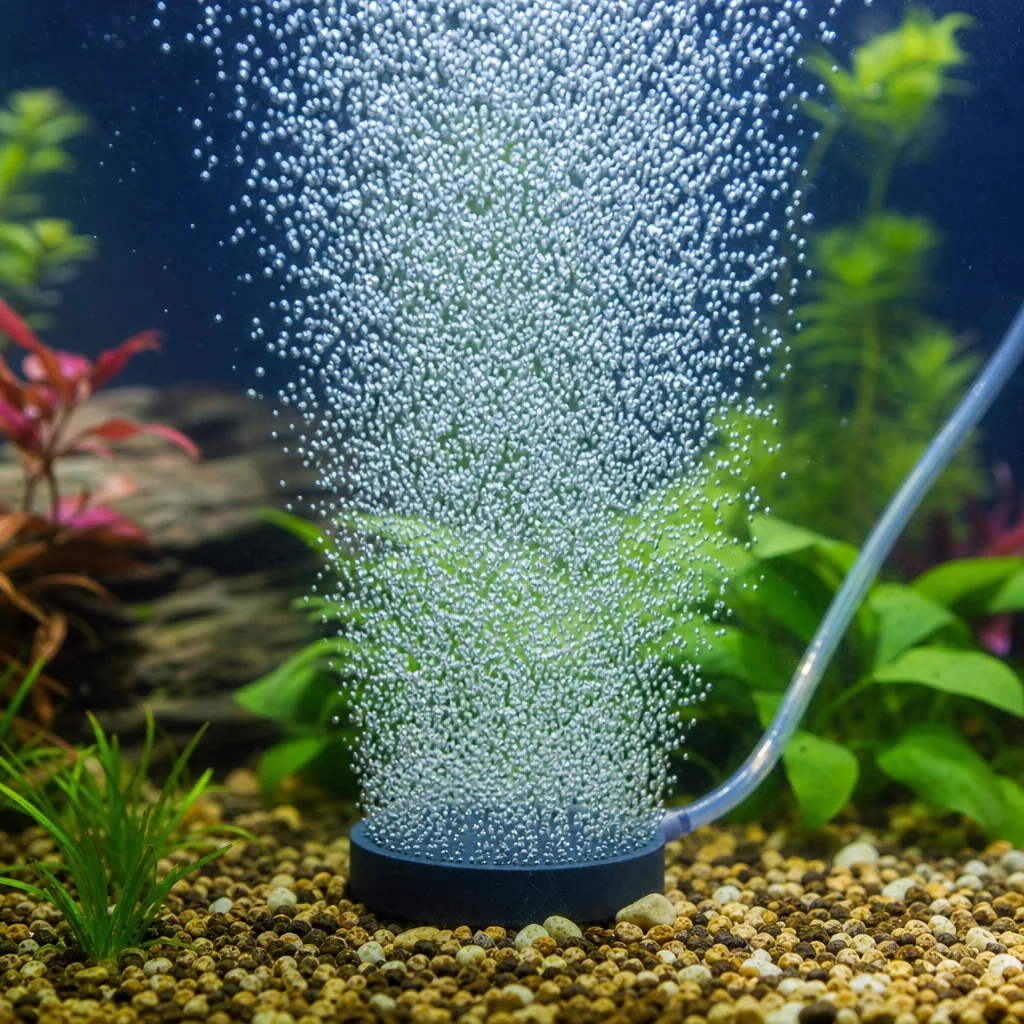
- Increase surface agitation. Aim your filter return to ripple the surface, or add an air stone.
- Check the water temperature. If it has climbed above the mid-70s Fahrenheit for a tropical community tank, cool it gradually with a fan across the surface.
- Reduce the bioload. Overstocked tanks run out of oxygen first at night when plants consume it instead of producing it.
A quality air pump and stone is cheap insurance for any crowded setup. You can see what we recommend in the shop.
Cause 2: Ammonia or Nitrite Poisoning
If your tank is new or you recently cleaned everything at once, you may have crashed the biological filter. Ammonia and nitrite both damage gill tissue and reduce the blood’s ability to carry oxygen, so fish gasp even when oxygen levels are fine. This is the second thing to rule out after aeration.
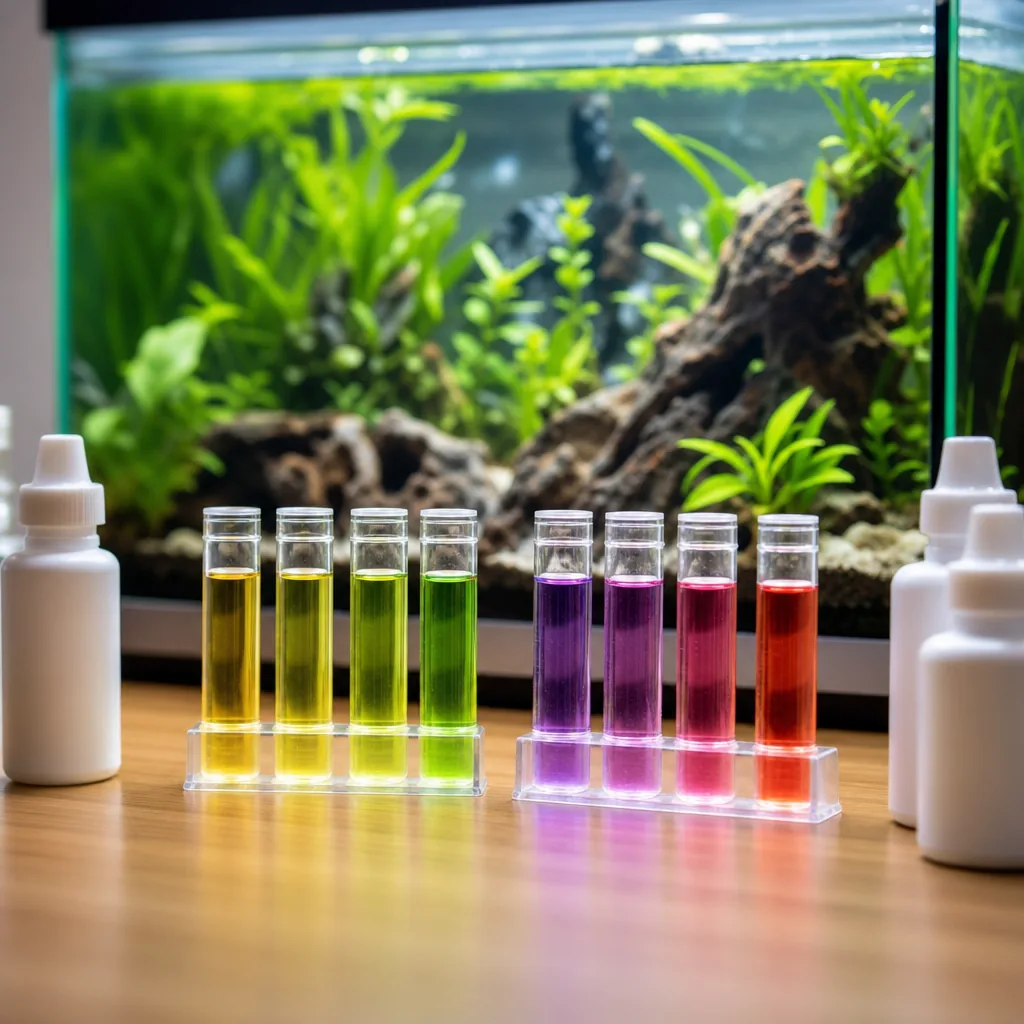
Test the water. Any detectable ammonia or nitrite is an emergency. Do an immediate partial water change of 25 to 50 percent with dechlorinated, temperature-matched water, and repeat daily until readings return to zero. A good liquid test kit is essential here; strips are too vague for a crisis. Our freshwater guides cover cycling a tank properly so this does not happen again.
Cause 3: High Temperature and CO2 Buildup
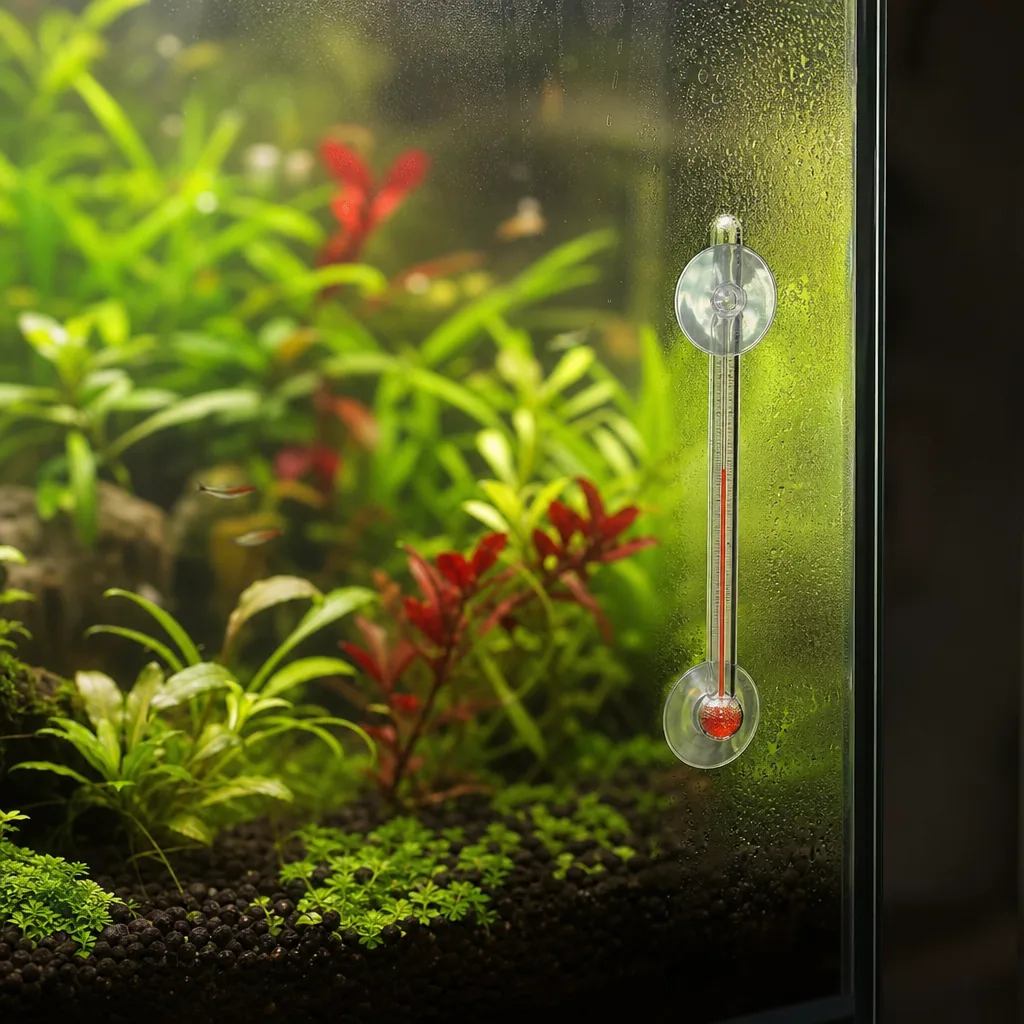
In planted tanks running pressurized CO2, an overdose can suffocate fish by displacing oxygen. If gasping starts shortly after you increased CO2, turn it off, add aeration, and reassess your schedule. Similarly, a stuck heater can cook a tank; touch the glass and check the thermometer before assuming anything else.
Cause 4: Gill Parasites or Disease
Flukes, ich in the gills, and bacterial infections all irritate the breathing surfaces and cause labored respiration. If your water tests clean, oxygen is good, and only one or two fish are affected while the rest look normal, suspect a health issue rather than the environment. Look for flashing, scratching, white spots, or excess slime.
Your First-Response Checklist
When you notice gasping, work through this in order:
- Add surface agitation or an air stone immediately.
- Check the heater and thermometer.
- Test ammonia, nitrite, and pH.
- Do a partial water change with matched, dechlorinated water if any reading is off.
- Confirm the filter and air pump are actually running.
- Only then investigate individual fish for disease.
Preventing It From Happening Again
Most gasping episodes trace back to thin margins: a tank stocked to its limit, a single point of failure for aeration, or a maintenance routine that lets waste accumulate. Build in some slack. Keep the surface moving, avoid overstocking, feed conservatively, and run a redundant air source on any tank you care about. A battery backup air pump is worth having for power outages. Read more troubleshooting walkthroughs on the blog.
Surface gasping is your tank asking for help in the only way it can. Respond quickly, fix the environment first, and your fish usually recover with no lasting harm.
Frequently Asked Questions
Is my betta gasping at the surface a problem?
Not necessarily. Bettas are labyrinth fish and take deliberate gulps of air at the surface as normal behavior. Worry only if breathing is rapid and constant, fins are clamped, or the fish also looks lethargic and off-color.
Can low oxygen kill fish overnight?
Yes. Oxygen drops at night when plants consume it, and a warm, overstocked, or poorly aerated tank can bottom out before morning. Adding an air stone is the single fastest safeguard.
How do I quickly add oxygen in an emergency?
Increase surface agitation right away: aim the filter return to break the surface, drop in an air stone, or point a fan across the water to cool and ripple it. More surface movement means more gas exchange.
Does warm water really cause gasping?
It does. Warmer water holds less dissolved oxygen, so heat waves and stuck heaters are common triggers. Cool the tank gradually and boost aeration rather than dropping the temperature suddenly.
My water tests fine but one fish still gasps. Why?
When water quality and oxygen are good but only one or two fish are affected, suspect gill parasites or infection. Look for flashing, scratching, white spots, or excess slime and treat for disease.