
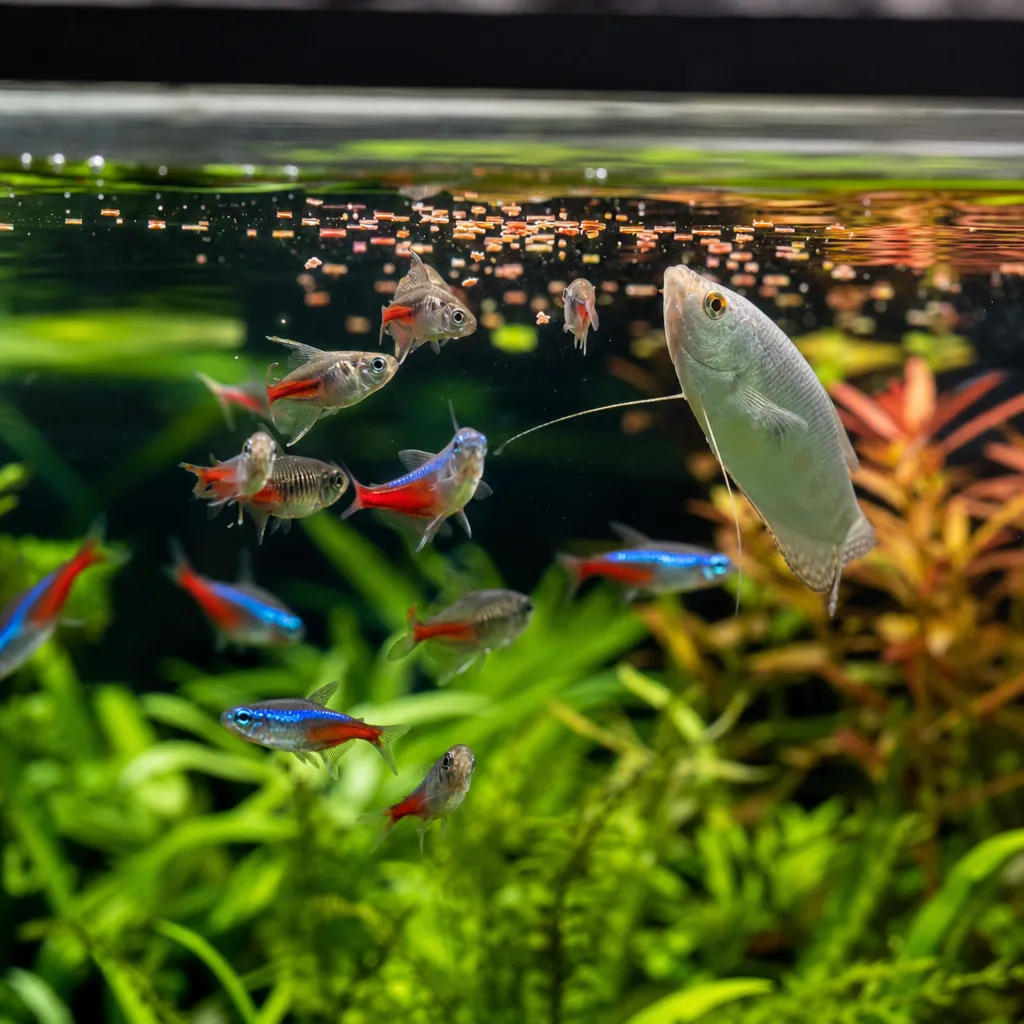
If I had to name the single most common mistake I see new fishkeepers make, it would be overfeeding, without hesitation. It feels like kindness, the fish always act hungry, and a little extra seems harmless. But leftover food and the waste it produces are behind a huge share of the water quality problems that make fish sick. Let me show you how to feed properly.
Why Overfeeding Is So Damaging
Fish only eat what they need, and anything they do not eat sinks, decays, and pollutes the water. Even the food they do eat becomes waste. That waste feeds a cycle of ammonia and nitrite spikes that your filter has to process, and if you overload it, water quality crashes.
The knock-on effects are exactly the problems beginners then panic about: algae blooms, cloudy water, stressed fish, and disease outbreaks like fin rot and ich. In most cases, the root cause was too much food. Feeding less is one of the easiest upgrades you can make to a struggling tank.
How Much Should You Feed?
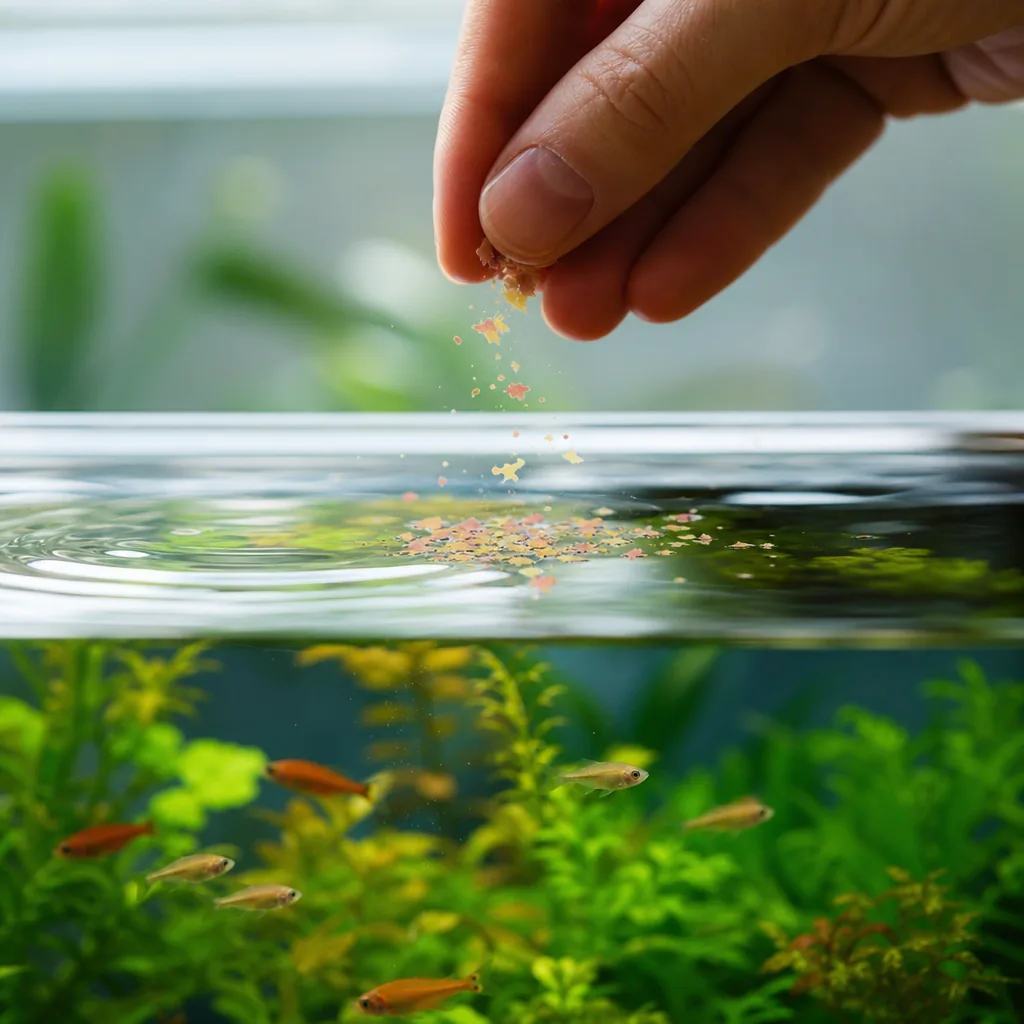
The reliable rule is simple: feed only what your fish can finish in about two minutes, then stop. If food is still drifting down or sitting on the substrate after a couple of minutes, you gave too much. Adjust down next time.
A fish’s stomach is roughly the size of its eye, which puts into perspective how little they actually need. It is far better to slightly underfeed than to overfeed. A fish can go days without food with no harm, but it cannot undo a fouled tank overnight.
How Often Should You Feed?
For most adult community fish, once or twice a day is plenty. Splitting the daily ration into two small feedings can be gentler on water quality than one big meal, but a single modest feeding works fine too.
Some situations call for different schedules:
- Fry and young growing fish need small feedings several times a day to fuel rapid growth.
- Large predatory fish may eat less frequently, sometimes every few days.
- Bottom dwellers and nocturnal species may need feeding after lights out so faster fish do not take everything first.
Know your specific fish, because their natural feeding habits should shape your schedule.
Should You Fast Your Fish?
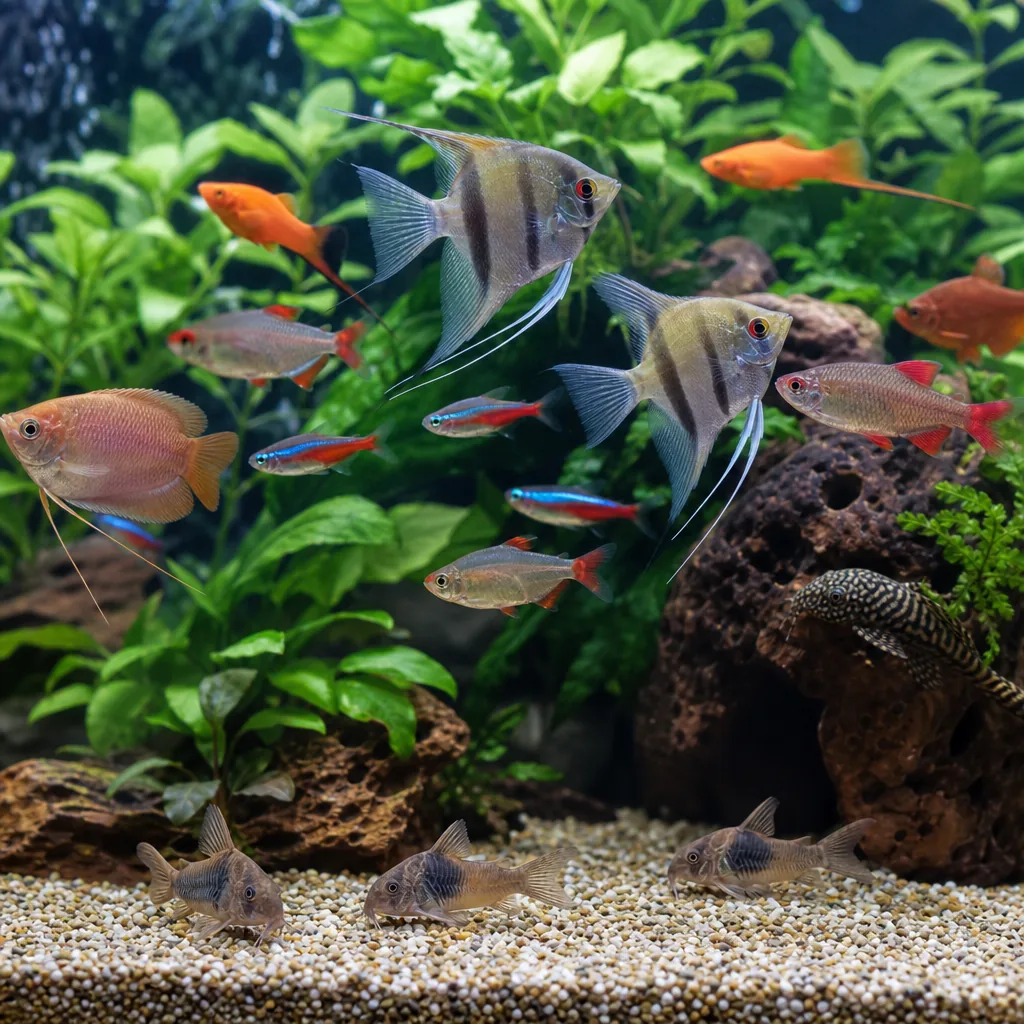
Many experienced keepers give their fish one fasting day per week. Skipping a day lets the digestive system clear out, can reduce bloating, and gives the tank a small break from waste production. It is not mandatory, but it is a sound habit for most community tanks.
Fasting is different from starving. One planned day off is healthy. Chronic underfeeding where fish are visibly thin and desperate is not.
Feeding a Varied Diet
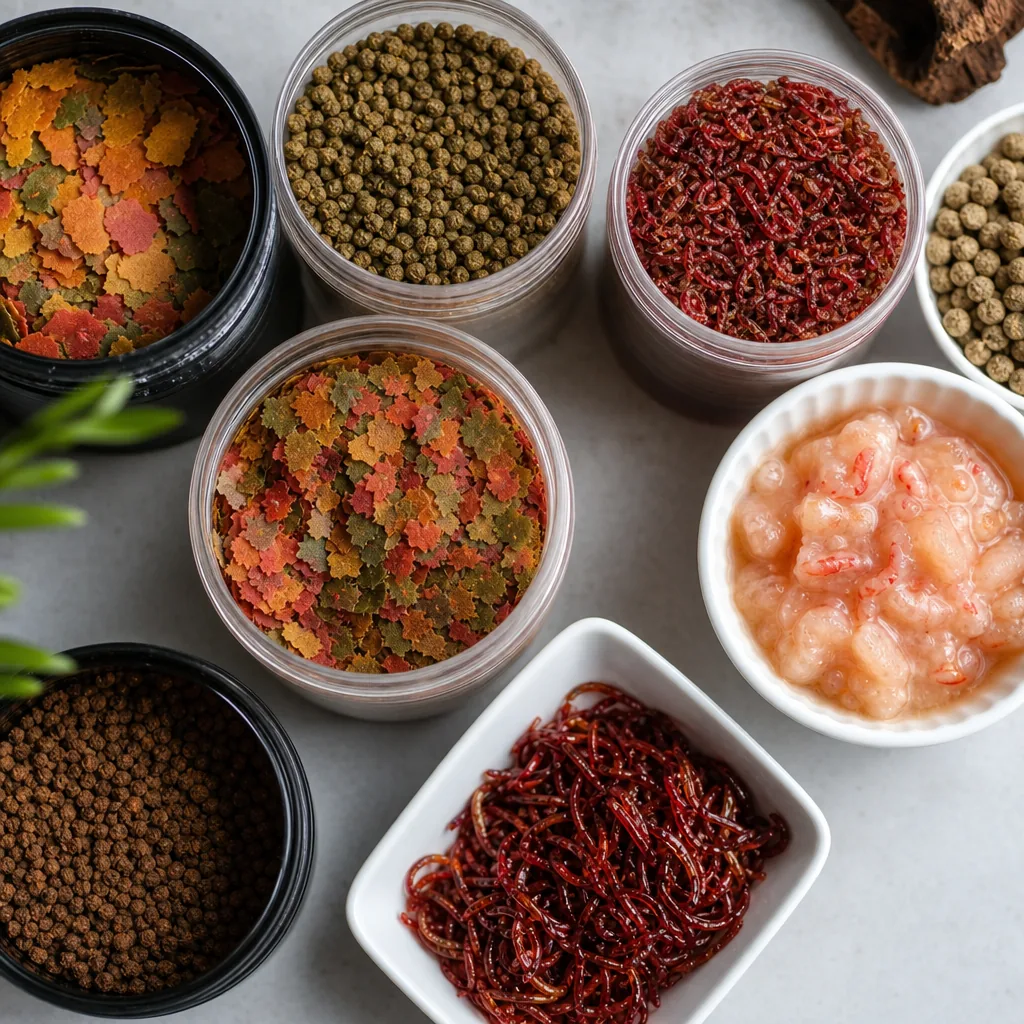
A single flake food is convenient, but variety keeps fish healthier and more colorful. Rotate a quality staple with occasional treats:
- Quality flakes or pellets sized for your fish as the daily base.
- Frozen or live foods like bloodworms, daphnia, and brine shrimp as treats.
- Blanched vegetables for herbivores and algae grazers.
- Sinking foods for bottom dwellers so they get their share.
Match the food to the fish. Surface feeders want floating food, bottom dwellers need it to sink, and everyone benefits from a menu that reflects what they would eat in the wild.
Practical Feeding Habits That Prevent Problems
A few small habits make a big difference:
- Watch every feeding for the first minute so you can gauge the right amount.
- Remove uneaten food if you clearly overshot.
- Do not feed to compensate for begging, fish beg constantly regardless of hunger.
- Keep an eye on the least assertive fish to make sure they are eating.
Feeding is also your daily health check. It is the moment you naturally observe every fish, so it is the best time to catch early signs of illness.
The Simple Takeaway
Feed small amounts your fish finish in about two minutes, once or twice a day, with a varied diet and an optional weekly fast. Do that and you will sidestep the water quality issues that trip up most beginners. When in doubt, feed less, because a slightly hungry fish is far healthier than a polluted tank.
For quality foods, feeders, and test kits to keep an eye on water quality, browse our shop. For more everyday care fundamentals, visit our freshwater section or keep reading across the blog.
Frequently Asked Questions
How much should I feed my fish per feeding?
Feed only what your fish can finish in about two minutes, then stop. If food is left drifting or sitting on the bottom after that, you fed too much and should reduce the amount.
How often should I feed aquarium fish?
Most adult community fish do well with one or two small feedings a day. Fry need several small feedings, and some large predators eat only every few days.
Is it bad to skip feeding my fish for a day?
No, a planned fasting day is actually healthy for most community tanks. Fish can safely go a day or more without food, and skipping a day gives their digestion and the tank a break.
What happens if I overfeed my fish?
Uneaten food and extra waste pollute the water, causing ammonia and nitrite spikes, algae, cloudy water, and stress that leads to disease. Overfeeding is behind most beginner water quality problems.
Should I feed my fish a varied diet?
Yes. Rotate a quality staple flake or pellet with frozen or live treats and vegetables for herbivores. Variety keeps fish healthier and more colorful than a single food.