
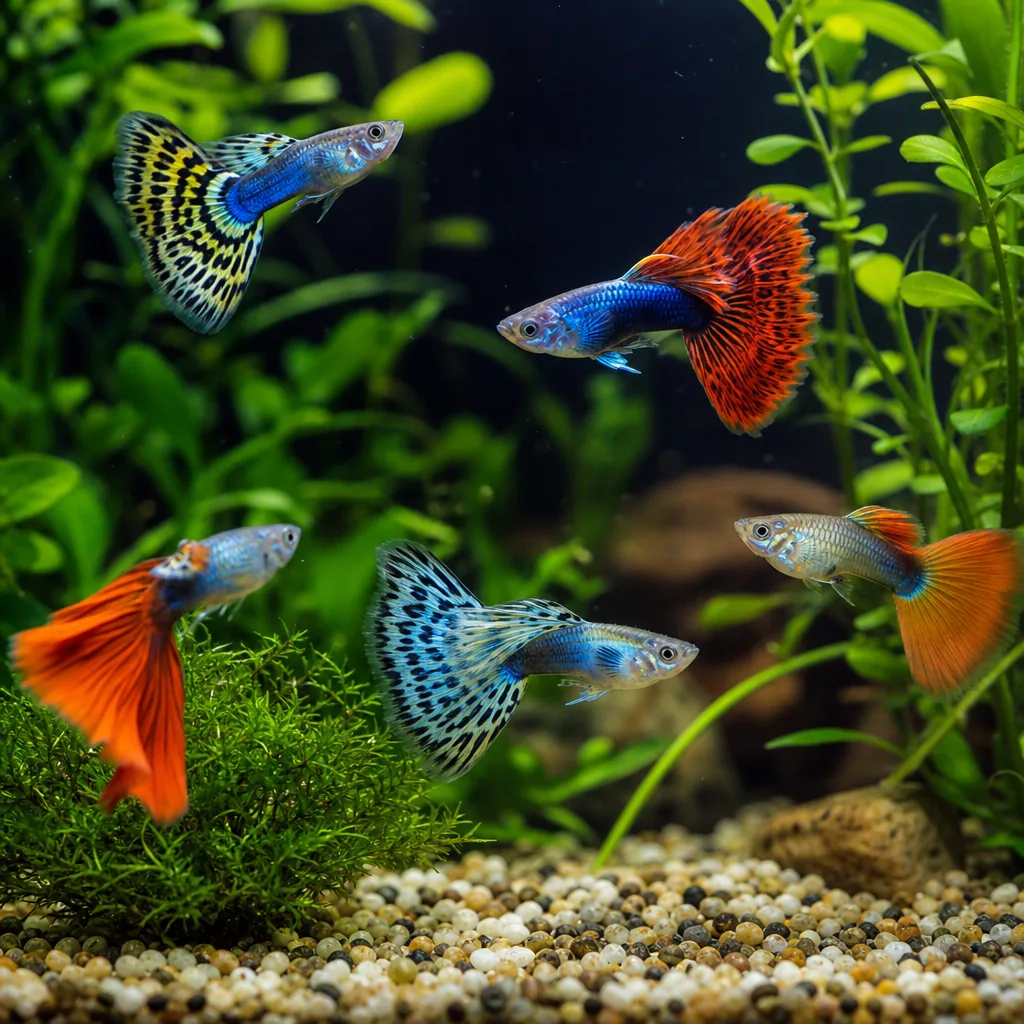
Guppies have a reputation as the perfect beginner fish, and for the most part it is deserved. They are hardy, colorful, active, and cheap to get started with. What catches new keepers off guard is not keeping them alive, it is keeping up with how fast they breed. Let me cover the full picture: setup, daily care, and what to do about the population explosion.
Setting Up a Guppy Tank
Guppies are small, but they are active swimmers and they multiply, so do not go too small. A tank of at least ten gallons gives you room for a starter group and some breathing space for the inevitable fry. Bigger is genuinely easier because it buffers water quality swings.
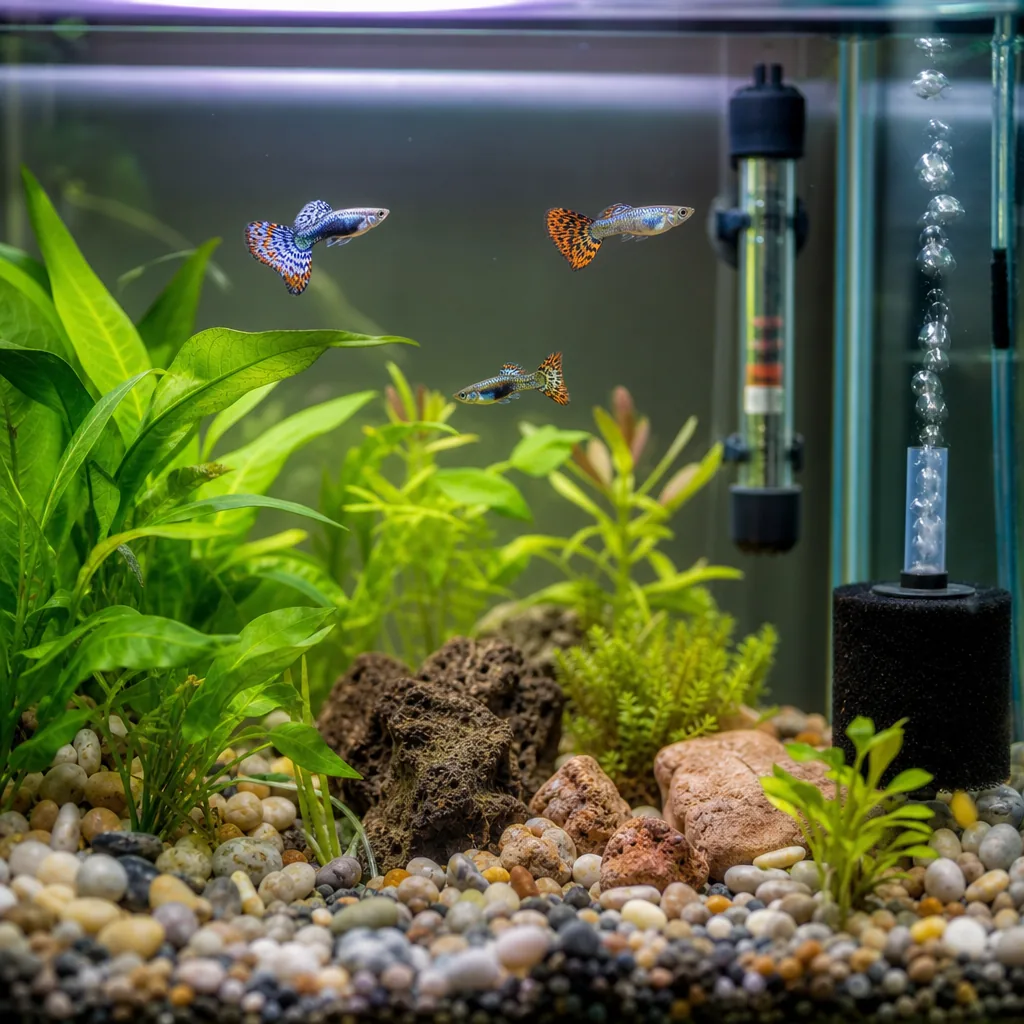
Your basic setup should include:
- A gentle filter, ideally a sponge filter or one with adjustable flow, since guppies dislike strong currents.
- A heater to hold a stable temperature in the low-to-mid seventies Fahrenheit range.
- Live or silk plants for cover, which also give fry a place to hide.
- A cycled tank before you add fish, so the biological filter can handle waste.
Cycling the tank first is the step beginners skip most often, and it is the one that causes the most losses. Get your filter established before you add livestock.
Water and Daily Care
Guppies are adaptable, but they do best in slightly hard, alkaline water and appreciate stability above all. Sudden swings stress them far more than water that is a bit outside the ideal range. Keep up with regular partial water changes to control nitrate, and test your parameters until you know your tank’s rhythm.
Feeding is simple. A quality flake or micro pellet once or twice a day is plenty, supplemented with the occasional frozen or live treat. The golden rule applies: feed only what they finish in a couple of minutes. Overfeeding is the fastest way to foul the water.
Choosing Healthy Guppies and Tankmates
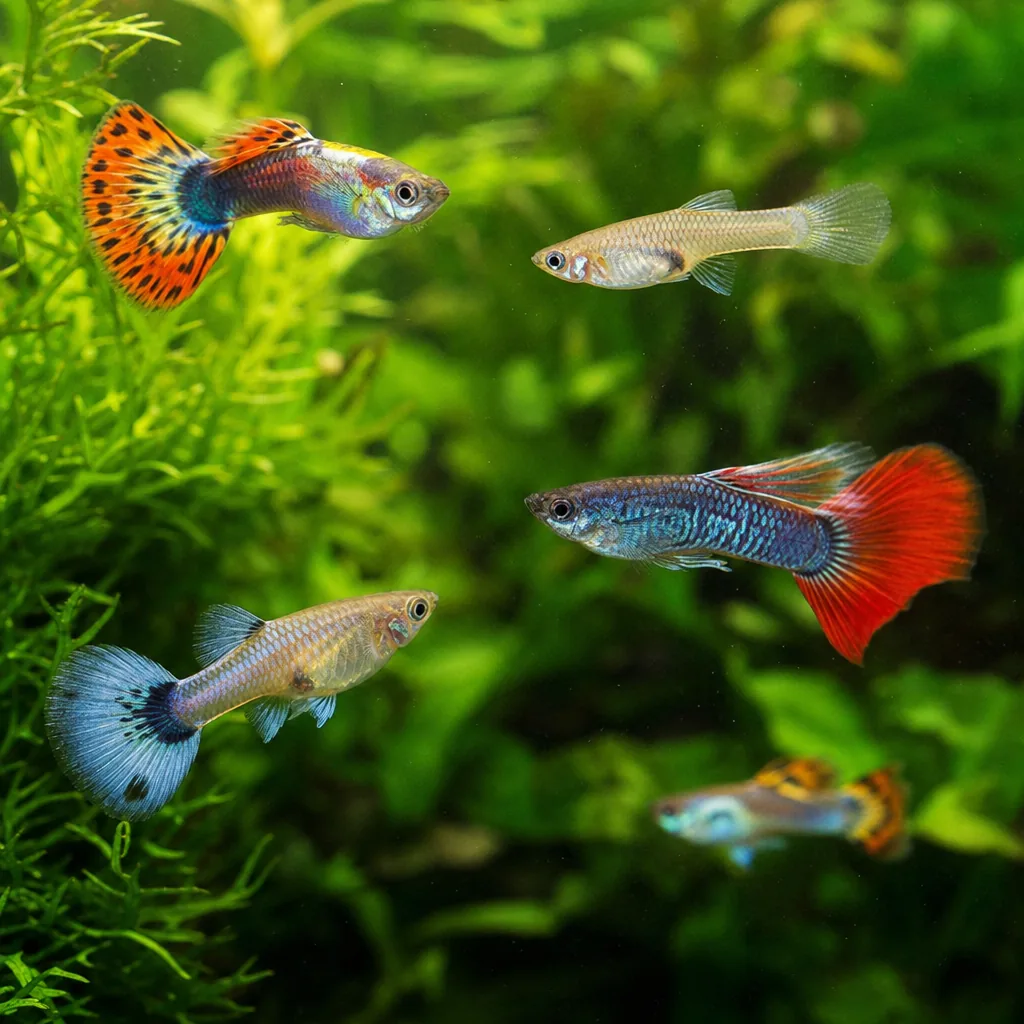
When buying, look for active fish with clean fins, bright color, and no signs of clamping or wasting. Guppies are peaceful and get along with most other calm community fish. Avoid fin nippers, which will shred those long tails, and avoid anything large enough to view a guppy as a snack.
One classic mistake is stocking mostly males or a poorly balanced ratio. If you keep both sexes, expect breeding, because guppies are livebearers and they are enthusiastic about it.
Breeding: It Will Happen Whether You Plan It or Not
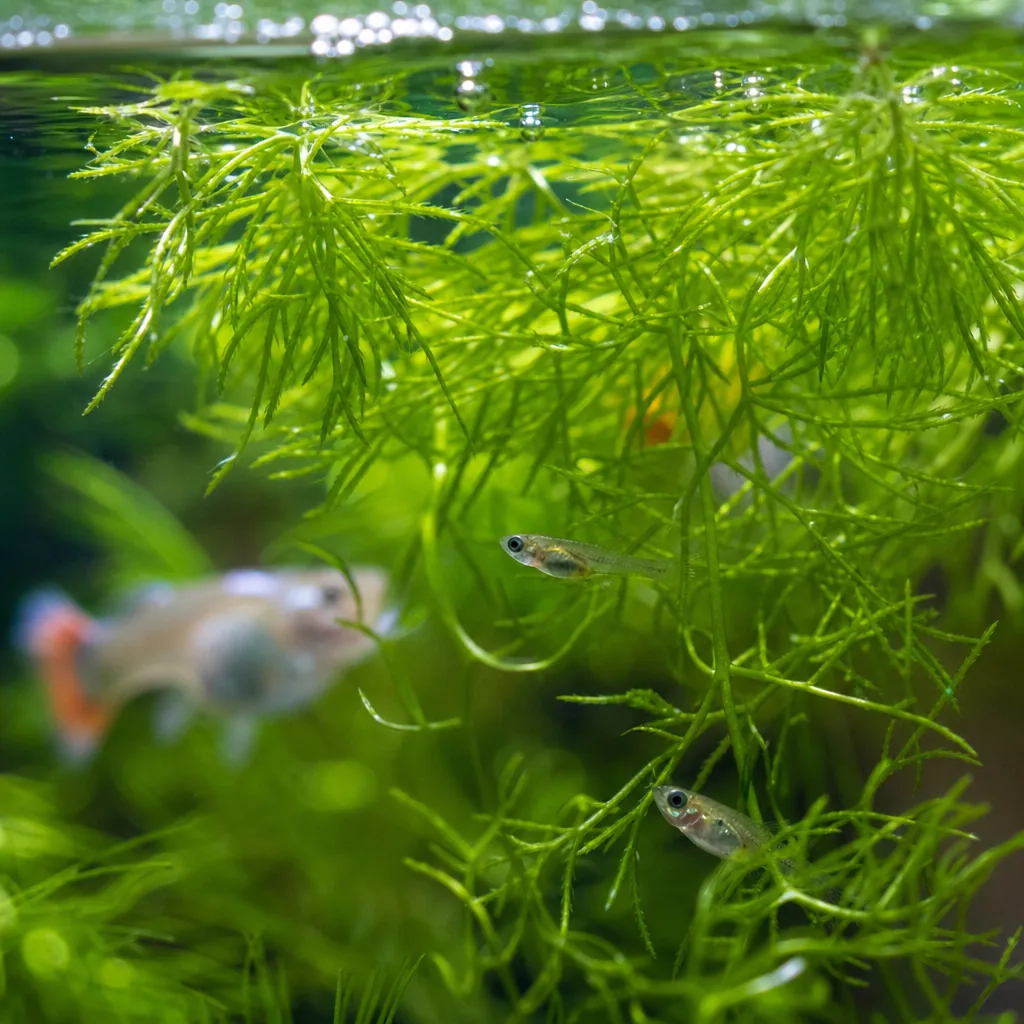
Guppies are livebearers, meaning females give birth to free-swimming fry rather than laying eggs. A single female can produce dozens of fry every few weeks, and she can store sperm to keep producing broods long after separation. This is why guppy populations seem to explode.
Managing the fry
Adult guppies, including the parents, will eat fry given the chance. If you want to raise them, provide dense plant cover or a breeding box, and feed the fry finely crushed food several times a day. They grow quickly with good food and clean water.
Controlling the population
If you do not want an endless supply, you have a few practical options:
- Keep only males, which also happen to be the more colorful sex.
- Let nature take its course by not providing fry cover, so the adults thin the numbers.
- Rehome or trade surplus fish with your local fish store or other hobbyists.
There is no shame in letting the tank self-regulate. Trying to save every fry is how people end up massively overstocked.
Common Health Issues
Guppies are hardy but not invincible. The problems you are most likely to see are stress-related, tied to poor water or sudden changes. Watch for fin rot, ich, and general lethargy or clamped fins as early warning signs. Nearly all of it traces back to water quality and stability, so your maintenance routine is your best medicine.
Putting It All Together
Guppies reward you with color and activity for very little effort, as long as you respect two things: keep the water stable, and have a plan for the breeding. Set up a properly cycled tank, feed lightly, and decide in advance how you will handle fry. Do that and you will have a lively, self-sustaining community that is genuinely enjoyable to watch.
For gear to get started, our shop has beginner-friendly filters, heaters, and test kits. You can explore more livebearer and community stocking ideas in our freshwater section, and find more beginner guides across the blog.
Frequently Asked Questions
How many guppies should I start with?
A small group of three to six is a good start in a ten-gallon or larger tank. If you keep both sexes, keep more females than males to reduce harassment, but remember that mixed groups will breed.
Do guppies need a heater?
In most homes yes. Guppies do best with stable temperatures in the low-to-mid seventies Fahrenheit, and a heater prevents the swings that stress them, especially in cooler rooms.
How often do guppies have babies?
Females can give birth roughly every four weeks and can store sperm to keep producing broods for months after mating. Each brood can be a couple dozen or more fry.
How do I stop my guppies from overbreeding?
Keep only males, avoid providing fry hiding spots so adults thin the numbers naturally, or rehome and trade surplus fish. Keeping a single sex is the simplest control.
Why do my guppies keep dying?
The most common cause is an uncycled tank or unstable water quality. Cycle the tank before stocking, keep up with water changes, avoid overfeeding, and hold a stable temperature.