
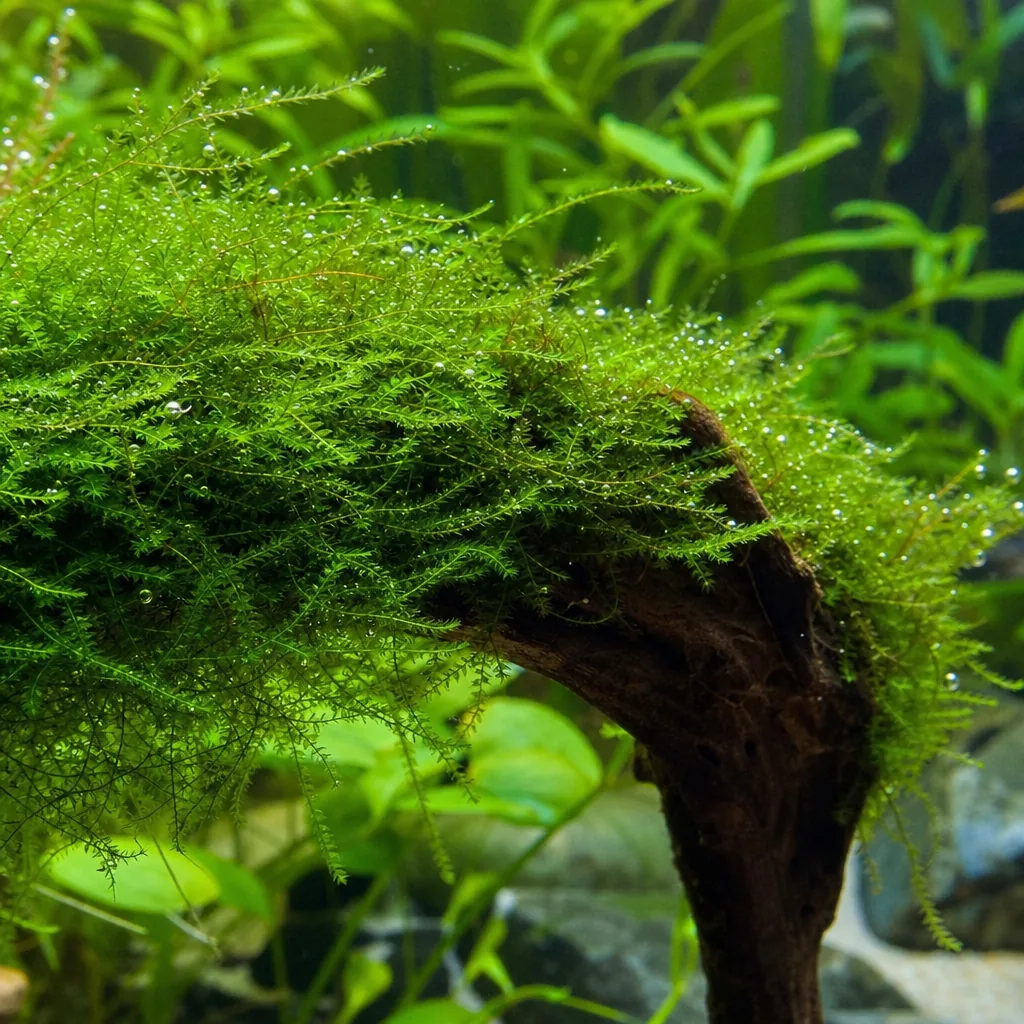
Moss is where a lot of people should start their planted-tank journey, and where plenty of experienced keepers keep coming back. It needs no special substrate, tolerates low light, and turns bare driftwood and rock into something that looks like it has been underwater for years. Get a few basics right and it is almost impossible to kill.
The Common Aquarium Mosses
You will run into a handful of mosses repeatedly, and while their care is similar, their looks differ enough to matter for aquascaping.
- Java moss – the classic. Fast, tough, undemanding, and happy to grow in a loose tangle. It is the best beginner moss and the one most likely to survive neglect.
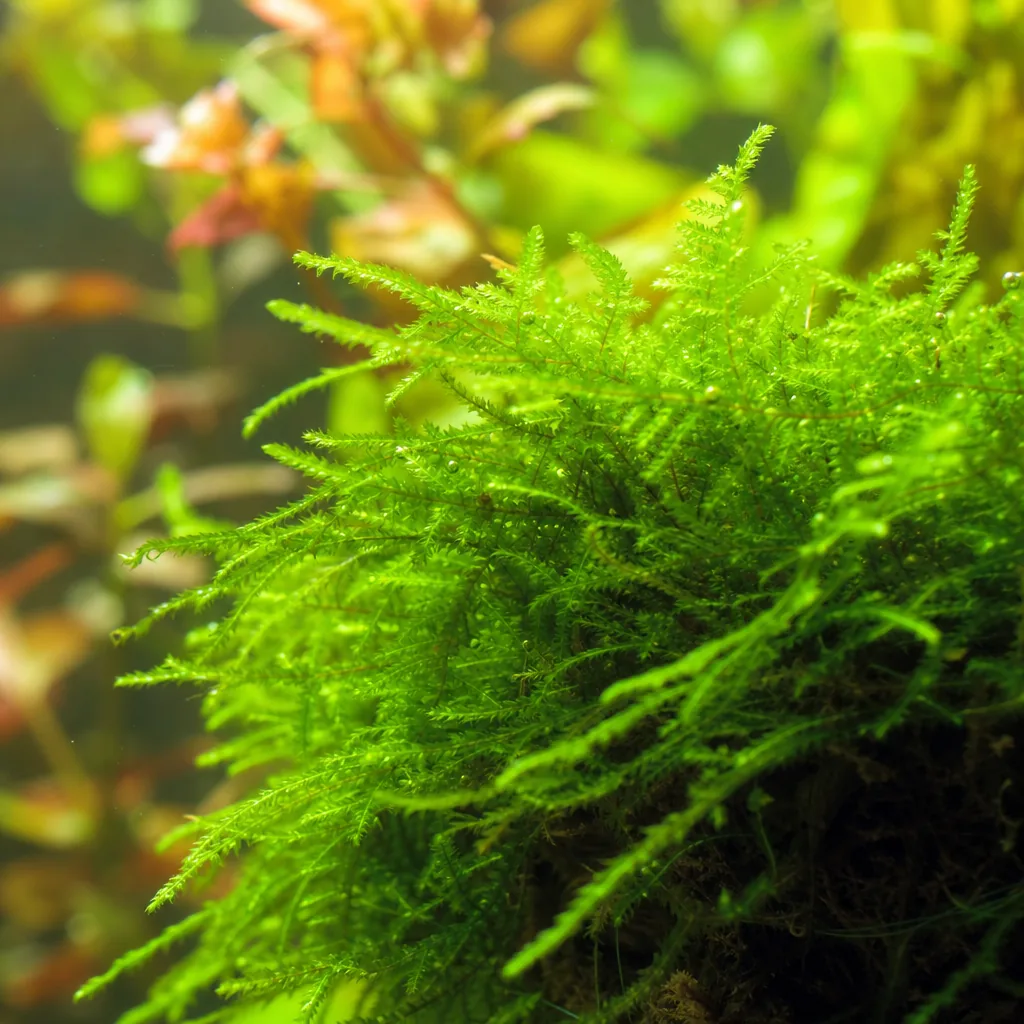
- Christmas moss – named for its branching, fir-tree fronds that grow in tidy triangular tiers. Slower and slightly fussier than Java, but neater when trimmed.
- Flame moss – grows upward in twisting, flame-like columns rather than spreading flat. Striking as a vertical accent, and slower growing.
All three attach to hardscape the same way and share the same core needs, so once you can grow one you can grow any of them.
What Moss Actually Needs
Moss has no true roots. It absorbs everything through its leaves and fronds directly from the water column, and it simply anchors to surfaces rather than feeding through them. That single fact drives every care decision.
- Light: low to moderate is ideal. Moss grows in low light, just slowly. Too much light without CO2 and nutrients invites algae to colonize the fine fronds, which is the number one moss problem.
- Temperature: most common mosses prefer cooler-to-moderate tropical temperatures and can look ragged in very warm tanks.
- Flow: gentle, steady flow keeps detritus from settling into the moss and delivers nutrients to the fronds.
- Nutrients and CO2: not required, but both speed growth and improve density and color. Moss will live without either.
Because moss feeds from the water, it does well in a wide range of setups. For lighting and flow gear that suits a low-tech mossy tank, see the shop and our freshwater guides.
How to Attach Moss to Hardscape
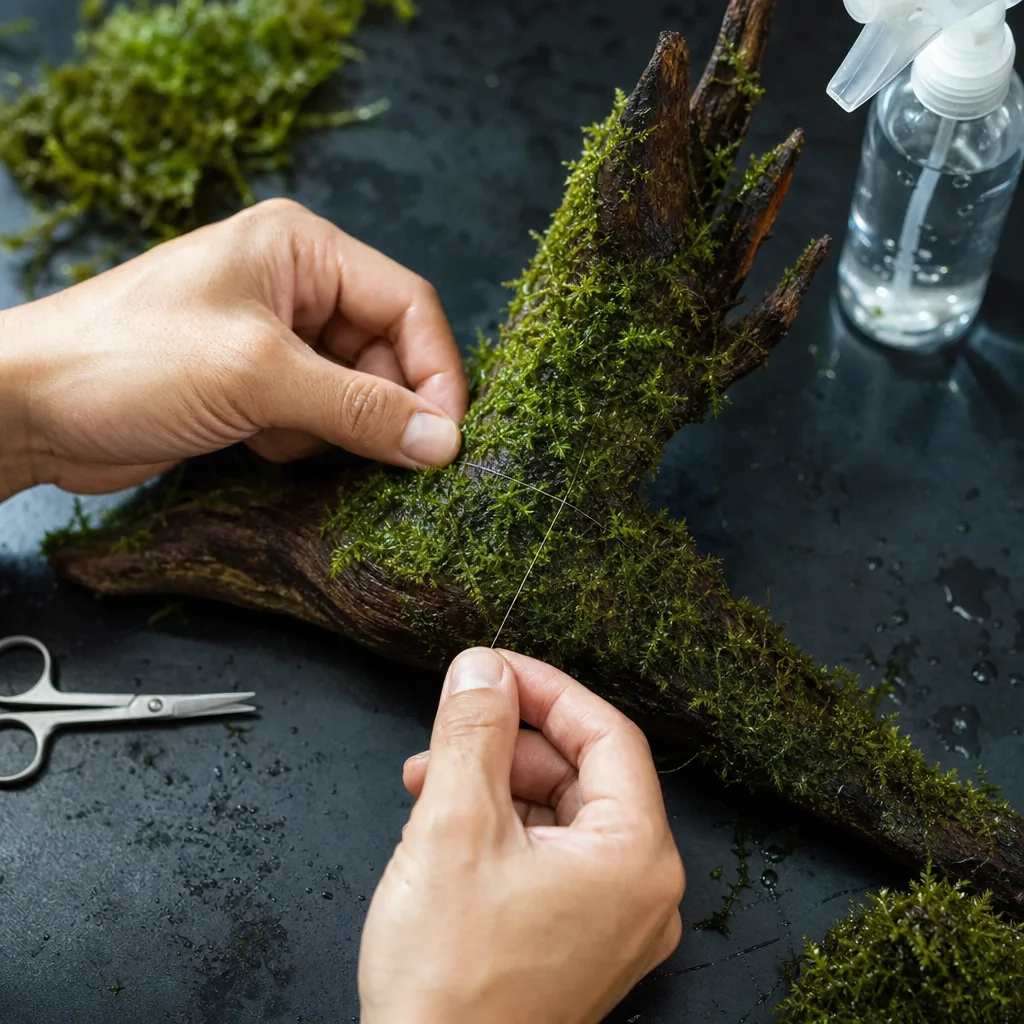
Since moss will not root into substrate, you fasten it to wood or rock and let it grip on its own over a few weeks. There are three reliable methods.
- Thread or fishing line: spread a thin layer of moss over the surface and wrap it snugly with cotton thread or clear fishing line. Cotton dissolves over time; fishing line stays. Thin layers attach faster and look better than thick clumps.
- Super glue gel: use cyanoacrylate gel (the kind sold as reef or plant-safe glue) to tack small portions of moss directly to dry hardscape. It bonds fast underwater-safe once cured and is aquarium-safe once set.
- Mesh: sandwich moss between two layers of plastic mesh to make a flat “moss wall” or carpet, then place or attach the mesh where you want it.
Whichever method you use, less moss is more. A thin, even layer roots faster and grows into a dense mat, while a thick wad tends to brown and die in the middle where light and flow cannot reach.
Trimming and Shaping
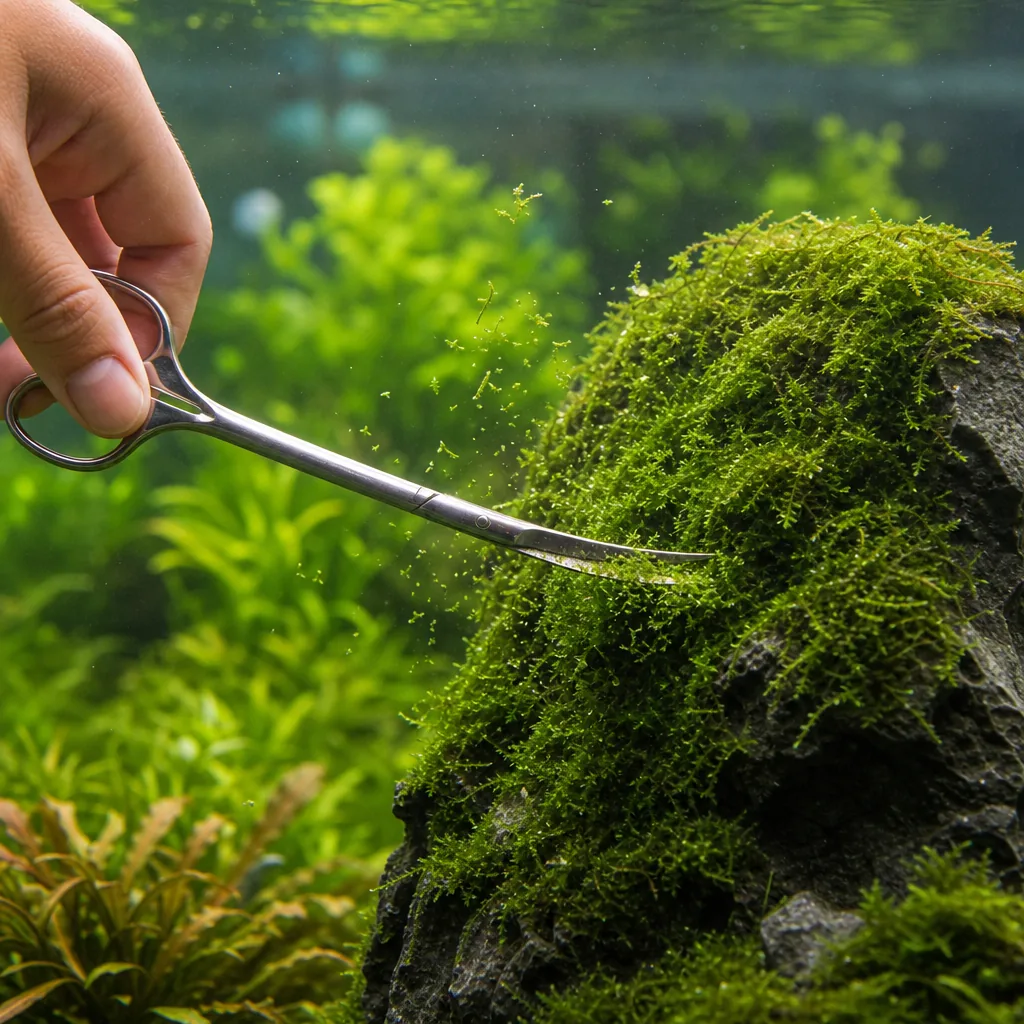
Moss keeps growing until you shape it, and the difference between a manicured Christmas moss tree and a shaggy mess is regular trimming. Trim with sharp scissors to your desired outline; the moss will branch and fill in denser after cutting, much like pruning a hedge. Remove the trimmed pieces or they will float around and attach wherever they land.
For flame and Christmas moss especially, occasional trimming is what preserves their distinctive shapes. Java moss you can largely let go, then cut back hard when it gets unruly. This forgiving pruning behavior is a big reason moss is such a beginner-friendly plant, and it pairs well with the aquascaping styles covered elsewhere on our blog.
Keeping Moss Algae-Free
The one real enemy of aquarium moss is algae, especially thread and hair algae that tangle into the fine fronds and become nearly impossible to remove without pulling out moss too. Prevention beats cure every time.
- Keep light modest. Bright light over slow-growing moss favors algae.
- Maintain gentle flow so detritus does not settle into the moss and feed algae.
- Keep nutrients balanced and do regular water changes.
- Add grazers such as small shrimp, which pick algae and debris out of moss better than any tool you own.
If algae does take hold, a heavy trim followed by improved conditions is usually more effective than trying to clean each frond.
Great Ways to Use Moss
Beyond covering driftwood and rock, moss earns its keep in a lot of roles. It makes an excellent spawning surface and fry refuge because tiny fish and shrimplets hide in the dense fronds. It softens the transition between hardscape and substrate. And moss walls or carpets create lush green backdrops and foregrounds without the demands of a true carpeting plant. Whether you keep a nano shrimp tank or a large aquascape, moss is one of the most versatile and forgiving plants you can own.
Frequently Asked Questions
Does aquarium moss need special substrate?
No. Moss has no true roots and feeds through its fronds directly from the water. You attach it to wood or rock rather than planting it in substrate.
How do I attach moss to driftwood or rock?
Wrap a thin layer with cotton thread or fishing line, tack it down with aquarium-safe super glue gel, or sandwich it in plastic mesh. Thin, even layers attach and fill in faster than thick clumps.
Does moss need CO2 and fertilizer?
No, moss grows without either, just more slowly. Adding CO2 and nutrients improves density and color, but the key limits are keeping light modest and flow gentle to avoid algae.
Why is my moss turning brown in the middle?
Usually the layer was too thick, so light and flow cannot reach the center and it dies off. Attach thinner layers and trim regularly so the whole mat stays lit and fed.
How do I keep algae out of my moss?
Keep light modest, maintain gentle flow so debris does not settle, do regular water changes, and add small shrimp to graze. Once thread algae tangles into moss it is very hard to remove without pulling out moss too.