
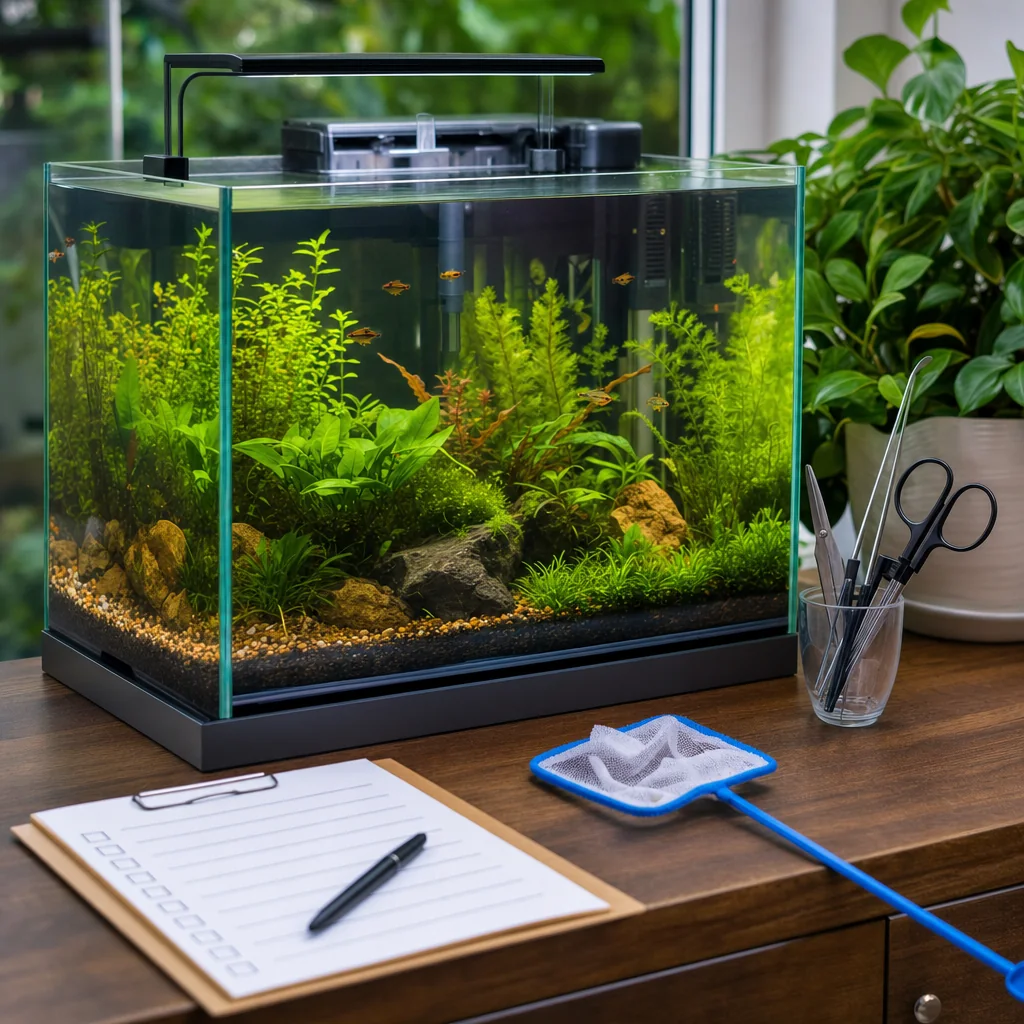
The secret to an easy, healthy aquarium isn’t a special product or a green thumb — it’s a routine. Tanks that look great year after year aren’t getting heroic effort; they’re getting small, consistent attention spread across daily, weekly, and monthly tasks. Tanks that crash usually got ignored until a problem forced a frantic, stressful intervention.
The goal of a maintenance schedule is to make upkeep automatic and minimal. Break the work into bite-sized pieces and no single task ever feels like a chore. Here’s a practical schedule you can adapt to almost any freshwater setup.
Daily Tasks (A Couple of Minutes)
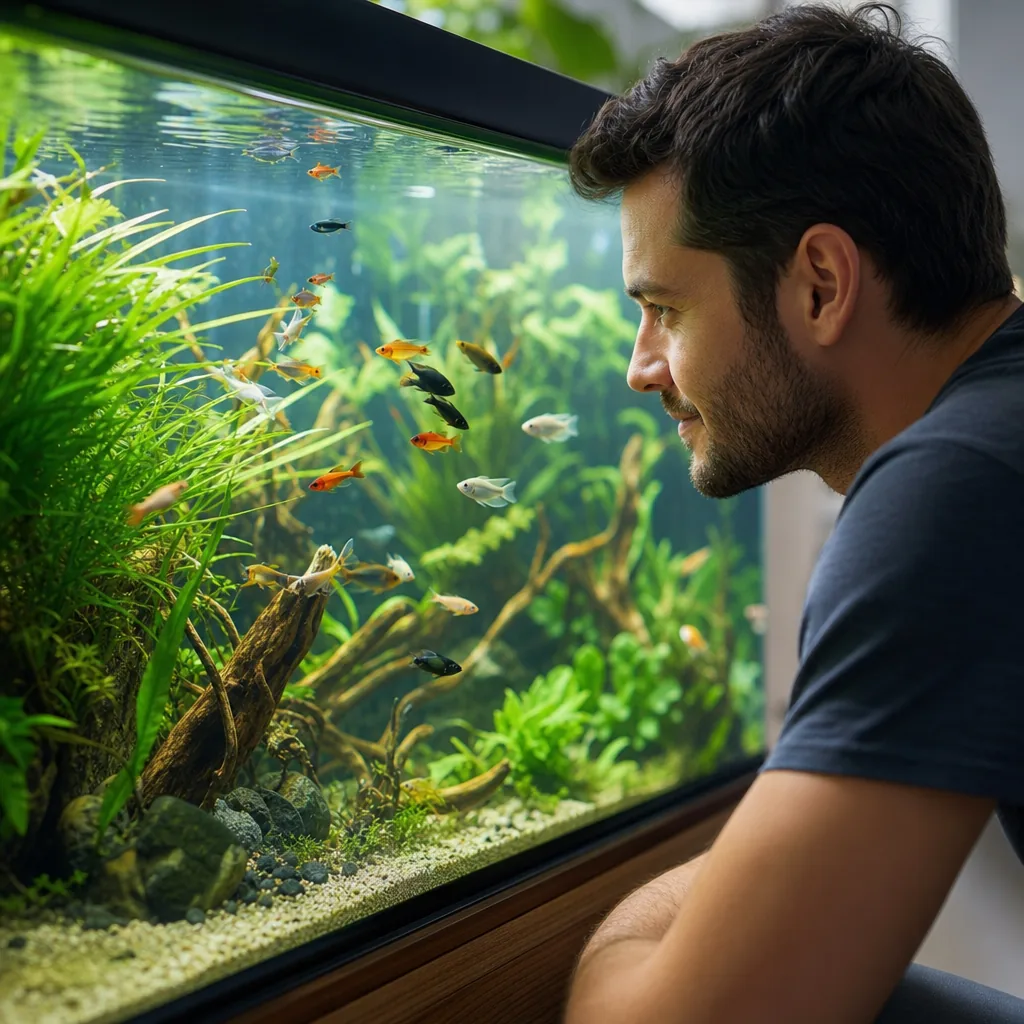
Daily maintenance is mostly observation, and it’s the most important habit you can build. You catch problems early when you simply look at your tank every day with intent.
- Feed appropriately — once or twice a day, only what fish finish in a couple of minutes.
- Count your fish — or at least scan for everyone. A missing or hiding fish is an early warning.
- Watch behavior — note clamped fins, flashing, gasping at the surface, or anything unusual.
- Check the temperature — a quick glance at the thermometer confirms the heater is working.
- Confirm equipment is running — filter flowing, lights on schedule.
That’s it. Two minutes of attention while you feed catches the vast majority of problems before they become emergencies.
Weekly Tasks (15-30 Minutes)
The weekly routine is where the real work happens, and it’s the backbone of a stable tank.
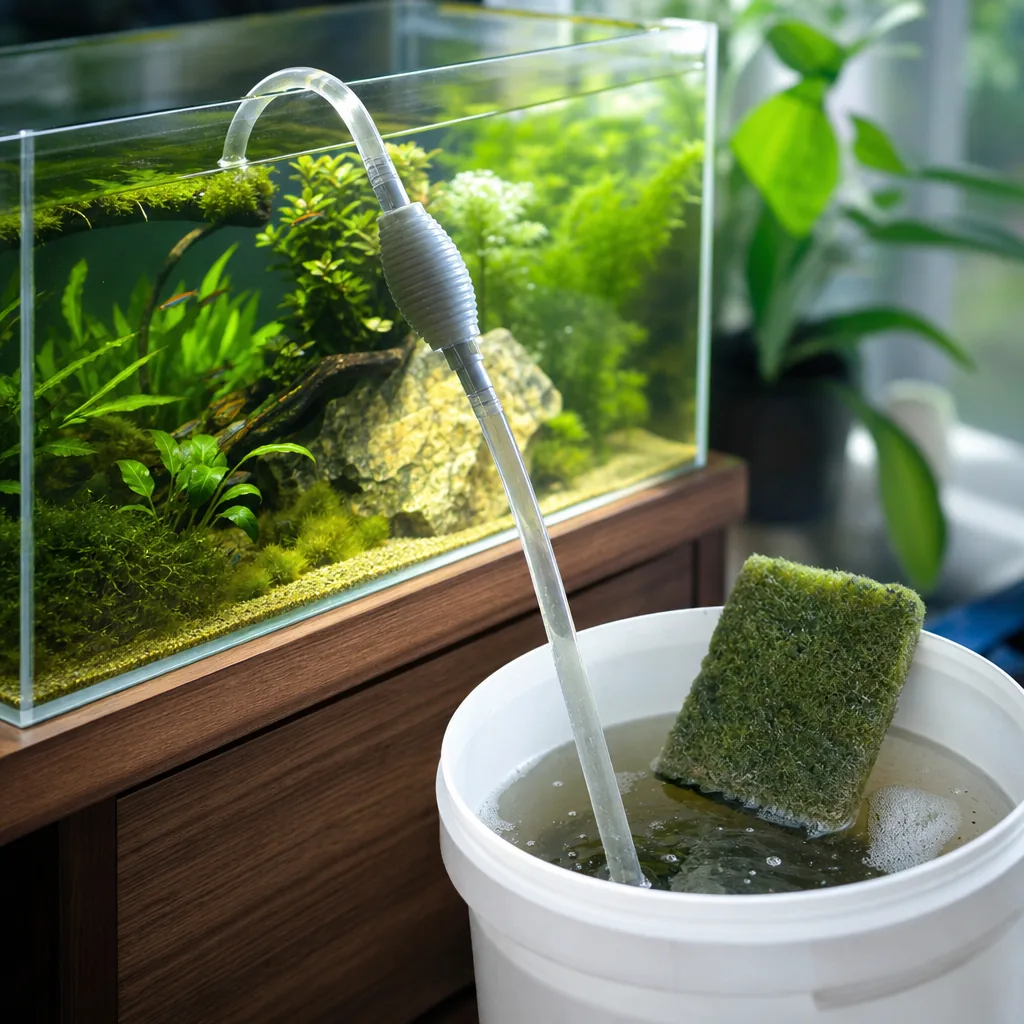
The core weekly job: water change
A 20-30% water change is the heart of weekly maintenance. Combine it with a gravel vacuum to pull waste from the substrate, and always treat the new water with conditioner. Our water change guide covers the easy way to do it.
Other weekly tasks
- Test your water — especially during the first few months and any time something seems off. Track ammonia, nitrite, nitrate, and pH.
- Clean the glass — wipe algae off the front and viewing panes before it builds up.
- Top off evaporation — replace evaporated water (with dechlorinated fresh water, not more salt or minerals).
- Trim and tidy plants — remove dead leaves and trim overgrowth so the tank stays healthy and open.
- Check equipment closely — listen for a struggling filter, look for clogged intakes.
Monthly Tasks (30-45 Minutes)
Monthly maintenance handles the deeper-clean items that don’t need frequent attention but matter over time.
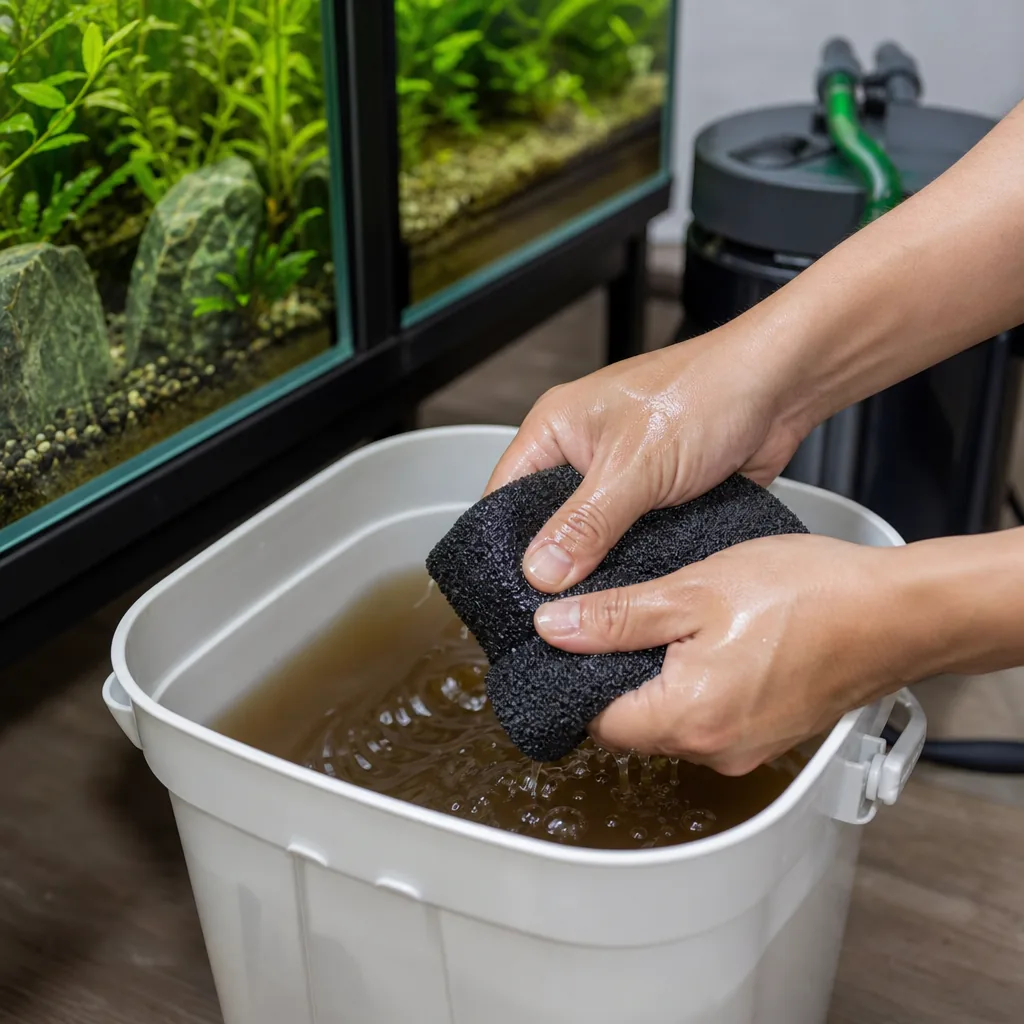
- Service the filter — rinse mechanical media (sponges, floss) in old tank water to clear gunk without killing bacteria. Never deep-clean the filter and do a big water change on the same day.
- Inspect biological media — replace it only if it’s literally falling apart, and even then, swap a portion at a time to preserve your bacteria.
- Clean the equipment — wipe down the heater, clear the impeller, and clean intake tubes and spray bars of buildup.
- Check the lights and timer — confirm the photoperiod is right; aging bulbs can shift and fuel algae.
- Inspect the tank itself — check seals, the stand, and for any signs of leaks or stress.
A note on filter timing
The most common maintenance mistake is doing too much bacterial disruption at once. Stagger your filter cleaning from your largest water changes, and never replace all your media simultaneously. Your beneficial bacteria live on those surfaces, and wiping them out triggers a mini-cycle and an ammonia spike.
Every Few Months / As Needed
- Replace airline tubing and air stones if they yellow or clog.
- Recalibrate or replace a thermometer or heater you no longer trust.
- Restock supplies — conditioner, test reagents, and filter media before you run out. Keep spares from our gear shop on hand.
- Deep-clean decor only if needed, and never with soap — scrub algae off in old tank water.
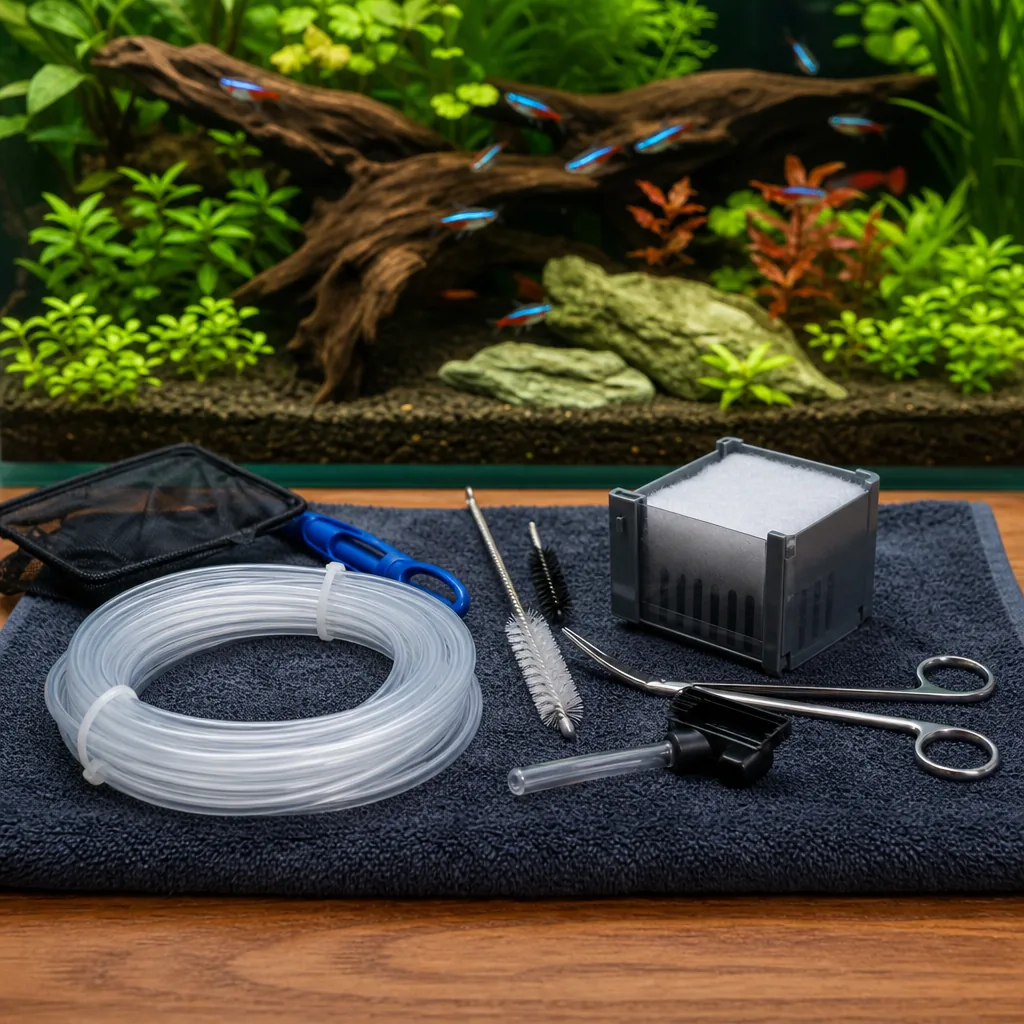
Adapting the Schedule to Your Tank
This is a starting framework, not a rigid law. A heavily stocked tank or a goldfish setup needs more frequent and larger water changes; a lightly stocked, planted tank may stretch the intervals. Let your test results and your eyes fine-tune the frequency. The principle holds regardless: small, consistent maintenance beats occasional dramatic intervention every time.
Final Thoughts
Write this schedule down, stick it near the tank, and follow it for a couple of months until it becomes second nature. The whole point is that a well-maintained aquarium asks very little of you on any given day — a few minutes here, a half-hour there. Stay consistent and your freshwater tank rewards you with clear water, healthy fish, and far fewer surprises.
Frequently Asked Questions
How much time does aquarium maintenance really take?
Just a couple of minutes a day for observation and feeding, 15-30 minutes weekly for a water change and cleaning, and 30-45 minutes monthly for filter servicing. Spread out this way, it never feels like much work.
What’s the single most important maintenance task?
The weekly partial water change. It removes accumulated nitrate and waste, replenishes minerals, and prevents the vast majority of water quality problems on its own.
Can I clean my filter and change water on the same day?
It’s best not to do a big water change and a deep filter cleaning together, since both disturb your beneficial bacteria. Stagger them by a few days to avoid triggering an ammonia spike.
How often should I test my water?
Weekly during the first few months and any time something seems off, then less often once the tank is mature and stable. Always test if you notice unusual fish behavior or are about to add livestock.
Do I need to follow this schedule exactly?
No — it’s a flexible framework. Heavily stocked or messy tanks need more frequent changes, while lightly stocked planted tanks can stretch the intervals, so let your test results and observation guide the exact timing.