
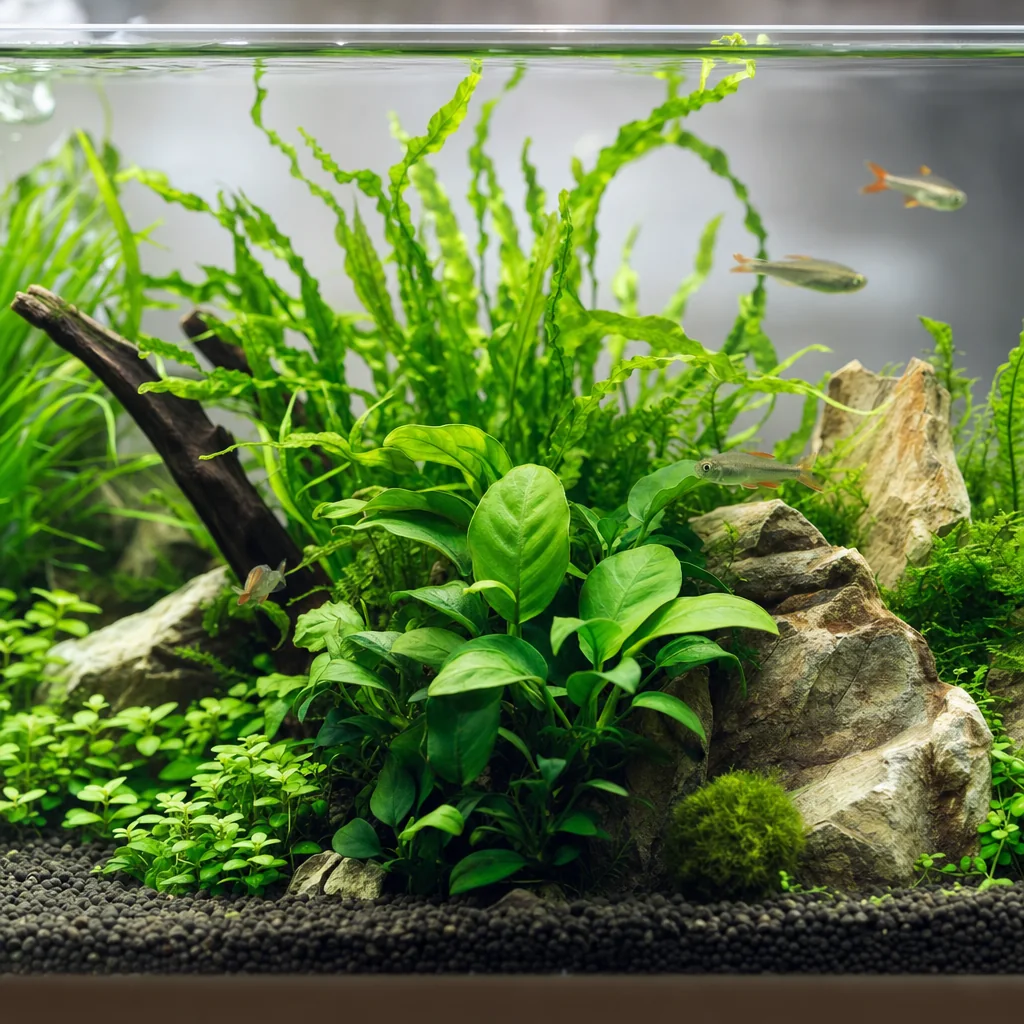
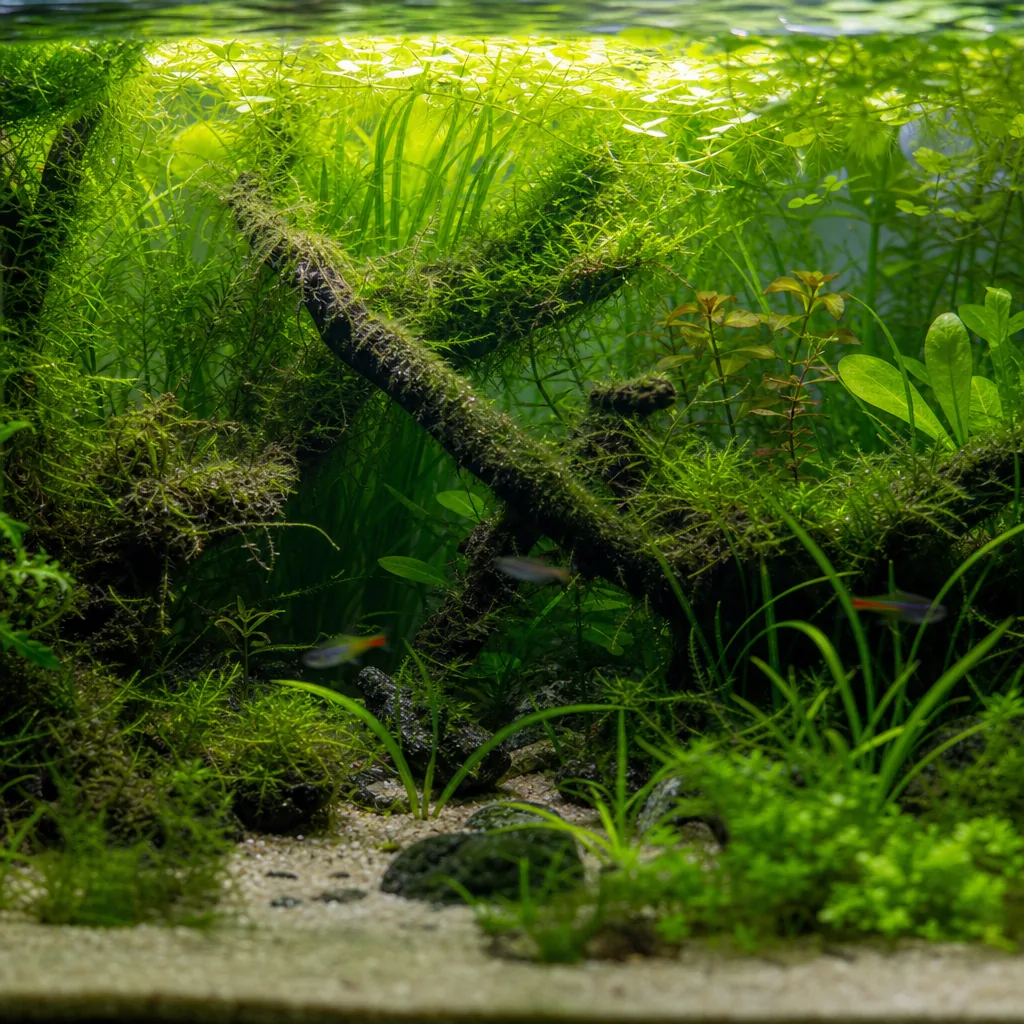
The low-tech planted tank is, in my view, the best entry point into the planted hobby and a destination plenty of experienced keepers happily settle into for good. No CO2 bottles, no daily dosing, no frantic pruning. Just hardy plants growing slowly in a balanced tank that asks little of you and looks better the longer it runs. If you want greenery and a living, natural-looking aquarium without signing up for a demanding maintenance regimen, this is the approach.
This guide covers everything that makes a low-tech tank work: the right plants, sensible lighting, a good substrate, and a relaxed routine that keeps it thriving.
What “Low-Tech” Actually Means
Low-tech does not mean low-quality or low-effort to set up. It means the tank runs without injected CO2 and usually with modest lighting and light dosing. The whole philosophy is balance over intensity: provide enough of everything for slow, healthy growth and let the tank find equilibrium. Slower growth is the feature, because it means less pruning, fewer swings, and a far more forgiving system.
Choosing the Right Plants
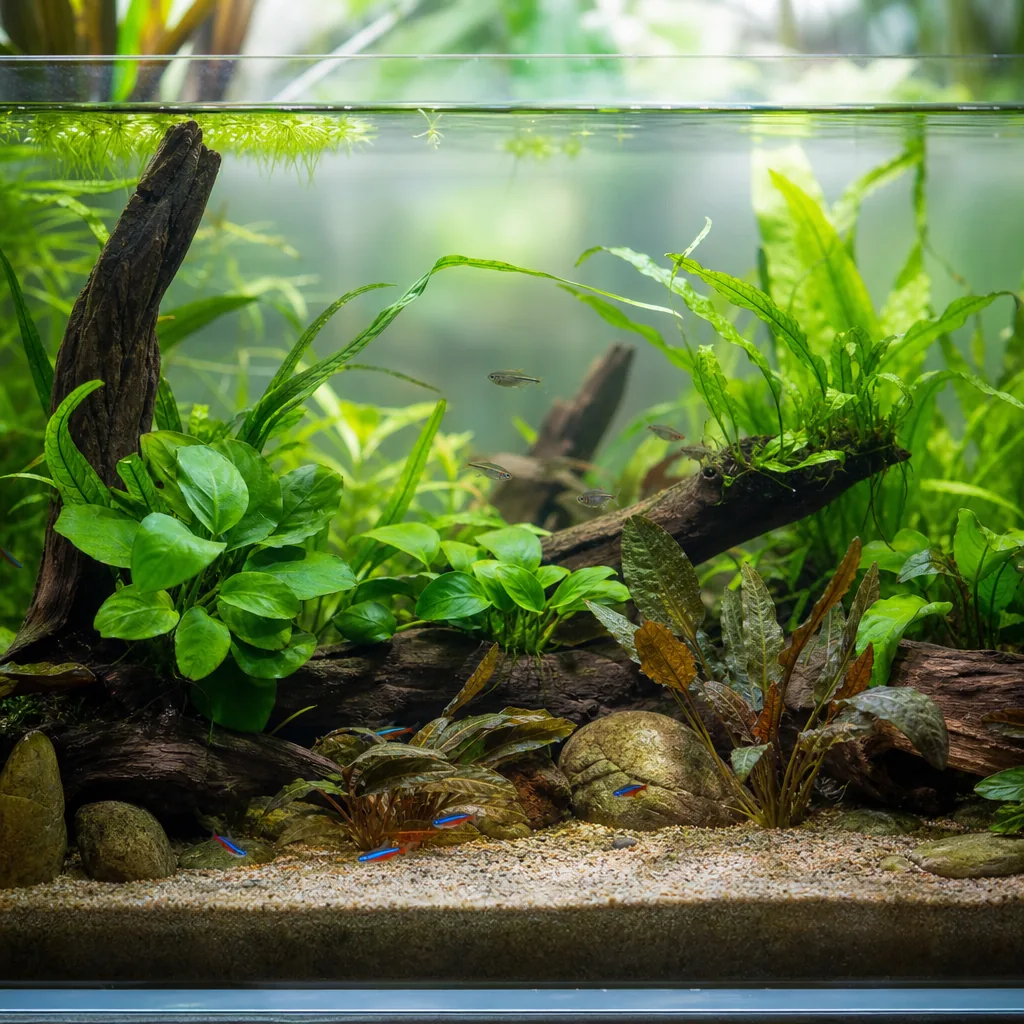
The foundation of a low-tech tank is plants that thrive without CO2. Choose well here and the rest is easy.
Reliable Low-Tech Plants
- Anubias grows slowly, attaches to wood and rock, and tolerates almost anything.
- Java fern is similarly tough, attaches to hardscape, and asks for very little light.
- Cryptocoryne species root in the substrate and fill in beautifully over time.
- Mosses add texture and grow steadily without demanding conditions.
- Hardy stem plants and floaters round out the look and help outcompete algae.
For a deeper list, see our guide to the best low-light aquarium plants. Many of these are sold as easy-care species in the shop.
Lighting Without Overdoing It
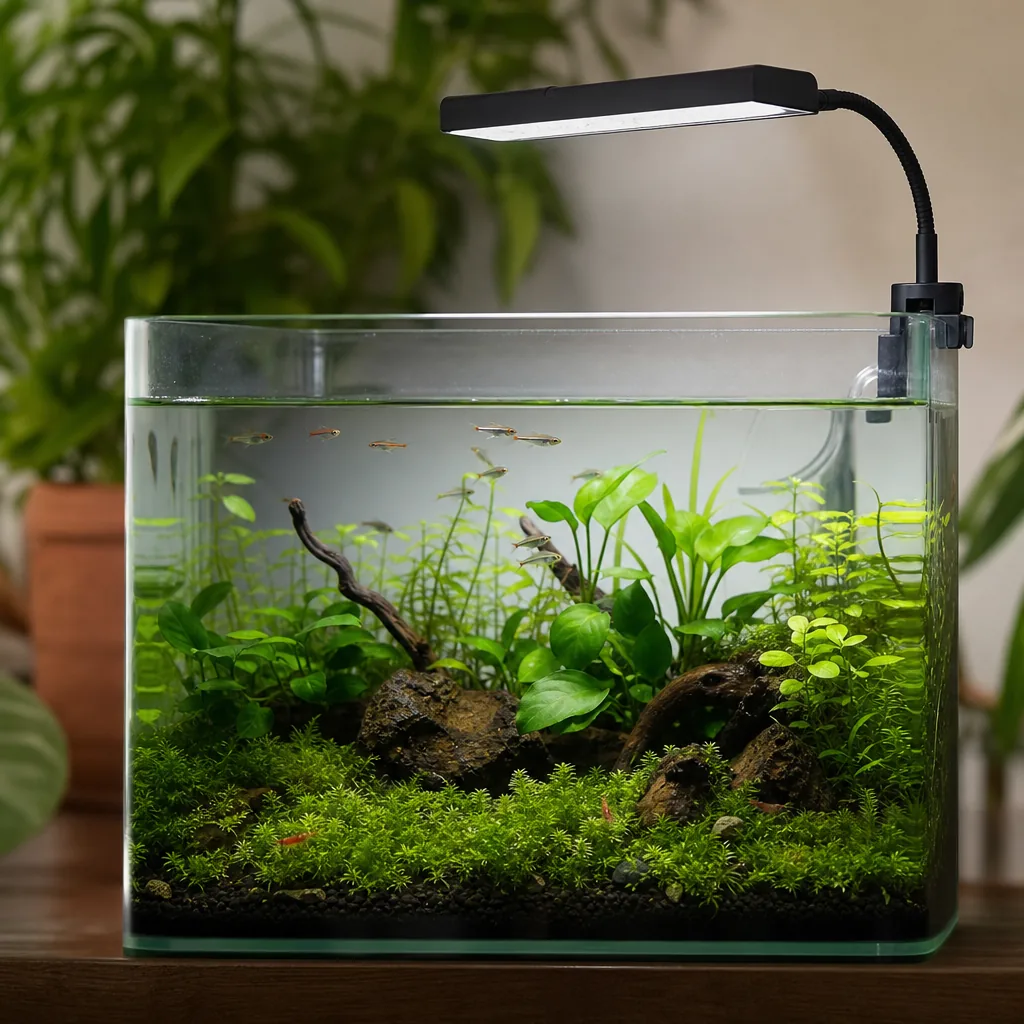
Here is where many beginners trip up. In a low-tech tank, more light is not better. Strong lighting without matching CO2 simply tips the balance toward algae. Modest, appropriate lighting on a consistent schedule is exactly what low-tech plants want. A timer keeps the photoperiod steady and removes guesswork. If algae starts creeping in, reducing the photoperiod is often the first and most effective fix.
Substrate Choices
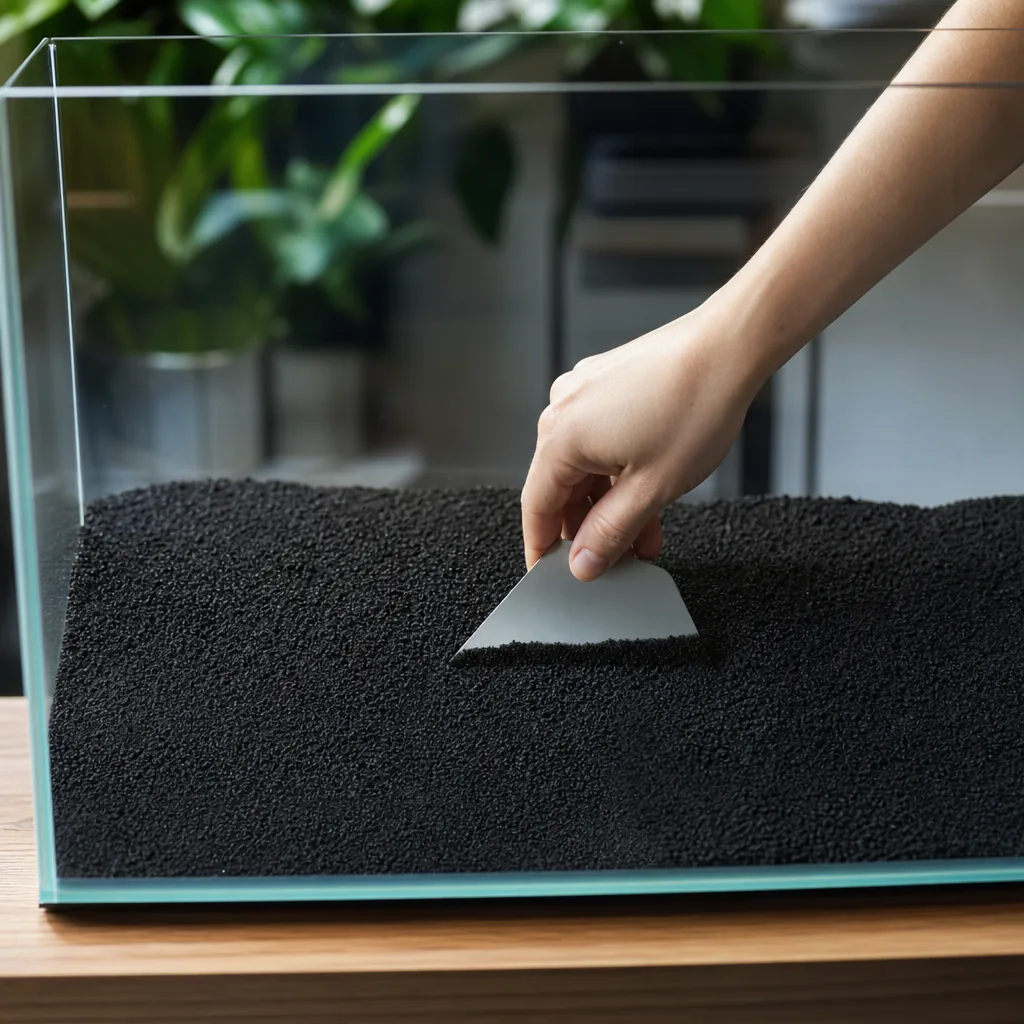
Plants that root, like cryptocoryne and swords, appreciate a substrate that holds nutrients. You have a couple of solid options.
- An active plant substrate provides nutrients to roots and supports stronger growth, ideal if you want lush results.
- Inert gravel or sand with root tabs works well too, with tabs supplying nutrients where roots need them.
Either path supports a healthy low-tech tank. The main thing is giving rooted plants something to feed from. Plants like anubias and java fern do not even root in substrate, so they are flexible about what is underneath.
The Easy Maintenance Routine
This is where low-tech earns its name. The routine is light and forgiving.
- Regular water changes keep the tank stable and remove excess nutrients that would otherwise feed algae.
- Light, occasional dosing of a comprehensive fertilizer covers what fish waste and substrate do not provide.
- Gentle pruning only when plants outgrow their space, which is far less often than in a high-tech tank.
- Cleaning the glass and removing any dying leaves keeps things tidy.
That is genuinely most of it. A low-tech tank rewards consistency far more than effort.
Letting the Tank Mature
The most important ingredient in a low-tech tank is patience. These tanks look their best after months, not days. Early on you may see slow growth and a little algae as the system settles. Resist the urge to add more light or tear things apart. Keep the routine steady and let plants establish their roots and fill in. A low-tech tank at six months looks like a different aquarium than it did at two weeks.
Why Low-Tech Wins for So Many People
A low-tech planted tank gives you most of the beauty of a planted aquarium for a fraction of the fuss. Hardy plants, modest light, a nutrient-holding substrate, easy water changes, and patience are the whole formula. It is forgiving of busy weeks, kind to beginners, and genuinely satisfying to watch mature. If you are weighing whether to add CO2 down the line, our CO2 guide helps you decide, and the freshwater hub covers stocking the tank with fish that suit a planted environment.
Frequently Asked Questions
What plants are best for a low-tech tank?
Hardy species that thrive without CO2 are ideal, including anubias, java fern, cryptocoryne, and mosses. Many attach to wood or rock and need only modest light, making them very forgiving for beginners.
Do I need a special substrate for a low-tech planted tank?
It helps for rooted plants. An active plant substrate feeds roots directly, but inert gravel or sand with root tabs works well too. Plants like anubias and java fern do not root in substrate at all, so they are flexible.
Why is too much light bad in a low-tech tank?
Without injected CO2 to match, strong lighting tips the balance toward algae rather than plant growth. Modest, consistent lighting on a timer is what low-tech plants want, and reducing the photoperiod is often the first fix for algae.
How much maintenance does a low-tech tank need?
Very little compared to high-tech setups. Regular water changes, light occasional fertilizer dosing, and gentle pruning when plants outgrow their space cover most of it. Slow growth means far less hands-on work.
How long until a low-tech tank looks good?
Give it months, not days. Low-tech tanks grow slowly and look their best after the plants establish roots and fill in over time. Patience and a steady routine matter far more than constant intervention.